The Neocon Fantasy Machine Rolls On

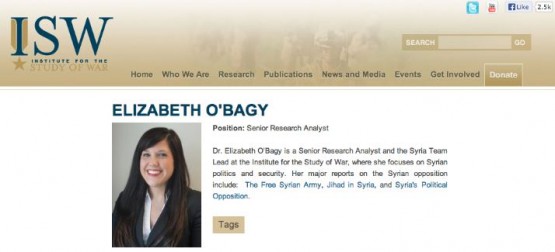
OBagy-555x252

The Kagans – so many you can barely keep track of them – are a particularly Washington clan. Like other neocons – the Podhoretzes and Kristols come to mind – the family occupies various posts and play assorted roles in advancing the idea of US global hegemony, constant interference in other countries (but never Israel!), and warfare. They played a key part in deceiving much of official Washington – wittingly or not – about the situation in Iraq, and thereby bear responsibility for the catastrophe that followed. Their “surge” subsequently failed to achieve what it was designed for: getting a multi-sectarian government with lower levels of mass violence in Iraq. You can see how utterly divorced from reality that pipe-dream was by just reading the news reports daily of the low-burning civil war there every day.

So is anyone surprised they were duped again? Zack Beauchamp (former Dishtern) gives a great account of the sorry story of how the woman who became one of the more conspicuous advocates for full-scale entry into another Middle East civil war was not what she said she was. Elizabeth O’Bagy lied to Kimberley Kagan about her doctorate and Kagan never checked it out before putting her Institute for the Study of War on record behind it:

Over the course of roughly a year, [O’Bagy] went from a graduate student and intern to a pundit making regular appearances on Fox News and being published in Foreign Policy, The Atlantic, and well, The Wall Street Journal. She was promoted to Senior Analyst and then to Syria Team Lead at ISW, and had become known as a go-to expert on the Syrian rebels among foreign policy experts.

It’s a classic example of how dubious actors with vague backgrounds can ascend so rapidly in Washington as long as they are parroting one faction’s preferred version of the truth. This isn’t unique to the neocons, of course. But since they currently hold the world record in being duped and duping others on matters of war and peace, the fact that this is still happening – especially after the lies and bullshit that occurred before the war in Iraq – is instructive that these people never learn.

These were the people touting Chalabi, remember? These were the people telling us there was no serious sectarian issue in Iraq under Saddam and a civil war was highly unlikely if we invaded. These were the people dismissing the notion in advance that we did not have enough troops to secure the country. These were the people – once trapped in their own delusional universe – that sanctioned grotesque and endemic torture of prisoners as a way to get out of it.

It sickens me to see this same propaganda machine wheeled into action again, and to see Washington take it seriously. But it heartens me as well that this unreliable person and demonstrable liar has been exposed. May she be the first of many.

Vladimir Putin, Meet Niccolo Machiavelli

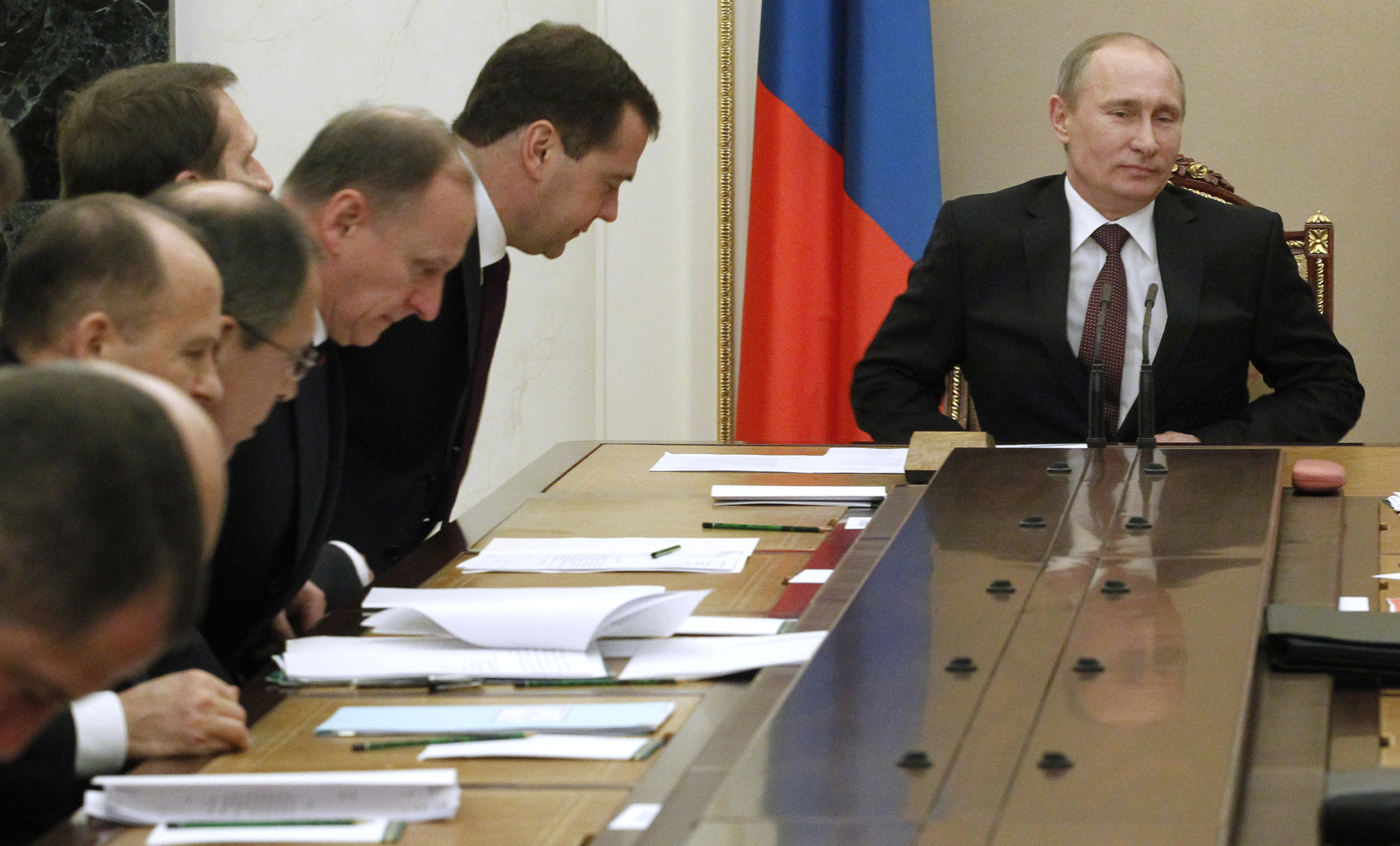
RUSSIA-PUTIN-SECURITY-COUNCIL

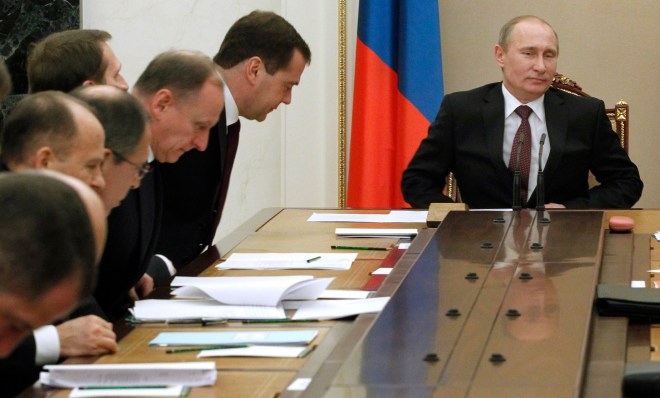
President Putin’s op-ed in the NYT today is fantastic. It’s a virtual end-zone twerk, as this botoxed former KGB hack brags about restoring a more peaceful world order, basks in the relatively new concept of Russia’s global stature, asserts obvious untruths – such as the idea that the rebels were behind the chemical attack of August 21 or that they are now targeting Israel – and generally preens.

Good. And whatever the American president can do to keep Putin in this triumphant mood the better. Roger Ailes was right. If the end-result is that Putin effectively gains responsibility and control over the civil war in Syria, then we should be willing to praise him to the skies. Praise him, just as the far right praises him, for his mastery of power politics – compared with that ninny weakling Obama. Encourage him to think this is a personal and national triumph even more than he does today. Don’t just allow him to seize the limelight – keep that light focused directly on him. If that also requires dumping all over the American president, calling him weak and useless and incapable of matching the chess master from Russia, so be it. Obama can take it. He’s gotten used to being a pinata.

All this apparent national humiliation is worth it. The price Russia will pay for this triumph is ownership of the problem. At some point, it may dawn on him that he hasn’t played Obama. Obama has played him.

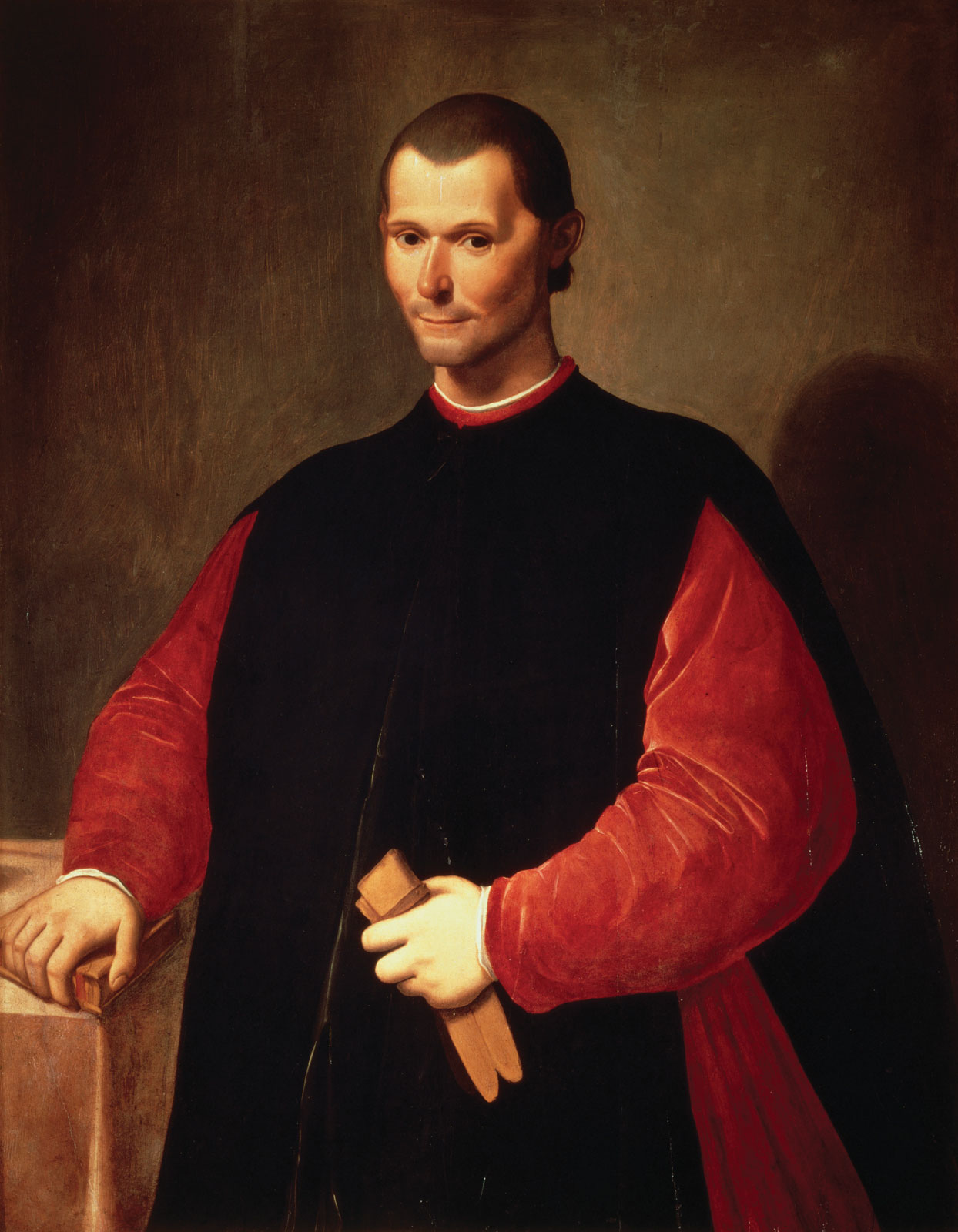
Which brings me to Machiavelli, the great intellectual master of power-politics. Most pundits use the term “Machiavellian” to mean whoever in the arena seems more successful at scheming, plotting, double-crossing, intimidating, and maneuvering. But Machiavelli himself had a different idea of what a true Machiavellian looks like: a kind, simple, virtuous naif.

Here’s the master making the point in The Prince:

Pope Alexander VI had no care or thought but how to deceive, and always found material to work on. No man ever had a more effective manner of asseverating, or made promises with more solemn protestations, or observed them less. And yet, because he understood this side of human nature, his frauds always succeeded.

It is not essential, then, that a Prince should have all the good qualities which I have enumerated above, but it is most essential that he should seem to have them; I will even venture to affirm that if he has and invariably practices them all, they are hurtful, whereas the appearance of having them is useful. Thus, it is well to seem merciful, faithful, humane, religious, and upright, and also to be so; but the mind should remain so balanced that were it needful not to be so, you should be able and know how to change to the contrary.

Notice the characteristic wit in praising true deception … in a Pope! Old Nick was funny – in fact, the only consistently funny political theorist. But notice too that the individual who seems the least Machiavellian is often the most. What you need to do is get past appearances and look coldly at the result of any course of action, and whose interests it really advances.

My view is that the US’s core interest is in not owning the Syria conflict, while making sure its chemical stockpiles are secure or destroyed. I think Obama’s worst mistake was not the WMD “red lines” comment (though that was unwise). It was his original public statement that Assad must go. Given that he runs the most powerful military machine ever assembled on planet Earth, that statement gave him some responsibility for what would happen next in Syria, without any core idea of where that conflict might lead. And the goal of the US in this conflict right now is not to own it. That is more important than the question of “boots on the ground” or not.

The core question is:

Are we seeking responsibility for resolving this ghastly sectarian bloodbath? I believe we have to have the steely resolve to act on our core interests – after bankrupting ourselves fiscally and morally next door in Iraq – to say no.

And the moments when Obama has risked owning this conflict have always been his low points. From that early high-minded and unnecessary statement on Assad to his impulsive declaration of intent to use force in August, he deeply worried the American people and Portrait_of_Niccolò_Machiavelli_by_Santi_di_Titothe world that the US could be getting into more responsibility for yet another Middle East sectarian bloodbath. But he has nimbly pivoted back from these positions – finding his way back to a more GHW Bush posture rather than a GW Bush one.
But the upshot right now – so far as I can see – is that Russia and not America now owns this conflict. It is Putin who is on the hook now – and the more Putin brags about his diplomatic achievement the more entrenched his responsibility for its success will become. And that is perfectly in line with Russia’s core interests: Putin is much closer to Syria than we are; he must be scared shitless of Sunni Jihadists who now loathe him and Russia more than even the Great Satan getting control of WMDs. Those chemical weapons could show up in Dagestan or Chechnya or the Moscow subway. It is Putin – and not Obama – who is therefore much more firmly stuck between the Sunnis and the Shia in Syria – not to speak of the Christians.

Of course, this argument only makes sense if you don’t believe the US is best served by being responsible for the entire Middle East, and by being the only major power seriously invested there. If your goal is US global hegemony, this was a very bad week. But if your goal is to avoid the catastrophe that occurred in Iraq, to focus on the much more important foreign policy area, Asia, and to execute vital domestic goals such as immigration reform and entrenching universal healthcare … then the result looks pretty damn good. Or at least perfectly good enough.

So when the inevitable cries of “Who lost the Middle East?” are raised by the neocon chorus, one obvious retort remains. Of all the regions in the world, wouldn’t the Middle East be a wonderful one to lose? You want it, Vladimir? Be our guest.

(Photo: Russian President Vladimir Putin chairs a Security Council meeting at the Kremlin in Moscow, on November 21, 2012. By Mikhail Metzel/AFP/Getty. Painting: Niccolo Machiavelli by Santi Ti Dito.)
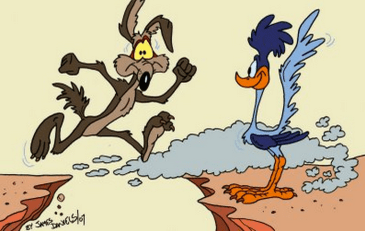
Another Meep-Meep Moment? Ctd

Readers keep the spirited debate going:

This talk of a meep-meep is absurd and could only be dreamed up by Obama-bots who are just as determined to wear rose-colored-glasses with all-things Obama as you declare the Right to be obstructionist against his every move. The only crisis averted was Obama’s crisis of accountability for his red-line stance on Syrian use of chemical weapons.  The actual crisis that you and Obama keep talking about, the fact of chemical weapons being controlled and used by madmen like Assad (and/or the Islamist rebels, take your pick), is far from resolved.

A wiser person would reserve the victory dance and cheers until some Screen Shot 2013-09-11 at 4.47.16 AM actual, verifiable results are forthcoming from the Russians and Syrians in producing and destroying their chemical WMD stockpiles.

Given the basement-level of trust any sane person would place in the parties involved here, extreme skepticism would seem to be warranted towards this agreement.  The appearance of progress was certainly made Tuesday – unless the primary concern was making progress towards finding a face-saving way out for Obama.  From your writing this week, it seems the latter was a more dire concern at the Dish.

I remain convinced that the actual issue of concern here remains far from resolved, and that all that has been accomplished is to kick the can down the road, postponing what is likely to be a renewed call for intervention by the U.S. in the near future.  I fully expect Syria and chemical weapons inspections, or lack thereof most likely, to still be in the news six months from now.  It will be interesting to see if Obama then ultimately follows through with his “serious threats” of “unbelievably small” attacks if (when?) Russia/Syria fail to meet their obligations.  Or whether the goalposts start getting moved by Kerry and Obama.  We shall see.

I have a post in process (update: now posted) that addresses some of these points. But my basic answer is this: what Obama has achieved is an unprecedented concession from Assad, and a much, much higher likelihood that chemical weapons will not be used again in this conflict in the way they just were. Fr0m my point of view, that’s our fundamental interest right now. And Obama has secured it – for a while. But unless we truly want Assad’s fall soon – and we obviously don’t – buying time is a perfectly good option. Another reader:

You seriously need to read James David Barber’s Presidential Character, about the primary traits of presidents and how they can predict presidential behavior. It will give you a good idea of what Obama is doing at any given moment because once you figure out what an Active-Positive is capable of then you know what Obama is capable of.

The key trait of an Active-Positive is Adaptive. Lincoln, for example, constantly looked like he was wavering between every issue during the conduct of the Civil War but in fact he was trying out every possibility towards a larger goal. Much like he wrote to Horace Greeley in that famous letter, if Lincoln had to free the slaves to preserve the Union he would; if he couldn’t to preserve the Union he would; if he freed only a portion of the slaves (the Emancipation Proclamation) he would do that. Lincoln was proved right: the Proclamation effectively blocked any European involvement and made more Union supporters into supporting the eventual end of slavery.

Adaptive A-P Presidents are more keen on compromise than the other three types (Active-Negatives won’t, Passive-Negatives might but would rather let someone else do it, Passive-Positives never want to rock any boat), and are certainly more creative in their solutions and in seeking alternate solutions as well. While the Active-Positive may look like a flip-flopper (especially to the more extremist wing of the president’s party) he’s actually shrewdly calculating the “long game” of getting his enemies to trip over themselves and his allies standing there gawking like they’ve never seen the Hand of God before.

I don’t buy into the current “story” that Obama got Kerry to float the chemical weapons solution that the Russian government quickly seized as a viable diplomatic answer. It really does look like Kerry pulled a gaffe. The genius of an Active-Positive President is to seize a gaffe and turn on a dime into making that gaffe work to his advantage.

The bad news about all this? Well, you see it makes you into the Horace Greeley of the story. Sorry (insert meaningful sympathetic pat on the back here). Hope you don’t mind. Meep-Meep.

Another:

You thought the money quote from Obama’s speech was when he agreed that the United States should not be the world’s policeman. Unfortunately, Obama contradicted this sentiment moments later with this:

My fellow Americans, for nearly seven decades, the United States has been the anchor of global security.  This has meant doing more than forging international agreements – it has meant enforcing them.  The burdens of leadership are often heavy, but the world is a better place because we have borne them.

Last time I checked, one who enforces laws is a policeman. Although in this case, the U.S. is the self-appointed policeman. Likewise, Andrew, you are talking out of both sides of your mouth.

You claim that Obama is moving us towards a world that is less dependent on the power of the U.S and strengthening international cooperation. Obama (and his “cast-iron balls“) did this by proposing unilateral humanitarian bombs be dropped. This is wonderful community organizing. To nudge diplomacy along sometimes you need to threaten unilateral strikes. Without threats, diplomacy is just “meaningless blather” – got it. To avoid wars, we need to threaten war. I am doubtful these tactics will take us to a better place.

Chill out with the Obama hagiography; leave that to MSNBC.

Wow: the notion that the credible threat of force may make diplomacy more effective seems a strange idea to my reader. Yet it is a core feature of international relations, with successful examples littering history. And it has taken us to a better place. Syria has admitted its chemical weapons stockpile and agreed to sign on to the Chemical Weapons Convention. Another piles on:

I appreciate the way you present things, the way you get all worked up, and the way things generally work out for you, but sometimes, you seem a bit shrill when defending yourself against the readers who question you. Here’s a good example: “Has it occurred to my reader that it was necessary to actually risk another war to get the diplomatic solution we now have? ”

This was one of your responses to criticism for your seeming about-face on Obama’s performance in this Syria fiasco. It seems very flippant and smug, because I’d immediately turn it back on you, and ask: “Did it occur to YOU, at the time when you were shrieking about his leading us to war, that it was necessary to actually risk another war to get the diplomatic solution we now have?”

Another quotes me:

And you don’t have to argue that Obama is some kind of Jedi warrior who saw all this from the start (a silly idea) to see that he was able to pivot, shift, test, improvise and flush out new options in a horrible situation as the crisis careened from one moment to another.

Amen to that. Watching Serious Foreign Policy Experts debate this on TV has been mind-boggling, as they all appear to have that same “silly” expectation. But really, solving difficult problems rarely works that way, where leaders announce a goal from on high, draw a straight line from A to B, and then follow that line. Rather, Albert Herschmann had it right in 1967 when he wrote about the “Principle of the Hiding Hand.” The entire essay [pdf] is worth a read, especially for those working in or around global development.  Money quote:

Creativity always comes as a surprise to us; therefore we can never count on it and we dare not believe in it until it has happened. In other words, we would not consciously engage upon tasks whose success clearly requires that creativity be forthcoming. Hence, the only way in which we can bring our creative resources fully into play is by misjudging the nature of the task, by presenting it to ourselves as more routine, simple, undemanding of genuine creativity than it will turn out to be.

Or, put differently: since we necessarily underestimate our creativity it is desirable that we underestimate to a roughly similar extent the difficulties of the tasks we face, so as to be tricked by these two offsetting underestimates into undertaking tasks which we can, but otherwise would not dare, tackle.

This isn’t the most comforting truth in the world (especially, it seems, for the pundit class), but it’s a truth nonetheless.

Another reader:

In taking account of the President’s actions regarding Syria, and reading your view of this, I can’t help but thinking of this scene from the West Wing:

I know you can be lukewarm when it comes to Sorkin’s work, and maybe others have already sent this along as well, but it keeps running through my head as I watch the way this thing in Syria unfold (and hope it continues to).  I don’t believe that the President had all of this in mind from the start, but I think he was smart and nimble enough to see an opportunity and willing to be misunderstood for a period of time.

Who Is Big Tobacco Bullying These Days?

Small, developing countries:

Absent state intervention on their behalf, [American] tobacco companies found a new way to fight efforts to regulate tobacco marketing. They take advantage of an “investor-state” dispute options being built into more free trade agreements between countries, which allows companies to directly challenge regulations they believe discriminate against foreign products. Unlike fighting laws in domestic legislatures or through WTO disputes, which are more formal and predictable, investor-state conflicts are decided by a panel of international arbitrators with no appeal, making them more attractive to multinational corporations.

“In most cases, when tobacco companies have gone after developing countries, they’ve gone after them for the same type of regulations we have in the U.S.,” Thomas Bollyky, a former U.S. trade negotiator, says. “They have made use of the possibility to bring disputes under trade and investment agreements in a way that no other industry has, and threatened disputes against Togo and Namibia, countries that don’t really have a budget set aside to fight these disputes, let alone the personnel to do it.”

The Climate For Chaos

Francesco Femia and Caitlin Werrell see evidence that climate change and drought helped cause the Syria conflict. Here’s Femia:

We found it very interesting that right up to the day before the revolt began in Daraa, many international security analysts were essentially predicting that Syria was immune to the Arab Spring. They concluded it was generally a stable country. What they had missed was that a massive internal migration was happening, mainly on the periphery, from farmers and herders who had lost their livelihoods completely.

Around 75 percent of farmers suffered total crop failure, so they moved into the cities. Farmers in the northeast lost 80 percent of their livestock, so they had to leave and find livelihoods elsewhere. They all moved into urban areas — urban areas that were already experiencing economic insecurity due to an influx of Iraqi and Palestinian refugees. But this massive displacement mostly wasn’t reported. So it wasn’t factoring into various security analyses. People assumed Syria was relatively stable compared to Egypt.

Drum summarizes what we do and don’t know about climate change’s connection to conflict:

Climate scientists have been warning for over a decade that global warming is going to produce environmental stresses and severe weather patterns that will have devastating impacts on countries that are none too stable to begin with. As always, there will never be proof that any particular war is due solely or even primarily to climate change, just as no particular hurricane is ever solely the product of climate change. But the evidence is striking—and getting more striking all the time—that climate change very likely plays a role.

The Great White Outdoors, Ctd

Readers continue the discussion over race and class when it comes to camping:

You have to understand it’s not really about cost; it’s also an aversion to sleeping on the ground in the damn woods. My (white) mother grew up well off in a big house with every amenity, and for vacations they drove around in a camper. She thought it was a blast. My (black) father grew up in a very poor household, sharing beds with his brothers and sisters and eating beans from a can. To this day, his idea of a vacation is not a sleeping bag on the ground in a tent, crammed in with his nearest and dearest, fending off bugs. It’s in a nice hotel bed, where people bring you room service and treat you like a king.

I think much of many black people’s aversion to camping stems from that. It’s less about not having the money – there are plenty of middle-class black families that could buy up the camping gear, and we certainly could have afforded it – it’s just that there’s little pleasure in living off the basics when you or your family very recently did just that not for pleasure, but out of necessity.

Add in the racism factor – the reality that until pretty recently, black people actually weren’t even allowed to stay in most nice resorts or hotels – and it makes even more sense why, when they have time and disposable income, they usually don’t pack a rucksack and head into the mountains.

Several more readers speak to those themes:

Long ago, in the early ’70s, my wife and I were leaders at a YMCA summer camp in the Pacific Northwest. We had mixed groups – middle-class suburban kids and lower-income African-American kids.  The camp itself had a swimming pool, dining hall and hot showers.  But for our kids, the big feature was several days of wilderness camping in tents with food cooked over fires and with no running water.  The suburban white kids had already learned that wilderness was cool and they were ready to go.  The lower-income kids, on the other hand, appreciated being in a place with all the comforts they probably didn’t have at home.

Another:

Your post reminded me of a study the California Parks Department did about 10 years ago.  They found that people of color avoided their parks because they were located in rural areas, and they did not feel comfortable or welcomed in the conservative small towns that are often the gateways to the parks.

Another reader:

Your thread reminds me of one of my favorite “Oprah moments”. In 2010, after receiving a letter from an African-American park ranger at Yosemite National Park who said he was concerned by the low number of African-Americans who visit national parks each year, Oprah and her friend Gayle King went on a camping trip to the park to bring attention to the issue and encourage more African American families to enjoy the parks. I’m not sure she changed many minds, but it made for some interesting television – not to see African-Americans camping, but to see the top 1% camping and “roughing it”. There are some video clips on Oprah’s website, including this one of Oprah and Gayle trying to set up their pop-up camper.

Another points to a wonderful place:

A conversation about camping, minorities, and means would be incomplete if you didn’t mention Prince William Forest Park, which is part of the National Park Service, in northern Virginia. We visited this summer – actually on July 4th – on our return trip from visiting family up north. Not sure what to expect, we went to the park because we needed a day in nature and were traveling with our dog, and my wife had discovered that the park was pet-friendly.

What we found was a 15,000-acre oasis with a history of creating open space for those less fortunate. It was originally formed as part of FDR’s Recreational Development Area program, to help make recreational activities accessible to poor, inner-city kids. The Civilian Conservation Corps built cabins and five camps (no whitewashing: the camps were segregated). Social agencies in the D.C. area – such as the nation’s first African-American YMCA – sent kids to summer camp at the park.  Here’s a link to the NPS’s page on the summer camps at the park. From that page, here’s the summation of the historic impact of Prince William Forest Park:

The RDA program left an important social and recreational legacy. The program created new parkland, which was available to all. Less fortunate residents in or near major cities had something similar to national parks, most of which were in the West. The social agencies that rented the cabins had greater opportunity for outreach. The experiences of a summer camp were far beyond the means of many of the children who stayed here. Not only did they get fresh air, but many of the camp programs gave children the opportunity for success later in life. Its legacy continues as visitors continue to use Prince William Forest Park and other former RDAs for their original purpose of recreation.

Importantly, there appears to be a modern opportunity to recapture some of the park’s history of introducing urban kids to the outdoors. The organization NatureBridge has started 3-day residential field science programs for middle school kids at Prince William Forest Park. Check out this link and the [following] video:

Sentenced To Live In A Shipping Container, Ctd

A reader writes:

Don’t knock Dutch container housing! In the Netherlands, container housing is more prevalent and respected than you might think. And they’re well-executed, like much the Dutch do. I was just back in Amsterdam last month and saw a couple other container buildings they’ve put together. It’s a smart thing to do, since these days there’s an imbalance in container flows – full from Asia, lots of empties back from the West. Or they just stack up, as a drive along the New Jersey meadowlands will confirm for you.

Now, relocating abusive gypsies is a fair point to question, but I wouldn’t automatically associate container housing with degradation.

Another questions the notion that the Roma family was mistreated:

A little trawling around other websites, including some Dutch ones, suggests that this family has been causing serious trouble for at least 13 years.

There have been court cases. Earlier this summer the city installed surveillance cameras in their block just because there had been so many complaints, including of intimidation.

It is really hard to evict a tenant in Amsterdam. The housing association has been trying for years. I think they accused the family of causing structural damage to the building where they lived (not sure about the translation here). The judge finally allowed the eviction on the grounds that the neighbors were afraid of them.

In another picture of their two-container home, you can see a tram stop in the background, probably a five-minute walk away. According to one commenter, an Albert Heijn (major grocery store) is two stops away on this tram – so Mr. Lonis’s mother-in-law is not going to find it hard to do the grocery shopping! While Zeeburgereiland does seem pretty sparsely built at the moment, the Zeeburg area in general is an up-and-coming area of Amsterdam with lots of nice homes, shops, etc. The comment from Geert Wilders is just a loony right-winger stirring up bad feeling. They have not been sent to a concentration camp.

How Important Is Breakfast?

Daniel Engber deflates the pro-breakfast hype:

study published last week in the American Journal of Clinical Nutrition starts with this simple fact—that in spite of all these association studies, no one knows exactly what skipping breakfast might be doing to our bodies. The study goes on to make a disturbing claim: Scholars in this field of inquiry—breakfast science—have been fudging facts and misinterpreting the science. The literature shows signs of research bias.

That doesn’t mean any of the studies described above is fraudulent or dubious. There certainly is a link between skipping meals and getting fat, but Andrew Brown, a nutritionist at the University of Alabama at Birmingham and lead author of the new critique, points out that large surveys of people’s diets and their health are at most suggestive. Lining up several dozen of them in a row doesn’t add much more value to their claims. It could be that my yuppie morning ritual really keeps my BMI in check, perhaps by changing my metabolism or helping to control my appetite. But it’s also possible that my breakfast habits do nothing for me on their own, and that they only correspond to some deeper determinants of health.

The Giant Sucking Sound Of Government Jobs

Public Sector Jobs

Derek Thompson explains a key element of our jobless recovery – the public sector’s “unprecedentedly bad post-crash performance”:

The public sector collapse was not Obama’s plan. It is not his fault, really. It is scarcely his responsibility, since the vast majority of government jobs — and of government jobs lost — have been at the state and local level. The recession devastated state tax revenue, and states cannot borrow from international lenders like Washington. So most had no choice but to cut workers. The stimulus delayed, but did not indefinitely defer, the blood-letting. And, since Congress refused to extend support even as interest rates clung to historically low levels, it’s been brutal.

If we held government employment perfectly steady since Day One of Obama’s presidency — not one more government job, nor one less — job creation would have seen a 25 percent boost. Instead, Obama’s legacy will include an historically strange post-recession collapse in government unemployment — and a powerful lesson in the limits of presidential power.

Update from a reader:

Derek Thompson’s post about the recovery is correct to note that the plummet in government jobs largely explains the lackluster recovery, and for that piece of information it is really Bill McBride at Calculated Risk who should be thanked. But when Mr Thompson says “The recession devastated state tax revenue, and states cannot borrow from international lenders like Washington. So most had no choice but to cut workers,” he makes a series of errors and gross misrepresentations.

States can and do borrow from foreign sources in exactly the same way the Federal government does, which is by selling their bonds to foreign buyers. Not only was Mr Thompson wrong about that, but he implies that Federal borrowing is that Federal borrowing comes from a “lender,” which makes it sound like going to a bank for a mortgage. But that is not right. The “borrowed” money comes from bond buyers.

What States generally cannot do is engage in deficit spending. They have balanced budget laws to follow. States also cannot print money or engage in quantitative easing. These are all things that the Federal government can do. Mr Thompson gets this all wrong.

And then there is Mr Thompson’s most pernicious error. He claims that Federal “borrowing” comes from foreign “lenders,” and that is a damnable misrepresentation. Most US Treasury Bonds are held by US citizens and US-based financial entities. The debt we owe is largely to ourselves.

Getting all of this right is crucial for understanding how and why the implementation of austerity and campaigns demanding austerity (like Simpson-Bowles) have been so damaging to the economy during the recession and nascent recovery.

Monetary Policy In The Gray

Matthew Boesler points to evidence that central banks have less influence in countries where the population skews old:

In [a] paper titled “Shock from Graying: Is the Demographic Shift Weakening Monetary Policy Effectiveness,” IMF economist Patrick Imam links aging populations in countries like the U.S., U.K., Japan, Germany, and Canada to empirical evidence that monetary policy has become less effective. “Based on the life-cycle hypothesis, we would expect older societies to typically have a large share of households that are creditors, and to be less sensitive to interest rate changes, while younger societies would typically have a larger share of debtors with higher sensitivities to monetary policy,” says Imam. And “with fertility rates plummeting around the world – often below replacement rate – including in low-income countries,” the IMF economist writes, “the world is going through an unprecedented demographic shift that is leading to a rapidly graying world.”

Neil Irwin elaborates:

What’s the theory? To start with, monetary policy works by changing the cost of borrowed money.

When growth is weak, a central bank cuts interest rates, which in turn makes spending, consumption, and investment more attractive. You’re more likely to buy a house or a car if the interest rate is 3 percent than if it’s 5 percent, for example. But crucially, the use of borrowed money is a crucial way that these lower rates translate into higher economic growth.

But borrowing money is disproportionately an activity of the young. Economists call it “life cycle hypothesis of saving” – people use credit to smooth out what they can consume over the course of their lives. When just embarking on a career, a young person might take out major loans for education and for buying a house and car. As they reach middle age, they will tend to have paid down some of that debt while also building savings. By the time they hit retirement age, they should be net creditors, with significantly more savings than they still owe in debt.

That would imply that in an older society fewer people are actively using credit products. Which should in turn imply that a central bank turning the dials of interest rates will be less powerful at shaping the speed of the overall economy.

Drum adds:

I can tentatively buy this. In fact, I’d toss out another possible channel for this effect as well: the elderly often live off investments, which means that their incomes fall as interest rates go down. So the bigger the proportion of elderly in a country, the more people you have who are forced to consume less because of low interest rates and the fewer people you have who are motivated to consume more by low borrowing rates.