“A Miraculous, Doomed Campaign”

RUSSIA-VOTE-MOSCOW

That’s how Masha Lipman assessed Alexey Navalny’s run for mayor of Moscow prior to the voting yesterday:

The system may have let Navalny run, but his campaign has unfolded in a difficult environment. Moscow officials have made public announcements accusing him of irregularities and campaign-policy violations (none of the allegations have been substantiated). Navalny personally was alleged to be hiding his ownership of real estate abroad—but no solid evidence was presented. Police raided an apartment where Navalny supporters allegedly kept “illegal” campaign materials; the door to the apartment was broken, and two young men were detained for ten days. No one explained what was illegal about the materials. Stacks of campaign newspapers have routinely been stolen. At one of his neighborhood meetings, Navalny himself was seized by the police and driven away. He was released shortly thereafter with no explanation.

Muscovites who decorated their apartment balconies with Navalny banners received visits from municipal officials or police, who demanded that slogans be removed. On several occasions, “visitors” emerged on straps outside the apartments, like window-washers but with cutting equipment. At least once, a “hanging visitor” physically threatened the host in a highly expletive manner. Episodes of similar harassment were reported day in and day out.

According to the official election results, Navalny ended up with 27 percent of the vote. Timothy Frye sees his strong showing as an embarrassment to Putin-backed incumbent Sergei Sobyanin, who narrowly achieved a first-round victory:

Sobyanin, who was thought to be generally popular in Moscow, a city that has prospered in recent years, likely thought that he could coast to victory against an inexperienced candidate with little organization in a very short campaign without relying on the most crude forms of falsification. Earning an easy victory in an election against a “real” opposition figure could have greatly increased Sobyanin’s standing – perhaps even as a potential successor to President Putin. Yet in squeaking by with just over 51% of the vote, Sobyanin returns to office diminished. Navalny, on the other hand, may end up in jail but by beating expectations he cemented his position as a leader of the opposition.

The runner-up is requesting a recount:

Navalny said he does not recognize the results, which he said were falsified. He insisted Sobyanin polled less than 50 percent and should have faced a runoff.

Previous Dish on Navalny and his arrest this summer here.

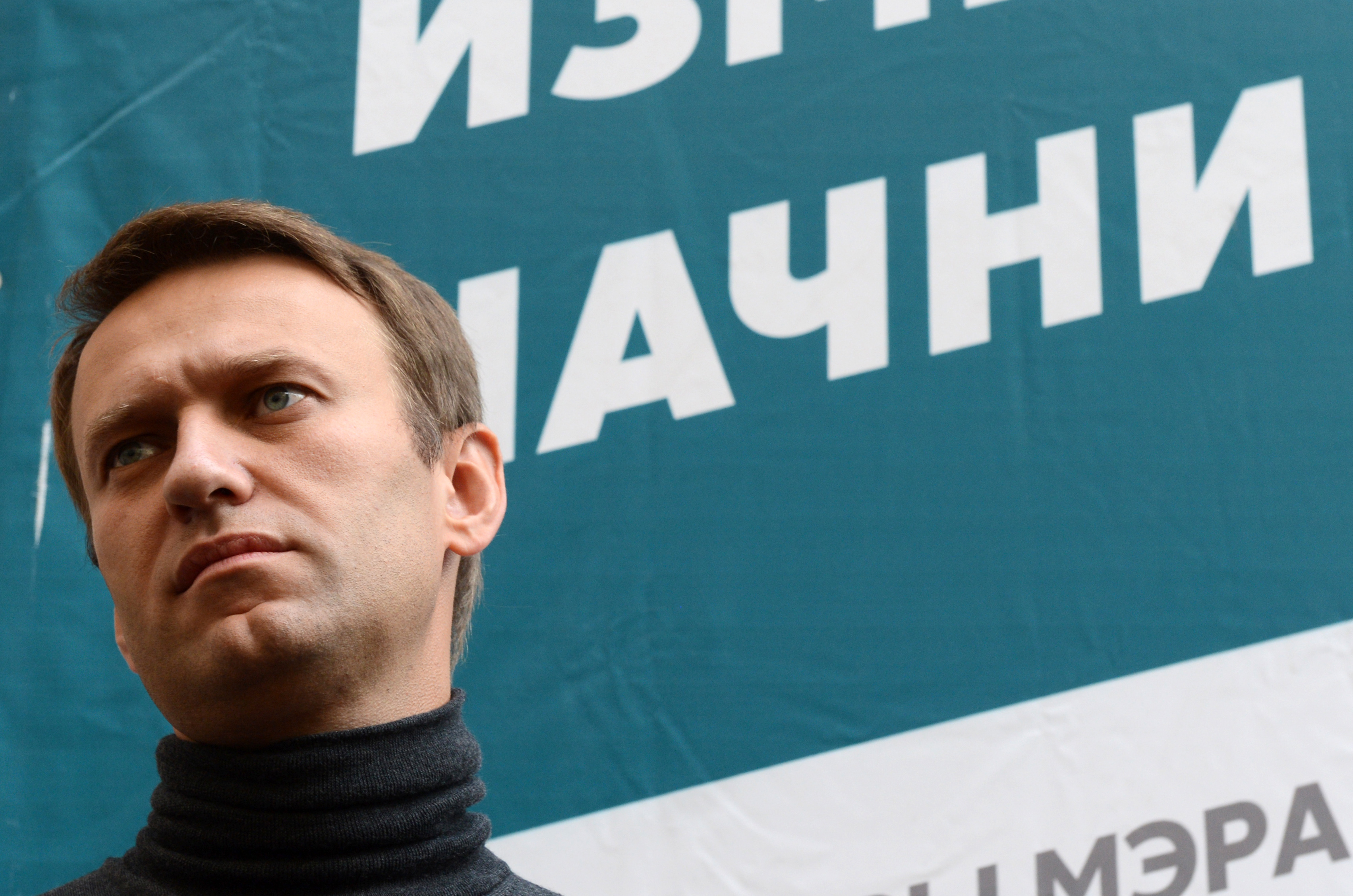
(Photo: Opposition candidate in Moscow’s mayoral race, Alexei Navalny, speaks to the media at his campaign headquarters in Moscow, on September 9, 2013. Russian opposition leader Alexei Navalny warned of protests after narrowly failing to push Moscow’s pro-Kremlin mayor into a run-off in tight elections he claimed were rigged. By Vasily Maximov/AFP/Getty Images)

Why Doesn’t China Just End Its One-Child Policy?

Because it’s a huge source of revenue:

[F]or a long time, the fee [paid by parents for extra-legal births] has been collected and spent in opacity, without even a hint as to how revenues generated from it are allocated in most local governments’ annual budgetary reports.

On July 11, 2013, Youshui Wu, a lawyer from Zhejiang Province, tackled this issue by submitting applications to the family planning commissions and treasury bureaus of 31 provincial-level political authorities, requesting the reports of how the money was levied and spent in 2012. By August 31, 17 provinces had responded with information on the amount of money collected in social support fees in 2012, yet none explained how the money was spent. The fees levied in the 17 provinces totaled 16.5 billion RMB (about $2.7 billion US dollars). …

Within this context, it is easier to understand why, despite strong public objection to the policy and academic proof of the policy’s long-term harm on China’s demographic structure, the strict birth control policy has remained resistant to reform.

Previous Dish on the one-child policy here and here.

Kerry Gaffes; The Russians Blink, Ctd

Josh Marshall advises the administration to “grab on to” the Russian proposal:

I’m not saying I think it will be easy or that the Russians are sincere. But getting all the regimes chemical weapons arsenal under international control would be no small achievement. Simply focusing on it would give the US something to apply leverage against (something it sorely lacks at the moment) and put the Russians in an awkward spot. The introduction of foreign forces of whatever sort is always something a regime trying to remain in power seeks to avoid. It would be a development that might well be used to leverage Assad out of power.

The key is that this potentially allows the US to reshuffle the deck and come at the problem on terrain which is inherently more favorable, given the Russian opening. Take the whole thing back to the Security Council. Have the Russians veto what they just proposed.

Jed Lewison adds that, “if Russia were actually able to get Syria to relinquish its chemical weapons, it’s hard to imagine a scenario where the administration would proceed with an attack”:

Of course, that’s the best case scenario. The flip-side is this: What happens if Russia and Syria say they are in the process of handing over weapons, but don’t take action quickly enough to satisfy the administration? Would the U.S. attack Syria at the same time that Russia was claiming to disarm it of chemical weapons?

Fisher is unsure whether Russia’s plan is legit:

[I]f Russia and Syria do go through with this plan, it would signal that both believe Assad can still win without chemical weapons. They would probably be correct. And it would significantly reduce the odds of any U.S. action against Assad, although it’s debatable whether that would be a good or bad thing for Syria. But, as Washington Institute for Near East Policy Executive Director Robert Satloff pointed out to me on Twitter, the “exit of chemical weapons would end any possibility of U.S./Western military action to balance the battlefield.” That’s a sign that Lavrov’s plan might be for real.

Drum weighs in:

[W]hat if the Russians aren’t playing games, but are seizing an unanticipated opportunity? It’s possible that for all their bluster, the Russians would actually like a way out of this that saves some face. It’s also possible, if you believe the latest reports in Bild am Sonntag, that Assad never wanted last month’s chemical attack to go forward in the first place. His generals did it without his go-ahead. So maybe he’d just as soon be rid of the stuff.

I doubt it. But it’s at least an intriguing thought.

Mataconis suggests that it “may not even matter if this Russian proposal is all that serious”:

The President’s request for authorization to use force is already in perilous trouble in Congress and even members of his own party are having a hard time getting in line behind him. If there’s a proposal sitting out there that could potentially avoid military action, which the Syrians have seemingly expressed a willingness to consider seriously, then it strikes me that it’s going to become all the more difficult to convince reluctant Members of Congress to get behind the President. The President has already said on more than one occasion that there is no imminent threat to the United States from Syria’s chemical weapons and that the attack that he has in mind can essentially be delayed indefinitely. He conceded that much by submitting the matter to Congress while at the same time insisting it was not an urgent enough matter that they needed to reconvene early. Indeed, it’s already been nearly three weeks since the attack which is supposedly the basis for the attack. If it was okay to wait this long, the reluctant legislator is likely to ask, then why not wait a little longer to see if this proposal pans out?

Dreher asks why the administration wouldn’t support this proposal:

Why would the Obama administration walk back Kerry’s statement, especially if the Russians are on board with it? I thought that the US goal here was simply to destroy Syria’s chemical weapons capabilities. If we can get a verifiable international operation to peacefully disarm Syria’s chemical stockpiles, why not?

Unless the Obama administration is using “chemical weapons” as cover for regime change.

Why Is Bombing The Something We Must Do?

I asked that question last night. Fallows is on the same page:

From what I can tell, approximately 100% of the pro-strike arguments have been devoted to proving what no one contests. Namely, that hideous events are underway in Syria, that someone (and most likely Assad) has criminally and horrifically gassed civilians, and that something should be done to reduce the ongoing carnage and punish the war crimes. And approximately 0% of the argument has addressed the main anti-strike concern: whether U.S. military action — minus broad support, any formal international approval, or any clear definition of goal, strategy, or success — is an effective response.

The Russian proposal is a start, don’t you think? Or what Congressman Chris Smith has suggested:

I think there is the potential to get China and Russia to agree to a [war crimes] tribunal, provided it applied equally to the rebels as well as the Syrian regime. This would be a non-lethal approach to Syria and would put them on the wrong side of justice for all and holding mass murderers to account. The pressure would be very profound. But it hasn’t even been tried. So why not try it before this bloodletting gets much worse?

Is Iran Part Of The Solution In Syria?

IRAN-POLITICS-EXPERTS-ROWHANI

Jay Newton-Small floats the idea:

When I was there late last summer, it was clear that Iranians weren’t particularly happy with Tehran’s unwavering support of Syria. Most of the bazaari wanted to see the money flowing to Syria spent instead propping up Iran’s faltering currency and economy. Add to that Assad’s use of chemical weapons, which are much reviled in Iran, and Rouhani might find popular support to weaken, if not break ties with Assad. And Iran might just be the only country Assad would listen to if they asked him to step aside. It is in both Washington and Tehran’s interests to prevent a failed state in Syria, and to stop Sunni radical al Qaeda factions from taking over the country. Such cooperation has been done before: Iran was a key ally in the U.S. invasion of Afghanistan, an Iranian neighbor, and with the toppling of the Taliban.

Packer also raises the possibility of Iran and the US working together:

Some Iranians point to the Bonn Conference of 2001—where Iran and the U.S. coöperated in the formation of an Afghan government, after the fall of their mutual enemy, the Taliban—as a model for what might take place with Syria. The U.S. and Iran have a common interest: preventing Salafi extremists, affiliated with Al Qaeda, from gaining power in the region. If this appeared probable in Syria, Iran might be willing to drop its support for Assad in exchange for a face-saving transition, backed by Turkey, Jordan, and the Gulf states: a ceasefire, a peacekeeping force made up of Muslim troops from the region, protections for Alawites and other minorities, U.N.-sponsored elections, and exile in a comfortable dacha for the Assad family.

None of this is likely.

It would take imaginative diplomacy of the kind that the Administration has shown little taste for in the Middle East. Iran would have to be convinced that it can’t win but also that it needn’t lose, and this would not be possible without deeper American engagement.

Judis nevertheless hopes for a diplomatic solution:

In Ha’aretz, Zvi Bar’el reports that Iran and Russia are working on a compromise proposal that could forestall an American attack on Syria. It would consist of a transfer of power in Syria in stages that would culminate in an election in which Bashar al Assad would not run and the transfer of Syria’s chemical weapons arsenal to Russia or another country. … Who knows whether these proposals are genuine, but they could represent a constructive way out of the current morass.

And that, it appears, is what just happened. And this moment might offer Obama an opening with the new administration in Tehran – an opening we all desperately need to avoid another war in the region.

(Photo: Iranian President Hassan Rowhani attends a session of the Assembly of Experts in Tehran on September 3, 2013. Iran’s Assembly of Experts is a body that selects the supreme leader and supervises his activities. By Mehrouz Mehri/AFP/Getty Images.)

If Congress Votes Against The President

Douthat expects major consequences for Obama’s presidency:

It is to President Obama’s great discredit that he has staked this credibility on a vote whose outcome he failed to game out in advance. But if he loses that vote, the national interest as well as his political interests will take a tangible hit: for the next three years, American foreign policy will be in the hands of a president whose promises will ring consistently hollow, and whose ability to make good on his strategic commitments will be very much in doubt.

I think Ross is hyper-ventilating. The simple fact is that American power was largely destroyed by the previous administration: Bush and Cheney both managed to gut US credibility on intelligence and prove that our vast military supremacy counts for nothing when it comes to actually bending the world to our will (see Iraq). Obama inherited that destroyed soft and hard power and has done his best with it. But the destruction itself was instructive. After the end of the Cold War, with no huge conventional military rival or threat, the US war-machine was far too big for the needs it was supposed to serve; and global views of America had soured more profoundly than at any point since the Second World War. The result is too big a weapon with too little international support. That’s one reason why Syria, a very tough issue in any era, is so particularly difficult for the US right now.

Millman is less excitable than Ross:

Presidents Ford and Carter faced much more serious rebukes from Congress in foreign policy where there was far clearer damage to Presidential credibility. We don’t generally count their Presidencies as successes – but America’s foreign policy was not crippled. If President Obama loses this vote, he will just have to count his votes more carefully in the future before committing himself where America does not already have clear and binding treaty obligations. Why again would that be so terrible?

And are we so certain that the president didn’t game this out? We may end up with a very Obama-style conclusion: putting Assad on notice, isolating Putin, and shifting the center of power in Washington over war and peace to a more democratic and constitutional place. Drum echoes:

Presidents suffer defeats all the time. Obama lost on cap-and-trade. He’s lost on plenty of judicial and executive branch nominations. He couldn’t get agreement for a grand bargain. He lost on gun control. What’s more, Republicans have been opposing him on virtually everything from the day he took office. In what concrete way would a defeat on Syria change this dynamic in even the slightest way?

Why Won’t Vegetarians Eat Fake Meat?

Julian Baggini considers the question:

In a poll run on the website of the Vegetarian Society, nearly four in five said they would not eat IVM [in vitro meat], while fewer than 7 per cent said they would. But why should there be such reluctance among vegetarians (who, for the purpose of this argument, I’ll take to include vegans) to welcome IVM when, from an animal-welfare point of view, it is nothing other than good news? Even if it doesn’t turn out to be commercially viable, the case for cultured meat rests very heavily on the unacceptability of intensive animal farming, and so shines a light on the ethical objections to the meat industry.

The only logical way to make sense of the reluctance of many vegetarians to back IVM is that their choices are not as driven by animal welfare and environmental considerations as we — and they — assume. Perhaps a distate for eating meat is a visceral feeling that is only loosely connected to a ethically motivated imperative not to cause undue suffering to animals.

Many people cannot distinguish between their ‘all-things-considered’ moral judgment and their unmediated gut feelings, mistaking reflex revulsion for ethical insight. Ingrid Newkirk, the president and co-founder of PETA, is refreshingly free of this confusion, which is perhaps why she can welcome IVM, even though she would not eat it. ‘Any flesh food is totally repulsive to me,’ she told NBC News. ‘But I am so glad that people who don’t have the same repulsion as I do will get meat from a more humane source.’

All of us, not just vegetarians, are at risk of confusing our base disgust and distaste with high principle. ‘Natural’ food feels right, ‘synthetic’ food feels wrong, so we are all-too-quick to dismiss the evidence that lab meat might be a good thing after all. And if you’re motivated to find the evidence that supports your gut feeling, there’s plenty from which you can pick and choose. But there is a huge difference between building your position on a firm evidence base and building an evidence base to support your position. We might believe our moral reasoning is evidence-led, but more often than not, we find ourselves led only to the evidence that conforms to our existing views.

Recent Dish on IVM here, here, here and here.

New Frontiers In Propaganda

Screen Shot 2013-09-09 at 3.26.58 AM

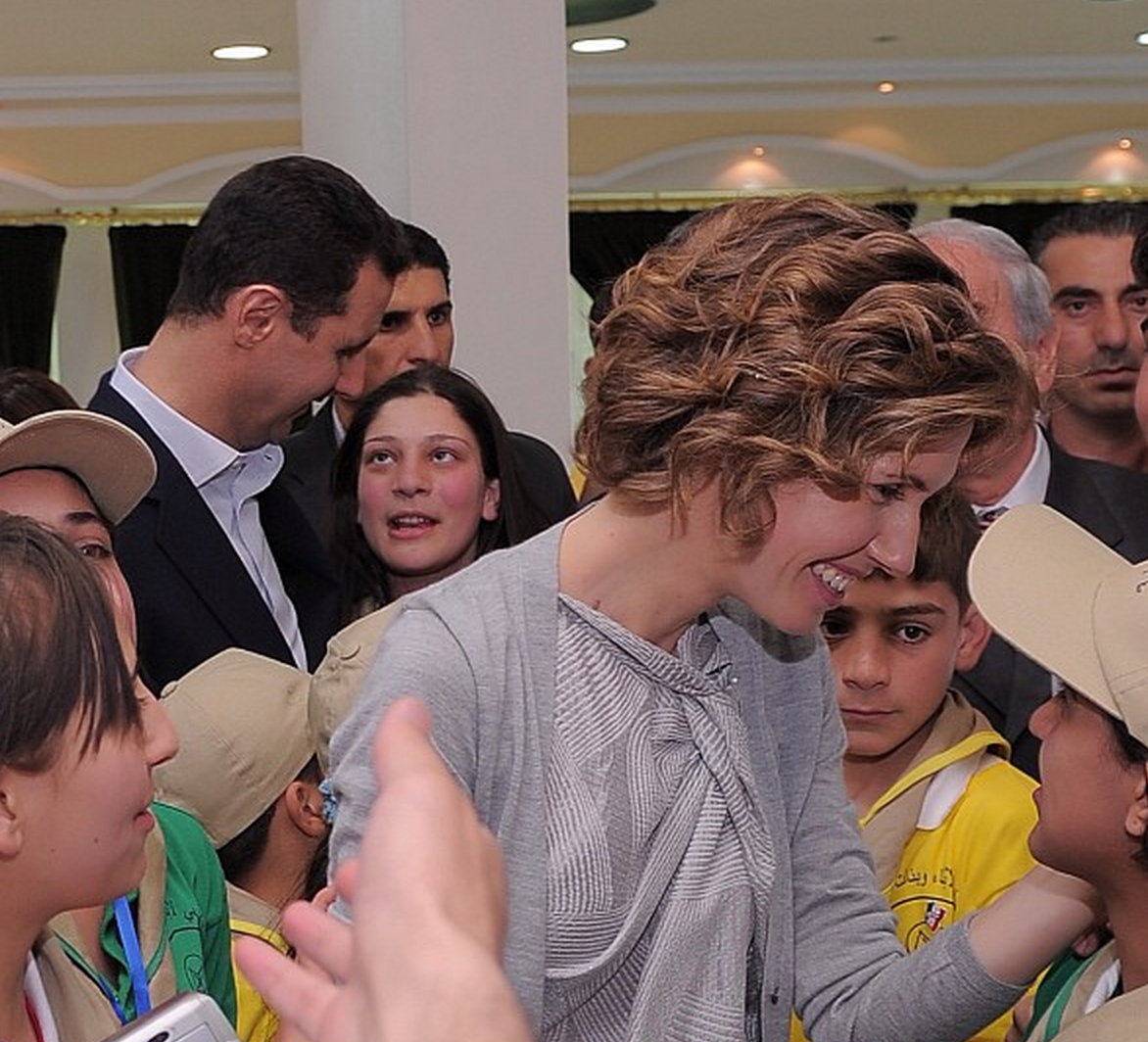
Megan Garber investigates the Assad family’s Instagram presence:

The account gives Syrians and non-Syrians alike a supposed little insight into the supposed little sitcom that is The Assads – that quirky family-next-door, comprised of people who are wacky and relatable in equal measure. The Instagrams attempt to humanize Syria’s first family, to place them in a familiar context – which is also to say, if you’ve been following the news out of Syria, a totally unfamiliar context. A context that is unfamiliar because it is untrue. It’s not, of course, that there’s no joy to be found in Syria, despite all the conflict and chaos in the country; it’s that syrianpresidency, with every implication of business-as-usual, commits a sin of informational omission. Which is all to say that this particular Instagram feed does what most Instagram feeds tend to do: It offers a carefully crafted performance of daily banalities. With the difference here being that most Instagram feeds, and most of their mundanities, do not belong to dictators.

Marin Cogan notes that the Syrian mass-murderer is hardly being creative:

Assad is the latest in what one news site has called “the dictators of Instagram.” Chechen President Ramzan Kadyrov has famously used the social-networking site as a platform to project his very Russian style of masculinity (photo montages of the impossibly barrel-chested despot weight-lifting and posing with wolves and wildcats.) The minions of Ayatollah Khamenei have posted several close-ups of Iran’s septuagenarian Supreme Leader on his photo-sharing page.

Unsurprisingly, the Instagram presence of Bashar’s beautiful wife Asma has increased recently:

The Daily Mail, based in Great Britain where Asma al-Assad was born to affluent Sunni Muslim Syrian expats, and where she met her husband when he was an optometry student, called the Screen Shot 2013-09-09 at 3.30.48 AMphotos a “sickening propaganda tool.”  The paper blasted her as “a stooge in this shameless PR exercise,” a woman who “seems is all too willing to try and mask the horrific atrocities being carried out by her husband’s forces.” Unlike other news sites, which ran the Instagram photos as stand-alone image, the Daily Mail paired each with a picture of Syrian carnage. …

The first lady’s family of Sunnis come from Homs, Syria’s third-largest city, which has been largely destroyed by Assad forces, Tabler said. But because she married into her husband’s ruling Alawite family and is the mother of their three children, “she is not about to break ranks. If she did, that would be great.”

But fortunately Instagram doesn’t shield the photos from criticism. Regarding the photo seen right:

Screen Shot 2013-09-09 at 3.29.34 AM

The STEM Surplus, Ctd

A reader remarks on the glut of degrees in science, technology, engineering and math:

I’ve got a PhD in chemical engineering and I work in early drug discovery. I’m actually doing pretty well. I’m in a specialized field that doesn’t tend to attract folks (I do a lot of math). My wife, however, is a different story. She has a PhD in oncological sciences – a molecular biologist with a speciality in cancer development and treatment. She spent six years getting a PhD, but really the best she can hope for is a $40K/year job as a post doc, which she will most likely have to do for at least four years in order to get a job making about $100-110K/year. By then she will be about 40.

There is no STEM shortage; there is a shortage of people willing to work for what companies want to pay. They get folks here on HB1 visas, and they are essentially treated like indentured servants. Sure they can change companies if: 1) they can get the same “position” and 2) the company will sponsor their visa. This is very difficult, and it gives the companies a lot of leverage, which they use to reduce wages. I have no problem with the HB1s; I think they should come with the same mobility that I’ve had. This would do a lot to remove the leverage companies have, and I’m fine with my wife and I competing with those folks.

You should really read Derek Lowe on the “myth of the STEM shortage.” He’s been covering this for quite a while. Also, check out Robert Cringely on H-1Bs.

More readers sound off:

I work in R&D for a large biotech company, one that would not survive if not for its capable and talented scientists and engineers. There is certainly no dearth of PhD-holders in biotech. That’s not what we need, and the obsession with graduate programs in STEM fields drives me crazy. We need master’s and especially bachelor’s degree candidates who are young and enthusiastic, willing to work long hours and weekends in a lab, on their feet, working with their hands, for a decade (at least), and who will be good at it. More and more, I see that our problem in hiring is not that there aren’t enough well-educated candidates; it’s that there are too many who are either overqualified for the roles that are really needed,or those who think that a PhD entitles them to an office and no grunt work.

Other things that will not fill our hiring gaps: associate’s degree candidates (rightly or wrongly, they are simply not respected or sought-after in an environment full of PhD, MS, and MBA degrees), visa-holders (several biotech firms have begun to restrict their sponsorship of visas and green cards below Director-level positions, which in bonkers), and non-STEM degree recipients (even our supply chain department, which does very little actual science, wants STEM backgrounds in new hires).

Once again, the people doing the educating and the people doing the hiring are not talking to each other enough, which is a whole different conversation.

Another perspective:

The analysis you excerpted from Robert Charette deals with aggregate number of STEM jobs and graduates, and I don’t have the hard data right now to either refute to agree with his conclusions. However, that does not mean that those STEM graduates are well aligned to the STEM jobs or that a macro surplus doesn’t mask micro shortages that might exist.

As you might imagine, STEM graduates are highly specialized, even at the bachelor’s degree level. I have a degree in electrical engineering from Cal Poly Pomona, but that doesn’t mean that when I graduated I would have been qualified for any job that could have been loosely categorized as “electrical engineering”. I would not, for example, have been qualified to work for an electrical power company.  I took one undergraduate class in power engineering, hated it, and got an A- in the one example of a class that my final grade was better than I deserved (there were a few more examples of the opposite, in my humble opinion).  Likewise, I would not have been qualified to take a job as an RF (radio frequency) engineer for, say, a company designing WiFi equipment, nor for a computer engineering position.  I was qualified to work in the semiconductor industry, which I did for 12+ years, or perhaps for a maker of optical fiber and laser equipment.

And that’s just at the entry level for people right out of college.  The specialization takes on greater and greater importance as you advance in your career.  After a few years, I wouldn’t have been qualified to work as a process engineer (responsible for a particular manufacturing process such as lithography or etching) or as a product engineer (responsible for failure analysis and product yield) in the factory I worked at when I started working there.  Companies want their experienced employees who make more to have the training, skills, and knowledge of someone who already works in the field, which I didn’t have.

I would venture to say other engineering disciplines like chemical and mechanical engineering are roughly the same, and it may be even worse for people with straight science degrees, like physics, chemistry, or biology, because you likely need either a master’s or doctorate degree to get employment in your field, and thus more specialization.

The country needs a vast amount of repairs, improvements, and new construction of our infrastructure, things like water and sewer systems, bridges and roads, levees and dams, and the power grid.  For that, we need civil engineers and electrical engineers with a specialization in power.  Not exactly the sexiest fields college students think of when they’re plotting out prospective career paths.  Large numbers of computer programmers with visions of working for Google or Apple don’t help us with this problem.  And I don’t know how many more there are like me, but I felt compelled to leave engineering because the semiconductor sector collapsed in the US, and even if I spoke Chinese, I don’t think I’d be interested in relocating there to work in the new factories to remain in the industry.  I couldn’t even find another job when I worked in the industry because the employers appeared to want people with on-the-job experience with the specific systems they use, not experience with a similar system but not exactly the same.  I’ve been out of engineering for so long, it would be impossible for me to go back to it.

So, yes, it might be the case that there are more overall STEM graduate than jobs, but that doesn’t mean that we have enough of the kinds of STEM graduates that we need and there are actually jobs they could get.

Patience, Mr President. Patience.

RUSSIA-G20-SUMMIT

I have to say I found myself shifting a little – not a lot, but a little – after reading the transcript of the president’s press conference at the end of the G20 Summit. Do yourself a favor and read it. It will disappoint those who still believe the man cannot speak without a Teleprompter, but it’s a deep, nuanced, sober and earnest case for a limited military strike to make sure the world does not simply look away when hundreds of children are gassed by a dictator. That seems to me to be Obama’s strongest point:

My goal is to maintain the international norm on banning chemical weapons.  I want that enforcement to be real.  I want it to be serious.  I want people to understand that gassing innocent people, delivering chemical weapons against children is not something we do.  It’s prohibited in active wars between countries.  We certainly don’t do it against kids.  And we’ve got to stand up for that principle.

Yes, we’ve got to. And none of us are happy with this kind of atrocity being allowed to stand. But the point is: even with Obama’s proposed strike, it would still stand. If the war is restricted to a few strikes as a symbolic act, it may degrade Assad’s ability to use those weapons in the future. But he’d still have them; and he could still use them. Using them after an attack would prove the intervention essentially toothless, and even give Assad the anti-American victim card to play. Obama addresses the point explicitly here:

Is it possible that Assad doubles down in the face of our action and uses chemical weapons more widely?  I suppose anything is possible, but it wouldn’t be wise.  I think at that point, mobilizing the international community would be easier, not harder.  I think it would be pretty hard for the U.N. Security Council at that point to continue to resist the requirement for action, and we would gladly join with an international coalition to make sure that it stops.

There‘s the weak link in the logic. He seems to think it would be crazy for Assad to continue using those weapons. But Assad is a crazy motherfucker with everything to lose. Of course, he could try again as an act of defiance. But he may be less predisposed to do that if we don’t launch a war, but fence him in. And if Obama wants to take a stand against Assad’s breaking of a long-held international norm with respect to using chemical weapons, then he has already. He came close at one point to bragging of it:

Frankly, if we weren’t talking about the need for an international response right now, this wouldn’t be what everybody would be asking about.  There would be some resolutions that were being proffered in the United Nations and the usual hocus-pocus, but the world and the country would have moved on. So trying to impart a sense of urgency about this — why we can’t have an environment in which over time people start thinking we can get away with chemical weapons use — it’s a hard sell, but it’s something I believe in.

And by using the G-20 Summit to insist that this breach of core human morality and decency not be ignored, Obama has already done a lot of what a military strike would do to protect this norm, without any of the bad consequences of intervening in the Syrian civil war. The world is intently watching – and Putin and Iran would be increasingly embarrassed if their client were to use these weapons again.

Another major incident and Russia would be using up a lot of capital to protect the murderous Alawite. Ditto Iran, whose more moderate elements are clearly sending a message that here is perhaps some smidgen of a basis to talk to the Americans again.

The good news is that there was unanimity at the G20 that chemical weapons were indeed used; the forthcoming UN Report will doubtless underline the core facts; and there is also a clear consensus that the use of chemical weapons is anathema. This entire debate has helped buttress these international norms even as Assad has breached them.

Why is that not enough for now? Why does reinforcing this breach of norms have to be executed militarily? Why cannot we have some kind of probation period for Assad, as the world watches more closely? If Assad were to use those weapons again, in Obama’s own words, that would make “mobilizing the international community … easier, not harder.” But it would be harder if America had muddied the waters by previously entering the civil war while there was no international consensus.

In other words, there is a sweet spot here that we could yet reach – a reinforcement of the norm, a gathering of evidence at the UN, a probation period for Assad, and the US guiding the rest of the world to keep on life-support this norm against using chemical weapons. Military action would be deferred and predicated on a clear violation in the future by Assad or, indeed, his opponents, if they get their hands on the stuff. The achievement of threatening to strike was getting the entire international community to wake up and pay attention.

Patience, in other words, is not the same as doing nothing. Sometimes, it is the only way to do something in a way that actually works.

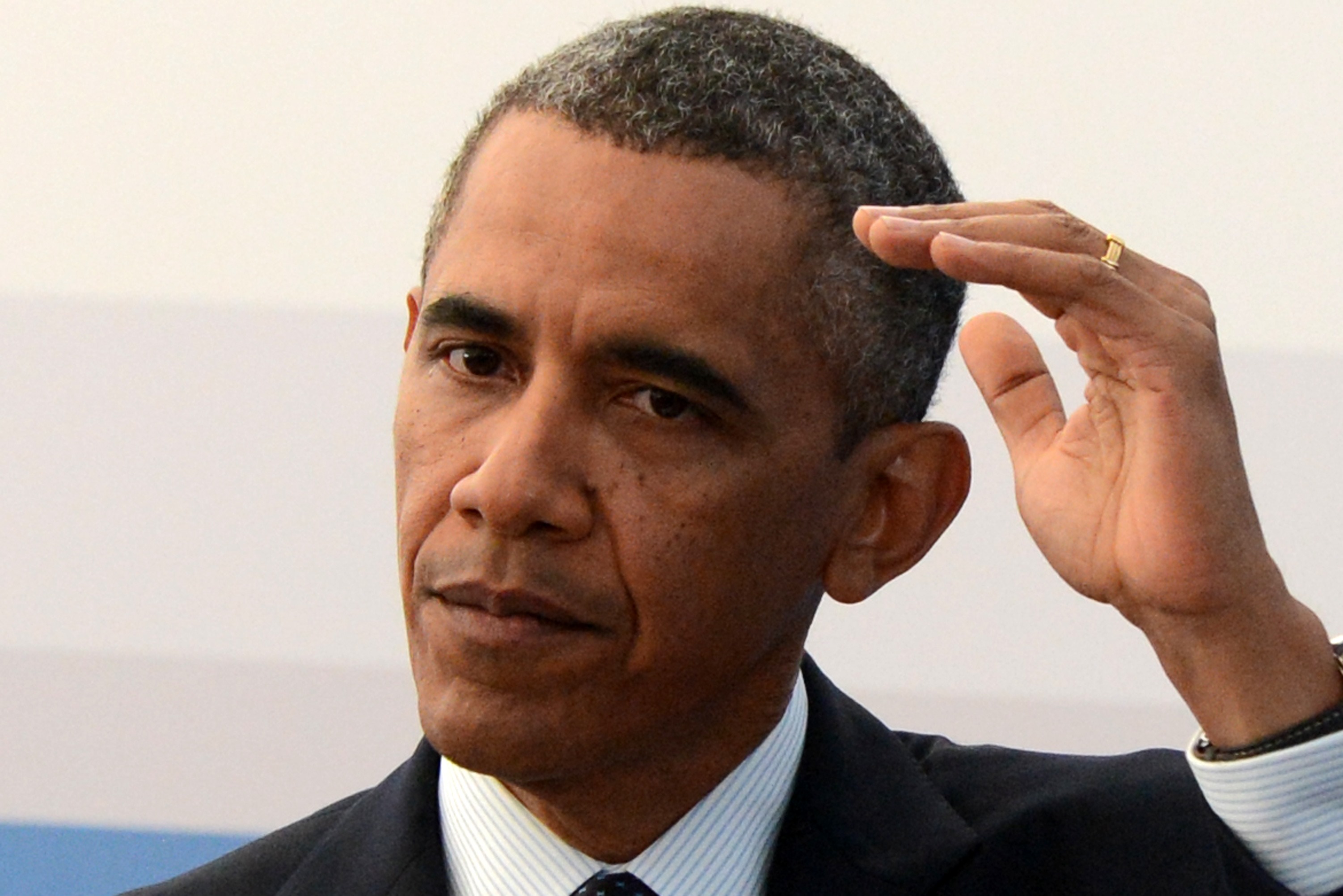
(Photo: US President Barack Obama gestures during a press conference in Saint Petersburg on September 6, 2013 on the sideline of the G20 summit. By Kirill Kudryavtsev/AFP/Getty.)