Studying Abroad In Autocracies

Jackson Diehl worries about the integrity of American universities as they expand into “unfree countries whose governments are spending billions of dollars to buy U.S. teaching, U.S. prestige — and, perhaps, U.S. intellectual freedom”:

In September a joint venture between Yale and Singapore will open on a campus built and paid for by that autocracy. Then there are the Persian Gulf states. The United Arab Emirates hosts branches of Paris’s Sorbonne and the Louvre and Guggenheim museums in addition to NYU. While funding jihadists in Syria and Libya, Qatar is on its way to spending $33 billion on an “education city” hosting offshoots of Cornell, Georgetown, Northwestern, Texas A&M and Carnegie Mellon.

Is it possible to accept lucrative subsidies from dictatorships, operate campuses on their territory and still preserve the values that make American universities great, including academic freedom? The schools all say yes, pointing to pieces of paper — some of them undisclosed — that they have signed with their host governments. The real answer is: of course not.

Drezner puts things in perspective:

I’d suggest that one’s attitude about this phenomenon depends on whether you’re concerned about a particular American university or about U.S. foreign policy.

If you care about the intellectual integrity of, say, NYU or Yale, then Diehl and [Anya] Kamenetz raise some pretty valid concerns.  Clearly, intellectual life in these satellite campuses is different from intellectual life in the home institution.  I’m more dubious about assertions that these differences will somehow “infect” the state of academic free speech in the United States, however.  Sure, these campuses are moneymakers for U.S. universities, but the bread and butter of higher ed’s revenue stream remains tuition and research dollars from the advanced industrialized states.  I suspect administrators in state schools fear their own legislatures more than the implications of going overseas.

On the other hand, from a U.S. foreign policy perspective, matters are less clear.  Diehl’s worldview is sympatico with the idea of spreading American values across the globe.  His column provokes a question:  is the likelihood of that spread of liberal values stronger or weaker with these kind of activities?  The counterfactual of no U.S. higher education involvement in authoritarian capitalist economies would be less discussion of the liberal arts in these venues.

Kicked Off Kickstarter

Reddit user Ken Hoinsky was running a successful Kickstarter campaign for his book Above the Game: A Guide to Getting Awesome With Women when controversy erupted over what some saw as the sexist and potentially dangerous nature of its contents – as a “guide for rape.” In response, Kickstarter issued an apology, banned “seduction guides” from its platform, and donated $25,000 to RAINN. Hoinsky, seen above, was disappointed in Kickstarter’s decision:

They’re a private company and they can do whatever they want, but it’s a cop-out, and it’s an overreaction on their part.

Maria Bustillos sympathizes with his situation:

No one has a “right” to Kickstarter. Out in the real world, however, we know that the rights to publish and speak are ten thousand times more important than the overheated rantings of some fool who can’t read. As PUA [pick up artist] guides go, Hoinsky’s is very, very far from being the most aggressive or objectifying. It is an entirely harmless book—as all books are. … [I]t is wrong and dangerous to suggest that shutting someone up is the best answer to any problem, ever.

Kat Stoeffel counters that “it’s okay to hate” Above the Game:

Hoinsky’s book may not be a rape manual, but it is a guide to exploiting the less-than-ideal conditions under which women have sex. It doesn’t hamper anyone’s free speech to say he’s unqualified to write about women to the point of being bad for them — or criticize Kickstarter for profiting from it.

Emily Greenhouse zooms out:

[T]he removal of Hoinsky’s project from Kickstarter might initially seem like a violation of free speech. But the right to publish is quite different from the right to speak, particularly on a platform like the Web. It’s the difference between a fundamental right and a market proposition. … It isn’t Kickstarter’s responsibility to endorse every project that it posts, and it isn’t Twitter’s responsibility to stand behind everything that’s tweeted. But their business models are built on the creations of others. Kickstarter skims money off of each successful project. What Kickstarter was made to realize, and what these other companies have already learned, is that when you profit from something, even if you don’t condone it, you’re complicit.

Will Support For Equality Slow?

Nate Cohn expects so:

When people discuss the inexorable rise of support for gay marriage, they talk about it like racial integration. The supporters of Jim Crowe were routed: it became impossible to publicly support segregation, and the opposition eventually died or flipped. But there’s another possibility: that gay marriage is somewhat more like abortion, where an entrenched minority remained steadfastly opposed, largely for moral and religious reasons. So far, the data suggests that gay marriage will be more like abortion, at least for a while.

Evangelical and Republican opposition to same sex marriage hasn’t budged.

According to Pew Research, Republican support for gay marriage has only crept up by a net-7 points since 2003, from 22-71 to 25-67. White evangelicals have moved a little quicker, but they still oppose by a 75-19 margin—a net-15 point improvement from 2003. In comparison, the public as a whole has shifted 30 points toward gay marriage—despite being held back by Republicans and evangelicals. Generational change isn’t helping very much, either. Just 30 percent of 18-34 year old evangelicals support gay marriage, which isn’t a huge improvement from the 25 percent who supported it in 2003. Young Republicans are a little more supportive of gay marriage than young evangelicals, but they still oppose gay marriage by 15 points, 39-54.

Should NBA Players Dodge The Draft?

Travis Waldron thinks so. He explains why the draft – held tonight – is more problematic for basketball than it is for football or baseball:

The NBA Draft traces its origins to 1947, when the Basketball Association of America formed, and it followed the worst-team-picks-first model the NFL had established more than a decade before. Now, though, it’s effect on limiting the bargaining power of athletes is perhaps even more pernicious than the other drafts, since a top draft pick in the NBA has much more potential to change the fortunes of an entire team than a top pick in football or baseball. A baseball player is just one of hundreds in his organization. A football player is one of 53 on a roster. A basketball player, though, is one of just 13 on each team in a sport where an individual can single-handedly change the complexion of an entire team. … A top draft pick in the NBA may not win a title on his own, but he can certainly put a team on the brink of a title far faster. That means he’s worth more money to teams that desire his services — and it means he loses more money in a draft system that prevents multiple teams from competing for those services.

Yglesias is on the same page:

[The draft] is a convenient way for veterans and owners to conspire together to depress the wages of young players, but in the name of “competitive balance” it also creates a constant open-ended bailout of mismanaged teams and prevents best practices from spreading. Teams like the San Antonio Spurs and Denver Nuggets, who manage to work their way into the playoffs year after year, are hobbled in their ability to retain fresh talent, while squads like the Orlando Magic and Cleveland Cavaliers, who plainly don’t know what they’re doing, engage in a goofy boom-and-bust cycle of occasionally picking up superstar talent on the cheap only to see the star fly the coop because management can’t get it together.

This is all rationalized through a baffling argument about the needs of small-market teams that completely ignores the fact that the teams that are most disadvantaged by the draft system are well-managed small-market teams, who are being systematically denied the fruits of effective talent evaluation.

Combating Military Rape, Ctd

Amanda Marcotte hopes that the revelation that “the majority of sexual assault in the military is male-on-male crime” will help move the discussion forward:

Part of the reason for this is that women are still a small minority in the military, representing only about 15 percent of service members. But what this astonishing number demonstrates is the truth of what feminists have been saying about sexual assault all along: It is not caused by an overabundance of sexual desire, but is an act of violence perpetrated by people who want to hurt and humiliate the victim, using sex as a weapon. … [L]est you think this male-on-male crime is the result of the repeal of “don’t ask, don’t tell,” Dao shows otherwise. As one male victim told Dao, “The people who perpetrated these crimes on me identify as heterosexual males,” which is frequently true of male-on-male rape.

Robert Knowles and Rachel Vanlandingham believe the military instituting affirmative action for women would help fix the problem:

Until women occupy the highest ranks in sufficient numbers, the sexual assault epidemic will likely persist. Studies show that institutions with a critical mass of women in leadership roles have far fewer instances of sexual harassment. When recruitment, promotion, and retention strategies lead to greater gender equality in the upper ranks, it will, in General Dempsey’s words, cause people to “treat each other equally.” In fact, such changes can have a far greater impact than in the civilian sector. The military’s culture, for all its flaws, prizes discipline and cohesiveness, which gives the armed services the unique ability to change quickly when they decide to do so.

Now that the Pentagon has lifted its ban on women in combat positions, extensive gender-based affirmative action should follow. As combat positions are the top springboard for advancement, more women must fill these positions now and female officers must be promoted at a much greater rate. This does not mean imposing fixed quotas or disregarding standards and merit. But integration goals should be especially aggressive for these positions, and commanders should consider the previous exclusion of women when assigning and promoting candidates.

Taking The Heat

Chili Peppers, Sorrento

Mary Roach traveled to Nagaland in north-eastern India to witness a chili-eating competition that tests participants’ ability to withstand capsaicin, the main active ingredient in hot peppers:

The event itself is surprisingly low-key. The mood is one of stoic grimness. No one is screaming in pain. No one will be scarred by the heat. That’s not how capsaicin works. It only feels hot. The human tongue has pain receptors that respond to a certain intensity of temperature or acid. These nerve fibers send a signal to the brain, which it forwards to your conscious self in the form of a burning sensation. Capsaicin lowers the threshold at which this happens. It registers “hot” at room temperature. “It trips the alarm,” says Bruce Bryant, a senior researcher at the Monell Chemical Senses Center in Philadelphia. “It says, ‘Get this out of your mouth right now!’” The chili pepper tricks you into setting it free.

The whole affair is beginning to seem like an anticlimax when I look up from my notes to see [member of Parliament in Myanmar and contest participant] Pu Zozam headed my way. I have seen people stagger in movies, but never for real directly in my sightline. Zozam’s legs buckle as he tries to keep walking. He goes down onto one knee and collapses sideways onto the floor. He rolls onto his back, arms splayed and palms up. He’s making sounds that are hard to transcribe. Mostly vowels.

After a minute he rolls back onto his side and raises his head to retch. A doctor prepares a hypodermic of dicyclomine. The drug is more typically administered to people with irritable bowel syndrome, to relieve cramping. Cramps and regurgitation are body responses to gastrointestinal irritation. (This is why people throw up when they drink too much, too fast; alcohol is an irritant.) “The cramp is quite severe,” Catherine Burns, the contestant from Liverpool, told me later. She recalls sitting cross-legged with her fellow contestants afterward. Not good enough, her body informed her. “I suddenly just had to recline.”

(Photo by Will Clayton)

Who Will Take Snowden In? Ctd

As the NSA leaker continues to linger in the Moscow airport and seeks asylum in Ecuador, Max Fisher profiles a dissident that the South American country once sheltered, a Belarussian whistleblower:

Belarus is the last remaining dictatorship in Europe. Alexander Barankov was a policeman in the capital city of Minsk, in the financial crimes unit. He uncovered what he believed to be systemic government corruption.  Barankov saw evidence that top Belarus officials, including the president, were illegally smuggling energy resources to fund their personal bank accounts. When state security caught on to him, he fled, first to Russia (sound familiar?) then to Egypt and, finally, Ecuador. Like Snowden, he started spilling his country’s secrets online and, eventually, won asylum.

Here’s the hitch: unlike Assange, who was sheltered by Ecuador’s London embassy as soon as he fled there from house arrest, Barankov had to push for three years before he won asylum.

That’s actually not unusual for non-famous asylum-seekers, including those who land in the United States. What’s unusual is that in June 2012, Ecuador’s government arrested Barankov and held him for 84 days as it considered Belarus’s long-standing extradition request. The timing was strange; Barankov had been in the country for years at that point. But Time’s profile points out that he was arrested just three weeks before Correa met with Belarus’s president, the same man whom Barankov had publicly accused of corruption. The Time story suggests that Correa’s government may have used Barankov “as a pawn” to ease tension with Belarus.

But Ecuador’s foreign minister just said Snowden has to get into the country in order to get asylum. Allahpundit reacts:

That’s a problem for Snowden.  So far, Russia has parried US demands to extradite Snowden on the basis that he hasn’t officially entered the country yet.  Even if he did, though, the US and Russia don’t have an extradition treaty in place.  Besides, Vladimir Putin is having far too much fun at the Obama administration’s expense …

Realistically, the Russians could seize him in the airport if they desired, but it might be a little embarrassing for Putin to do so now after he and Foreign Minister Sergei Lavrov stood on the technicality for the last couple of days.  If Snowden officially enters Russia — which he would need to do in order to get to the Ecuadorian embassy — then all bets are off.  However, even that’s problematic, as his American passport is no longer valid. Ecuador could supply him with a new passport, of course, but they’d have to do that before he got to the embassy.  It doesn’t sound as though Ecuador is in any rush to do that, even if it would make Snowden feel a little more at home in Ecuador if he arrives there at all.

Recent Dish on Snowden on the lam here and here.

The IRS Inspector General Must Resign

US-POLITICS-TAX

A reader writes:

Did you see this new development?  It has come out that the Inspector General’s report on the IRS was deliberately limited to only discussing Tea Party groups, and the IG says it was Congressional Republicans who ordered this limitation.  In other words, the whole “scandal” was ginned up from the start. It’s not just that the IRS was targeting progressive groups also, but that the entire IG report was deliberately skewed, with undisclosed parameters, to create the false impression that Tea Party groups were being singled out.  Now the IG and the Republicans are pointing the finger at each other, and the only scandal concerns the investigation itself.

Garance has a great post about the IG himself. It seems to me that the more we learn about this, the clearer it is that Bush appointee J Russell George should resign. We have no evidence whatever that the White House was involved in any way, and we now know that the IRS scrutiny included left-liberal groups, and yet the Inspector General, fully aware of these facts, testified under oath:

This is unprecedented, Congressman …. During the Nixon Administration, there were attempts to use the Internal Revenue Service in manners that might be comparable in terms of misusing it.

Did he ever cop to the fact that progressive and liberal groups were also targeted?

In May, George declined to answer questions about whether progressive groups were targeted, a kind of cageyness that now raises questions about his impartiality in presenting findings about what went on at the IRS.

At the May 22 House Oversight and Government Reform Committee hearing “The IRS: Targeting Americans for Their Beliefs,” Chairman Darrell Issa asked George point-blank about “be on the lookout” orders: “Were there any BOLOs issued for progressive groups, liberal groups?”

“Sir, this is a very important question,” the courtly George replied. “Please, I beg your indulgence …. The only ‘be on the lookout,’ that is BOLO, used to refer cases for political review were the ones that we described within our report.”

That’s either perjury or incompetence. But almost certainly perjury. He should resign.

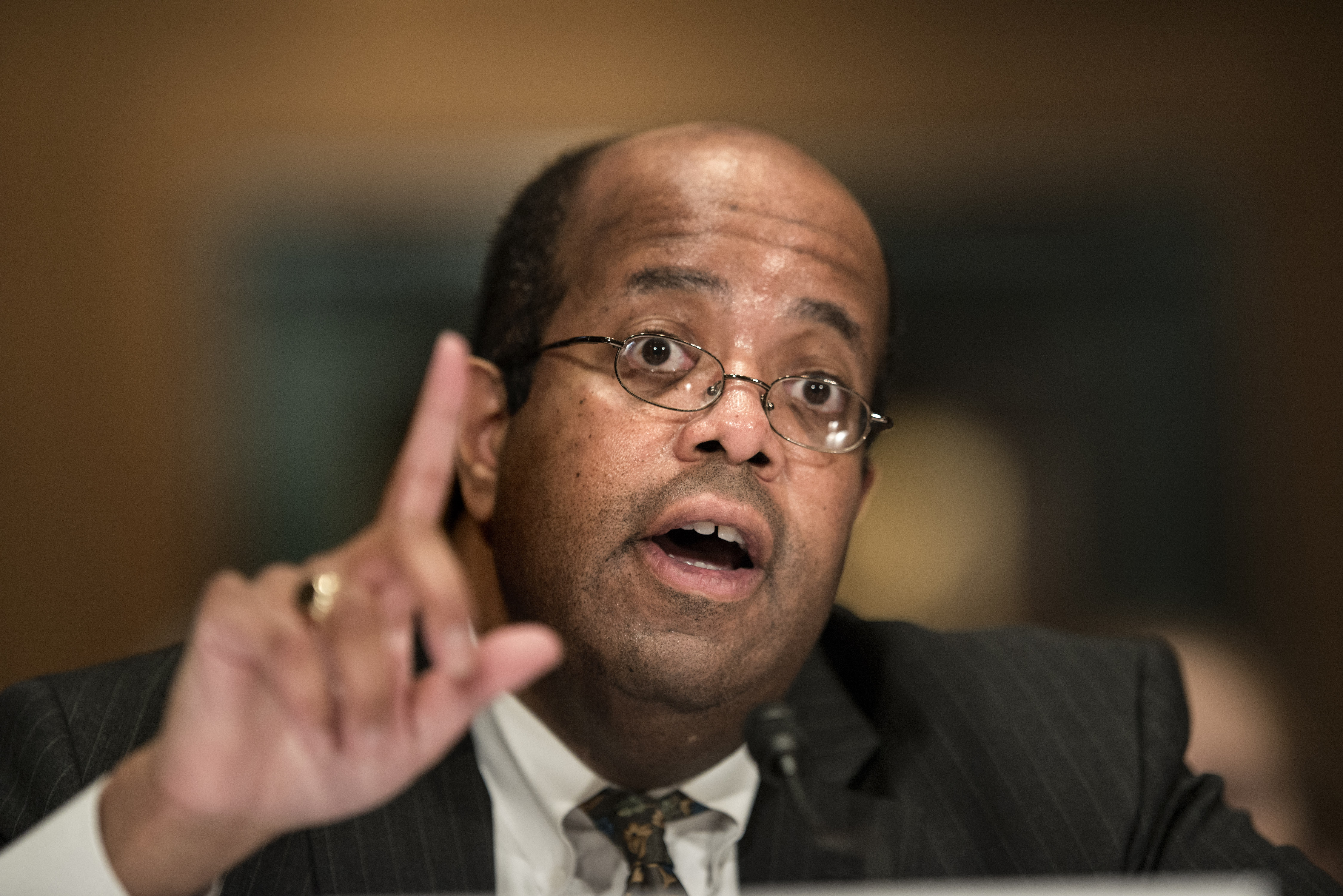
(Photo: J. Russell George, Treasury inspector general for tax administration, speaks during a hearing of the Senate Finance Committee on Capitol Hill May 21, 2013 in Washington, DC. Acting IRS Commissioner Steven Miller and others appeared before to committee to testify about the targeting of politically conservative 501(c)(4) groups applying for tax exempt status. By Brendan Smialowski/AFP/Getty Images.)

“It Was The Economy, Faggots”

ISRAEL-US-PERES-CLINTON

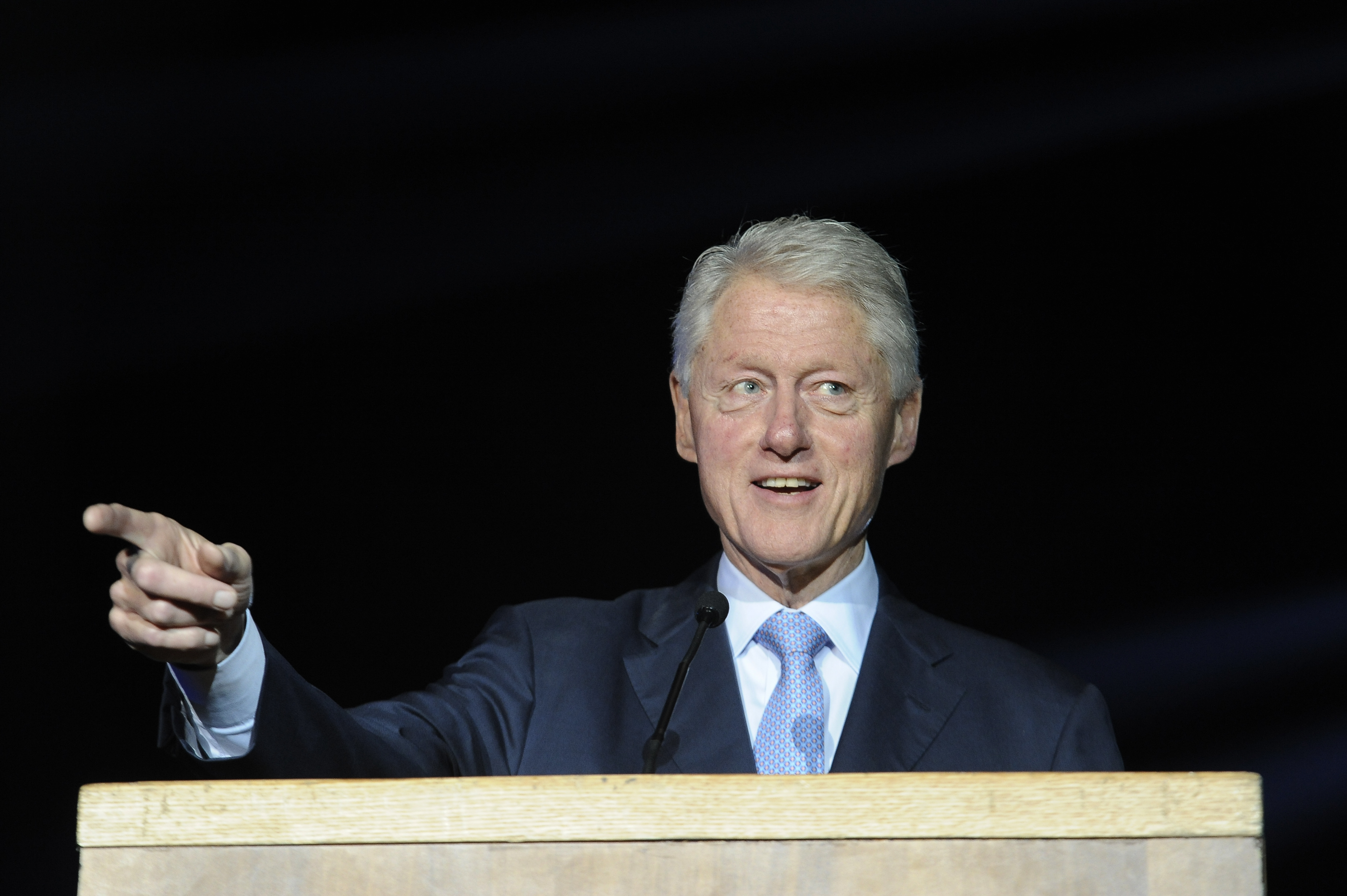
David Graham takes stock of Clinton’s “PR blitz,” as the man who signed DOMA celebrates its downfall:

In March of this year, the former president wrote a column in the Washington Post calling for overturning DOMA, but while his policy suggestion was clear, he didn’t dwell on his own role. Clinton resorted to the old “it was a very different time” line and simply suggested he’d come around; there was no emotional expression of regret, all the more notable from a president known for emoting so well. Still, Clinton’s PR blitz hasn’t been fruitless. GLAAD, one of the nation’s largest gay-rights groups, named him an “Advocate for Change” in April. And as one of the nation’s most popular public figures, his advocacy does matter for LGBT rights.

But in 50 years, what will be remembered? Clinton’s late-career conversion, or DOMA? As more and more gay-rights victories like the Supreme Court’s DOMA decision pile up, the major milestones of discrimination will loom larger still, icons of the bad old days. Those who lived through the 1990s may well remember the complicating factors, the mitigating circumstances, that went into Clinton’s compromise on DADT and cave on DOMA. They will protest that gay marriage wasn’t even something anyone beyond a choice few (notably Sullivan) talked about seriously in 1996. They will point to his support for AIDS research and employment nondiscrimination laws. They will insist that a stronger gay-rights stand would have been untenable.

That may be true; it’s also a defense that some politicians who did nothing to stop segregation used to absolve themselves. Regardless, those shades of gray will be increasingly faint as history recedes and the past looks more black and white. The clearly defined policies will be remembered in a way the qualifiers won’t be.

The man has never fully owned the damage he did to gay people and to the cause of equality. As for GLAAD, please. I saw Clinton’s hypocrisy and callousness up close in trying to persuade donors and HRC and the rest at the time.

The Clintons wanted marriage equality to go away fast; and HRC and all the major donors went along. Bill Clinton’s sociopathic side was never better illustrated, in many ways. Years later, Dick Morris actually asked me out to lunch to apologize for DOMA. Weird, but at least honest. Clinton can never accept he was a true fighter against civil rights as president. But he was. He’ll now say what he can to get back into power via his wife’s candidacy – including all the right things on marriage.

But he wasn’t just a fair-weather friend as president; he was our enemy – and more lethal because he was a Democrat and gave legitimacy to the opposition like no one else. I’m happy he’s for us now; but he sure was against us then. Clinton administration official Bob Hattoy once summed up Clinton’s views on the entire subject in his presidency: “It’s the economy, faggot.”

Equality Before The Taxman

Roberton Williams looks at the tax consequences of the DOMA decision:

Edith Windsor sued the federal government because her wife’s estate had to pay more than $363,000 in estate taxes. The estate would have paid nothing if the federal government recognized her marriage.

The estate tax provides only marriage bonuses. An estate may claim an unlimited spousal exemption for inherited assets—and thus pay no tax—while the total exemption for all other heirs is limited, currently to $5.25 million. And any unused part of that limited exemption carries over to the estate of the surviving spouse, thus guaranteeing that $10.5 million of the couple’s combined assets will go to heirs estate tax-free. DOMA’s demise can thus result in lower estate taxes for same-sex couples, although very few will be affected: less than 0.2 percent of decedents leave estates big enough to owe tax.

But he notes that for “many same-sex couples will find that federal recognition of their marriages means higher income tax bills.” TNC, who writes that “the right to marry is the right to protect one’s family,” reflects on the estate tax money that will be refunded to Windsor, in the context of slavery:

The state repossessing a couple’s wealth because it finds them icky, is wholly unjust. It recalls a particularly horrible aspect of slavery–the assault on the families of people deemed to be outside the law. There is a particular war here, which better people than me can speak to. But power is at the core of the long war which began sometime in the mid-17th century with the passage of the first slave codes. The prohibitions against same-sex marriage are not simply about witholding the right to be pretty in a dress or dashing in a tux (though I would deny no one their day.) It is about ensuring that only certain kinds of people, and certain kinds of families, are able to amass power, and with that power, influence over the direction of our society.