The Roots Of The White People Party

Sam Tanenhaus claims that, when “the intellectual authors of the modern right created its doctrines in the 1950s, they drew on nineteenth-century political thought, borrowing explicitly from the great apologists for slavery, above all, the intellectually fierce South Carolinian John C. Calhoun”:

The image of the “angry black man” still purveyed by sensationalists such as Ann Coulter and Dinesh D’Souza is anachronistic today, when blacks and even Muslims, the most conspicuous of “outsider” groups, profess optimism about America and their place in it. A politics of frustration and rage remains, but it is most evident within the GOP’s dwindling base—its insurgents and anti-government crusaders, its “middle-aged white guys.”

They now form the party’s one solid bloc, its agitated concurrent voice, struggling not only against the facts of demography, but also with the country’s developing ideas of democracy and governance. We are left with the profound historical irony that the party of Lincoln—of the Gettysburg Address, with its reiteration of the Declaration’s assertion of equality and its vision of a “new birth of freedom”—has found sustenance in Lincoln’s principal intellectual and moral antagonist. It has become the party of Calhoun.

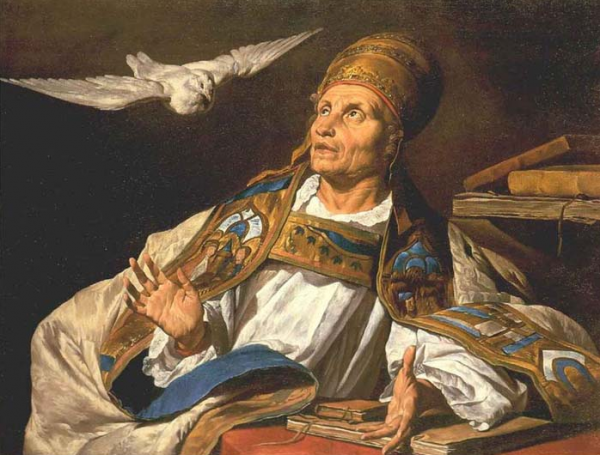
Pope Gregory And Pope Benedict?

82ebf_SaintGregoireleGrand-600x455

Well it sure makes for an interesting parallel:

No one could doubt that this Holy Father has meditated profoundly, and I expect repeatedly, on The Pastoral Rule of St. Gregory the Great—that sixth-century handbook for those who hold the highest spiritual authority, what Benedict and others have called the ars artium (“the art of arts”).  Much of the book is a warning against the wrong reasons for grasping or holding on to power, followed by an outline of the virtues needed to exercise leadership well.  In the first book of The Pastoral Rule we find this line, which I believe has quietly echoed for some weeks in the Holy Father’s thoughts:  “He must be a man whose aims are not thwarted by the frailty of his body.”  The office of Peter is not a spiritual thing which discounts human nature.  That sacred ministry resides with a person, but that person must have the nature to exercise its rigors.

In 2008, in one of the Holy Father’s General Audiences, Benedict spoke on St. Gregory, a former monk who reluctantly assumed the papacy:

Gregory remained a simple monk in his heart and therefore was decidedly opposed to great titles.  He wanted to be—and this is his expression—servus servorum Dei. Coined by him, this phrase was not just a pious formula on his lips but a true manifestation of his way of living and acting. He was intimately struck by the humility of God, who in Christ made himself our servant. He washed and washes our dirty feet. Therefore, he was convinced that a Bishop, above all, should imitate this humility of God and follow Christ in this way.  His desire was to live truly as a monk, in permanent contact with the Word of God, but for love of God he knew how to make himself the servant of all in a time full of tribulation and suffering. He knew how to make himself the “servant of the servants.”  Precisely because he was this, he is great and also shows us the measure of true greatness.

One line from Benedict’s comments stands out: “His desire was to live truly as a monk…” Perhaps the same, in slightly modified form, could be said for the former professor and scholar. His temperament and abilities, not unlike Rowan Williams in the Church of England, always were slightly at odds with the practical demands of his office. This profile of Williams by Paul Elie is really worth re-reading.

The View From Your Window Contest: Winner #140

Screen Shot 2013-02-08 at 3.37.37 PM

A reader writes:

I have never entered the VFYW contest before, so here goes nothing. The general feel of the picture is that of Italy, Spain, or Latin America. Based on the condition of the road (smooth without any obvious flaws – EU transportation subsidies, perhaps?), the more “stretched” appearance of the license plates, the presence of what appears to be a uniformed police officer in the crosswalk, and the blue shorts of a man in the crosswalk which remind me of the Italian national football team’s kit, I’m going with Italy. I suspect this is somewhere in southern Italy, based on the slightly decayed appearance of some of the buildings. And it’s clearly a congested residential neighborhood in a decently-sized city. Beyond that, it’s a shot in the dark for me. So I’m going with Naples.

Another:

The narrow cobblestone street, the somewhat decrepit 19th century building, the mixed-race crowd in very casual summer clothes, the shot through a window in a wall a meter thick (perhaps an old fortress or church?) … it must be Southwestern Europe somewhere, and based on the crowd, I’m guessing a touristed but not wealthy part of Paris. Montmartre?

Another:

The bastions in Cartagena, Colombia have deep cuts like this, large enough for a person to sit it.  This looks like a view from the sea up one of the streets leading to the cathedral.

Another:

This looks like New Orleans to me. Mainly because I can’t shake the American vibe I’m getting from the streets and cars and the people. Also because its Mardi Gras season and you are a good Catholic. (I wish I was there right now with a big plate of oysters and a nasty drink from a street vendor.) Perhaps I’m reading too much into the time of year. This might be Lithuania. I’m notoriously bad at this contest.

Another:

Too hard! I’m not one to just write in with a guess without anything to back it up but that strategy does seem to work for people occasionally. And I’m still kicking myself for not going with my gut on #135 (Tehran). So there’s my guess: Rabat, Morrocco.

Another:

I have never played this game, do not have the where with all, patience or time to give these the effort that they need.  But I LOVE watching it every week. I’m not really playing now. I’m responding to this one only because that is just the coolest freakin window I think I’ve ever seen ever on The Dish.

Another gets very close:

Looks like the Caribbean, with the narrow streets and painted buildings. The ethnic diversity is right, and it looks like there are also some tourists. The billowy clouds suggest the humidity of the area, and the people are dressed for warm weather as well. The cars are on the right – plus they look fairly modern and American – so I don’t think it’s Cuba or a British colony. Maybe the view is from a church window? Let’s go with the Cathedral of San Juan Bautista in Old San Juan.

Another nails it:

Just took a mental break from sorting through photos from our recent vacation to Puerto Rico and the British Virgin Islands and checked the Dish, only to see a very familiar view in this week’s contest. After all these years, finally a view I’ve enjoyed in the flesh!

This week’s window is from a small chamber in the western front of Castillo San Cristobal in San Juan, Puerto Rico. Just behind the National Park Service ranger station at that entrance, probably the second chamber from the right of the several small chambers off the little courtyard by the chapel at that gate. We’re looking directly down Calle Sol and across Bulevar del Valle. At the bottom left, the ramp from the Bulevar up to the gate ends at street level.

If you haven’t been to San Juan, I must advise you that it’s one of the very few cities I’ve ever visited that made me wish to have stayed longer. (The full list: Edinburgh, Montreal, San Juan.) Usually, when my wife and I travel, we stay a day or three in the capital or the city with the airport and then head to the countryside for the rest of our stay, and almost always we regret not leaving the burg earlier.

Another:

This picture was taken from Castillo San Cristobal in Old San Juan looking toward the intersection of Bulevar Del Valle and Calle Sol.  The picture was taken from one of the small windows located just to the left of the main entrance:

castillo san cristobal

My wife and I spent our 25th anniversary wandering around Old San Juan during the off season and had plenty of time to explore both forts.  While this fort has the less dramatic setting of the two, it offers great views of the dense urban fabric of the old city.  We chose to go to Puerto Rico because we couldn’t afford to go to Europe and our passports had expired.  We ended up falling in love with the place.

Another:

This one jumped out at me as being in the Caribbean, where I travel frequently for work, but after a couple of minutes realized that I had walked past this spot the only day I ever spent in San Juan, Puerto Rico, in 2005. I had a pretty good idea of where it was on a map, somewhere near Castillo de San Cristóbal. A quick search of Google Maps led me to the intersection of Calle Sol and Calle Norzagaray (or Bulevar del Valle according to Google Maps). The view is facing west, looking down Calle Sol, from the arched window to the left of the entrance of the castle when facing the castle, indicated by the green arrow in this image:

PRmap

Another:

Given the number of online photos taken from the same spot as your viewer, I’m betting you received quite a few correct responses. It was taken from a gunport in the Forte San Cristobal, one of several massive forts which guard San Juan and its harbor. Collectively, they make up the San Juan National Historic Site, managed by the National Park Service.

Perhaps the greatest thing about the VFYW contest is the utterly random knowledge you can draw upon to get the answer. When I was younger I played a video game called “Pirates!” which indirectly taught me the locations of the major cities and forts on the old Spanish Main. So when I saw this week’s view, the height and thickness of the fort’s walls told me that this was probably one of those major colonial cities, such as Cartagena, Santo Domingo or San Juan. Attached is a picture that shows your viewer’s window in the distance and the even more famous El Morro fortress in the foreground:

VFYW San Juan Forts Marked - Copy

Another:

Since I’ve only participated in one other VFYW contest, I’m probably not going to win, but I do have a strange tidbit to contribute.  The US Army used the fort during World War II (since the US had been controlling Puerto Rico for almost half a century by then), and made a number of modifications to the fort. One of the first you encounter is a “decontamination chamber,” which they built to help disinfect soldiers exposed to gas or chemical weapons.  There is a big sign up describing the room and how it was used, and at the end of the narrative, it says the following: “This antechamber is also known as a gas chamber but it is not to be confused with the gas chamber used in the Second World War to exterminate racial minorities.” Right, because when I go to old Spanish forts in the Caribbean, the first thing I think of is the Holocaust.

Another shifts focus:

I’ve included one of my own photos that shows what the buildings across the street look like without a fresh coat of paint:

DSCN1104

Another:

As I’m sure your submitter has explained, the Castillo de San Cristobal is a beautiful colonial Spanish fortress and UNESCO World Heritage site, and one of the biggest tourist draws in San Juan. Incidentally, in the area to the right is La Perla, a tragically crime-ridden slum that’s reputed to be also quite dangerous, but it is located outside of the old city walls and for that reason (and perhaps to blame for its situation) seems to be fairly isolated from the rest of the city.

Another:

I knew this right away – a blast of stale booze from a corporate retreat nearly 15 years ago. Thanks for the ugly memory. Since you guys always want the winner to have pointed out the vantage of the photo on a map like some kind of JFK assassination fetishist, here’s my attempt:

vfyw

Another:

A few years ago I spent an evening wandering Old San Juan with folks from Louisiana and the West Coast. We had a feast at a family restaurant where the southerners fought over roasted fish eyes, the Left Coasters squirmed, and we all stuffed ourselves on plantain served a dozen ways. We dodged puppets on stilts ricketing up cobblestones, squeezed through an arched doorway into a salsa club with more musicians than dancers, and passed by crowds of locals watching films projected onto pastel stucco walls. For a New Orleans boy it was surreal, the same sturdy Spanish masonry as the French Quarter, but built on a hill instead of mud.

Of course hundreds of readers will also get this one so I won’t get the book, but thanks for triggering the memories.

Another:

So I just spent three days in intensive care and this contest kept me pretty busy.  Thank for keeping my mind off of a difficult situation. By the way, this is my seventh entry and believe my third correct one … what’s it going to take?

A contest in which dozens of readers guess the correct location but none of them have guessed a difficult window in the past without having won already. So our intensive care reader is the winner this week. From the photo’s submitter:

Well, that was fun to see pop up on my screen. When I walked into the fort and wandered into an empty hallway, I spotted this ancient window with a view of the beautiful city of Old San Juan. They just don’t build cities like this anymore, sadly. I knew you’d appreciate the “view from a 200+ year old window” looking down Calle Sol. It occurs to me that guessers may have some difficulty with this one because Google doesn’t cover Puerto Rico very well and there is no Street View. On the other hand, there’s probably plenty of tourist pics posted on the web, and I’m sure many people have vacationed here.

Indeed several readers have:

I stood in that window just a few weeks ago!

IMG_0547

My fiance and I spent a few days in old San Juan in late December before heading to the incredibly beautiful Puerto Rican island Vieques to celebrate our engagement.  Both Castillo de San Cristobal and its sister fort Castillo San Felipe del Morro are part of a U.S. National Park Historic Site and a World Historic Site.  They’re gorgeous and well worth an afternoon’s exploration, particularly to see the U.S. WWII-era modifications to the forts so that soldiers could watch for German submarines attempting to derail Caribbean cargo vessels. First-time guesser and longtime fan so I suspect I may lose to some longer track records, but perhaps a View Inside Your Window gets extra points?

Another view from a reader:

606_1064431206305_4970_n

(Archive)

Special Teams Explained

A reader notices another addition to the site:

special-teamsI really enjoyed reading all of the short bios of the Dish staff.  (Were they always there?  Never noticed them before!) I would like to bring to your attention, however, that Chas Danner’s bio is the only one that makes no mention of what he actually does for the Dish (his bio is comprised entirely background information about him.)

Also, no mention at all what “Special Teams” means.

Chas was an outgoing intern when we decided to go independent back in December. When his internship was over, he essentially refused to stop working for us and ended up volunteering as our project manager for the new site. Despite our tight one-month timeframe to get everything ready, Chris, Patrick and I were determined to maintain the same output and quality of Dish content on top of all the extra work that goes into starting a small business (such as health insurance, which we discussed last week). Chas’ experience with websites and design, as well as his ability to coordinate with developers, hosting providers and other tech peeps for hours on end, was crucial to our ability to drive the car while building it.

“Special teams,” a title that Chas picked and which I had to look up, is a football term for players that execute kickoffs, punts or other special plays. Similarly, Chas, with his variety of skills and technical knowledge, will help the Dish with things we generally have no clue about. He also has a great editorial eye and deep sense of Dishness, so he will be an asset in many areas. Basically, he rocks.

Life After Abbottabad, Ctd

Megan McCloskey sets the record straight on health insurance for bin Laden’s killer:

Like every combat veteran of the Iraq and Afghanistan wars, the former SEAL, who is identified in the story only as “the Shooter”, is automatically eligible for five years of free healthcare through the Department of Veterans Affairs. But the story doesn’t mention that.

The writer, Phil Bronstein, who heads up the Center for Investigative Reporting, stands by the story. He said the assertion that the government gave the SEAL “nothing” in terms of health care is both fair and accurate, because the SEAL didn’t know the VA benefits existed. “No one ever told him that this is available,” Bronstein said.

Seriously. That’s his excuse? Pathetic.

The Lost Promise Of Joseph Ratzinger

Pope Benedict XVI Visits Erfurt

In an essay on Pope Benedict’s legacy in America, Michael Sean Winters highlights these words from his World Day of Peace message just six weeks ago:

It is alarming to see hotbeds of tension and conflict caused by growing instances of inequality between rich and poor, by the prevalence of a selfish and individualistic mindset which also finds expression in an unregulated financial capitalism. In addition to the varied forms of terrorism and international crime, peace is also endangered by those forms of fundamentalism and fanaticism which distort the true nature of religion, which is called to foster fellowship and reconciliation among people.

That’s an authentic Catholic message – and it’s what lies behind my own concern with fundamentalism (which is not faith – but a form of neurosis) and with the moral limits we must impose on capitalism to remind ourselves that human beings are always ends in Christianity. They are never means. Winters adds:

Imagine, for a moment, the outcry if President Barack Obama had lumped “unregulated financial capitalism” with “terrorism” and “international crime” in the same paragraph as threats to world peace! But because many of Pope Benedict’s American fans do not share his clear, unequivocal suspicion of markets, these teachings tend to be ignored …

In another mark of his distance from what Americans consider conservative orthodoxy, Benedict has earned the title of “Green Pope.” He is the first pontiff to articulate a clear theology surrounding the moral obligation to care for the environment, and to link that teaching to the Church’s traditional concern for the poor. In an environmental catastrophe, the poor are usually hit the hardest. Many make light of the Vatican becoming a “carbon neutral” state, seeing it as mere symbolism. Of course, Catholics do not ever qualify the noun “symbolism” with the adjective “mere.”

Indeed. And you can see in his handling of these matters the rudiments of what could have been a transformative, prophetic papacy, one that responded with urgency and grace to the most pressing issues of our day. For a Church that is dying in Europe and for an American religious landscape increasingly marked by the rise of agnostics and the “nones,” the ability to speak to young people about environmental catastrophe and a financial collapse that came into being just as they reached adulthood held much promise.

And yet when it came to his brutal enforcement of rigid theological orthodoxy, his callous treatment of women, his unstinting opposition to the aspirations of gay and lesbian Christians, and his weak, corrupt handling of the child rape scandal, Benedict squandered this opportunity. This is all the more tragic given Benedict’s prodigious learning and theological acumen – he could have been a messenger not just for the continued relevance of the love Jesus witnessed to on every page of the Gospels, but a sophisticated, erudite, intellectually credible messenger for that vision.

I’ve already noted the false hopes of his brilliant encyclical, Deus Caritas Est. Sadness at what might have been is given further impetus when you read his early theological works, and realize how much of his thinking was forged by the reformist and incredibly innovative work that helped spur the Second Vatican Council.

Here’s one anecdote that sticks in the mind, taken from his memoir Milestones, about the symbols he chose to mark his appointment as Archbishop of Munich and Freising:

The first of [these symbols] was the shell, which first of all is simply a sign of our pilgrimage, of our being on the road: “We have here no lasting city.” But it also reminded me of the legend according to which one day Augustine, pondering the mystery of the Trinity, saw a child at the seashore playing with a shell, trying to put the water of the ocean into a little hole. Then he heard the words: This hole can no more contain the waters of the ocean than your intellect can comprehend the mystery of God. Thus, for me the shell points to my great master, Augustine, to my own theological work, and to the greatness of the mystery that extends farther than all our knowledge.

And then there’s this, from his relatively early work, Introduction to Christianity:

[B]oth the believer and the unbeliever share, each in his own way, doubt and belief, if they do not hide from themselves and from the truth of their being. Neither can quite escape either doubt or belief; for the one, faith is present against doubt; for the other, through and in the form of doubt. It is the basic pattern of man’s destiny only to be allowed to find the finality of his existence in this unceasing rivalry between doubt and belief, temptation and certainty. Perhaps in precisely this way doubt, which saves both sides from being shut up in their own worlds, could become the avenue of communication.

These words, read from the present day, are haunting. Could there be a more wrenching image of a man “shut up in his own world” than the aging Benedict in the Vatican? Somehow, the young theologian who praised doubt as an “avenue of communication” between believer and unbeliever became the “Vicar of Orthodoxy” and “God’s Rottweiler.” My own view is that the tragic moment in Ratzinger’s career was his elevation from theologian to the enforcer of orthodoxy. His austere Augustinianism – his deep sense of the way in which God enters our lives and has entered our world regardless of our will or desires – created a beautiful, if perhaps too beautiful – theology. But with a catch, when truth became allied with ecclesiastical power:

His bleakness, while theologically a way in which the extremity of grace can be radically described, is — once in power — a recipe for authoritarianism. The same view that holds that man is hopeless and needs the mystery of God holds that man is hopeless and needs the discipline of authority. For these reasons, the elevation of Ratzinger to the prefect of the Sacred Congregation for the Doctrine of the Faith was a particularly fateful decision. The very same theology that could describe the mystery of God, His unknowability, His radical gift of grace, could be used to justify the lack of any trust in the work of the Church below, and the necessity to maintain absolute conformity to the mysterious dictates received from above. What Ratzinger’s elevation unleashed—the wild card in Ratzinger’s development—was the factor of power. His theology did not change. But its new context was to transform the purity of its intent.

Somehow, the prelate who compared the mysteries of God to the vastness of the ocean aided and abetted the forces of reaction in the Church. Somehow, the thinker who urged readers to recognize “the truth of their being” became the foe of gay and lesbian Christians who wanted to do just that. There was equally a blindness to the revolution in women’s freedom that occurred in his lifetime. You will notice that his abdication begins, “Dear Brothers …” Sisters are not among those he addresses as equals:

Ratzinger describes women, in The Ratzinger Report, as the receptacles “of motherhood, of gratitude, of contemplation, of beauty.” His challenge to women in the 1980s is to live up to the virtues of the Virgin Mary. In itself, that is hardly objectionable to a Catholic. But what is remarkable is how much is left out. No other avenue of achievement or self-fulfillment is countenanced. The implication is that there is nothing of value for the Christian view of women in the work, creativity, or independence that women in the West now partly enjoy. On the contrary, women have paid

“the highest price to the new society and its values. . . . What is the woman to do when the roles inscribed in her biology have been denied and perhaps even ridiculed? If her wonderful capacity to give love, help, solace, warmth, solidarity has been replaced by the economistic and trade union mentality of the “profession,” by this typical masculine concern?”

Is Ratzinger really saying that any form of “professional” work is destructive of the “roles inscribed in [female] biology”? And does the massive moral experience of working women, who have also struggled to lead Catholic lives, have nothing to say to this judgment? Is “solace” incompatible with a mother who devotes herself in part to a world other than the family? Is love a capacity necessarily destroyed by work? Has Ratzinger any evidence to support such claims?

Of course he didn’t. By that point – and further on – he asserted and demanded obedience. He was meticulous in his scrutiny of the church’s theologians and helped stamp out the very debate he once helped pioneer. The slightest scintilla of heresy could be detected from Rome, publicized and disciplined. Thousands of cases of child rapes – all of which he saw from 2001 onwards? Not so much. He insisted on total and utter secrecy within the church and no cooperation with civil authorities. He allowed a monster like Maciel to carry on.

Perhaps once he abdicates the papacy the full extent of Joseph Ratzinger’s transformation can be understood and, if not explained, then more fully grasped. And then, maybe, a Church that so desperately needs renewal, and a world that needs Jesus’ message of love and grace more than ever, finally can move forward and speak with credibility to the modern world. It is difficult to know how that can happen apart from coming to terms with the forces, within and without the Church, that are personified by the brilliant young German theologian who became Pope. A Pope who, in the end, gave up, when faced with the enormity of the corruption and degeneracy his papacy did so little to counter and the Western faithless he failed to engage.

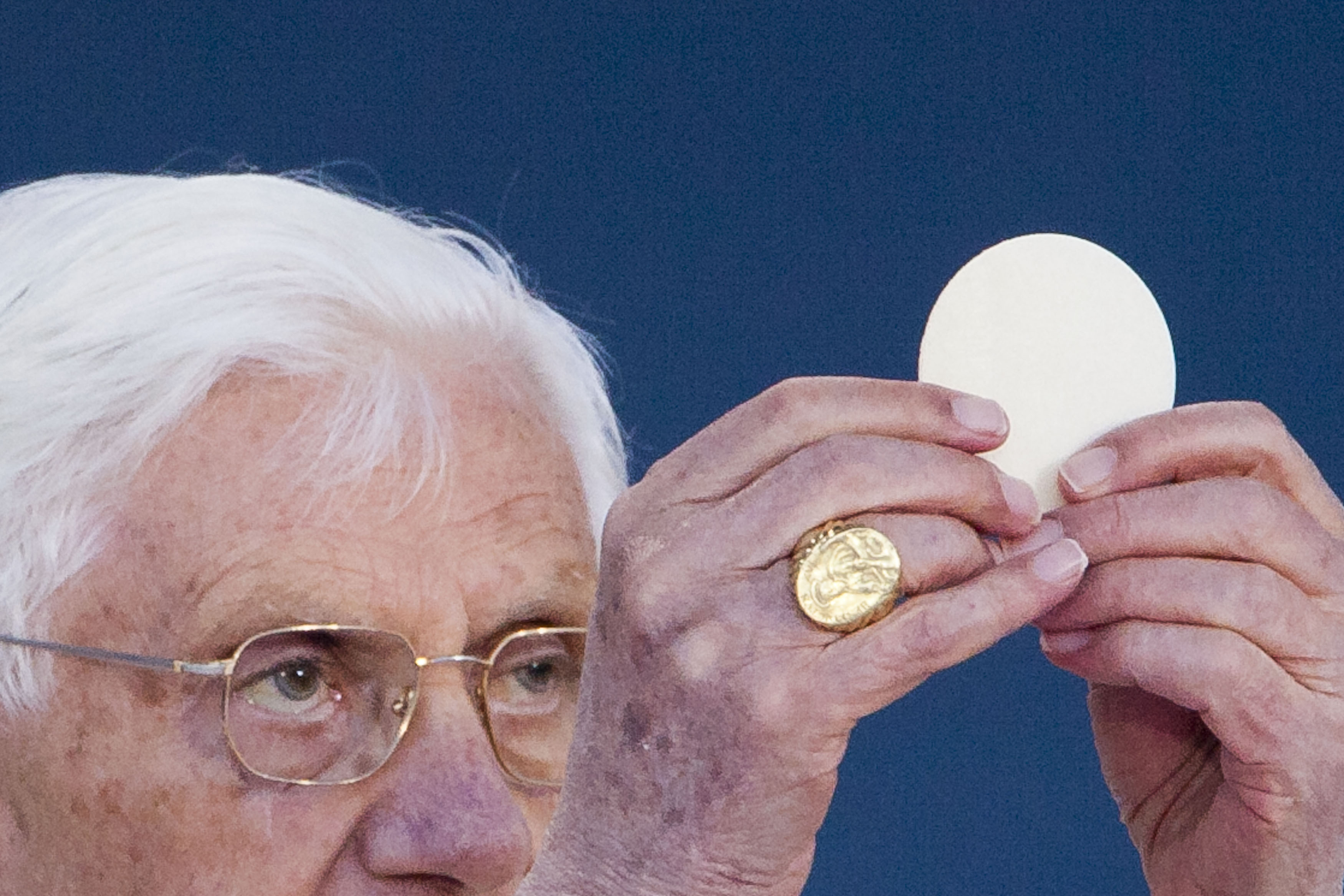
(Photo: Pope Benedict XVI leads morning mass at Domplatz square in front of the Erfurter Dom cathedral on September 24, 2011 in Erfurt, Germany. By Carsten Koall/Getty Images. My entire 1988 essay on Ratzinger is now online at The New Republic. )
College Credit 101

The Consumer Financial Protection Bureau is initiating an inquiry into the relationship between colleges, banks and debit card companies. One of the more egregious examples:

Preloaded debit cards have caught on in recent years as a method of giving college students access to federal grants and loans for living expenses. While they have come under scrutiny for high fees, they are a way to give money to students without using paper checks, and do not require a bank account. Critics say students would be better off opening a bank account than relying on preloaded cards. Higher One has dominated the debit card market for years, and has come in for much of the criticism for swipe fees, ATM fees and other charges that can chip away at students’ financial aid. As the cards have grown more popular, other banks, including Sallie Mae, have entered the market place.

Kay Steiger argues the practice is “obviously predatory in a lot of ways”:

Though my alma matter, the University of Minnesota, didn’t go quite so far as to use our student ID cards as ATM cards, they did fold in an application to open an account with TCM Bank along with the forms I was supposed to fill out for my student ID. Though it’s not necessarily bad to encourage student to open bank accounts, it did leave me with the impression that I wouldn’t get my ID card unless I signed up with this preferred bank. Of course in retrospect this seems crazy, but as an impressionable 18-year-old college student, it’s easy to see how manipulative marketing financial products can be when they appear to be endorsed by the college.

The View From Your Blizzard II

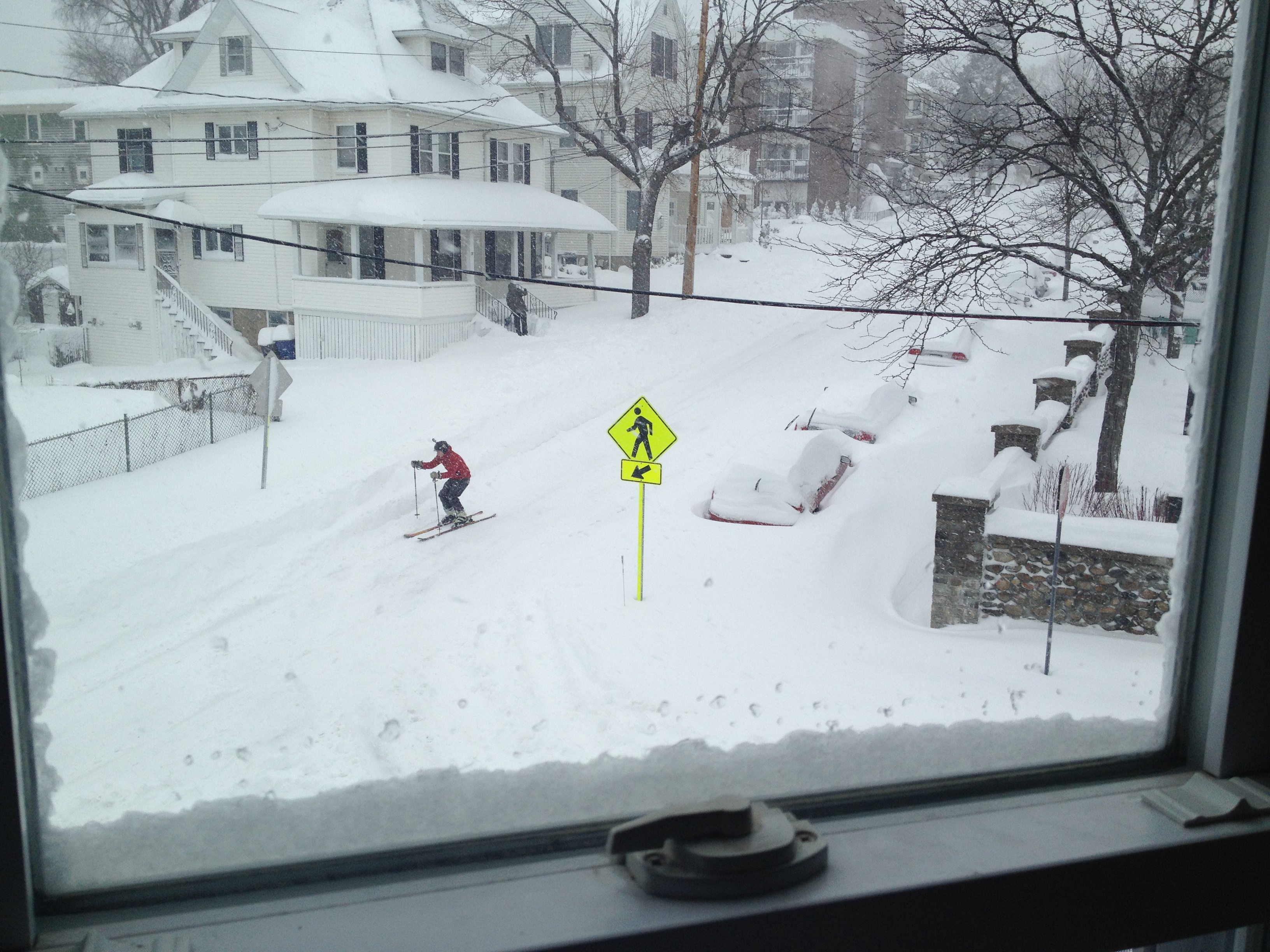
Somerville-MA-930am

Somerville, Massachusetts, 9.30 am.

The first batch from the weekend here. Readers kept sending in so many great ones that we just had to go another round:

Manchester-CT-1024 am

Manchester, Connecticut, 10.24 am

Kitchener-Ontario-2pm

Kitchener, Ontario, 2 pm

waltham-MA-850am

Waltham, Massachusetts, 8.50 am

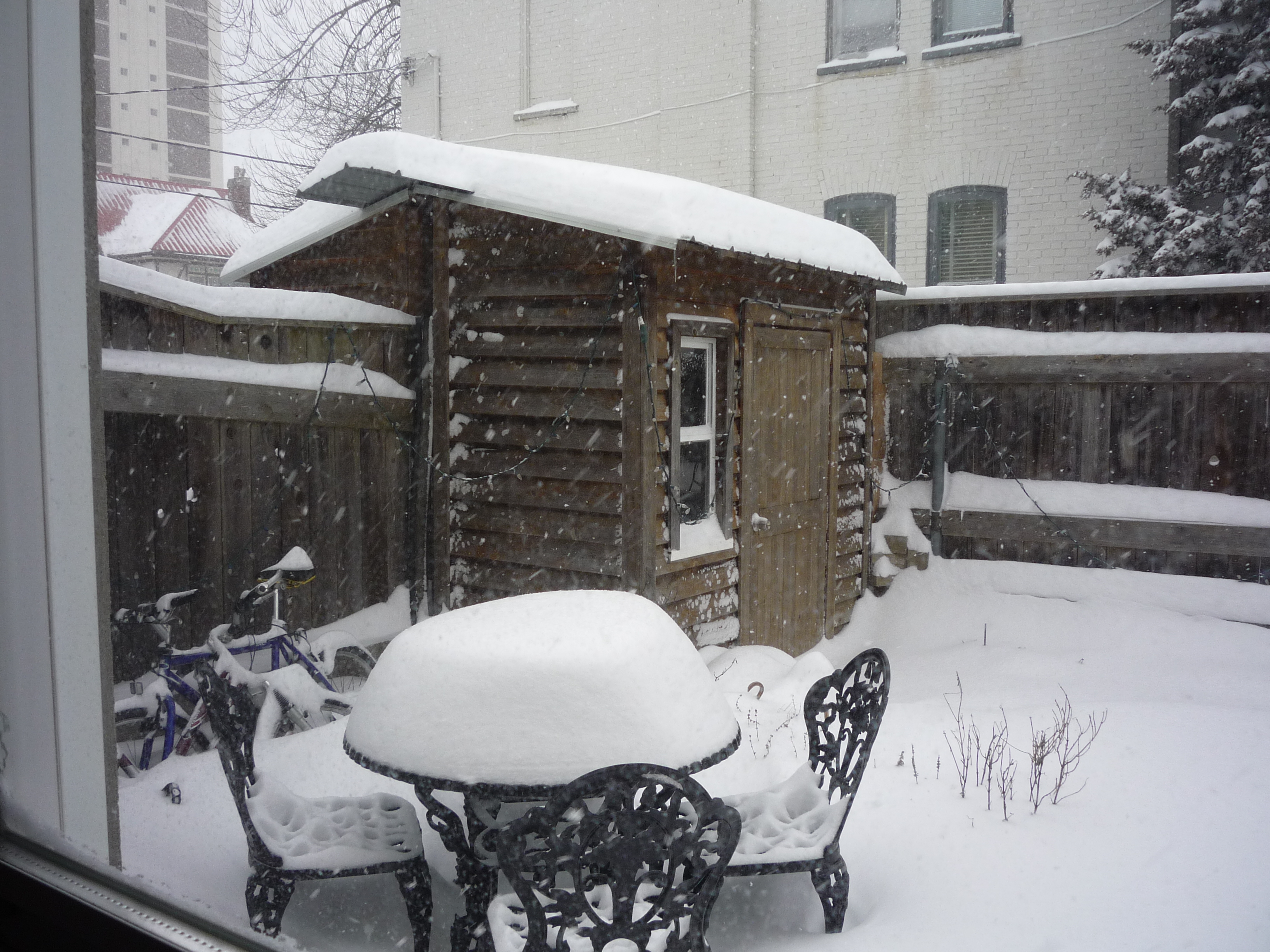
Toronto-Ontario-930am

Toronto, Ontario, 9.30 am

Clarkdale, AZ 915 am

Clarksdale, Arizona, 9.15 am

Benedict’s Radical End

[Re-posted from earlier today]

A resignation is truly a big deal. Since it hasn’t happened in 600 years, it changes the institution. It’s not outside the rules. The last Benedict to resign was Benedict IX (1032-45), “after selling the papacy to his godfather Gregory VI.” I’m unaware of any evidence of that kind this time around. John Paul II drew up contingency plans to resign if he became incapable of performing his functions – and yet he hung on for a very long time indeed.  Tom Reese:

In Light of the World, Pope Benedict responded unambiguously to a question about whether a pope could resign: “Yes. If a Pope clearly realizes that he is no longer physically, psychologically, and spiritually capable of handling the duties of his office, then he has a right and, under some circumstances, also an obligation to resign.”

On the other hand, he did not favor resignation simply because the burden of the papacy is great. “When the danger is great one must not run away. For that reason, now is certainly not the time to resign. Precisely at a time like this one must stand fast and endure the situation. That is my view. One can resign at a peaceful moment or when one simply cannot go on. But one must not run away from danger and say someone else should do it.”

That was published a little over two years ago. And yet in his resignation letter, this is the rationale:

In today’s world, subject to so many rapid changes and shaken by questions of deep relevance for the life of faith, in order to govern the bark of Saint Peter and proclaim the Gospel, both strength of mind and body are necessary, strength which in the last few months, has deteriorated in me to the extent that I have had to recognize my incapacity to adequately fulfill the ministry entrusted to me.

I do think his reference to the world “being shaken by questions of deep relevance for the life of faith” is a critical qualifier here. He seems to recognize that the challenges the Catholic church now faces – its intellectual collapse in the West, the stench of moral corruption revealed by the decades of child-rape and cover-ups, and the resort to the crudest forms of authority and reactionaryism in response to new ideas, discoveries and truths about human nature – have now overwhelmed his physical and mental strength. At some point, the sheer human energy required to try and impose a moral authority already lost must have seemed hopeless.

And the damage has been enormous.

Look at Benedict’s legacy in Germany, his home country:

Since Benedict’s election in 2005, the number of people leaving the Catholic Church in Germany has more than doubled, and it’s been the highest most recently in Ratzinger’s former Archdiocese of Munich and Freising. Only 30 percent of Germans are still Catholic today.

In Ireland, the collapse has been close to total. At the start of his papacy, Benedict declared his intent to bring Catholicism back to intellectual life in Europe. He didn’t just fail; he failed catastrophically, accelerating the Church’s demographic, spiritual and moral decline in the West. Key pillars of the Wojtila-Ratzinger counter-reformation – like the Legion of Christ, the creation of the repeat child rapist and drug trafficker, Marcial Maciel  – crumbled to dust. Key enablers of abuse were given rewards – Boston’s Cardinal Law springs to mind; other minor figures – including the monster who raped over 200 deaf children, Father Lawrence Murphy – were allowed a quiet retirement with no serious punishment;  I called for the Pope’s resignation two years ago, as the full extent of his complicity in the child-rape crisis came into closer view:

Ratzinger can no more be separated from John Paul II than Bush can from Cheney. And the cult of authority was John Paul II’s and Benedict XVI’s key contribution to the modern church. Now we see how this cult of authority was directly connected to enabling the church to enable, hide and defend the rapists of children … there is no escaping the verdict of history.

The Pope must resign. He has no moral authority left. And a new Pope needs to be selected who represents an end to the euphemisms, an end to any tolerance for this, and who will seek to restore the balance of authority achieved by the Second Vatican Council.

For me, the great tragedy of Benedict was his panic after the Second Council. There is no disputing the elegance of his mind or the exquisite meticulousness of his perfect, orderly German theology – and his work alongside the more consistently modernist Hans Kung will stand the test of time. But his post-1960s theology had as much relationship to the real challenges of the 21st Century as the effete, secluded German scholar, embalmed in clerical privilege for his entire adult life. And his early promise as a theologian calcified into the purest form of reaction and fear when given the power to enforce orthodoxy, which is what he essentially did for well over two decades. It was excruciating to watch such a careful, often illuminating scholar turn into a Grand Inquisitor. It was revealing that a bureaucrat who never missed even a scintilla of heresy was able to turn such a blind eye to the monstrous rapes of so many children. I wrote once:

Reading Benedict for a struggling gay Catholic like me is like reading a completely circular, self-enclosed system that is as beautiful at times as it is maddeningly immune to reasoned query. The dogmatism is astonishing. If your conscience demands that you dissent from some teachings, then it is not really your conscience. It is sin. And if all this circular dogmatism forces many to leave the church they once thought of as home? So be it.

When he was actually elected Pope, I was horrified by what it implied about the future. Back in 2005, I wrote:

I was trying to explain last night to a non-Catholic just how dumb-struck many reformist Catholics are by the elevation of Ratzinger. And then I found a way to explain. This is the religious equivalent of having had four terms of George W. Bush only to find that his successor as president is Karl Rove. Get it now?

I read much of Ratzinger’s theology back in the 1980s, as he assumed the power of Papal enforcer of orthodoxy. Here’s an extract from my 1988 TNR review of Ratzinger’s thought (alas, not online):

The metamorphosis of Joseph Ratzinger from Augustinian theologian to Augustinian policeman, and finally to policeman, may in part be due to the metamorphosis of the Church itself. The forces of change have been so great in the Church during the past two decades that some form of simple assertion of authority may have a prudential justification. John Paul II, however, has balanced Ratzinger’s zeal with a more humane approach. Together, they have played a “good cop, bad cop” routine with recalcitrant faithful. Ratzinger’s great gift to a Church all too easily distracted by the world is to call the faithful back to the fundamentals. But it is difficult not to feel dismayed by the way in which his earlier inspiration has ceded to the dictates of coercion, and his theological distrust of fallen man has translated so easily into disdain for Christians trying to live obediently in modernity. The man who might have guided the Church through reason has resorted to governing by force.

Ed Kilgore summarized the piece:

Sullivan’s take on Ratzinger back then was that he represented the marriage of the German Augustinian tradition (the same tradition that produced great Protestant theologians from Martin Luther to Karl Barth) with papal power, along with an unhealthy attitude about sex and gender. It’s a very toxic combination, producing a very political agenda in the guise of the non-political sovereignty of the Church. That’s why Andrew ultimately compared Cardinal Ratzinger then, and compares Benedict XVI now, to Dostoevsky’s Grand Inquisitor: a man driven by the logic of theology to, and perhaps beyond, the limits of Christianity itself.I hope Sullivan is wrong about the new pope, but there are unsettling analogies in his Catholic analysis of Ratzinger to the strangely un-Christian tendencies recently apparent in so many conspicuously Christian U.S. religious and political leaders.

I don’t think, alas, that I was wrong. And the desert in which the church has wandered since has been bleak but not without oases of new thought and eruptions of real grace and persistence of real faith. Those of us who have hung in must now pray for a new direction, a return to the spirit of the Second Council, a Pope of reform after an era of often irrational reaction and concealment of some of the worst evil imaginable. It can happen. Perhaps Benedict XVI finally grasped that. And finally did what he was never ever capable of doing before: let go and let God take over.

May the sunlight now come in; may accountability be taken; may a new fearlessness, guided by the Holy Spirit, give the church new life when its strength and vitality are in such profound crisis. May we see real punishment for the enablers of child rape; may we see more married priests and a serious discussion about women priests. May we see a return to the core truths of our faith: that God exists, that God is love; that this love became incarnate to rid us of the dead-end of worldliness into the wonderment of caritas. This is a chance for renewal. And repentance … as Lent inexorably approaches and Easter finally beckons.

Know hope.

Face Of The Day

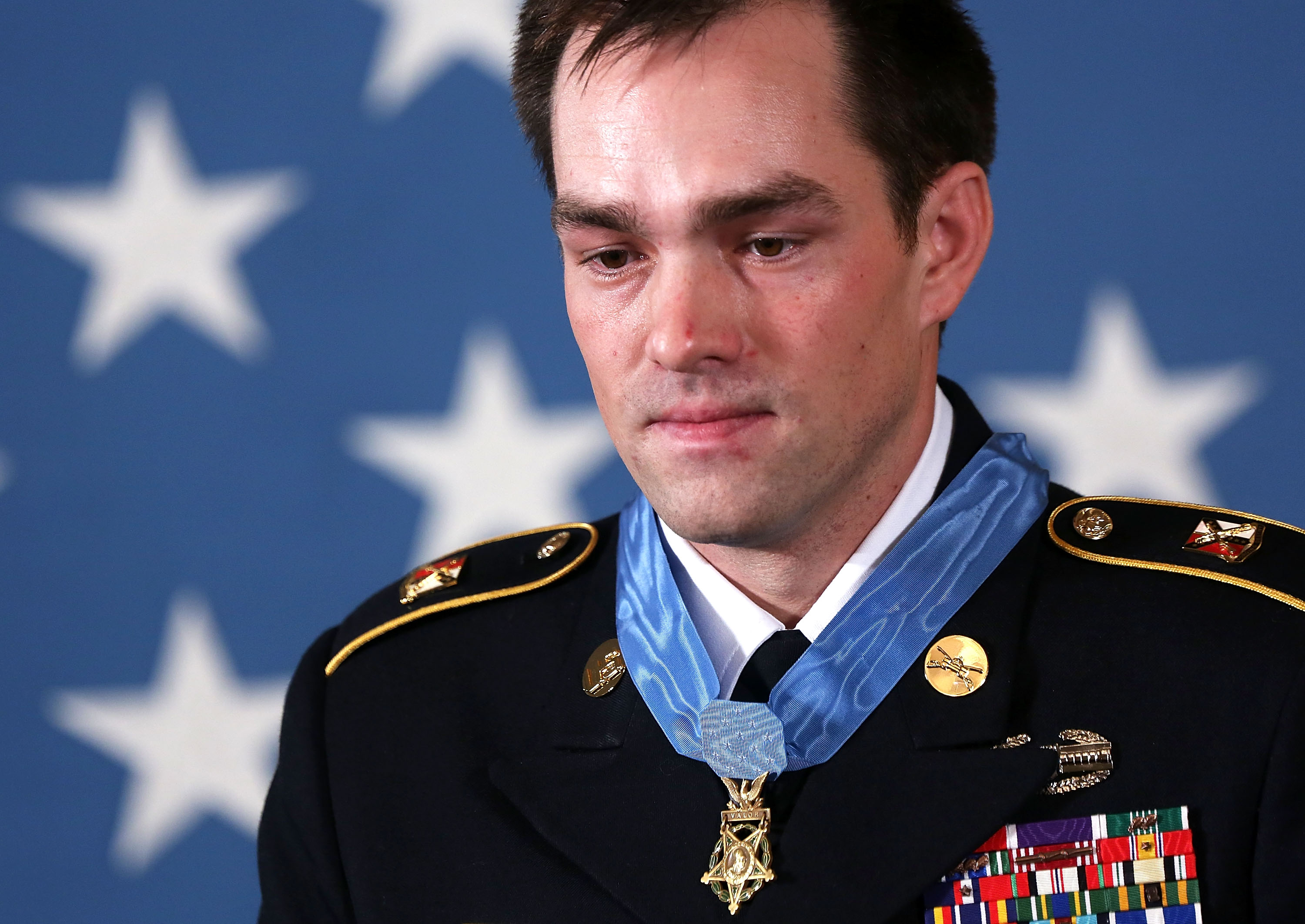
President Obama Confers Medal Of Honor On Former Staff Sgt Clinton Romesha

Clinton Romesha, a former active duty Army Staff Sergeant, stands after he was presented with the Medal of Honor for conspicuous gallantry by U.S. President Barack Obama at the White House February 11, 2013 in Washington, DC. Romesha received the Medal of Honor for actions during combat operations against an armed enemy at Combat Outpost Keating, Kamdesh District, Nuristan Province, Afghanistan on October 3, 2009. By Alex Wong/Getty Images.

The official details of Romesha’s heroism, also available here on Wikipedia, are below:

Staff Sergeant Clinton L. Romesha distinguished himself by acts of gallantry and intrepidity at the risk of his life above and beyond the call of duty while serving as a Section Leader with Bravo Troop, 3d Squadron, 61st Cavalry Regiment, 4th Brigade Combat Team, 4th Infantry Division, during combat operations against an armed enemy at Combat Outpost Keating, Kamdesh District, Nuristan Province, Afghanistan on October 3, 2009. On that morning, Staff Sergeant Romesha and his comrades awakened to an attack by an estimated 300 enemy fighters occupying the high ground on all four sides of the complex, employing concentrated fire from recoilless rifles, rocket propelled grenades, anti-aircraft machine guns, mortars and small arms fire.

Staff Sergeant Romesha moved uncovered under intense enemy fire to conduct a reconnaissance of the battlefield and seek reinforcements from the barracks before returning to action with the support of an assistant gunner. Staff Sergeant Romesha took out an enemy machine gun team and, while engaging a second, the generator he was using for cover was struck by a rocket-propelled grenade, inflicting him with shrapnel wounds. Undeterred by his injuries, Staff Sergeant Romesha continued to fight and upon the arrival of another soldier to aid him and the assistant gunner, he again rushed through the exposed avenue to assemble additional soldiers. Staff Sergeant Romesha then mobilized a five-man team and returned to the fight equipped with a sniper rifle. With complete disregard for his own safety, Staff Sergeant Romesha continually exposed himself to heavy enemy fire, as he moved confidently about the battlefield engaging and destroying multiple enemy targets, including three Taliban fighters who had breached the combat outpost’s perimeter.

While orchestrating a successful plan to secure and reinforce key points of the battlefield, Staff Sergeant Romesha maintained radio communication with the tactical operations center. As the enemy forces attacked with even greater ferocity, unleashing a barrage of rocket-propelled grenades and recoilless rifle rounds, Staff Sergeant Romesha identified the point of attack and directed air support to destroy over 30 enemy fighters. After receiving reports that seriously injured Soldiers were at a distant battle position, Staff Sergeant Romesha and his team provided covering fire to allow the injured Soldiers to safely reach the aid station. Upon receipt of orders to proceed to the next objective, his team pushed forward 100 meters under overwhelming enemy fire to recover and prevent the enemy fighters from taking the bodies of their fallen comrades.

Staff Sergeant Romesha’s heroic actions throughout the day-long battle were critical in suppressing an enemy that had far greater numbers. His extraordinary efforts gave Bravo Troop the opportunity to regroup, reorganize and prepare for the counterattack that allowed the Troop to account for its personnel and secure Combat Outpost Keating. Staff Sergeant Romesha’s discipline and extraordinary heroism above and beyond the call of duty reflect great credit upon himself, Bravo Troop, 3d Squadron, 61st Cavalry Regiment, 4th Brigade Combat Team, 4th Infantry Division and the United States Army.