The Dish Model, Ctd

dishterns

A reader writes:

I just read that you pay your interns. I applaud that! In the ’90s I did a couple of unpaid internships that paved the way for gainful employment, so I’ve benefited from the system. I was lucky because my parents could help out while I was working for free. I agree with the idea of people paying dues, learning the ropes, starting in the mail room, etc. But why not for minimum wage at least? The poor cannot afford to audition for jobs for several months the way I could. The rise of unpaid internships as a prerequisite for interesting work is just unfair and perpetuates the class system.

So thanks. I’m gonna subscribe now.

We actually pay Dishterns roughly twice the minimum wage and include health insurance. That’s the deal I insisted they had with us at the Beast (no one who works for me is not going to have health insurance, period), so that’s the deal we are determined to continue under Dish Publishing LLC. You can help keep our internship a paid one by pre-subscribing here (and we allow you to give a little extra if you have the means).

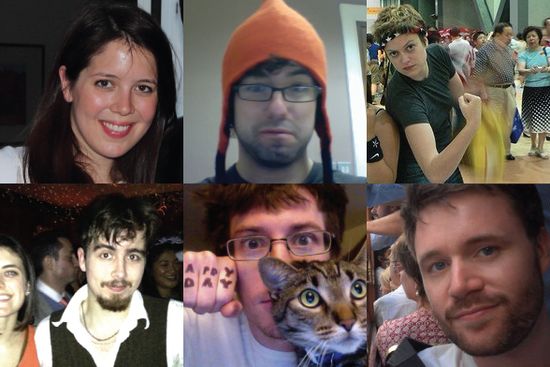
(Clockwise from top-left: Maisie Allison (now at The American Conservative), Zack Beauchamp (now at Think Progress), Gwynn Guilford (now at Quartz), Chas Danner (who will be staying on after we go independent), Doug Allen and Tela (current Dishtern and beagle bait, respectively), Brendan James (current Dishtern and troubadour). Zoe, Chris and Patrick all started as interns as well.)

The Awl On The Dish

One of my favorite websites interviewed me about the new Dish when I was still in bed with the flu. Money exchange:

Maria Bustillos: I’ve freaked a few atheists out by telling them: You don’t understand doubt nearly as well as my friends who are believers. Faith is a much harder struggle than just smugly shelving the question of doubt, imagining you “know” something. You don’t understand it.

Andrew Sullivan: Thank you. Thank you, thank you so much for saying that, because the one thing I always argue is that no Christian does not have elements of agnosticism in his or her life, because God is ultimately unknowable; so of course there is a vast amount about God that we cannot begin to understand, and therefore doubt is integral to faith; it’s not some sort of enemy of faith, it’s its wellspring.

The Dish Meter’s Mechanics, Ctd

A reader writes:

I started reading your blog about two years ago and subscribing to your new model was an easy decision for me. Regarding your meter discussion, I have to disagree with many of your readers. I think metering the original long-form writing by you and your staff is counterproductive. Your long-form blogging is the very best part of the site, so putting it in a place where non-paying readers can’t see it will decrease your ability to attract new subscribers. If when I first came to the site all I saw was the content aggregation, I would have quickly taken the Dish off of my RSS feed. Why take away from potential new customers the very thing that is going to convince them to sign up?

Even if all of my longer posts are metered, only a portion of my writing will go behind the read-on, thus allowing all readers to get the gist of the post, regardless of subscription. Another reader:

I’m not quite sure why there is so much hand-wringing about whether your links to other people are in front or behind the meter. If you chose to fund your website with advertising instead of subscriptions, you’d still be making money from linking to other sites. You currently don’t pay for the privilege of linking to the various sites you post every day, do you?  So why does it matter where the links are on your site?

I guess I don’t see your use of “read on” being the trigger of the site meter as necessarily the most effective way of getting more subscribers. I view it more as just your community of loyal readers/subscribers subsidizing everyone else’s being able to share in the value we see in The Dish. But I guess it will all depend on whether you can get enough subscribers to meet your revenue goal.

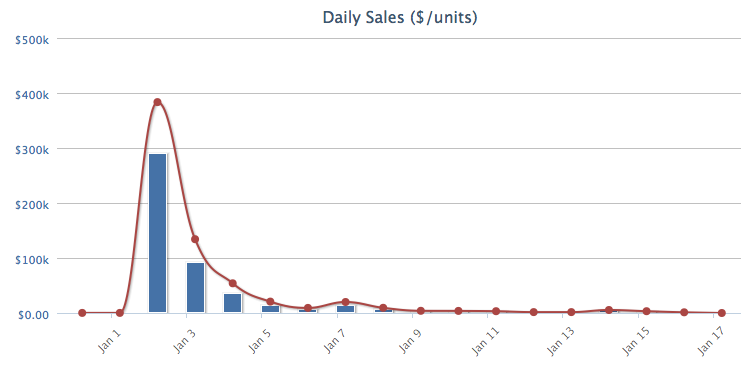
The first big wave of subscribers and their high percentage of donations were likely driven by that feeling of “loyalty”, but that initial wave of support has dropped off significantly:

TinyPass_Screenshopt

So we presume – hope! – that a much larger swathe of fence-sitters will only subscribe once they are nudged by the meter. That theory is reinforced by many emails we are receiving, such as this one:

Although I haven’t subscribed yet, I love the Dish and can’t imagine my day without unhindered access to it. So when the meter hits, I will almost certainly sign up. I’m just waiting to see the site first.

Regarding your discussion about the meter’s mechanics, I have a suggestion and a plea.

My suggestion: do not put reader dissents behind the meter (as someone else suggested.) The high-quality vigorous push-back you include from readers is one of the best and most distinctive things about your blog and will help lure new readers. Also, the dissents will tweak people’s interest in the commentaries that are behind the meter. In doing so, they may encourage new subscriptions.

My plea: It makes sense to put reader-generated threads behind the meter. But if you do, can you make them freely available after a certain amount of time has passed? The bioethics professor who shares the “It’s So Personal” link with his or her students would no longer be able to if it’s behind the meter.  The content of some of these threads remains just as valuable and relevant over time. So why not allow delayed free sharing? Readers who want to follow or contribute to the threads in real time would still have an incentive to subscribe. But those bioethics students would also benefit from the content, down the road – and may become followers of the Dish as a result.

Another bit of brainstorming:

When presenting a longer piece that includes aggregated content, I think you should alter the format you currently use. Right now, you frequently have quoted content in the middle of a longer piece. Going forward, why not put all that stuff up top as a “jumping off point,” give a brief summary of where you’re going, and then the meter kicks in for your full thoughts?

Previous feedback from readers here. To help keep this community alive and innovating, sign up for the new Dish here.

(Chart from TinyPass)

The Dish Model, Ctd

Dishterns

A reader writes:

I just read that you pay your interns.  I applaud that! In the ’90s I did a couple of unpaid internships that paved the way for gainful employment, so I have benefitted from the system.  I was lucky because my parents could help me out while I was working for free.  I agree with the idea of people paying dues, learning the ropes, starting in the mail room, etc.  But why not for minimum wage at least?  The poor cannot afford to audition for jobs for months the way I could. The rise of unpaid internships as a prerequisite for interesting work is just unfair and perpetuates the class system. Thanks. I’m gonna subscribe now.

We actually pay Dishterns one-and-a-half times the minimum wage and include health insurance. That’s the deal they had with us under the Daily Beast, so that’s the deal we are determined to continue under the new independent Dish. You can help keep our Dishternship a paid one by subscribing here.

(Clockwise from top-left: Maisie Allison (now at The American Conservative), Zack Beauchamp (now at Think Progress), Gwynn Guilford (now at Quartz), Chas Danner (who will serve as the Dish’s tech manager after we go independent), Doug Allen and Tela (current Dishtern and beagle bait, respectively), Brendan James (current Dishtern).

The Dish Meter’s Mechanics, Ctd

A reader writes:

I think you should experiment with the upcoming meter. One of the reasons I gave you $100 (even that is low for the value I get from the Dish every year) is to encourage this experiment Rncse29.6-rosulek1.previewof yours. So you should experiment with every aspect you can.

Also, I think you should have no problem putting the meter in place for stories that are not original reporting. Aggregation is part of the media now, like it or not, and aggregators (like HuffPo, e.g.) get paid for using stories that they did not write. It's just the way things work now. I would think that most writers would jump at the chance to be exposed to your vast and influential readership. And if they object, just keep a database of folks that don't want to be included and make sure not to link to them anymore.

Another differs:

I'm a relatively new reader – started during this election, now I catch every post – and I haven't subscribed. Yet. I've been waiting to see how the new website looks. But I know how I'll behave under the circumstances you've described: If you use read-ons primarily to hide other people's content, I'm not going to subscribe. I can read other aggregators for free. If your reblogs and recommendations are free, but your original commentary – the most valuable thing on the site – is metered, I will probably sign up.

Another reader worries that "there may be potential copyright issues if it was less than 50% original content/comments by the Dish team with a "charge" being issued by the Dish." But another writes:

The read-on might actually work to the external sources' advantage, in that non-payers will then have more reason to follow the link to the original if they're interested.

Another has an interesting idea:

Why not set the default read-on button to simultaneously link to the original work in a new tab? That way the original material page gets a share of the traffic. It might be slightly annoying to Dishheads, but I often link to the original articles anyways and would be willing to put up with the extra key strokes to close any tabs I'm not interested in.

Another echoes the majority of the emails on what content should go behind the meter:

Long time reader, first time contributor – in my opinion, I think it only makes sense to trigger the meter with your longer original commentary and the reader threads. If the goal of the trigger is to encourage additional subscriptions/donations, people are going to be more willing to make that spur of the moment decision in order to read content they can’t get somewhere else. Otherwise, you may risk turning away potential Dish-heads by triggering the meter with content which is easily obtainable elsewhere. I sincerely love (almost) everything about The Dish. But what truly separates your brand from other imitators is 1) your original content and 2) the on-line community you have built up through the years. People will pay for quality and that is The Dish’s quality.

You do a wonderful job of linking to interesting nuggets from other sites and exposing the community to thoughts/items outside their comfort zone; but that’s the icing on the cake. People won’t pay for icing unless they can taste the delicious cake it’s on top of.

Another tosses out specifics:

Behind the meter
Andrew and staffs' long-form writing.
VFYW contest results
Reader dissents
Reader extrapolation
Extensive threads (Cannabis, Marriage Equality, etc.)

In front
Shorter posts
Cool Ad Watch
Mental Health Break
Poetry
Religious discussions

You, your staff, and your readers evolve my world-view every day, thanks. (Notice I did not say just you and your staff?)

The Dish’s Core Strength, Ctd

Nat Worden gets our readers:

The complex but natural reporting process that is generated by [online journalism] has a certain organic authenticity that is rarely found on TV or radio or in newspapers Personal or magazines. More expertise and perspective is typically brought to bear. The pretense of objectivity is abandoned, making for a more honest forum, and everything is generally much more transparent.

Online journalists like Sullivan invite their audience into the reporting process and bring them along for the ride, while many traditional journalists keep the reporting process between them and their sources, leaving their audience in the dark about how they came upon the information they're reporting. Naturally then, traditional journalists often put the interests of their sources above their audience — a major problem in the corporate media — whereas the new breed of online journalist is reestablishing a genuine connection with readers and earning their trust in an age where distrust of the media is probably more rampant than distrust of government.

One of the best examples of reverse-reporting on the Dish was our "It's So Personal" series, a spontaneous outpouring of first-hand accounts from readers confronting late-term abortions, triggered by the murder of abortion doctor George Tiller. My impression at the time:

I've never seen the power of this medium so clearly and up-close: one personal account caused a stream of others. How could old-school reporting have found all these women? How could any third-person account compete with the rawness and honesty and pain of these testimonials? It was a revelation to me about what this medium could do. 

Coincidentally, a reader wrote in yesterday to praise the series:

I first became a regular reader of your blog in 2008-9, in the lead up and aftermath of Obama's first victory, during the financial crisis, and as you covered the Green Rebellion in Iran.  I became particularly taken with the Dish, however, when you started posting letters you were receiving following the murder of George Tiller. 

I am a philosophy professor and often teach bioethics.  For the past few years, when I've been introducing the topic of abortion by reviewing the different methods of abortion (on the premise that getting the empirical facts right is the obvious starting point for philosophical progress), and mentioned late-term abortions ("intact dilation and extraction" aka "partial birth abortion"), I've ended up talking about the "It's so Personal" posts.  I've then posted a link on my course website for the students to read themselves.  So thank you for offering my students a resource for understanding one of life's most complex moral decisions.

P.S. I haven't yet subscribed to the Dish, but that's just because I'm a procrastinator, and probably will wait until I'm forced to subscribe before getting myself officially signed up!

Previous commentary about our readership here. The full discussion thread on the Dish model and its new independence here.

The Dish Meter’s Mechanics

Jonathan Glick wonders about them:

I suspect the longer pieces that trigger the pay-us reminder will need to be original just because writers being aggregated will get pissed if they use long quotes from their stuff to drive subscription sales.

We've been contemplating the best way to use "read-ons" going forward, since the read-on clicks are what will trigger the meter and the please-pay message. We could set the meter lower and only have read-ons on longer original commentary and on reader threads. Or we could set the meter higher and use read-ons essentially as we do now. Or we could just play it by ear, experiment a bit and see what works best. What do you think?

The Dish Model, Ctd

Noah Millman, who wishes us well on our new venture, contemplates the economics of the web:

[N]one of Sullivan’s revenue will downstream to the content-creators on whom he depends. And that remains the essential business-model problem of the written word in the age of the internet. Newspapers were vertically-integrated: the same organization produced the content, aggregated it, and delivered it. But in the age of the internet, the delivery mechanism and editorial function have been disaggregated from content-production. You get access to the internet from a utility company like Verizon that does not own and is not responsible for providing content. And you find what you want using an advertising-supported search engine like Google that similarly does not own and is not responsible for producing content. Or through a reliable aggregator like Andrew Sullivan, who also does not own or pay for most of the content he steers people towards. These business models depend on content-generation for their own viability, but they aren’t primarily responsible for content-generation.

It’s easy to see how things could be structured differently. Aggregators could downstream a fraction of their advertising or subscription revenue to producers of content that was clicked through to. But it’s not obvious what would motivate these entities to adopt such a model, there being no actual shortage of content. And there will never be a shortage of content, because there is a large enough group of people who will do this for fun, whether or not it is profitable.

All questions we are closely considering as we go along. More on this soon. Freddie DeBoer, for his part, focuses on the Dish’s endless search for new online voices:

I literally started this blog at a public library, here on Blogger’s free platform using Blogger’s free server space, with no connections in media or journalism or commentary, no published work, and seemingly no entrance into the Byzantine and cliquish world of professional media. I had little thought of anyone reading this blog. But within two weeks or so of starting it, Andrew Sullivan had linked to one of my pieces, and from their came far more clicks, links, and attention. My readership is small, but it is committed, and while I am terrible at communicating with people who thank me for my work, their support means everything.

This is still an amateur blog, one for which I have never received a dime, although I have had people buy me books from my Amazon wish list, for which I’m immensely grateful. That amateur status suits me fine, both pragmatically and theoretically. But to be in the conversation, to have the ability to weigh in and be listened to– that’s a blessing, and I owe it to Andrew and his deep commitment to equality on the level of ideas. Whatever disagreements I may have with Andrew or with the Dish as an entity, his fierce commitment to looking anywhere and everywhere for fresh voices, quality writing, and provocative opinions is a profound credit to him. When it comes to writing, he is truly an egalitarian. More than anything, that commitment, and the workload it requires, will be his enduring legacy. I can only thank him and his staff and wish them all the best.

You can read Freddie on a regular basis at L’Hôte, his excellent little blog. Update via email from Patrick O’Connor, whose tweet is embedded above:

FWIW that tweet was made within moments of reading about the plan at Huff Puff before they corrected their story saying the rate would be $19.95 a month, not $19.99 a year. So I retweeted “never mind” soon after. After learning the correct (and very reasonable) amount to be charged, I regretted the flippancy of tweet’s “huh?” I have great admiration for what you all do.

O’Connor adds:

By the way, I don’t know if any of you are Californians, but a dear member of the California Public Broadcast community passed away today at 67. His name was Huell Howser. Everyone I know is very upset at his passing. He was like Fred Rogers for grown ups. His programs on every facet of California life are treasures. His format was simple. No crew for his shoots. There was a hand-held cameraman. Huell was his own sound man, holding a microphone. He would travel thoughout the state, stopping wherever appealed to his fancy to interview the locals. It was as close to blogging as you could do on television. For example, did you know that the world’s biggest wisteria vine was just east of Pasadena in Sierra Madre?
The Dish’s Core Strength

Readers

Conor Friedersdorf, a Dish alum, understands that strength is you:

I finally saw the reader inbox in all its glory while guest blogging for Sullivan as he vacationed. It's a gig I did several times, all of them while The Dish was hosted here at The Atlantic. I've never received so much delightful correspondence. The Dish readership is massive, highly educated, ideologically diverse, employed in a stunning array of fields, and spread out across the world. Of course, those same attributes characterize the readership here at The Atlantic, and I've gotten tons of wonderful emails in the course of my current job, but something about the blogger's personal, informal tone inspires correspondence of a different character. Compare the comments on the average item here at The Atlantic with the loyal readers Ta-Nehisi Coates has cultivated in the comments section of his blog, where it's more like an intimate community.

Alex Massie, who has also guest-blogged on the Dish, bets that "many bloggers could perhaps raise more money from an annual 'pledge week' than they suspect":

Not enough to compensate them for all their time but enough to make a difference. I think – actually, I just hope – that some goodly proportion of readers (at whatever "level" you’re at) appreciate that, at some point, not everything can be free and that even "amateurs" catering to small or specialist audiences merit some compensation for the enjoyment they provide.

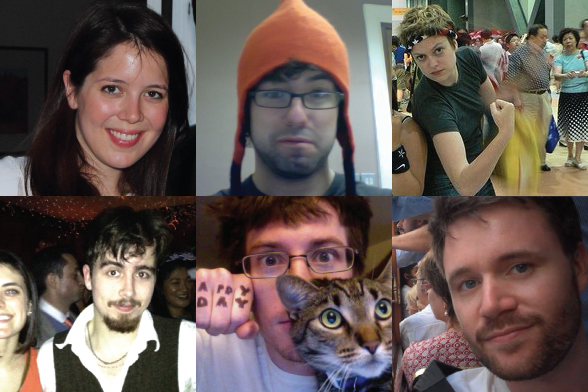
(Photos from Dish readers' Gmail profiles, used with permission. Become a founding member of an independent, ad-free Dish here.)

The Dish Model, Ctd

Ann Friedman joins the discussion:

Whether or not the phrase "personal brand" grosses you out, it’s something any journalist who wants to be employed in another 10 years should be thinking about. Andrewmug Having a direct, dedicated following—a readership invested in you, not just the publication you’re primarily associated with—is like a career insurance policy. While there are many fine journalists who never bring even the lightest detail about their personal lives into their professional narrative—no tweets about their kids, no first-person anecdotal ledes, no opinion-tinged asides in reported features—they are an increasingly small group. I cringe every time I read a New York Times story in which the reporter awkwardly refers to herself as "a visitor." Really? You can’t just say "provided me with directions to her Craftsman bungalow"? Please. …

[J]ournalists were always a part of the story. Why not just own up to the fact that three-dimensional humans are doing this work?

All of the posts in the Dish Model thread can be read here. A reader sent the above photo:

My mother-in-law, after years of me talking about "Andrew" and her asking "Who?" and me responding "My favorite blogger", got the jump on you re: Dish merch.  I received a one-of-a-kind coffee mug for Christmas, replete with your face on it (courtesy of the George Stephanopoulos show).

Of course the Dish has grown to be much bigger than one blogger – four other staffers, two paid interns (new ones started this week: Doug Allen and Brendan James), a poetry savant and a million-strong readership, which provides about a third of our content.