The Dish Model, Ctd

PM Carpenter argues that being completely reliant on subscribers may restrict the Dish's editorial freedom:

Just know that with every strong opinion you write, you'll be risking half of your readership, and therefore, potentially, half of your subscription base. And when finances get tight, the temptation to retract one's opinionated claws might become irresistible. In short, you may find that corporate-free editorializing is far more tyrannical than being free from corporations might seem.

This has occurred to me. I lost a third of my readers in 2003 when I turned against the Iraq war. But somehow I think my lack of a filter is not related to its potential impact on my life, career or income. So I'll trust my own psychological tic. I wish it were an act of moral courage. But it's just who I am. And if you think I have no filter, you should meet my mother.

The Dish Model, Ctd

Donation

Tyler Cowen worries that the new metered Dish foreshadows the end of "a golden age for the blogosphere":

I wish him well with it, but I also hope no one else tries too hard.  (Note by the way that Sullivan will allow a free RSS feed, with complete posts, and free links from other blogs, so this is hardly a full gate.)  In the limiting case, imagine a blogosphere where everything is gated for some price.  What could we at [Marginal Revolution] link to?

Razib Khan has similar concerns:

$19.99 is a pittance. But if I give Andrew Sullivan his due, who else should I “tip.” How about Tyler Cowen? Or Maria Popova? I consume more of Tyler’s content directly than Andrew’s, and Maria’s even more indirectly and in a diffuse fashion. In terms of media consumption I’m currently a subscriber to The New York Times, contribute to Wikipedia, try and support bloggers who I read and have fund drives, and also have a Netflix account. This isn’t much. But it starts to add up. The content universe of the internet is vast for the infovore, especially for one who relies a great deal on intermediating technologies to sift and filter the stream of content.

But this was always the case with old media. You paid for your New Yorker and New Republic and Wired and the Economist. And we paid more, relatively speaking, for each – because we were also paying for paper, print and physical distribution. Dan Gilmor proposes one possible solution:

One thing I'd bet on is alliances among bloggers where we can pay a lot less for a grab-bag of sites, on the theory that many more people will be willing to join that way, creating win-win-win situations. Again – and I can't use this word enough – the more experimenting and innovation the better.

Yglesias thinks along the same lines:

[I]f subscription models succeed, I'd expect them to evolve in the direction of big bundles. That might be because there are eight or nine giant content conglomerates selling subscriptions. Or it might be because of cross-marketing deals. Either way you'd get something that looks less like "the Internet" as we know it today and more like the adjacent series of walled gardens that CompuServe, Prodigy, AOL, etc. originally promoted as the vision of online existence.

At the Dish, we are not so much proud of our agnosticism as resigned to it. We do not know what the future will bring. What I do know is that this medium is still very young, in the grand scheme of things, and that the only way to survive is to experiment in line with what the web seems to be telling us it wants. That last thing is a little hard to gauge precisely: it's hitting a moving target as you are in transit as well. Which is why innovating this medium is as much art as science – and full of wrong turns and surprises. After a while, you relax and enjoy the ride. But I have to admit I was really anxious this past week; last night, as some of it sunk in, I couldn't sleep at all. One hour in the end. So I may be crashing soon …

The Dish Model, Ctd

Dustygate

Just a simple point: Jay Rosen grasps and explains better than I could the reasoning and hope of "mutualized journalism." Here is how Alan Rusbridger defines it:

This open and collaborative future for journalism – I have tried the word “mutualised” to describe something of the flavour of the relationship this new journalism has with our readers and sources and advertisers – is already looking different from the journalism that went before. The more we can involve others the more they will be engaged participants in the future, rather than observers or, worse, former readers. That’s not theory. It’s working now.

Indeed it is. It pretty much sums up the inchoate thing we all have been developing on this page for a decade or more. Rusbridger adds:

And, yes, we’ll charge for some of this – as we have in the past – while keeping the majority of it open. My commercial colleagues at the Guardian firmly believe that our mutualised approach is opening up options for making money, not closing them down.

Exactly our intention: everything you see on the Dish will remain free if you never press a Read On button. You will be able to link to any post with no meter counting. But the deep dish experience will be paid for by the core Dishheads. My fuller explanation of the move is here.

Join the experiment and become a member here.

The Dish Model, Ctd

Dean Starkman cautions that the Dish's new business model "may not be as much of a bellwether as you might think, or hope":

To a certain extent, Sullivan and his crew are, if not sui generis, an anomaly on the Web—one of only a handful of established bloggers able to draw what amounts to a mass audience, month after month, year after year. In The Myth of Digital Democracy, published in 2009, Matthew Hindman assembles the data to show that, for a number of technical and cultural reasons, a small number of bloggers—and Sullivan was one of those singled out—dominate traffic heading to politically oriented sites. A lot of traffic goes to a few sites, while the vast majority gets very little. Hindman calls this the “missing middle.”

I addressed this line of argument in an interview with Techcrunch:

Asked whether this approach can be replicated by other, less well-known bloggers, [Sullivan] said, “Well, we don’t know if it’s even going to work for us yet, so let’s not get ahead of ourselves.” After all, low six-figure revenue isn’t enough to sustain even a year of the Dish. At the same time, he said that smaller blogs that are “just one person blogging out of a room” will have lower costs.

“If you get rid of all the overhead … I think it is scalable with a smaller blog,” he said. “I don’t see why not.”

The Dish Model, Ctd

Jeff Bercovici reports that The Atlantic is also exploring a meter for its digital content:

“Paid content is going to be a big area of focus for us,” says Scott Havens, The Atlantic’s president. Havens is in the process of putting together a “paid content SWAT team” whose brief will include everything from overhauling The Atlantic’s tablet products to experimenting with a metered pay wall like the one The New York Times implemented two years ago. “It’s not definitely happening, but it’s definitely part of the mix,” Havens says of the metered model. “We’re watching what’s going on out there, and I think the conditions are right for experimentation.”

The Dish Model: The Data

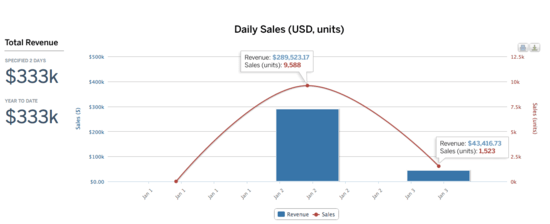
Basically, we've gotten a third of a million dollars in 24 hours, with close to 12,000 paid subscribers (at last count). On average, readers paid almost $8 more than we asked for. To say we're thrilled would obscure the depth of our gratitude and relief.

More details below. All of the graphics can be enlarged by clicking on them. The number of subscribers and the total revenue that has come in as of 1:15 pm ET today (credit card and Tinypass fees take a small bite out of the revenue number) is below:

Daily_Sales

The next graphic breaks down subscription revenue by price paid and shows the number of subscriptions at that price. This includes only the 10 prices that have brought in the most revenue:

Top_Products

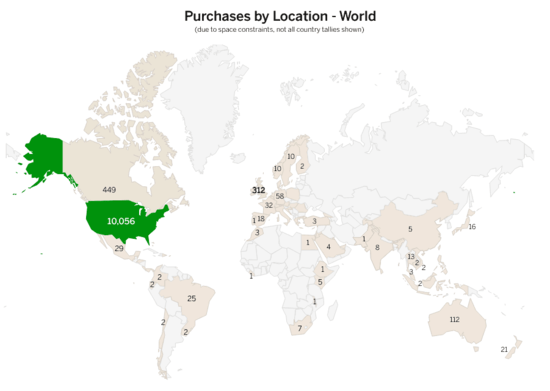
The number of subscriptions in each country:

Dish_World_Map

Go Canada and Britain! The number of subscriptions in each state:

US_Map

If our goal was an annual income of somewhere around $900K (we erred on the safe side), we have gotten a third of the way there in 24 hours, which is why we're all somewhat gob-smacked. We feared it would take far longer for us to get that kind of support. Total number of paid subscribers? Almost 12,000 right now. That's still only 1 percent of our total monthly readership – so we have plenty of room to talk more of you into subscribing before the meter hits. And the current number is misleading because of that. We really won't know how effective this is going to be until we actually have the meter in place. That's the only true measurement of how many readers will eventually pay to read the Dish.

But as a kick-off, this has been, well, words fail. We don't know how to thank you enough. Except to work harder than ever to make the Dish everything it can be in the future.

If you've held off so far, please think about giving it a go. We're still in the foothills of the mountain we need to climb. At the basic price, it's around a nickel a day. Simply as an experiment in figuring out how to make journalism work in the new media world, it's a pretty good investment. In return, we'll stay as transparent as we can (this post is a downpayment) – and answer only to you.

Pre-subscribe here.  My explanation of the move is here. And, er, you rock. But we knew that already.

The Dish Model

Unlike Mr Morgan (prove him wrong by pre-subscribing here), Felix Salmon likes our new economic model. From his conclusion:

Sullivan is burning no bridges here. If this works, great; if it doesn’t work, I’m sure that there will be a fair few publications out there willing to add their names to the list of places which have hosted the Dish. It’s what the financial types call a free option. And I’m very glad that Sullivan is taking the plunge, to see just how much money is out there for someone looking to make it on subscription revenues alone. I only have one request for him: please be very transparent about the numbers!

We will. We were waiting for a solid 24 hours of data before letting you know (and that is now up). We’re gathering that data as we speak and will report back to you later today. We’ve struggled with the obvious questions of transparency: if the subscriptions come in as a disappointment, would publicizing that become a self-fulfilling prophecy? Or would it help spur more support? If we do really well, would that encourage readers who haven’t subscribed to take a free ride? Would it generate complacency?

Eddy1After some urgent soul-searching, we’ve decided that this is your blog and that you deserve to see as much behind the curtain as possible, without disclosing individual employees’ private information. We just have to trust that the data won’t hurt the site, whatever side of the line we fall. So, as soon as we gather up all the data, we’ll give you our rough calculation of our estimated budget for our first year and data on how much progress we have made so far. Felix isn’t far off with $750,000 – but we were a little more conservative in guessing future unknown technological costs, and so we calculated a slightly higher number, and a steeper hill to climb. I’m a fiscal conservative, remember.

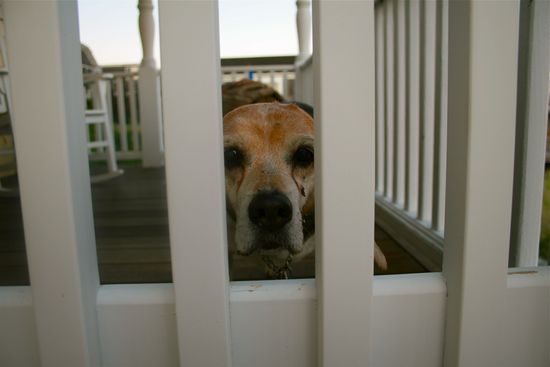
But basically, we think we should be as accountable to our readers as we can, and leave a lot of the financial mystery, spin and secrecy of the old media behind. One other reason we’ve decided to ignore the risks of transparency is because our ambitions are effectively open-ended. Our initial budget is simply for what we currently provide readers. But if we can do better, we will plow the extra money into commissioning long-form journalism, and hire an editor or two to edit it. We would really love to use the Dish’s bloggy base to enrich long-form writing, just as we are trying to support poetry. My own dream is a monthly tablet magazine called Deep Dish, which would have the best of the month’s Dish (with some reader-threads all brought together, a window view gallery, a couple of photos) and two or three really deep dives into subjects that come up in our unending conversation. Getting the blogosphere to bring back long-form is a really subversive idea. But I think we could have a go at it, if you help us by pre-subscribing (do it here! Or the adorable hound gets it!). So even if we were to hit our target, we can still appeal to readers to help us become more ambitious. We will of course hit a limit at some point – and we won’t really have a good grip on what that number is until mid-February at the earliest, after the meter has actually been installed. But we’ve decided to give you the numbers up-front because we trust you get what we’re trying to do. We are resigned to many free riders with a freemium model as open as ours will be. But we figure the more honest we are with you, the more reasoned you can be in your support (or not). Alyssa Rosenberg wants a thousand business models to bloom:

I hope their business model becomes sustainable not because I think we need it as a sole light forward in a dark publishing landscape. Rather, I think we need a lot of models, so new entrants into the market have lots of paths to sustainability. Some products that have been prestige for the entire run of their existence, like The New Yorker, will be able to flourish in their walled gardens without ever venturing out into a more open marketplace. Others, that have both passionate and casual readers, and perform the services both of delivering basic news information and offering up longer, more proprietary analysis, like the New York Times and the Dish will do well with metered models.

Projects like ThinkProgress and Pro Publica, which want a certain amount of independence from corporate interests and protections from the vicissitudes of the advertising marketplace, will successfully justify their necessity to a variety of non-profit funders. Rather than aiming to be among the most privileged and valued of products and individuals from the start—a position that guarantees financial support, but that doesn’t clarify the nature of the product they’re distributing—publications and content distributors would do better to know the fundamental nature of their business, and to choose a revenue support model based on that.

Paul Constant agrees that our model won’t work for everyone:

This will no doubt inspire many bloggers to consider adopting a reader-funded model. Those bloggers should remember that Andrew Sullivan is one of maybe five names that could make a reader-sustained blog financially viable.

Out Of The Ashes Of Dead Trees

[Re-posted from earlier today]

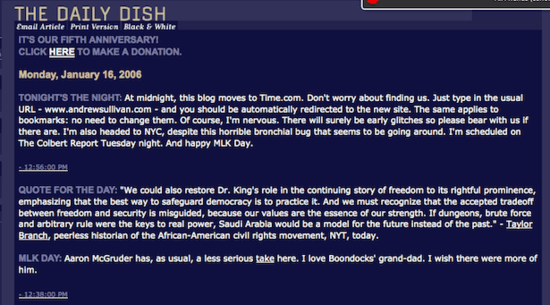
The shift in my own mind has happened gradually. Even up to a year ago, I was still getting my New York Times every morning on paper, wrapped in blue plastic. Piles of them would sit in my blog-cave, read and half-read, skimmed, and noted.

Until a couple of years ago, I also read physical books on paper, and then shifted to cheaper, easier, lighter tablet versions. Then it became a hassle to get the physical NYT delivered in Provincetown so I tried a summer of reading it on a tablet. I now 1350574398585.cachedread almost everything on my iPad. And as I ramble down the aisle of Amtrak’s Acela, I see so many reading from tablets or laptops, with the few newspapers and physical magazines seeming almost quaint, like some giant brick of a mobile phone from the 1980s. Almost no one under 30 is reading them. One day, we’ll see movies with people reading magazines and newspapers on paper and chuckle. Part of me has come to see physical magazines and newspapers as, at this point, absurd. They are like Wile E Coyote suspended three feet over a cliff for a few seconds. They’re still there; but there’s nothing underneath; and the plunge is vast and steep.

Which is why, when asked my opinion at Newsweek about print and digital, I urged taking the plunge as quickly as possible. Look: I chose  digital over print 12 years ago, when I shifted my writing gradually online, with this blog and now blogazine. Of course a weekly newsmagazine on paper seems nuts to me. But it takes guts to actually make the change. An individual can, overnight. An institution is far more cumbersome. Which is why, I believe, institutional brands will still be at a disadvantage online compared with personal ones. There’s a reason why Drudge Report and the Huffington Post are named after human beings. It’s because when we read online, we migrate to read people, not institutions. Social media has only accelerated this development, as everyone with a Facebook page now has a mini-blog, and articles or posts or memes are sent by email or through social networks or Twitter.

And as magazine stands disappear as relentlessly as bookstores, I also began to wonder what a magazine really is. Can it even exist online? It’s a form that’s only really been around for three centuries – and it was based on a group of people associating with each other under a single editor and bound together with paper and staples. At The New Republic in the 1990s, I knew intuitively that most people read TRB, the Diarist and the Notebook before they dug into a 12,000 word review of a book on medieval Jewish mysticism. But they were all in it together. You couldn’t just buy Kinsley’s perky column. It came physically attached to Leon Wieseltier’s sun-blocking ego.

But since every page on the web is now as accessible as every other page, how do you connect writers together with paper and staples, instead of having readers pick individual writers or pieces and ignore the rest? And the connection between writers and photographers and editors is what a magazine is. It defines it – and yet that connection is now close to gone. Around 70 percent of Dish readers have this page bookmarked and come to us directly. (If you read us all the time and haven’t, please do). You can’t sell bundles anymore; and online, it’s hard to sell anything intangible, i.e. words, because the supply is infinite. You no longer control the gate through which readers have to pass and advertizers get to sponsor. No gateway, no magazine, no revenue – and massive costs in print, paper and mailing.

I know a bit about these things, having edited a weekly magazine on paper for five years and running this always-on blogazine for twelve. It’s a different universe now. And to me, the Beast’s decision to put Newsweek Global on a tablet and kill the print edition is absolutely the right one. To do it now also makes sense. To have done it two years ago would have been even better. Why wait?

[I]f print is a money-loser — and I keep hearing that is is, for newspaper after newspaper — why not end it now, today, and go purely digital? Why shouldn’t newspapers around the world, or at least in the most internet-saturated parts of the world, just stop the presses — especially if they know they’ll have to do it anyway, and in the meantime the cash is draining away? What are the restraining factors? Habit and tradition? Powerful executives who have known the print world for so long that they can’t imagine life without it? The half-conscious feeling that paper and ink are real in ways that pixels and bits are not, and that if you only have pixels and bits you might as well be just a blogger, without a saleable product you can hold in your hand? This inquiring mind really, really wants to know.

That’s Alan Jacobs with whom I heartily agree. The reason is that these huge corporations, massive newsrooms, and deeply ingrained advertizing strategies become interests in themselves. No institution wants to dissolve itself. Getting that old mindset to accept that everything that it has done as a business and editorial model is now over, pffft, gone, is very, very hard. But they often cannot adjust because they are too big to move so quickly and because new sources of information and new flows of information keep evolving, and because no one really wants change if it means more job insecurity. We’re human. It’s not pleasant realizing that the entire business and editorial model for your entire career is kaput.

But that doesn’t mean the end of journalism, just of the physical objects that convey journalism. The “media” is simply Latin for the way in which information is transmitted. It’s the way one idea or fact or non-fact goes from someone’s brain into another’s. Today journalism is consumed by people at work, like you, reading to stave off boredom, or following an election, or because they love a particular site, or just find it productive, ahem, to check out the latest meme or cool video or righteous rant online. Then we watch TV, but not the nightly news, apart from the older generations. The generations below mine get their news online all day long and through Stewart/Colbert. The other way of reading is leaning back, enjoying long-form journalism or non-fiction in book or essay form – at the weekend or in the evenings or on a plane. And the tablet is so obviously a more varied, portable, simple vehicle to deliver a group of writers tied together in one actual place, which cannot be disaggregated, than paper, print and staples. And far less expensive. Print magazines today are basically horses and carriages, a decade after the car had gone into mass production. Why the fuck do they exist at all, except as lingering objects of nostalgia?

So this is a radical change and will be wrenching in transition, but is actually essential to saving the journalism we still need:

It is important that we underscore what this digital transition means and, as importantly, what it does not. We are transitioning Newsweek, not saying goodbye to it. We remain committed to Newsweek and to the journalism that it represents. This decision is not about the quality of the brand or the journalism—that is as powerful as ever. It is about the challenging economics of print publishing and distribution.

“Challenging” is a euphemism for impossible. Maybe a couple of magazines will survive in print as status symbols at the high end, or as supermarket check-out tabloids at the lower stratosphere. But I doubt even that. Tablet subscriptions seem to me the only viable way forward. The good news is that the savings from this can be plowed back into journalism if revenues from subs and ads revive. In the end, the individual who will decide if magazines survive at all, even on tablets, will be readers, and their willingness to pay for writing in that form, when they go online and get it for free. Yep, it’s up to you. And all your invisible hands.
Religion And The Dish, Ctd

A reader writes:

As a nonbeliever in any supernatural deity, I still yearn for moments of transcendence and universal understanding. The Dish’s Screen shot 2012-04-17 at 9.06.52 AMthe online debates you had with Sam Harris about whether there is a God – not to relish triumphant in Sam’s cogent arguments, but more to study your arguments defending Christianity. I find your reasoning comforting even though I cannot consider myself a Christian.

What I’ve taken from the Dish is the very basic notion that we are stardust, that we are a living part of the universe. When human beings study the mysteries of the universe, they are studying the mysteries of themselves. A part of the universe observing itself and its own origins has to be unique, and that unique experience could lead to transcendence, some universal connectedness, or some other thoughtful revelation. Whether religion is a proper outcome of this unique observation I cannot say. But overall, the Dish gives me solace that there might be something else out there, even if I can never understand it.

Another writes:

Tell your first reader to learn how to scroll and ignore stuff that doesn’t interest him. I skip all the poetry talk, for one. This isn’t rocket science.

Another dissents:

I think it was a little contrived to put those two reader comments next to each other like that.

I, too, got a little too much religion from your blog in recent weeks, and I could object to it I suppose with better and more convincing language than that first reader’s oversimplification. But then to place that comment with that other reader’s touching tale of Dish-emotional-support was just too much. At times it is frustrating to see such a false dichotomy of opinion presented in that way – brash fool versus a touching story, ignorance versus sentiment. It isn’t often, but sometimes, and here you used one reader as a foil, a straw man to whip by another reader who was earnest and heartfelt.

Here is an objection to the religious content that is more focused: there is something persistently incongruous about your Catholicism that, as a Dish reader for many years now, I have trouble with, especially when you write a cover article about, and go on Bill Maher to defend, what is essentially a Protestant anti-establishment position – that we should listen to Jesus and our own conscience over that of the authority of Rome.

For about five minutes in the early ’60s, Vatican II brought the light of the individual to the hyper-authoritarian history of Catholicism. I understand that is formative for your generation of Catholics, but it is a blip on the radar of the Western Church’s history. I still can’t understand what draws you to that faith. You could be Anglican, Episcopalian, even Eastern Orthodox (the faith in which I was raised, just as beautifully archaic, and more antiquated than the Western Church, with a far more abstract and less prescriptive theology, and, the beauty part, barely any political power to speak of), and yet you cling to a Church that after flirting with modernity, went right back to what is arguably its true nature, anti-individual, anti-modern, anti-progress, anti-conscience of the self, and in many ways anti-Jesus.

The Second Vatican Council is still binding. It did not expire after five minutes. That it has been pushed back on by two successive Popes does not make it, and the modern Christianity it fallibly charted, not worth defending. Another reader:

Just a quick note to say how very sorry I would be if the opinion of the first reader in this post were to prevail. I’m one of your church-going readers: a liberal Catholic in academia who has innumerable frustrations with the church hierarchy, but who believes both in the core teachings of the Gospels and in at least the potential of the earthy church to witness to those teachings. Most of my friends and colleagues are not religious, and I cherish your posts about religion – whether they’re personal spiritual reflections or hard analyses of the failures of religious institutions. We need more people in public life who speak about religion in thoughtful, incisive ways, not fewer.

When I first started reading you, some ten years ago, in the early days of my PhD program, you were one of the very few writers who modeled a way of being both an intellectual and a person of faith. I have more models for that now, but you were very much a part of my coming to believe that these parts of my personality were not in fundamental tension. I’ve come to think that the dismissive way so many liberals talk about religion is, itself, a form of anti-intellectualism: a total disinterest in trying to understand habits of thought other than their own.

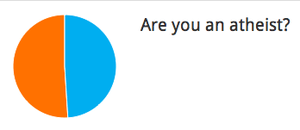
(Image: A pie chart from a Dish-centric survey showing that 49% of 25,357 sampled readers identify as atheist)

Religion And The Dish

A reader writes:

I like your blog, but enough.  Organized religion = institutionalized superstition, IMHO. My enjoyment of your blog is declining as the god stuff seems to be taking over.

Another writes:

I am a lapsed Catholic, who believes pretty firmly in not attending church these days but who misses the opportunity for transcendence that an hour in a beautiful church, with incense and music and ritual and silence, can sometimes provide.  I have sought other avenues to experience spirituality on Sundays: creative writing, painting, making time to play piano, taking a long walk outside, etc.  But I have come to rely on the insights and thought-provoking content that the Dish provides on Sunday evenings.

This week, I had my annual check-up and my doctor found a small lump in my breast. 

I am scheduled for an ultrasound this week and I am of course hoping for a benign diagnosis. Nonetheless, my mind has been wandering to the more dire things.  Tonight, I read through the Dish's postings of the day, and found myself moved to tears when I read the commentary about the "two words" of Native Americans to describe the dead; I pondered the points made about "Living Without God;" and I was struck deeply by the commentary on the "Meaning of a Malady" from Mark Dery.

On a lighter note, I read the commentary from David Gessner about watching wrens nest and give birth to babies as he watched through the window with a great deal of joy. While in graduate school, I had the pleasure of watching two mourning doves nest, lay eggs, and nurture their chicks through the window, as I sat at the desk in my room.  The chicks learned to fly one day and I remember feeling such fear and awe as I watched them nearly fall from the height of the nest and the take flight.

So, on the eve of what is sure to be a scary week for me, health-wise, I wanted to thank you for providing a spiritual outlet each Sunday, for offering the opportunity to consider the big questions rather than certainty in the answers, and for consistent recognition through your content that joy demands a place in all of these debates.