When A Father Comes Out

One story:

From a son's perspective, Chris Wallace talks about his reaction to finding out:

What sweet solace I took in blaming my father for all of my perceived failings in masculinity. No wonder I was so different from the back-slapping, arm-wrestling boys I grew up with. Lacking his introduction into their codes and secret handshakes, I had been forever closed off from their fraternity. … "I feel like everyone’s been laughing at me my entire life," I moaned. My mother turned on me and said quietly, “It wasn’t you they were laughing at.” My pity party ended then and there.

The truth was that even as I wanted to harbor a Shakespearean grudge against my father, I was warmed by his accidental revelation. I thought about how he had grown up very alone, in a conservative family during the conservative fifties. How he had no one he could speak frankly to until he met my mother working on the original production of Hair.

The View From Your Window Contest

Vfyw_11-26

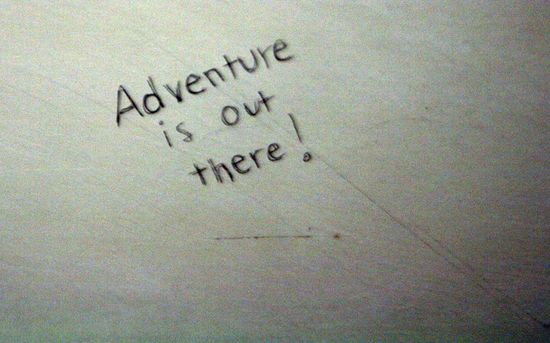
You have until noon on Tuesday to guess it. City and/or state first, then country. Please put the location in the subject heading, along with any description within the email. If no one guesses the exact location, proximity counts.  Be sure to email entries to VFYWcontest@gmail.com. Winner gets a free The View From Your Window book. Have at it.

Exporting Democracy While Destroying It At Home

Though Turkey appears to be pushing for a democratic Syria, Dani Rodrik worries that the Erdogan government has the opposite goal on the domestic front:

[A]ny perceived opponent of the current regime can be jailed, with or without evidence, for terrorism or other violent acts. Special courts, tasked with prosecuting terrorism and crimes against the state, have been working overtime to produce charges that are often as absurd as they are baseless. For example, journalists have been imprisoned for producing articles and books at the behest of an alleged terrorist organization called "Ergenekon," whose existence has yet to be confirmed, despite years of investigation.

Building A Bullshit Detector

Dan Schultz is developing software that would highlight suspicious claims in news articles and provide a link to the basic facts. Andrew Phelps has more:

[Schultz] wants to embed critical thinking into news the way we embed photos and video today: "I want to bridge the gap between the corpus of facts and the actual media consumption experience." … The software is being designed to detect words and phrases that show up in PolitiFact’s database, relying on PolitiFact’s researchers for the truth-telling. "It’s not just deciding what’s bullshit. It’s deciding what has been judged," he said. "In other words, it’s picking out things that somebody identified as being potentially dubious."

Is Exploration Dead?

4110340785_f2a337a2dd_b

Brian Lam spoke with Lorie Karnath, president of the 107-year-old Explorer's Club, about what it means to be an explorer in a century where nearly everything is mapped. Lam:

[I]f the age of the explorer as just "man hiking somewhere hard" is over, then the age of field exploration backed by explorers who are also engineers, programmers, roboticists, data analysts and videographers is amidst us. …

The Explorer’s club is filled with people like the Woods Hole Team of Gallo and Langes and Ballard who explored the Titanic and are building the machines that go and see where we couldn't alone. And the Club had just given awards to Thomas Levy, who is using radiocarbon dating to see if he can prove "King Solomon’s Mines" existed; Brent Steward who is using radio and satellite tracking tools to see where animals migrate; And Albert Lin is using a complex matrix of map, ground penetrating imaging and crowdsourcing data to try and locate Ghengis Khan’s tomb somewhere in the 600,000 square miles of Mongolia.

(Photo by Quinn Dombrowski)

Micro Jobs

Scott Adams proposes an alternative system of employment:

A typical homeowner has lots of micro jobs piling up around the house. Maybe an inaccessible light bulb is blown out and you don't have a tall ladder. Maybe you want to install a dimmer switch and you're not comfortable around electricity. Maybe there's a dead mouse in your trap and you're too freaked out to deal with it. You can come up with a long list of jobs you'd rather pay someone to do for you, if only that person were easily identified and reasonably priced.

This is where my idea of Job Bunching comes in. Imagine going to a website and entering a short description of your micro job need. When your neighborhood has collectively entered enough micro jobs – which might take some time – it becomes worthwhile for someone to accept the jobs as a bunch. He or she can drive to the neighborhood and handle ten minor jobs in half a day, each one paying a minimum of $20 dollars. 

The Importance Of Being Sarcastic

Studies have shown that sarcasm enhances problem solving. An inability to understand it can be an early warning sign of brain disease:

Sarcasm so saturates 21st-century America that according to one study of a database of telephone conversations, 23 percent of the time that the phrase “yeah, right” was used, it was uttered sarcastically. Entire phrases have almost lost their literal meanings because they are so frequently said with a sneer. “Big deal,” for example. When’s the last time someone said that to you and meant it sincerely? “My heart bleeds for you” almost always equals “Tell it to someone who cares,” and “Aren’t you special” means you aren’t.

“It’s practically the primary language” in modern society, says John Haiman, a linguist at Macalester College…

Decoding Da Vinci

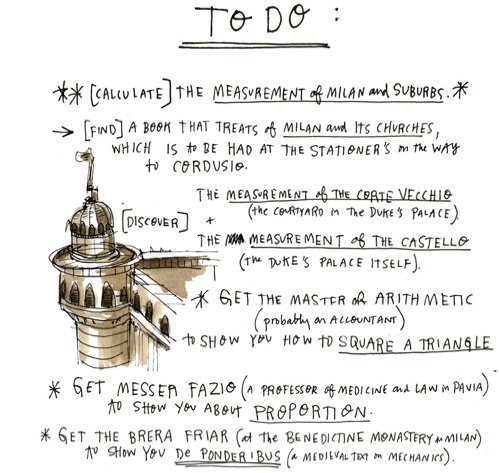
Using a list he wrote in the 1490s:

Screen shot 2011-11-23 at 7.50.04 PM

Robert Krulwich marvels at Leonardo's scattered thoughts:

Minds that break free, that are compelled to wander, can sometimes achieve more than those of us who are more inhibited, more orderly…

Maggie Koerth-Baker observes humility in the great genius:

I think it's pretty interesting that of the nine tasks shown, six involve consulting and learning from other people. Leonardo da Vinci needs to find a book. Leonardo da Vinci needs to get in touch with local merchants, monks, and accountants who he hopes can help him better understand concepts within their areas of expertise.

Leonardo da Vinci knows he doesn't know everything.