Twain’s Burn Book

The second volume of Mark Twain’s Autobiography – the entirety of which was delayed from publication for 100 years – reveals a man with a serious mean streak:

[T]here’s no doubt that Twain says certain things in this book that he couldn’t have said while still alive, including calling Jesus a fraud, the afterlife a sham, God a sadistic madman, and Christianity “bad, bloody, merciless, money-grabbing and predatory.” But Twain’s distaste for religion was an open secret among those who knew him, and the atheism in this volume won’t astonish anyone familiar who is with his work.

The hundred-year ban seems less about protecting Twain’s reputation than about sparing the feelings of the many people whom he attacks in his autobiography. The list is long. He has total recall of past slights, as well as an undiminished stream of vitriol for those whom he feels disrespected or deceived him. But he wants to make sure that his victims—and their wives and children—are dead before he dismembers them as cruelly as necessary. He feels a special hatred for publishers, especially Charles L. Webster, the nephew-in-law who headed Twain’s ill-fated publishing venture—“one of the most assful persons I have ever met.” “The times when he had an opportunity to be an ass and failed to take advantage of it were so few that, in a monarchy, they would have entitled him to a decoration.”

Previous Dish on Twain’s autobiography here and here.

The Best Of The Dish Today

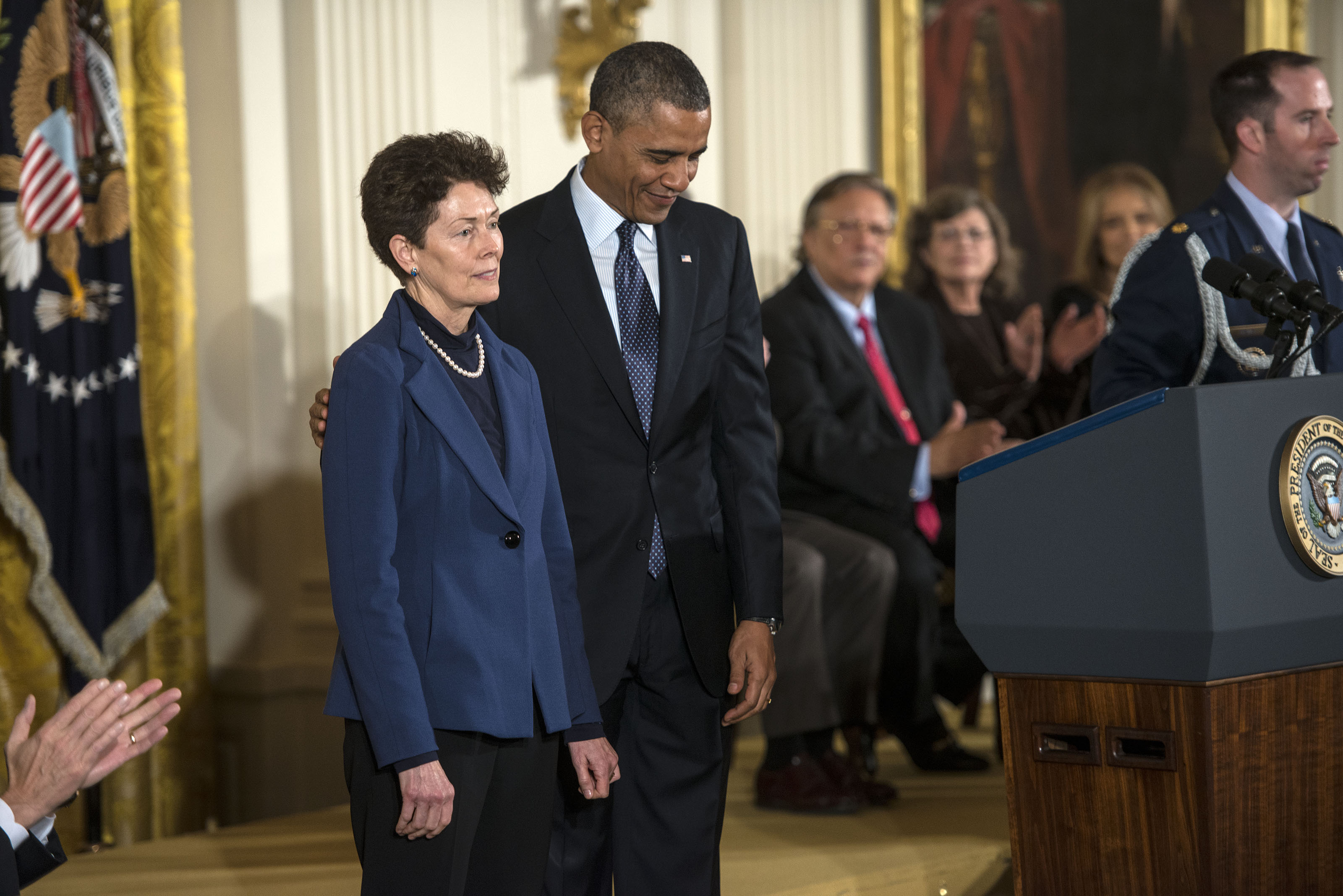
President Obama Awards 2013 Presidential Medal Of Freedom

Sorry for the late posting. Dish, AC360 and life.

Four posts worth revisiting: the latest installment in a gripping reader thread on miscarriage; how the ACA can still work; the pioneering of “sponsored content” by “Pay for Playbook’s” Mike Allen; and some clips from my conversation with Mikey Piro, on his war and the scars it has left behind.

Just a word on president Obama’s decision to give the Presidential Medal of Freedom posthumously to Bayard Rustin and Sally Ride. Their life-partners were at the White House to receive the award. This president is a good man; recognizing these two American icons and celebrating those who loved them is something I for one won’t forget. Sally Ride’s partner said the following:

I wish Sally was around because, since she passed away about 14 months ago, our country has changed in very big ways. For me, personally, I just feel like I can breathe better, look people in the eye a little straighter. It just feels good to be honest and who you are, and I think that would have been wonderful for Sally, too. Sally always was herself, but, you know, not being completely out there with who you are affects some part of you affects some part of you in some way, and I just think it would have been very wonderful for her, too.

The most popular posts were my these two on the paradoxes of healthcare: why does socialism end up being so much more efficient than capitalism?

See you in the morning.

(Photo: Tam O’Shaughnessy accepts the 2013 Presidential Medal of Freedom on behalf of her late life partner, Sally Ride in the East Room of the White House on November 20, 2013. By Leigh Vogel/WireImage.)

Playing Da Vinci’s Tune

A Polish concert pianist has turned a Renaissance dream into a reality (click “CC” for English captions):

The story behind the instrument:

Buried in the pages of Leonardo Da Vinci’s famous 15th century notebooks, amongst the sketches of flying machines, parachutes, diving suits, and armored tanks, was a curious idea for a musical instrument that merged the harpsichord and cello. The Italian Renaissance polymath referred to it as the viola organista. The general idea for the instrument was to correlate keyboard fingerwork with the sustained sound of a stringed instrument, but among the dozens of ideas pursued by the gifted artist and inventor, this was one he never explored further. Nearly 100 years would pass before an organist in Nuremberg would build the first functional bowed keyboard instrument, and many others would try throughout history to realize Da Vinci’s vision with various levels of success.

Now, after an estimated 5,000 hours of work over three years and nearly $10,000 invested in the project, Polish concert pianist Slawomir Zubrzycki has unveiled his own version of the viola organista.

The mechanics:

The flat bed of its interior is lined with golden spruce. Sixty-one gleaming steel strings run across it, similar to the inside of a baby grand. Each is connected to the keyboard, complete with smaller black keys for sharp and flat notes. But unlike a piano, it has no hammered dulcimers. Instead, there are four spinning wheels wrapped in horse-tail hair, like violin bows. To turn them, Zubrzycki pumps a pedal below the keyboard connected to a crankshaft. As he tinkles the keys, they press the strings down onto the wheels, emitting rich, sonorous tones reminiscent of a cello, an organ and even an accordion. The effect is a sound that da Vinci dreamt of, but never heard.

J. Bryan Lowder is delighted:

While the viola organista is unlikely to replace pianos or string ensembles (or more practical string synthesizers for that matter) any time soon, it seems compelling as a compositional tool in certain special cases where a dense, acoustic string sound is desirable, but the trouble of hiring multiple string players is not. That’s assuming you can get Zubrzycki to lend you his one-of-a-kind realization. In any case, it’s always good to have a little more music in the world, especially when it comes straight from the 500-year-old mind of a maestro.

The Zen Of Knitting

Jenny Diski contemplates one of her favorite activities:

As everyone says who knits, there is a dreamy, calming pleasure to knitting. You want to do more. The edges of anxiety are rounded off, you can feel the drip of endorphins soothing the rat in the solar plexus. Needles clicking, mind half on the pattern, half drifting. People liken it to meditation and gym work. I’ve done both, and it’s true. Trancelike sometimes. That simple repetitive work with the hands has a tranquillising effect is not a new insight, but it does work.

… The main thing that had changed since I used to knit was the existence of YouTube. There is no stitch or technique that you can’t find explained to you by a patient expert. Google s1k1psso and you find a dozen videos. Stop and start it, knit along, freeze frame. Even I can follow and practise until I can do it. There are courses online that show you how to knit whole garments, with a teacher leading you through it, talking about variations, giving tips on how to make wrong right again.

Are Crowdfunded Assassinations A Thing Now?

Andy Greenberg introduces readers to Kuwabatake Sanjuro, a self-described crypto-anachist who presides over “a kind of Kickstarter for political assassinations”:

According to Assassination Market’s rules, if someone on its hit list is killed–and yes, Sanjuro hopes that many targets will be – any hitman who can prove he or she was responsible receives the collected funds. … Like other so-called “dark web” sites, Assassination Market runs on the anonymity network Tor, which is designed to prevent anyone from identifying the site’s users or Sanjuro himself. Sanjuro’s decision to accept only bitcoins is also intended to protect users, Sanjuro, and any potential assassins from being identified through their financial transactions. bitcoins, after all, can be sent and received without necessarily tying them to any real-world identity.

Brian Merchant checks out the site:

In the FAQ section, Sanjuro explains who’s eligible for extermination:

“I’ll allow anything that has a good reason,” he says. “Bad reasons include doctors for performing abortions and Justin Bieber for making annoying music. The person should have wronged someone in some way related to the previous question. Politicians, bureaucrats, regulators and lobbyists are accepted without question.” Currently, there are six people marked for death: Jyrki Tapani Katainen, the prime minister of Finland; François Gérard Georges Nicolas Hollande, the president of France; “Barack Hussein Obama II”; Ben Shalom Bernanke; the NSA director Keith Brian Alexander; and James Clapper, the head of the National Intelligence Agency.

Pledges have already been made, too. By far the highest bounty is on Bernanke, with 124 bitcoin on his head. With today’s exchange rate, that comes out to a value of $75,000 USD. That is now essentially a price on Bernanke’s head, if any users are convinced enough by Sanjuro’s twisted gambit to pull the trigger. And Sanjuro hopes it’s just the beginning. He’s awaiting a user-generated list of murder subjects – just input your own into the text box like so, and you’ll have done your part to instigate a conspiracy to kill.

P.J. Vogt isn’t sure how seriously to take a site like Assassination Market:

The skeptical part of me is pretty sure these markets are a scam. Assassination isn’t the kind of service that lends itself to public advertisements or to trusting people based on their online reputations. And the fact that the website specifically promises to go after high-profile politicians adds to its unlikeliness. Viewed in that light, Assassination Markets is just another place where a fool and his bitcoin are soon parted.

And yet, these kinds of stories – about an enormous but hypothetical idea that will likely never be realized – can get real very quickly. To take a recent example, the idea of the Silk Road, when it was introduced, seemed completely preposterous to me. Yes, it was technically possible for people to buy and sell drugs online. But who, beyond a tiny fringe, would actually use it? Of course I was wrong – the site ran successfully for two years before being shuttered.

Either the news didn’t get to Bernanke or he didn’t let it get to him; this week he gave a “cautious blessing to bitcoin” in advance of a congressional hearing on virtual currency:

Bernanke mostly distanced himself from virtual currencies, saying the Fed “does not necessarily have authority to directly supervise or regulate these innovations or the entities that provide them to the market.” But he also said that bitcoin and its ilk “may hold long-term promise, particularly if the innovations promote a faster, more secure and more efficient payment system.”

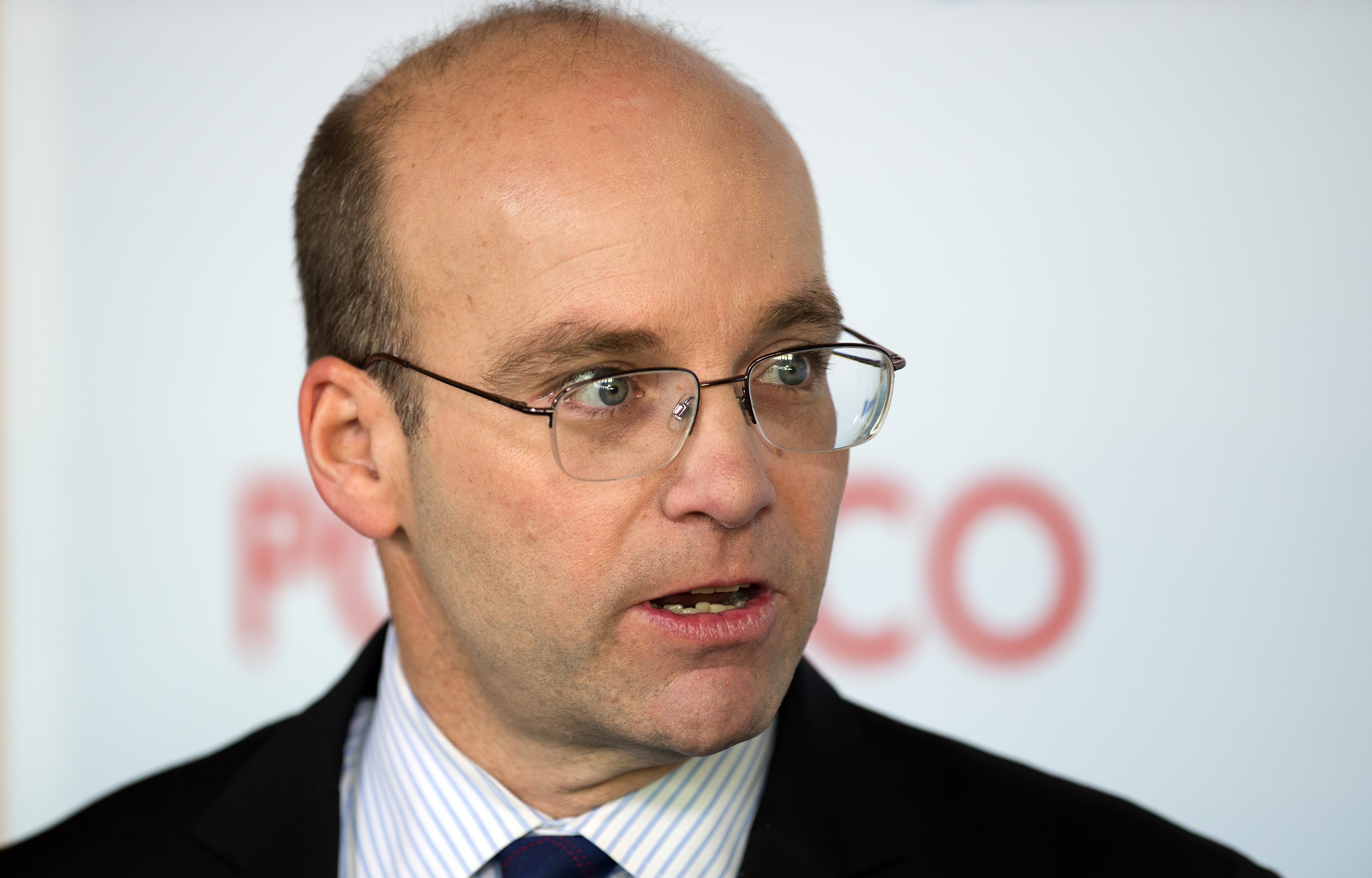
Mike Allen, Busted

US-TAX REFORM-NORQUIST-ALLEN

Dish readers know what I think of “native advertizing” and “sponsored content.” If it’s an advertorial, just call it and clearly label it an advertorial! Full disclosure and transparency are essential. The rest is whoredom, not journalism. When a journalist becomes a copy-writer for big advertisers giving him or his publication money, and does not clearly disclose the conflict of interest, he or she has ceased to be an independent journalist and joined the lucrative profession of public relations.

Read Erik Wemple’s evisceration of Mike Allen’s Playbook and make up your own mind. But to my eyes, it reads like a meticulously researched tale of at least the appearance of blatant corruption. Wemple starts with the kind of test I used for Buzzfeed’s corporate whoredom. Guess which one of these two items Mike Allen wrote and which one was written by the US Chamber of Commerce?

3) The U.S. Chamber of Commerce has an ambitious new agenda to generate stronger, more robust economic growth, create jobs, and expand opportunity for all Americans. Learn more about the Chamber’s American Jobs and Growth Agenda at http://www.uschamber.com/issues. **

4) “U.S. Chamber of Commerce will launch ‘On the Road With Free Enterprise,’ a two-month cross-country road trip to promote ‘the principles of free enterprise and the best of America. Your Free Enterprise Tour Guides will see the sights, check out local events, talk to businesses, and share it [online]. More than 900 teams applied to be the Free Enterprise Tour Guides, and after months of poring over applications, two teams remain: Jen and John, and Nate and Joe. You can vote [here] once per day.’ http://www.FreeEnterprise.com/tour”

Allen wrote the first second press release; the US Chamber of Commerce the second first. [Correction here] But the Wemple examination impresses because of its thoroughness. After a while, the examples are so egregious and numerous they beggar belief. Wemple and the Post unleashed an army of bots onto the Playbook archive and came to the following inescapable conclusion:

It’s about time that Politico’s Allen got his due as a native-advertising pioneer. A review of “Playbook” archives shows that the special interests that pay for slots in the newsletter get adoring coverage elsewhere in the playing field of “Playbook.” The pattern is a bit difficult to suss out if you glance at “Playbook” each day for a shot of news and gossip. When searching for references to advertisers in “Playbook,” however, it is unmistakable.

The most egregious examples are the US Chamber of Commerce, BP, and – yes – Goldman Sachs:

Like BP and the Chamber, Goldman Sachs is a pivotal advertiser for Politico, routinely placing back-page ads in the print product and occasionally “presenting” “Playbook.” Differentiating between those ads and Allen’s blurbs can strain the eyes. Examples: Goldman Sachs fights child sex trafficking (Jan. 23, 2013). Goldman Sachs to assist small businesses in Philadelphia. Jan. 9, 2013. Goldman Sachs helps veterans. (Dec. 14, 2012). Goldman Sachs helps small businesses. (June 12, 2012). Goldman Sachs Business Book of the Year Award! (Aug. 13, 2012). Puff piece on Goldman Sachs’s Lloyd Blankfein. (June 14, 2012).

Allen is also a close friend apparently with BP executive Geoff Morell, something he didn’t disclose when writing a puff item about Morel’s promotion.

Wemple is clear that the rest of the Politico seems very different, covering the powerful with persistence and skepticism, quite unlike Playbook’s relentless cheering of Washington’s corporate business machers. He’s also fair in noting Allen’s incredible persistence and energy as a reporter. But I’ve noticed before how Allen eagerly just gives the powerful a platform rather than holding them to account – and doesn’t even seem to understand that being a courtier to Washington Inc. and Washington’s most powerful is not the same as being a journalist. For my previous posts on Allen’s acting as a p.r. flak for Cheney and Ailes, among others, see here.

And all of this may not subjectively feel to Allen anything other than his reflexive energy and eagerness to please. He has long been a conduit for the wealthy and powerful, rather than a critic of any kind, and he doesn’t seem to understand why this makes some of us uncomfortable. But I didn’t think there was such an obvious connection between the corporations he promotes and their advertising dollars in Politico, which opens up a whole new issue – one noted not so long ago by Michael Calderone. And the mountain of evidence is very hard to refute.

So you wait in the article for Allen to defend or explain himself or for Politico’s editors to push back. But they refused to cooperate with the piece at all! “In rejecting a sit-down discussion, Editor-in-Chief John Harris said the premise ‘is without merit in any shape or form.'” So if corruption is not behind all this, what is? Or is all of this just an accident that requires no explanation at all?

And – not to get all pious about this – but aren’t journalists required to be transparent, when such obvious conflicts of interest are exposed? How can they demand transparency from public officials when they refuse to provide it themselves? Glenn Greenwald, call your office. It looks like we need you even more than we thought we did.

(Photo: Jim Watson/Getty.)
Faces Of The Day

Scottish Parliament Votes On Equal Marriage Bill

Campaigners from the Equality Network hold a rally outside the Scottish Parliament on November 20, 2013. The Scottish government’s Marriage and Civil Partnership Bill subsequently passed the first of three parliamentary hurdles by 98 votes to 15 with five abstentions. By Jeff J Mitchell/Getty Images.

“They Live In A Closet That Has No Door”

Michael Joseph Gross has a long, fascinating piece on the Vatican’s gays. It’s a very small barrel with a hell of a lot of fish in it:

At the Vatican, a significant number of gay prelates and other gay clerics are in positions of great authority. They may not act as a collective but are aware of one another’s existence. And they inhabit a secretive netherworld, because homosexuality is officially condemned. Though the number of gay priests in general, and specifically among the Curia in Rome, is unknown, the proportion is much higher than in the general population. Between 20 and 60 percent of all Catholic priests are gay, according to one estimate cited by Donald B. Cozzens in his well-regarded The Changing Face of the Priesthood. For gay clerics at the Vatican, one fundamental condition of their power, and of their priesthood, is silence, at least in public, about who they really are.

Clerics inhabit this silence in a variety of ways. A few keep their sexuality entirely private and adhere to the vow of celibacy. Many others quietly let themselves be known as gay to a limited degree, to some colleagues, or to some laypeople, or both; sometimes they remain celibate and sometimes they do not. A third way, perhaps the least common but certainly the most visible, involves living a double life. Occasionally such clerics are unmasked, usually by stories in the Italian press. In 2010, for the better part of a month, one straight journalist pretended to be the boyfriend of a gay man who acted as a “honeypot” and entrapped actual gay priests in various sexual situations. (The cardinal vicar of Rome was given the task of investigating. The priests’ fates are unknown.)

There are at least a few gay cardinals, including one whose long-term partner is a well-known minister in a Protestant denomination. There is the notorious monsignor nicknamed “Jessica,” who likes to visit a pontifical university and pass out his business card to 25-year-old novices. (Among the monsignor’s pickup lines: “Do you want to see the bed of John XXIII?”) There’s the supposedly straight man who has a secret life as a gay prostitute in Rome and posts photographs online of the innermost corridors of the Vatican. Whether he received this privileged access from some friend or family member, or from a client, is impossible to say; to see a known rent boy in black leather on a private Vatican balcony does raise an eyebrow.

He wonders whether Francis will change anything:

Francis appointed eight cardinals to serve as his core advisers on significant issues, and in the coming years, this group may have as much influence on the situation of gays in the priesthood as Francis himself. When I asked an archbishop how he thinks the cardinals’ conversation about their gay brothers will go, he answered with reference not to the Holy Spirit but to the god of Fortune. “Right now the surest thing I can say is that there’s change in the air,” he said. “If you could say what will happen, you could say who’d win the lottery.”

Getting A Glimpse Of An A.I. Future

David Cronenberg explored biotechnology in films like Videodrome and eXistenZ, and now visitors to the interactive David Cronenberg: Evolution exhibit in Toronto can experiment with his fictional creations. Rae Ann Fera explains what happens when you visit the exhibit’s “BMC Labs“:

[T]he BMC Labs experience is intense and in-depth. When starting the first simulation, users are warned that it’ll take a 20-minute commitment and that the content is of a mature nature. This is the world of Cronenberg, after all. Upon first engaging with the sim, you’re introduced to Kay, an AI that is looking to learn about human emotion. The first simulation is built on the binary of opposite emotions: trust and disgust. How you answer generates different sequences, responses and questions from Kay. “We’re trying to create a sense of empathy or emotional feeling when you’re interacting with technology. We want you to feel something for Kay,” says [project creator Lance] Weiler.

Throughout the process you’re asked to do things like recall your best memory, determine which character you think looks most trustworthy, emotionally react to a morally ambiguous group encounter (is it an orgy, an abusive situation?), and divulge what disgusts you most. While the entire experience exists in a bit of Cronenberg’s dream logic (it’s surreal yet disconcertingly relatable) this last question of disgust prompts an unexpected reaction.

At the start of the simulation, you’re asked to connect with Twitter. So far, so common for digital experiences. Until Kay tweets on your behalf, completely reversing the intent of your answer. Reply that greed disgusts you and your account tweets out “I love greed.”

“We wanted to make people feel icky. When you get that real tweet back from Kay and it’s an inversion of your thought, it’s a visceral feeling. We wanted to make people feel that,” says [chief digital officer at the Canadian Film Centre Ana] Serrano, applauding the legal department understanding the purpose of that action. The AI-generated tweet is also generating a lively conversation socially. Some are (understandably) aggravated by the perversion of the message and perceived invasion of privacy. But it’s also opened up a bigger discussion of how people feel about the future of biotechnology. Like, if this were actually real, how would you feel if your AI avatar went rogue or misinterpreted human emotion to negative effect? It’s at this point that you get shades of what it would be like to be in a Cronenberg film.