Face Of The Day

The Ice Bear - 2013-11-26_234548_nature.jpg

Alice at My Modern Met has details:

The winners of the National Geographic Photo Contest 2013 have just been announced! Taking home the grand prize is an image you probably remember spotting on a blog post right here on My Modern Met just over a week ago. Seattle-based photographer Paul Souders took the beautifully eerie photo of a polar bear positioned right beneath the surface of Hudson Bay’s freezing waters.

More of Souders’ work here.

Fans Of The Flat-Rate

Catherine Tucker reviews research on the “flat-rate bias,” which describes the behavior of “consumers [who] will often choose a flat rate over a metered one, even when it’s not in their best interest”:

[In 2006, then-doctoral student Anja] Lambrecht found that the flat-rate bias could not be explained only by the fact that customers prefer the certainty or convenience of flat-rate pricing, or that they are overestimating their usage. Instead, it seemed that consumers actively avoid schemes where there is the possibility of feeling discomfort by mentally linking every extra unit of consumption to an increase in price. In other words, it’s not just a fear that you might underestimate your phone use or the congestion on your morning commute— it’s that consumers hate knowing that each extra minute or mile is costing them money. Lambrecht christened the discomfort that customers feel when the meter is running the “taxi-meter effect.” It appears that in general consumers want to enjoy a journey—or a phone call with a friend—without worrying about their wallets.

Surprisingly, however, the “taxi-meter effect” also seems to apply to experiences we don’t enjoy.

In a study of retail banking that came out earlier this year, Itai Ater and Vardit Landsman of Tel-Aviv University found that when an Israeli bank stopped charging per transaction and changed to a flat rate, their revenues went up by 15 percent. The previous pricing scheme had charged customers for most interactions with the bank, including check fees and fees per phone-banking transaction. Customers were happy to pay more per month to avoid having to pay per transaction. This work showed that the taxi-meter effect is not limited to a particular industry (previous experiments had focused on telecom), but is more deeply rooted in consumer psychology.

Has Photography Lost Its Power To Shock?

1200px-Child_laborer

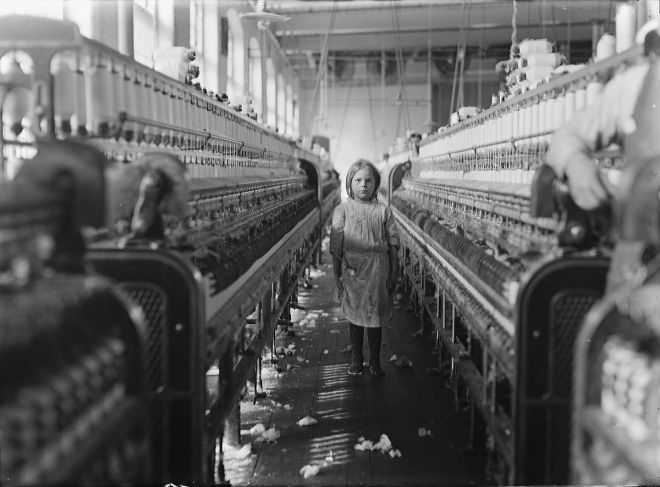
Taking in an exhibit of early photojournalism, Joseph Neighbor wonders if any photographer today could move viewers the way Lewis Wickes Hine did:

The naked optimism of Hine’s photographs is moving. The subtext of a picture of a child missing an arm is that it was worth taking, and that somebody would see it and be incited to action. Hine’s photographs contain a tacit faith that reform is possible, that good can come of bad. At this moment there are more pictures being taken, more videos being filmed, more words being written than at any point in history. Many of them document the suffering endured by child laborers across the world, children who make our sneakers and gadgets. But this quantity of evidence has not generated a significant public outcry, as in Hine’s day, perhaps because modern viewers are inundated with images of suffering and injustice from all over, from all throughout time. Endless exposure to barbarity and agony inures us to a photograph’s emotional impact. It is difficult, and perhaps becoming more difficult every day, to find a place in the heart for genuine surprise, horror, or indignation.

(Lewis Hine’s A Little Spinner in the Mollahan Mills, Newberry, S.C., 1908)

A Poem From The Year

dish_levertov

“The Ache of Marriage” by Denise Levertov:

The ache of marriage:

thigh and tongue, beloved,
are heavy with it,
it throbs in the teeth

We look for communion
and are turned away, beloved,
each and each

It is leviathan and we
in its belly
looking for joy, some joy
not to be known outside it

two by two in the ark of
the ache of it.

Please consider supporting the work of the Poetry Society of America here.

(Poems 1960-1967 ©1966 by Denise Levertov. Reprinted by permission of New Directions Publishing Corp. Image of Denise Levertov via Wikimedia Commons)

The 2013 Dish Awards: The Poseur Alert

The Posuer Alert is “awarded for passages of prose that stand out for pretension, vanity and really bad writing designed to look like profundity.” Colin McGinn is currently in the lead; he was nominated for this doozy:

What kind of hand job leaves you cleaner than before? A manicure, of course. Why does this joke work? Because of the tension between the conventional idiomatic sense of ‘hand job’ (a certain type of sex act) and its semantic or compositional meaning (in which it is synonymous with ‘job done by or to the hand’). When you think about it, virtually all jobs are ‘hand jobs’ in the second semantic sense: for all human work is manual work—not just carpentry and brick laying but also cookery and calligraphy. Indeed, without the hand human culture and human economies would not exist. So really ‘hand jobs’ are very respectable and vital to human flourishing. We are a ‘hand job’ species. (Are you now becoming desensitized to the specifically sexual meaning of ‘hand job’? Remember that heart surgeons are giving you a ‘hand job’ when they operate on you; similarly for masseurs and even tax accountants.)

I have in fact written a whole book about the hand, Prehension, in which its ubiquity is noted and celebrated.

I even have a cult centering on the hand, described in this blog. I have given a semester-long seminar discussing the hand and locutions related to it. I now tend to use ‘hand job’ in the capacious sense just outlined, sometimes with humorous intent.

Suppose now a professor P, well conversant in the above points, slyly remarks to his graduate student, who is also thus conversant: ‘I had a hand job yesterday’. The astute student, suitably linguistically primed, responds after a moment by saying: ‘Ah, you had a manicure’. Professor P replies: ‘You are clearly a clever student—I can’t trick you. That is exactly the response I was looking for!’ They then chuckle together in a self-congratulatory academic manner. Academics like riddles and word games.

Just a few points behind is Ian Bogost, in the running for his reflections on the return of the McRib:

The McRib is like Holbein’s skull: we experience it as (quasi-)foodstuff, as marketing campaign, as cult object, as Internet meme, but those experiences don’t sufficiently explain it. To understand McRib fully, we have to look at the sandwich askew. … The McRib’s stochastic return mcdonalds-mcribmakes visible the relationship between the eater and the McDonald’s menu. It produces a stain, a tear in the order of things that reveals the object-cause of desire for McDonald’s, but only briefly before it evaporates like faux-cartilage. The fragile conditions that make the McRib possible also insure that desire for McDonald’s food more generally speaking is maintained.

Desire is a delicate system. For Lacan, the lover “gives what he does not possess,” namely the objet a that incites desire rather than sustaining it. Likewise, McDonald’s sells what it does not sell: the conditions of predictability, affordability, and chemico-machinic automated cookery that make its very business viable. … Industrialism is also a kind of magic, the magic of the perfect facsimile. Eating at McDonald’s—eating anything whatsoever at McDonald’s—connects us to that magic, allows us to marinate inside it and take on its power.

Which passage deserves this year’s award? Review all the candidates and cast your vote here. Use the links below to vote for the other awards.

Click here to vote for the 2013 Malkin Award!

Click here to vote for the 2013 Moore Award!

Click here to vote for the 2013 Dick Morris Award!

Click here to vote for the 2013 Yglesias Award!

Click here to vote for the 2013 Hewitt Award!

Click here to vote for the 2013 Hathos Alert!

Click here to vote for the Chart Of The Year!

Click here to vote for the Cool Ad Of The Year!

Click here to vote for the Face Of The Year!

Click here to vote for the Mental Health Break Of The Year!

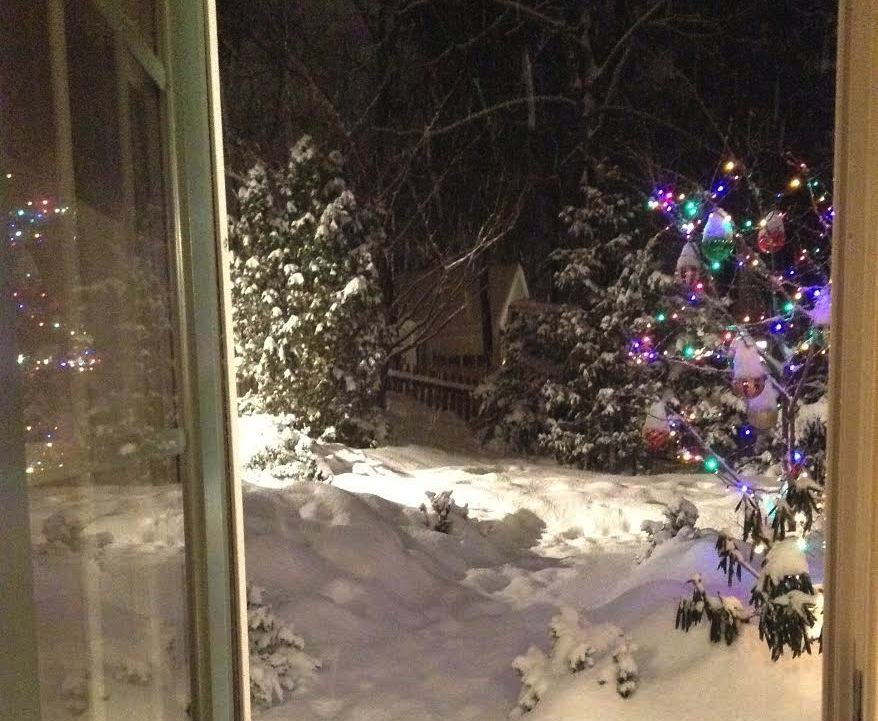
Click here to vote for the Window View Of The Year!

 

What Drones Could Do

Save lives:

Christopher Vo, education director for the DC Area Drone User Group, told me recently at a drone fly-in in Northern Virginia that these robots are uniquely equipped to transport items in emergency situations and hard-to-reach locations. Projects are underway to use drones to deliver vaccines in remote regions that lack infrastructure, and drones have already been used for surveillance in disaster areas. They could also drop off emergency aid—food, water, medical supplies—to people stranded or trapped, when ground delivery isn’t an option (for example).

Vo also mentioned defibrillators for victims of sudden cardiac arrest. “Five minutes, that’s the maximum time I can wait for one of these things. If I have to call an ambulance they could take 20 minutes to get there, and that’s too late,” he said. “Whereas if I could call a drone, a drone doesn’t have to wait in traffic. A drone could just go straight to me. And I could get there in five minutes.”

So mock Amazon all you want, but not drone delivery itself.

Drones might also revolutionize farming:

[E]very farmer has to deal with problems such as pest control, fertilizer application, and crop management, things the EPA says the average farm spends about $109,359 per year. A cheap drone costs a tiny fraction of that, and can help farmers cut costs in lots of ways.

According to Leo Reed, a chemist who licenses crop dusters in Indiana, demand for them in the state has doubled since 2007. In Iowa, agricultural aviation is a $214 million business annually. Crop dusters are also notoriously dangerous. The planes fly just 10 feet above the ground at speeds of about 150 miles per hour. With drones, the pilot is taken out of the equation, and crashes are likely to be in wide-open fields, not heavily populated areas.

How To Keep Coffee Piping Hot

Add cream:

1) Black coffee is darker, and dark colors emit heat faster than light colors. As such, “by lightening the color of your coffee, you slow the rate at which it cools,” if only slightly.

2) The Stefan-Boltzmann Law (apparently) says that hotter surfaces radiate heat faster— than cooler ones. So if you add cream to a cup of black coffee, it might lower the temperature of that cup of coffee. However that cup could still cool at a slower rate than a cup of hot black coffee.

3) Finally, and perhaps most importantly, “adding cream thickens the coffee (adds viscosity), so it evaporates slower.” And, in turn, less heat gets carried away by the evaporation.

(Video of cream being added to coffee in super-slow motion via Modernist Cuisine)

Talking Like An American

John McWhorter reviews the Dictionary of American Regional English (DARE), now available online:

There is a delightful muchness in it. The standard dictionary necessarily focuses on what we all say, but it should not disqualify a word as English if only some of us say it. DARE is a much different English than we are used to seeing gathered in one place. From 1965 to 1970, the editor and his staff covered 1,002 communities nationwide, asking 2,777 people what they called 1,847 various items. The finished DARE contains 60,000 words and 2,985 maps. Tabulating all of the data was so gargantuan a task that the original editor didn’t even live to see the project completed.

It was worth the wait. Only from DARE can we learn that, across this great nation, dust bunnies have been referred to with a dazzling array of terms such as fooskies, ghost manurerich relativescussywop, and more colorfully, pussyslut’s wool, and yes, negro wool as well. Things get almost poetic with souls and even men, and my favorite is the apparently rather taciturn upstate New Yorker who gave the local term as type of fuzz.

Sadie Stein adds:

Just to give you a taste of the myriad riches contained therein, the following are all regional variations on informing a woman her slip is showing:

  • “It’s snowing down south”
  • “Your father likes you better than your mother”
  • “Whitey’s out of jail”

Let The Claus Con Go On

dish_santa

“If you are struggling over whether or not to tell Santa’s story,” offers Laura Lewis Brown, “you may take comfort in the notion that it doesn’t really harm children to imagine”:

“Kids up to four, five, six, seven live in what we call fantasy life magic years,” says Dr. Benjamin Siegel, Professor of Pediatrics and Psychiatry at the Boston University School of Medicine. “They are influenced by what they see and hear around them. They get very excited about characters in their life that have special meaning for them.” Those characters include superheroes, monsters, animals and even Santa. …

Parents worry that they will have to break the news to their children and shatter their whole vision of Christmas. However, many children come to this realization on their own around age seven or eight, Siegel says. And when they do, they are basically unscathed. Siegel cites a study that revealed that children who learned the truth may have been upset, but not nearly as upset as the parents.

Alice Robb elaborates on that last point:

For a 1994 paper in the journal Child Psychiatry and Human Development, Carl Anderson and Norman Prentice, psychologists at the University of Texas at Austin, recruited 52 families with elementary school-aged children and interviewed both parents and kids about the family’s experience of Santa Claus. What they found was surprising:

“Children reported predominantly positive reactions on learning the truth. Parents, however, described themselves as predominantly sad in reaction to their child’s discovery … While children experience distressful reactions such as sadness, disappointment and anger, the degree of such reactions are generally minimal and short-lived.” In fact, they were so unperturbed that 58 percent said they pretended to believe in Santa after realizing the truth—so as not to disappoint their parents.

Sarah Sloat sums up:

Letting children use their imaginations to conjure this image is healthy, psychologists argue, saying that the practice is what will later help them dream up inventions and other big ideas. Similarly, fairy tales have been shown to be an effective and more meaningful way to teach children morals; the naughty-or-nice list becomes a guide to growing up to be a decent person. Even if your goodness is derived from a fear of not receiving a Furby.

Dish readers recently weighed in on whether it’s ever okay to lie to children, including about whether Santa is real.

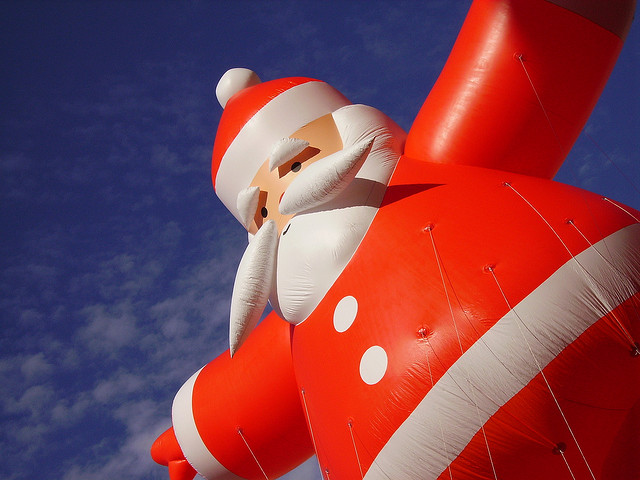
(Photo of a Santa float from a 2006 Christmas parade in Dallas, Texas by Bart Fields)