Francesca Gino explains how underdressing can actually increase perceived social status:
In recent research, my Harvard Business School colleagues Silvia Bellezza and Anat Keinan and I found that under certain conditions, nonconforming behaviors, such as not following the expected dress code or the appropriate professional conduct in a given context, can signal higher status. In our research, for example, shop assistants working in boutiques selling luxury brands in Milan assigned greater status to the woman wearing gym clothes and a jean jacket rather than to the woman properly dressed. In another study, students assigned higher status to a 45-year-old professor working at a top-tier university when he was described as wearing a t-shirt and had a beard than to a clean-shaven one wearing a tie. When the deviant behavior appears to be deliberate, it can lead to higher status inferences rather than lower ones.
Why is this the case? Nonconformity often has a social cost, so people assume people breaking the rules enjoy a powerful enough position that they are not concerned about the costs.
Love Actually is a considerable outlier among romantic comedies in its rigorous conviction not only that people fall in love without really knowing one another, but that they don’t even need to learn anything about each other to confirm their initial attraction. … The fundamental problem with Love Actually is that it presents romance as either absurdly easy—something that strikes you like a thunderclap and requires only a single grand gesture in order to be fulfilled—or all but impossible. Notably absent is the idea that love might ever be worth a little sustained effort: some mutual exploration and discovery, a bit of care and nurture, maybe even the overcoming of an obstacle or two. Indeed, it’s hard to shake the sense that what is “classic” about Love Actually is not that it shows us anything about how people fall in love, but that it so conspicuously declines even to try.
Emma Green issues a defense, saying she’s drawn to “the excitement and power of demonstrations of love”:
None of the movie’s characters manages to pull off a Hollywood-perfect version of this.
Hugh Grant, who plays Britain’s prime minister, gets caught kissing one of his staffers, played by Natalie McCutcheon, on stage at her nephew’s Christmas play. Colin Firth proposes to his former house cleaner, Lúcia Moniz, in grammatically sketchy Portuguese. Martin Freeman’s character meets Joanna Page’s character while they’re working as body doubles on the set of a soft-core porn movie, yet he fumbles their first kiss after he finally asks her out on a date. These scenarios are messy, awkward, and often hilarious, but they are also winning, because they make the universe seem ever-so-slightly more wondrous.
If the real world is not like this, then perhaps it’s the real world that needs to change—we’d be better off if there were more grand gestures. These are moments that remind of how special life really is: The gesturer gets the thrill of delighting someone they care about; the recipient feels as though they are uniquely worth of someone’s affections; and bystanders believe that, one day, they too might find the high heights of enthusiastic, whirlwind love.
Love Actuallyis the most pro-romantic film ever. It is a clarion call to share your pent up feelings for other people. That is good. That is decent. That is rare. People like to be told that they’re thought of as wonderful, that they matter to someone else. People should do it more often. And sure, they probably don’t feel the same way about you, but you should find out. Just in cases.
Alyssa Rosenberg, for her part, appreciates the movie “not because I think it’s a compelling celebration of love, or because it’s a good holiday movie, but because of how sad the film often is.” Lindy West joins the haters, and so does Julian Sanchez, who zooms out:
The ultimate wish-fulfillment is not imagining that you can become special through sustained effort, but to have it confirmed that you were special all along, as you always secretly suspected. A romcom in which two characters find love because they are both interesting, clever, funny, accomplished, kind, confident, attractive—insert your favorite adjective here—and play equal parts in winning of the affection of the other would not only fail to scratch this itch, it would be depressing. We don’t go to movies to watch people more interesting, clever, funny etc etc than ourselves achieve love and happiness in a context very much like that of our real lives—that’s what we are watching in our real lives. We go to movies to be reassured that we can have those things without being transformed ourselves. The viewer-identification characters here, then, need to seem basically good and genial—we’re not going to project ourselves onto someone actively unlikable—but also bland and passive enough that they don’t leave us feeling like true love is for people with desirable characteristics we conspicuously lack.
Orr stands by his claim that the film is “not merely unromantic, but actively anti-romantic”:
The problem … is the patterns that emerge when you consider the film as a whole. One subplot about an older man wooing a much-younger subordinate? Fine. But three? And on it goes: not one, but two gags (three, if you count the Colin subplot) about how the only possible way a man could overcome heartbreak is with the assistance of one or more supermodels; two storylines in which women (never men) see their romantic lives shattered by obstacles that ought to be surmountable; and, most important, upwards of half a dozen subplots in which characters go directly from initial physical infatuation to (presumed) happily-ever-afters, without remotely bothering to get to know one another in between. … Set aside the [Laura] Linney and [Alan] Rickman-[Emma] Thompson storylines (which I find problematic in other ways), and it’s almost two hours of rom-com porn, of grand gestures with little buildup and no follow through, of money shots.
Catherine Andrews calls for a truce, claiming that “almost all ‘rom coms’ are this bad”:
Look, in the end, I can forgive anybody, including myself, who likes Love Actually. Because BRITISH ACCENTS. And Colin Firth. And I guess it kinda WOULD be nice to fall in love without having to ever try or talk to a person or go on OKCupid. … And we could also just admit to ourselves, Love Actually is a movie with many sins, but sometimes, things are hard, and we just want to pop a beer and watch a stupid fantasy movie. Arrow-shooting elves don’t exist, but they’re fun to watch — and just because they’re depicted on screen doesn’t necessarily mean that most of us think it’s that way in real life. At least, I hope not.
Walking with the Wounded team member Duncan Slater is embraced by his daughter Lilly on his return to London Heathrow on December 23, 2013. The South Pole allied expedition comprised of three international teams made up of wounded servicemen and women from the UK, the US and the Commonwealth (Australia and Canada) trekking across 335km of the Antarctic Plateau to reach the South Pole in 16 days. By Dan Kitwood/Getty Images
Matthew Schmitz defends the abbreviation against its religious detractors:
One of the popular indicators of the supposed war on Christmas is the use of the abbreviation Xmas. The well motivated, if grating, “Don’t take Christ out of Christmas” alludes not so subtly to the abbreviation. The former Anglican bishop of Blackburn, Alan Chesters, advised his clergy against usingit. Jane Wyles, editor of the Anglican C Magazine, summed up much Christian sentiment when she criticized the “glib way people substitute Christ with this anonymous ‘X’. It’s all part of the PC picture—Christianity gets squashed into a smaller and smaller corner.” …
Xmas is, though, a much more venerable abbreviation than many suppose. The X signifies the Greek letter chi, which was traditionally combined with P, or rho, to signify the name of Christ. Constantine instructed his soldiers to scrawl the letters on their shields before the Battle of the Milvian Bridge, his victory in which led to the unlikely establishment of a Christian empire. Far from a symbol of secularization, then, Xmas carries echoes of the clash of battle that inaugurated political Christendom. The abbreviation’s use in English dates back to 1021, when an Anglo-Saxon scribe saved himself space by writing XPmas. The P was dropped but the term soldiered on: Coleridge used Xmas in his letter writing. The wags at Punch pressed it into service as a verb, Xmassing …
Contrary to popular belief, migrants don’t tend to flow from the poorest countries to the wealthiest:
It is often said that the only way to reduce migration from poor countries is to boost development, but this ignores the inconvenient fact that development is generally not associated with lower levels of emigration. Important emigration countries such as Mexico, Morocco, Turkey and the Philippines are typically not among the poorest countries. Meanwhile – and against popular perceptions of a “continent on the move” – Sub-Saharan Africa is the least migratory region of the world. In fact, when you examine the data, human and economic development is initially associated with increasing emigration. Any form of development in the poorest countries of the world is therefore likely to lead to accelerating emigration. Such findings contradict conventional thinking and force us to radically change our views on migration. …
Improved access to information, images and lifestyles conveyed through education and media tend to broaden people’s mental horizons, change their perceptions of the “good life” and typically increase material aspirations. Development processes tend to initially increase both people’s ability to move and their aspirations, explaining why development often boosts migration.
One of the things I’m proudest of, here at the Dish, is our publishing of poetry on a regular basis. We started doing it haphazardly a few years back, but this is the second year that the Dish’s poetry offerings have been arranged by Alice Quinn. Not every reader will know what an honor and privilege this is, but Alice was Knopf’s poetry editor from 1976 – 1986 and the New Yorker’s poetry editor for the next twenty years, and is now the executive director of the Poetry Society of America. To have someone of her experience and judgment be the guardian of a blog’s selection of poetry has always been a coup for us. But this year especially, in its range and depth and often piercing simplicity has been a joy.
If you love the poems, there’s something you can do to thank Alice for her work, which she does for us for the love of bringing poetry to a new medium and new audience. The Poetry Society of America, the wonderful organization Alice directs, is running a special year-end membership campaign from now until January 2nd. While supplies last, anyone who joins at the basic level of membership ($45) will receive for an extra $5 a signed, limited-edition broadside of “Keeping Our Small Boat Afloat” by Robert Bly. Any donation is tax-deductible – and for a short time, you also get a beautiful broadside in the bargain. If you want to thank Alice, sign up for your membership here.
In the week ahead, we’ll also be looking back at a few of the poems offered this year, chosen by Alice and Matt – think of it as an idiosyncratic “greatest hits” of Dish poetry. Each of these poems will include a link to the Poetry Society of America’s membership drive. The first poem we’re revisiting is below.
“Hunger for the Absolute” by Frank Bidart:
Earth you know is round but seems flat.
You can’t trust
your senses.
You thought you had seen every variety of creature
but not
this creature.
・
When I met him, I knew I had
weaned myself from God, not
hunger for the absolute. O unquenched
mouth, tonguing what is and must
remain inapprehensible—
saying You are not finite. You are not finite.
Please consider supporting the work of the Poetry Society of America here. And you can read all of our “Poems From The Year” here.
As usual, our blue-ribbon panel – sequestered for days in an undisclosed location – has selected this year’s finalists. It was an agonizing, often nail-biting time. But we did our duty and now it’s that time of year for you to do yours. Click the links listed below and vote for the 2013 Malkin Award, Hewitt Award, Hathos Alert, Moore Award, Poseur Alert, Yglesias Award, and Dick Morris Award. Polls are also open for the Chart Of The Year, Mental Health Break Of The Year, and Face Of The Year.
And, for the first time, you can pick the year’s best Window View and Cool Ad. Yes, a Window View contest everyone can win!
You have until the end of the year to pick the prize-winners. The polls will close on Tuesday, December 31, at midnight. Winners will be announced soon after. You picked many of the entries; we just marshaled the very best (or worst) for your final selection:
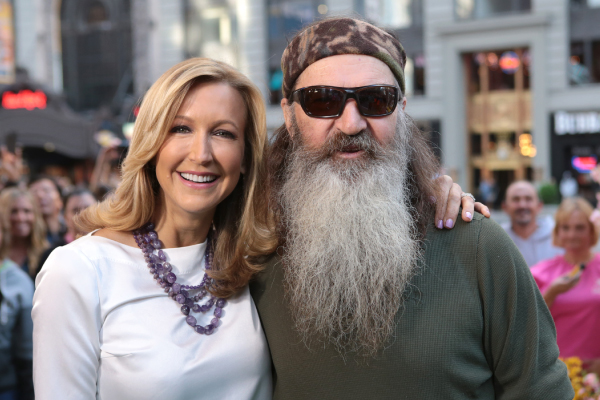
Phil of the Duck Dynasty reiterates the fundamentalist view of sin:
The acts of the sinful nature are obvious. Sexual immorality, is number one on the list. How many ways can we sin sexually? My goodness. You open up that can of worms and people will be mad at you over it. I am just reading what was written over 2000 years ago. Those who live like this will not inherit the kingdom. All I did was quote from the scriptures, but they just didn’t know it. Whether I said it, or they read it, what’s the difference? The sins are the same, humans haven’t changed […] But there’s a way out, do you want to hear the rest of the story or what? Jesus will take sins away, if you’re a homosexual he’ll take it away, if you’re an adulterer, if you’re a liar, what’s the difference?
In that last round-up of sins, Robertson puts homosexuality first, then adultery, then lying. The last two are actually in the Ten Commandments – and yet “homosexuality” is on their level, along with the view that somehow homosexual orientation can be prayed away (something that the largest Christian denomination on earth, the Catholic Church, denies). And this fundamentalist psychology then deepens:
If you break one sin you may as well break them all. If we lose our morality, we will lose our country. It will happen.
Again, as Christian doctrine, this is bonkers. There are obvious levels of sinfulness; the smallest white lie is not the same as a rape, and committing one does not mean committing them all. But you can hear the rhythms of the terrified fundamentalist psyche behind all these words. It is not enough for sins to occur (because that would make our time no different than any other); it is always the case that we are confronting a crisis of sinfulness, and that crisis is always spinning out of control into apocalyptic scenarios. So you give in to the gays, you give in to everything evil, because “if you break one sin you may as well break them all.” And if you break them all, America ceases to exist.
To recap: fundamentalism is not the same as Christianity. It has certain psychological tropes. The first is to see sexual sin as by far the worst of them and the root of all of them. The second is to see gays – whose very being represents sexual sin – as an enemy class within a society bringing about its destruction if they are not stopped or converted (see: Jews, Europe, circa 1300 – 1945). The third is to see these gays as opening the door to every other sin and evil. The fourth is to “lose our country.”
There are many varieties of Christian experience. Let’s just say I prefer the Pope’s.



 The Dish