
Los Angeles, California, 6.40 am
Los Angeles, California, 6.40 am
Amy Davidson asks:
What is the disadvantage of going to Congress? That they are loud and annoying and someone will try to introduce a resolution tying action in Syria to Obamacare? If the Administration can’t stand up to Ted Cruz, it can hardly hope to frighten Bashar al-Assad. And if going to Congress now feels time-consuming, how does it compare to the hours, days, weeks, and sanity expended on the Benghazi hearings? Those might have happened anyway, but they got a fair share of their formless force from the Administration’s initial decision to not really bother with Congress and the War Powers Act when it came to Libya. If you haven’t been asked in the first place, there is no cost to turning a tragedy into a piece of political theatre.
Alex Altman expects Syrian intervention to become a political bludgeon:
The only sure thing is Obama’s opponents will use Syria against him, no matter how it turns out.
House Speaker John Boehner‘s new letter to the president, released late Wednesday afternoon, is a sign of how they may try. Boehner’s letter requests “a clear explanation of our policy” and interests that require intervention, as well as “a clear, unambiguous explanation of how military action — which is a means, not a policy — will secure U.S. objectives.” It notes points of agreements. It includes a list of 14 important questions. But it’s mostly notable for what it doesn’t include: a request for Obama to seek congressional approval.
Instead Boehner wants “substantive consultation,” a phrase that is vague enough to verge on meaningless. The subtext is clear. Republicans will be happy to hammer the president for acting unilaterally, which Obama himself once disavowed. But many want no part of a vote. Backbenchers could wind up on the wrong side of history. And Boehner would have to wrangle a majority out of a restive party that, on this issue, is perhaps even more divided than usual.
Ramesh Ponnuru doubts that Congress would vote for war:
This is not a military action that we are undertaking to defend ourselves from attack or to protect a core interest. The congressional power to declare war, if it is not to be a dead letter, has to apply here. And it seems to me exceedingly unlikely that Congress would vote to commit us in Syria, because the public manifestly opposes it. This is a war with no clear objective, thus no strategy to attain it, no legal basis, and no public support.
Ed Morrissey, on the other hand, suspects that Congress would authorize force:
Why not go to Congress? There is at least as large a bipartisan group urging action, probably more than enough in both chambers to get easy passage of a limited pass. The authorization would give Obama more political cover on what is undeniably an unpopular action, and spread the blame to both parties. Chuck Todd suggested yesterday that the White House is afraid that “isolationists” will block the authorization, and that the delay in getting approval would be too great … Delay? Well, it’s been months since the first time Syria used chemical weapons, which makes a rush to action here moot. Furthermore, the UN wants more time to determine what exactly happened anyway.
Cassidy wonders whether the delay in Britain will spur congressional debate:
After yesterday’s dramatic developments in London, which culminated in Prime Minister David Cameron delaying a parliamentary vote to authorize British participation in an American-led attack, President Obama faces the choice of putting off the bombing or going ahead without the support of America’s closest European ally. Should he choose to hold off for a few days, which seems likely, it will give Congress time to consider the matter, and to schedule a vote approving military action. Until now, the White House has resisted such a vote, and the Republican leadership has stopped short of demanding one. But now that Britain has allowed the people’s representatives to have a say, and also given the U.N. inspectors in Syria some time to complete their investigation of last week’s awful gas attack, the political dynamic in Washington may change.
Drum hopes so:
There are legitimate issues surrounding the powers of the president and the extent to which Congress can micromanage military attacks. But this is something that Congress should actually spend some time debating, instead of just folding up and letting the president do whatever he wants with nothing more than a bit of muttering about separation of powers. The president may be commander-in-chief, but that doesn’t mean the U.S. military is his personal plaything. It’s past time to make that clear.
Earlier Dish on congressional approval and Syria here.
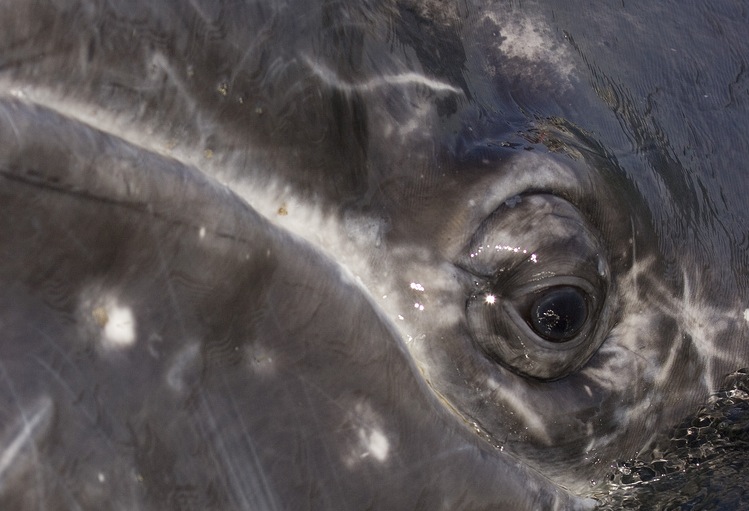
A reader writes:
Evan Soltas’ article make a decent argument for “catch share” in whaling, though I find it curious he neither quotes nor links to any opponents of the idea (instead choosing to summarize their ideas, which strikes me as lazy and uncharitable). I generally support catch share and other conservation solutions that take human activity into account. But had Soltas done more research, he might have realized another problem–whalers break the rules now, and they will break the rules under any catch share system so long as their home countries don’t care to enforce the rules. The International Whaling Commission (IWC) has no enforcement powers. If you hauled a dead humpback whale (actually not that endangered any more) into San Diego harbor, Federal and State authorities would swiftly descend. The same is not true in Japan. Though they’re allowed to take Minke and other smaller whales for “research” purposes, other explicitly protected whales have always been illegally killed by Japanese whaling fleets without consequence.
Years back, my father (Dr. Stephen R. Palumbi) and his colleague Dr. Scott Baker purchased whale meat from Japanese fish markets and used genetic testing to prove that illegal whales were being taken. Blue, fin, sei and other severely endangered great whales were clearly present in the meat supply. A minor furor erupted, with Japan and various useful idiots denying the incontrovertible evidence in front of their faces. Our family home got a number of threatening calls from Japanese-accented men over the next few years (organized crime is involved in the trade). Baker has since repeated the experiment; the illegal species can still be bought without much trouble in Japanese fish markets.
So, catch share is generally a fine conservation strategy. Given proper enforcement mechanisms, which Soltas simply assumes with a wave of his hand at the end of his piece, it might work for whales. But the problem remains: the rules that exist are not being followed. Do whatever you like with the Minke market, but nobody is seriously proposing that blue whales should be hunted. And yet, they are. Until all parties to the IWC are operating in good faith, the rules shouldn’t budge.
And Evan Soltas could have figured all this out if he’d done his homework.
Another reader adds:
Let’s set aside the argument about whales’ intelligence being a reason not to kill or eat them. Instead, I want to address the notion of establishing a “properly regulated market” in whaling as a way to allow their populations to increase.
The history of attempts to manage fisheries makes it clear that “sustainable” management is extremely difficult to pull off. It takes well-crafted regulations, requires strict enforcement and compliance, and relies on fisheries science which is notoriously difficult to get right. The majority of attempts to regulate fisheries for the sake of increasing fish populations have failed or have been so eroded over time by the interests of those who want fish to maximize yield (which typically leads to overexploitation) that the regulations and systems themselves become meaningless.
The assumption that such a system could be put in place for whales is foolhardly. It runs in the face of fisheries management history and fails to take into account the fact that whales are, like many shark species, slow to regenerate. Their feed sources and habitats have been radically reduced. In some kind of ideal scenario, perhaps one could determine some “sustainable worldwide quota” that, as long as it was adhered to, whale populations would increase. But, this sort of paper plan rarely works out in the real world. The idea lacks credibility when factors like human nature, degraded habitats, food sources and more are taken into account.
(Photo by Charlie Stinchcomb)
Nathan Ingraham reports on a major advance in brain-to-brain communication:
Using a non-invasive brain-to-brain setup, a researcher in one lab was able to send a signal from his brain to control the movements of a second researcher in a lab on the other side of campus. It’s believed to be the first human brain-to-brain interface; previous demonstrations have featured rat-to-rat and human-to-rat communication.
The demonstration focused on a simple computer game: Rajesh Rao, a professor at UW who has worked on brain-computer interfacing for more than a decade, looked at a screen and had to fire a cannon to shoot down an enemy plane while avoiding friendly planes. On the other side of campus, Andrea Stocco had the keyboard to execute those commands, but couldn’t see the game itself. But using their brain-to-brain interface, Rao imagined that he was using his right hand to click the space bar on a keyboard – and Stocco’s right hand carried out the command without any conscious movement on his part. Stocco likened it to an involuntary twitch or a nervous tic.
John Biggs emphasizes that this “is not mind control”:
The subject cannot be controlled against his or her will and neither party can “read” each other’s thoughts. Think of this as sending a small shock controlled via the Internet to trigger a fairly involuntary motion.
But Dan Farber sees big possibilities:
“It’s very much a first step, but it shows what is possible,” [project contributor Dr. Chantel] Prat said. “Right now, the only way to transfer information from one brain to another is with words,” she said. With advances in computer science and neuroscience, people could eventually perform complicated tasks, such as flying an airplane, and dancing the tango, by transferring information in a noninvasive way from one brain to another. “You can imagine all complex motor skills, which are difficult to verbalize, are just chains of procedures,” Prat said.

Marc Tracy explains why Bush’s critics are captivated by his art:
The paintings are proof that Bush is an artist—that he invests his energies and imagination in creating works that are meant to be aesthetically pleasing and serve no utilitarian purpose. And being an artist is proof that Bush is an honest-to-God person, not the nightmarish, vague presence we all remember. It’s not even that Bush has a soul, just as it’s not even that the paintings are all that good. (And, I mean, are they, really?) It’s that he is of the same species as we are. He possesses an inner life—the very thing whose apparent absence seemed to connect all of his worst outer traits, from his intellectual incuriousness to his bullying nature (the nicknames!) to his economic cruelty to his foreign militarism.
The paintings are a reminder that—as Philip Roth wrote of the White House during the Clinton years—a human being lived there. Someone who provided unprecedented funding for combating AIDS in Africa and evinced tolerance at a personal level. A son, a husband, a father.
Can make reading others’ emotions more difficult:
Someone with a poker face will not miss an opponent with a big smile on her face when she look at her cards – participants suppressing their expressions were not significantly worse at correctly stating the expression they saw on the final slide. But when it comes to identifying slight signs of emotion – the hints revealed by a careful player – someone trying to hold a poker face is more likely to miss them.
Poker players cloaking their emotions is probably still wise. But other stone-faced professionals should take note:
As the authors point out, these findings may be most important for professions like law enforcement or medicine. Police officers interviewing a victim try to maintain a professional demeanor, devoid of expression, while seeking out information about others’ emotions. Yet this research shows the inherent difficulty of doing so. This is particularly true of a therapist’s work.
A reader illustrates how even cultures known for their patience can frustrate people:
Being from Canada, the simple act of trying to exit a crowded city bus usually involves trying to inoffensively indicate to the other passengers that your stop is next. Contrast that with China, where people just push their way through. I went there for the Olympics in 2008 and I soon realized that my apologies weren’t even registering with the locals – in fact, I probably looked like an idiot saying “sorry” every time someone bumped into me on the Beijing metro.
On a similar note, I went to Israel in 2006 and the company that was hosting the visit took us to Masada, the ancient mountaintop fortress. At one point during the tour we ended up in narrow corridor while our group of five Canadians waited for a group of Israelis to pass. After about a minute they cleared out and, as we moved on, our guide laughed at us saying that in Israel, if you don’t push your way through you’ll never get anywhere.
This got me thinking of how my inoffensive Canadian behaviour (standing patiently, not saying anything) could be considered annoying to any Israeli tourists that happened to be stuck behind us.
Another reiterates how rude tourists accompany any economy that suddenly booms:
The “ugly Chinese” tourist has a precedent in the “ugly Japanese” (and the “ugly American” before that).
I remember a couple of decades ago, being in a Munich beer tavern, when the previous generation of Japanese suddenly found themselves rich enough to hit global tourism sites. A group of Japanese tourists, seriously stressed over too much wurst and a lack of rice and miso, celebrated the end of their German tour by knocking back a few too many beers and singing impromptu karaoke in very loud voices. In the end, they got absolutely hammered and jumped atop the tables to show the stunned Western patrons a rousing version of their traditional Japanese summer “O-Bon” dance. It was behavior you see here in Asia during any given local community’s annual harvest festival.
This all has a cogent economic explanation. Paul Krugman, before his current role as shrill liberal attack dog, used to explain the Asian economic miracle in terms of “inputs” boosting productivity, or agrarian laborers leaving farms and rice fields for the factories, stores or those other middle-class employment opportunities that migrated to Asia from the developed world. These jobs pay more than farming. First Japan, a now other Asian countries have created a middle class able to afford travel for the first time.
Yet this new middle class remains steeped in their agrarian roots. At heart, they are rowdy serfs with little time for our stodgy bourgeois notions of personal space, privacy or speaking in a relatively quiet voice in restaurants. In China’s case, you need to throw in the fact that decades of socialist mismanagement of distribution networks instilled in its citizens a deeply – deeply – held notion that waiting patiently in line is a great way NOT to get what you’re waiting for.
These notions don’t disappear just because you now have had a few years of better management. Japan, again, shows how this will play out. You now have a generation of Japanese that have adopted a more restrained way of conducting themselves when abroad.
Another turns the spotlight on American culture:
I was born and raised in Brazil, and live in DC. Americans are indeed very strict about enforcing their personal space in ways that can be frustrating. For instance, when riding the Metro, one will often see a “crowded” train car that actually has a lot space that would be available if people were more comfortable standing in slightly closer proximity. Perhaps Americans’ strong sense of individuality gets in the way of accomplishing collective needs, and we could learn something from our Chinese counterparts.
Still, I wouldn’t go as far as the three Chinese tourists I saw sharing one urinal in a restroom by the Washington Memorial.
Read the whole discussion thread here.
Kyle Vanhemert passes along a remarkably detailed look at America’s racial makeup. Here’s the Eastern US:

Vanhemert explains what makes this map so special:
The map, created by Dustin Cable at University of Virginia’s Weldon Cooper Center for Public Service, is stunningly comprehensive. Drawing on data from the 2010 U.S. Census, it shows one dot per person, color-coded by race. That’s 308,745,538 dots in all–around 7 GB of visual data. It isn’t the first map to show the country’s ethnic distribution, nor is it the first to show every single citizen, but it is the first to do both, making it the most comprehensive map of race in America ever created.
White people are shown with blue dots; African-Americans with green; Asians with red; and Latinos with orange, with all other race categories from the Census represented by brown. Since the dots are smaller than pixels at most zoom levels, Cable assigned shades of color based on the multiple dots therein. From a distance, for example, certain neighborhoods will look purple, but zooming-in reveals a finer-grained breakdown of red and blue–or, really, black and white.
This is Detroit:

Explore the full interactive map here. Recent Dish discussion of the South, race, and social mobility is here.
Daniel Gross finds evidence that Republicans are warming to many of Obamacare’s individual components:
In the old days, they used to say that a conservative is a liberal who has been mugged by reality. When it comes to health insurance, it seems a liberal is a conservative who has been mugged by an illness. After having a devastating stroke in 2012, Sen. Mark Kirk had an epiphany about the inadequacy of rehabilitation services for poor people. “My concern is what happens if you have a stroke and you’re not in the U.S. Senate, and you have no insurance and no income,” he told National Journal. “That’s the question I have been asking, and the reality is that if you’re on Illinois Medicaid and are a stroke survivor, you will get just five visits to the rehab specialist.”
The same holds for the pre-existing condition ban.
Clint Murphy, a former political operative, McCain campaign staffer, and cancer survivor turned Georgia real estate agent, recently wrote of his conversion on Obamacare. Although he had long since been cancer free, Murphy still wasn’t able to get insurance as a self-employed person. “I have sleep apnea. They treated sleep apnea as a pre-existing condition. I’m going right now with no insurance,” he said. Murphy said he can’t wait for the exchanges to bet set up in Georgia, so that he’ll be able to purchase insurance without being denied for a pre-existing condition. And even as they cavil about ripping up Obamacare, and hence the ban on pre-existing conditions, it is common to hear some Republicans speak kindly of the ban.
This is a dynamic we’ve seen over and over again in the past 80 years. Republicans shriek, cry socialism, and offer full resistance to any effort to expand social insurance. Then, after a certain amount of time passes and social insurance measures become popular and effective, they stand foursquare behind them and demand they be protected. Every single stinking component of FDR’s New Deal was a disaster, but don’t you dare touch Social Security! Lyndon Johnson’s Great Society program was a debacle, but keep the government out of Medicare! Obamacare must be torn up root and branch, just don’t kick junior off my insurance plan!
Bill McKibben’s environmental group is campaigning to name hurricanes after climate-change deniers:
Phil Plait approves:
This ad campaign is pretty clearly tongue-in-cheek, but maybe this isn’t such a bad idea. Clearly, when politicians stick their heads so deeply into the sand that they can see the Earth’s core, something needs to be done. Public mockery isn’t the worst thing that can happen.
 The Dish