Friday on the Dish, Andrew sounded off on the news of chemical weapons use in Syria, questioned why we don’t call modified AR-15s weapons of mass destruction when they inflict just as much death as a pressure cooker, and noticed another step toward Greater Israel in a dodgy visa law. Elsewhere, we further investigated that fake AP that sent the Dow plummeting, checked in on the sequester and America’s anemic recovery, and Adam Serwer went another round in the debate over guest workers.
As Tim Murphy said a good word for the Reddit detectives Robert Beckhusen provided some insight into extremist psychology. Ian Steadman envisioned food copyright in the era of 3D printing, debated whether to subject online retailers to sales taxes and readers asked Steve Brill about Obamacare and its discontents. Later, Karl Rove was true to form in the Quote for the Day as we spotted a powerful PSA on domestic abuse from Saudi Arabia, graded an evidently creationist science exam, and put bomb-sniffing hounds to the test.
In assorted coverage, Alyssa warned of what Zach Braff’s Kickstarter project might bring, Michael Erard suspected the well of band names is drying up and Linda Holmes assessed the merits of reality TV’s dumb anti-heroes. Michael Dirda touched on the sorrowful qualities of Keats, we traced the history of the emoticon, and Venessa Veselka pondered the absence of woman in road epics.
Meanwhile, a developer controlled his phone via brain waves, a teacher allowed cheating in the classroom and we shot off the brief history of espresso. We pulled up some serious 80s hathos, as well as some sludge porn. Finally, we spent a moment with a bright young protestor, had fun watching some unfortunate mascots in the MHB and caught the skyline of Kuwait City in the VFYW.
–B.J.
Thursday on the Dish, Andrew laid out the case for treating AIPAC like the NRA and joined Alec McGillis in questioning Bret Stephens’ Pulitzer prize. He answered more reader criticism of his take on the Boston bombing and jihad, stepped up the conversation with Millman and Dreher, and also noted the fresh case of a religiously motived attack in Canada. Elsewhere, he agreed with Frank Luntz that Republicans are whipped by talk radio ideologues and considered the toll of the hard drive on the sex drive.
In political coverage, Enten fact checked W. Bush’s “comeback” narrative as the curtain went up on Dubya’s presidential library, we kept an eye on the immigration bill and Rubio’s pitch and debated the merits of a bigger Koch presence in media. As the dust began to settle around the details of the Boston attack we recounted Boston’s history of covert jihad networking and connected the industrial tragedies of West, Texas and yesterday’s in Bangladesh. Readers asked Steve Brill how the US can catch up to other nations on health care as we investigated whether Obamacare’s exchanges will work out and Ben Geman noticed Kerry’s squeamishness on Keystone XL.
We realized that human rights still aren’t held in high regard the Afghan military as Shaun McCanna focused on its ongoing opium problem. We also witnessed drug overdoses double since 1999, with about half due to pharmaceuticals, blogs recorded the Mexican drug wars in lieu of old media and Shaunacy Ferro discovered the difficulty of studying psychedelics. Later, Mac McClelland observed gentle butchery and we saw an unsavory pro-hijab PSA in the Cool Ad Watch.
In assorted coverage, Dr. Thomas Murphy VII let A.I. play Super Mario Bros, Aaron Ansarov mashed up jellyfish artfully and mapped the world in carpet patterns. Dan Nosowitz spotlighted some anal-retentive drug mules, we surveyed a green skyline and explained why New York keeps its chic cheap. We looked out at Petaluma, California in the VFYW, glimpsed nature in the Face of the Day and Jimmy McMillan ran for mayor in the MHB.

Wednesday on the Dish, Andrew fired back at Greenwald in debating the Boston bombers and jihadism, expounded on his view of Islam and modern terror, agreed with Beinart on the takeaway of the Tsarnaevs’ Caucasian identity and rolled his eyes at ongoing attempts to sidestep the religious explanation. Elsewhere, he unleashed further on Bill Keller’s editorial line on torture, and reflected on the changing significance of the question, “are you gay?” and happily noted that good content means good business.
In political coverage, we dove deep into the politics of immigration reform, revisited the Gulf oil spill and asked whether the FBI dropped the ball in Boston. On the eve of his presidential library opening, we took stock of George Bush’s apparent PR recovery and sensed some love lost between Dubya and his Vice. Barro set the record straight on workplace mortality, readers asked Steve Brill how hospitals turned into profit mills, we debated the politicization of the sequester. Finally, we considered whether citizenship should be up for bidding as Millennials turned out to be a generation in the passenger seat.
In miscellanea, readers responded to the masturbatory debate, we glimpsed a Matrix-esque rehab program, and Dish met Phish. Matt Honan grasped for a solution to misinformation on Twitter, Virginia Heffernan praised the Internet’s new language of looking, and Adam Alter illuminated the clout of color over our minds. Lisa Margonelli proved the eco-friendliness of living mobile as we tasted a stiff glass of enviro-whiskey.
We followed the longstanding blowback of bullying, Amy Benfer took apart love in The Little Prince, and Tom Junod dispensed wise words on how to sustain a marriage. Lastly we welcomed spring back with a beat in the MHB, spent a moment at a Muslim vigil in Boston for the Faces of the Day and peeked out at the Upper West Side in the VFYW.
Tuesday on the Dish, Andrew pushed further in the debate over terror and America’s PTSD, rebuking arguments that deemphasize the Tsareav brothers’ jihadist motivations and taking on readers’ dissent. He also pointed to the fruits of Christian fundamentalism in the new, pro-confederate arguments of Douglas Wilson, ventured into strange and wondrous world described in Jennifer Rubin’s latest column, and noted the Dish’s latest honor. Later, Andrew revisited the hypothesis of gay overachievement in light of new evidence, sounded off on the difference paths toward coming out in the world of sports and noted Rhode Island and Nevada appear ready to legalize gay marriage quite soon.
In political coverage, we traced the origins of the West, Texas explosion, analyzed the markets’ reaction to the fake AP doomsday tweet, and kept a tab open on immigration reform, which Ramesh claimed still carries one huge defect. Ackerman took note of the insta-Truthers over the Boston bombings, Emily Bazelon summed up truth about the rule of law in the face of terrorism, we separated Islamophobia from genuine criticism, and got a whiff of a genuine lead as to who radicalized the older brother Tamerlan.
Elsewhere, we felt the burn of sequestration intensify and learned of the enormous size of America’s off-the-books economy as readers asked Steve Brill what surprised him reporting on our bloated healthcare industry. Nate Cohn envisioned gun control as a strong campaign issue for Democrats in 2016, Nathan Hegedus emphasized the physical staying power of firearms and we debated the correlation between crime and gun ownership. Finally, we sized up the new cyber-security bill CISPA that just made it out of the House, Ambers issued some rules of thumb for journos using police scanners and Chris Mooney explained why academia skews liberal.
In assorted coverage, Cornell researchers studied mosh pit mumurations, The Smiths embodied the best in angsty adolescent love as Rebecca Makkai scribbled books within books. Readers toughed out another challenging VFYW contest, we surveyed American laws allowing roadkill cuisine, the anxious and needy among us performed better in poker and Stanford and MIT made sure the first ever transaction online was a drug deal. Lastly, we spent a moment with some young Parisians celebrating the legalization of same sex marriage in France, caught a striking sunrise in Decatur, Indiana for today’s VFYW, and set off the mother of all mouse traps in the MHB.
Monday on the Dish, Andrew pushed back against pundits downplaying the Tsaraev brothers’ religious radicalism, connecting it with a greater refusal to acknowledge the power of fanatic faith. He weighed in on the debate over Mirandizing the surviving suspect, lauded the decision to do so when it came—contrasting this case with justice under Bush—and cautiously tracked Francis’ first few moves as Pope, with an eye to the future.
In more Boston coverage, Rafia Zakaria accounted for the preeminence of American tragedies, we reviewed how news of the bombing is going down at the Kremlin, and we continued to ask whether Boston’s city-wide lockdown was really necessary. Dzokhar Tsarnaev himself supplied the Quote for the Day and Julia Ioffe unpacked the significance of the bombers’ crisis of assimilation in the US while Charles King placed less weight on their link to the Caucasus. Later we watched a remarkable video of marine amputees comforting victims of the Marathon bombing and posted a one-stop shop for last week’s coverage of the Boston bombings.
In political news and views, Beinart dismissed MoDo’s latest critique of Obama’s grit, we gathered some analysis on the Senate’s latest flop on gun legislation, and John Ismay updated Eisenhower’s “chance for peace” speech. Soldiers shared their experiences in our thread on the plight of US veterans, Rod Dreher defended the French against American conservatives, J. Bryan Lowder imagined the next logical step after the lifting of the Boys Scouts’ gay ban.
In miscellanea we learned that the news can be bad for your health and discovered the blowback of drug PSAs. Dean Starkman tracked the crash in WSJ’s longform writing as we read the journal of a professional killer and browsed album reviews by musicians themselves. Angela Watercutter excavated vintage Internet, we watched a grandmother experience virtual reality and Navneet Alang explained anomalous aesthetics.
Elsewhere, Andrew Johnston warned of the fragility of GPS, Kas Thomas deflated the antioxidant theory and Bill Wasik checked the phrase “viral.” Ben Marks studied the blood rust of vintage blades while we tucked our ball chairs away. Finally, we saw the bloody results of French homophobia in the Face of the Day, glanced at a view of Honolulu in the VFYW and chuckled at the less than literary output of celebrities on Twitter in the MHB.
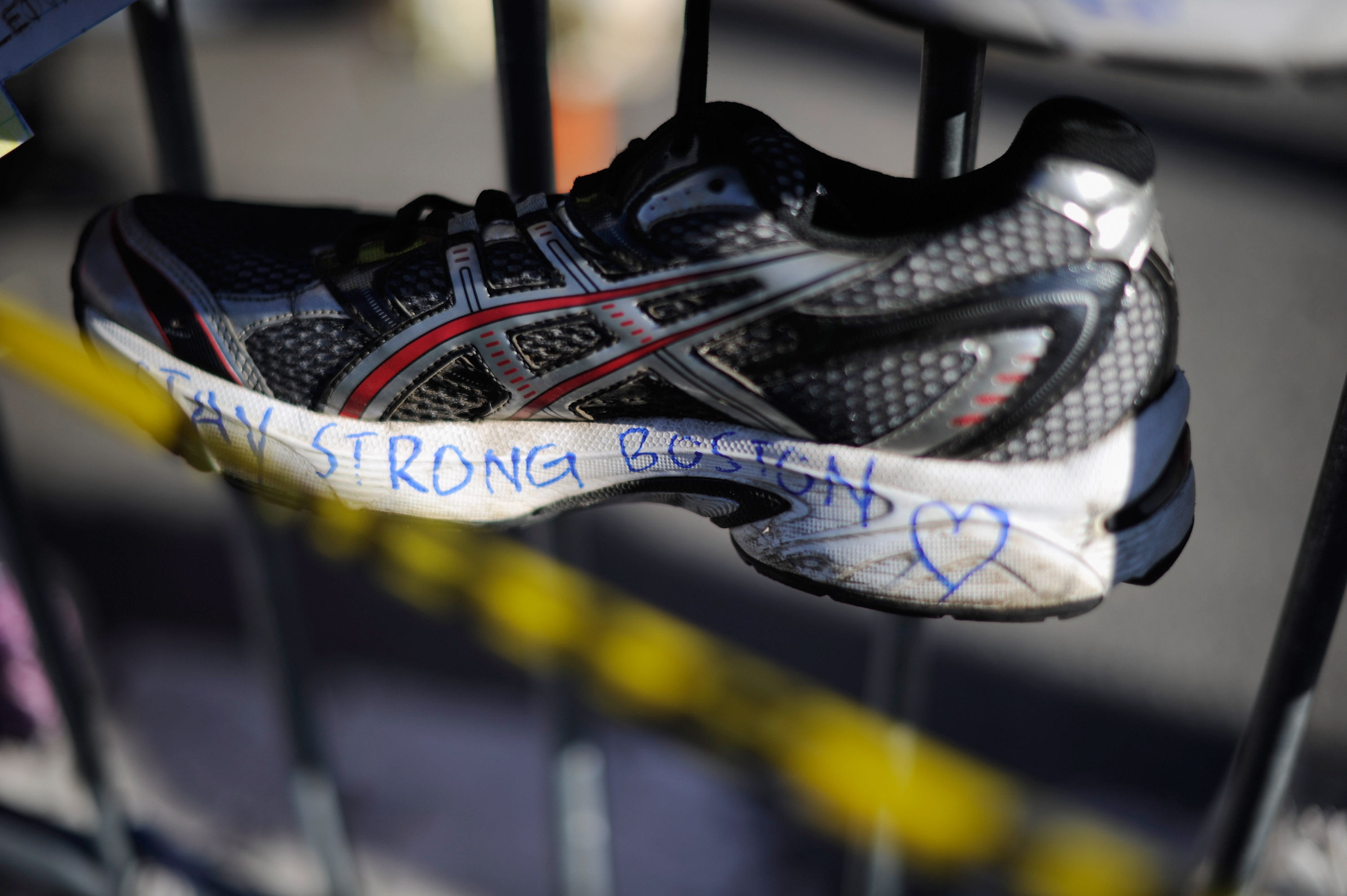
Last weekend on the Dish, we took a break from covering Boston, pausing only to praise the city’s medical teams, while Andrew and Hitch continued their late night conversation about religion.
We also provided our usual mix of religious, books, and cultural coverage. In matters of faith, doubt, and philosophy, David Foster Wallace saw perfectionism as paralysis, George Scialabba remembered Camus’s brilliance, and Tom Jokinen considered the finer points of failure. Kaya Oakes found her religion again through Bach, Theo Hobson profiled the new new atheists, and David Sessions speculated about the future of evangelicals and same-sex marriage. Richard Brody pondered the religious themes in Malick’s To the Wonder, Tom Bartlett unpacked the complex faith of Christian Wiman, and William Hurlbut used the example of St. Francis of Assisi to question our biotechnological ambitions. Rachel Shukert tracked the rise of Jewish characters in Mad Men, Edward J. Blum examined depictions of Jesus’ race throughout the ages, Rod Dreher and Damon Linker debated the geography of the good life, and Carl Sagan divulged his highdeas.
In literary and arts coverage, James Wood revealed why he goes easy on first-time novelists, James Baldwin ruminated on the risk of writing, and Geoffrey Pullum elaborated on his critique of George Orwell. Jenni Diski explored the role of “just deserts” in literature and film, Ferris Jabr went through the research suggesting the downside to e-reading, and William Deresiewicz pointed out that the distortion of the English language often starts with the elite. Glen Weldon chronicled the various incarnations of Superman, J. Bryan Lowder walked us through this year’s avant garde winner of the Pulitzer Prize for music, and Damien Ober spotted a fascinating detail about Lincoln’s rise to national prominence. Read Saturday’s poem here and Sunday’s here.
In assorted news and views, Mark Mazzeti narrated the story of an enigmatic West Virginian entrepreneur, Aaron David Miller found the political consequences of America’s unique geography, and Max Fisher highlighted a study debunking some assumptions about which Europeans start drinking at a young age. Nate Cohn went another round debating if Obama’s race cost him votes, Craig Hubert interviewed Sebastian Junger about the allure of war, and Lauren Markham described the rise of a new type of refugee. Michael Pollan asked why we cook, Maria Popova dug up a 1949 guide to dating, and Emily McManus spotted an entertaining academic study of Facebook. Hathos Alert here, MHBs here and here, FOTDs here and here, VFYWs here and here, and the latest window contest here.–
–B.J. & M.S.

 ”) to punctuate “every jocular or ironical sentence.”
 The Dish