The Daily Wrap

Today on the Dish, Andrew tore into Bill Keller’s latest excuses for refusing to print the word ‘torture,’ reluctantly voiced potential support for Hillary in 2016, and sighed at the ongoing clout of the gun lobby. He speculated on the political intrigue behind the immigration bill, paused to listen to New Zealand’s parliament erupt into song over marriage equality, gave credit to the military men who helped fellow runners in Boston. He also talked blogging on a GigaOM panel with Andrew Ross Sorkin and Maria Popova.

We tried to keep track of today’s media derp over Boston, Alexis set vigilante investigators on Reddit straight, and we awed at the strength of those injured in the bombing and the hospitals that took them in. Later, we gathered reflections on the proper reaction to this kind of terrorism while Greenwald pleaded for more global empathy.

In other political coverage, a gay reader seriously considered throwing in with the GOP, Yglesias made a second pass over the flawed Reinhart-Rogoff report and Susan Porter doubted the effectiveness of anti-bully laws. Washington residents said yes to pot legalization as we took a trip to the marijuana farmer’s market. We tipped our hats to the news crew that won this year’s Pulitzer for national reporting, took note of Lady Thatcher’s funeral proceedings, and Jerry Coyne disapproved of patenting genomes. Daniel Pipes actually recommended we fund mass murderer Bashar al-Assad while Ford Vox encouraged a hi-tech check on health care acquired infections.

In assorted coverage, a reader and eyewitness to the Boston bombing shared a flash of levity from that day, while another shared sorrow. Readers asked Rod Dreher about the toll of cancer treatment, Thane Rosenbaum said a good word for revenge, and Tara Clancy tore it up at the Moth. Cowen ran a thought experiment if our lights went out in middle age, we scanned the Louvre for secrets and leafed through Woody Guthrie’s sole attempt at fiction.

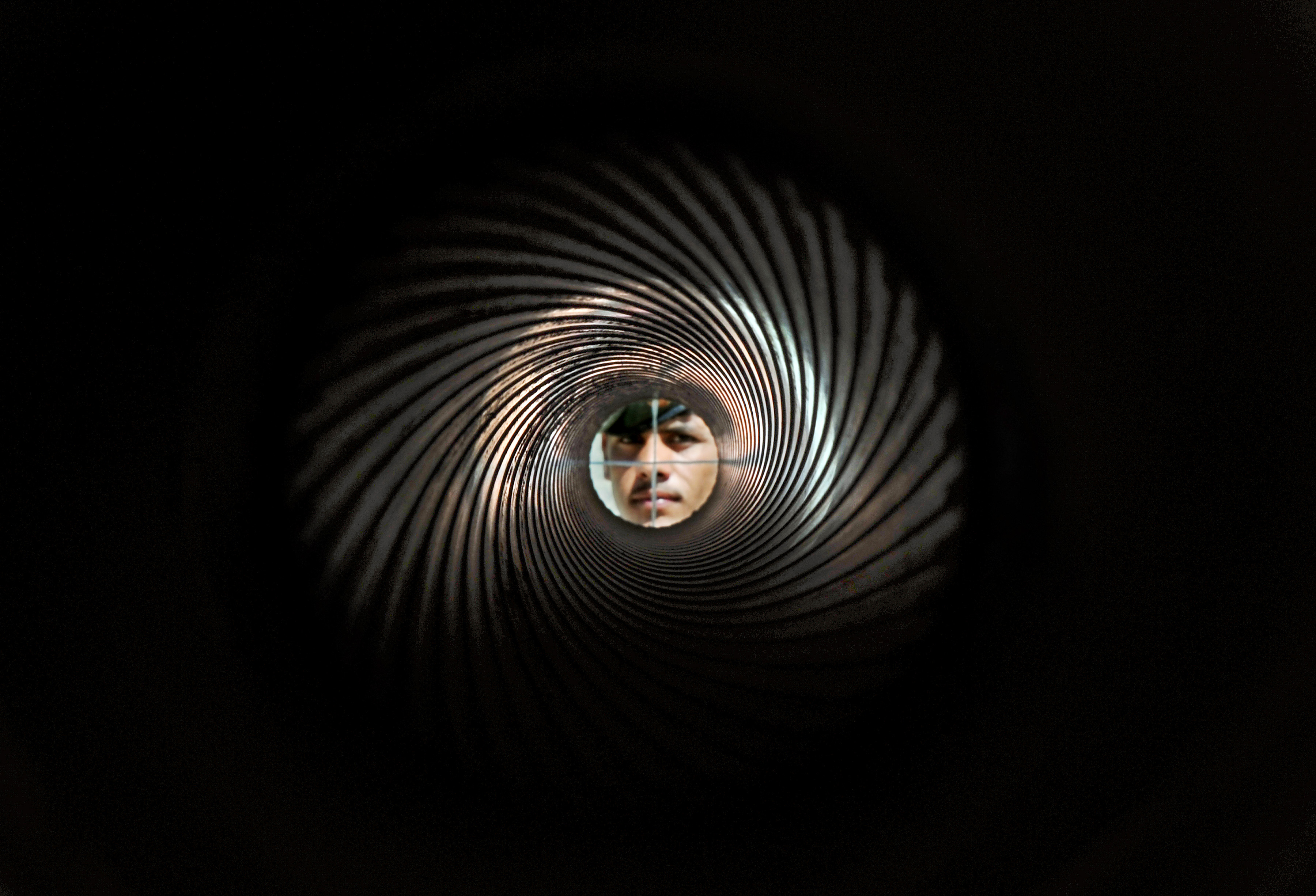
Elsewhere, we got up close and personal in a sketchy Cool Ad Watch and remembered an old folk remedy for bed bugs. Finally, we visited Lothersdale, England in the VFYW, witnessed the power of lighting in the MHB, and stared down the barrel of a gun at the Face of the Day.

–B.J.
The Sound Of Equality, Ctd

A reader writes:

Thanks for posting the clip of NZ parliament following the passage of the marriage equality bill! As a New Zealander living in the US, I’m tremendously proud to be a Kiwi today.  The scene in parliament you posted, the speeches – wonderful. I would love it if you could also post the MP Maurice Williamson’s excellent speech for your readers. It’s making news all over the place and rightly so, as he humorously reassures the anti- equality folk that life will go onthat. He also tweeted a photo of the “big gay rainbow” over his electorate this morning.

Williamson’s epic speech seen above. Another Kiwi writes:

I’m a 17-year-old New Zealander studying in Dunedin. I’ve been reading the Dish nearly every day for about four years now.  I live in a residential college dorm, and everyone came down to the common room to watch the vote. Everyone was on Facebook and Twitter and texting, connecting with friends in other parts of the country, saying “are you watching this?” And when the bill passed and everyone in Parliament started singing, we started singing, too.

Earlier this year, I was following your Millennial Voters thread with interest. In terms of young peoples’ attitude towards marriage equality, I think you rather understated the case. There is no one my age that I know who is not strongly in favour of it. Young adults, at least in NZ, tend to view gay rights as almost a non-issue – so obviously right as to not even merit debate. Unless something truly bizarre happens, in 30 years, there will be few people left who will oppose marriage equality at all.

Kia kaha, Andrew; stand strong. The world keeps getting better.

Processing The Pain

Boston Deals With Aftermath Of Marathon Explosions

A reader writes:

Your recent post on vengeance prompted this email. My Facebook wall has been telling me that I should “fight darkness with light” (and I agree); that I should use this attack to extend my circle of empathy to overseas massacres occurring against people who are unlike me (I also agree); that I should focus on the people who helped instead of the person who committed the massacre (and I remain in agreement). And yet I don’t just feel “sadness,” I actually feel hate. I hate the man who did this, about whom I need to know nothing else than the fact that he did this.

I’m sensing this is inexpressible in the current circumstances. Saying this on Facebook would not only be useless (like most Facebook postings), but could mark me as the barbarian in my peace-loving group of academic friends. And yet I look at my little son, with whom I wanted to attend the Chicago marathon this fall, and I feel that I would not “forgive” someone who killed or maimed him – I would want to rip his body apart. The only reason I would not do it is because I do find violence physically disgusting, and because I’d put myself in jail. But hate I would feel, and I do feel now. Impotent hate – hate that will not turn to action. But real, visceral hate.

I’m telling this to you “secretly” to see if there is any way to contextualize this feeling. Religion would not help – I’m an atheist and find no comfort in transcendent matters (other than art and “humanity talk,” which often works, but not today).

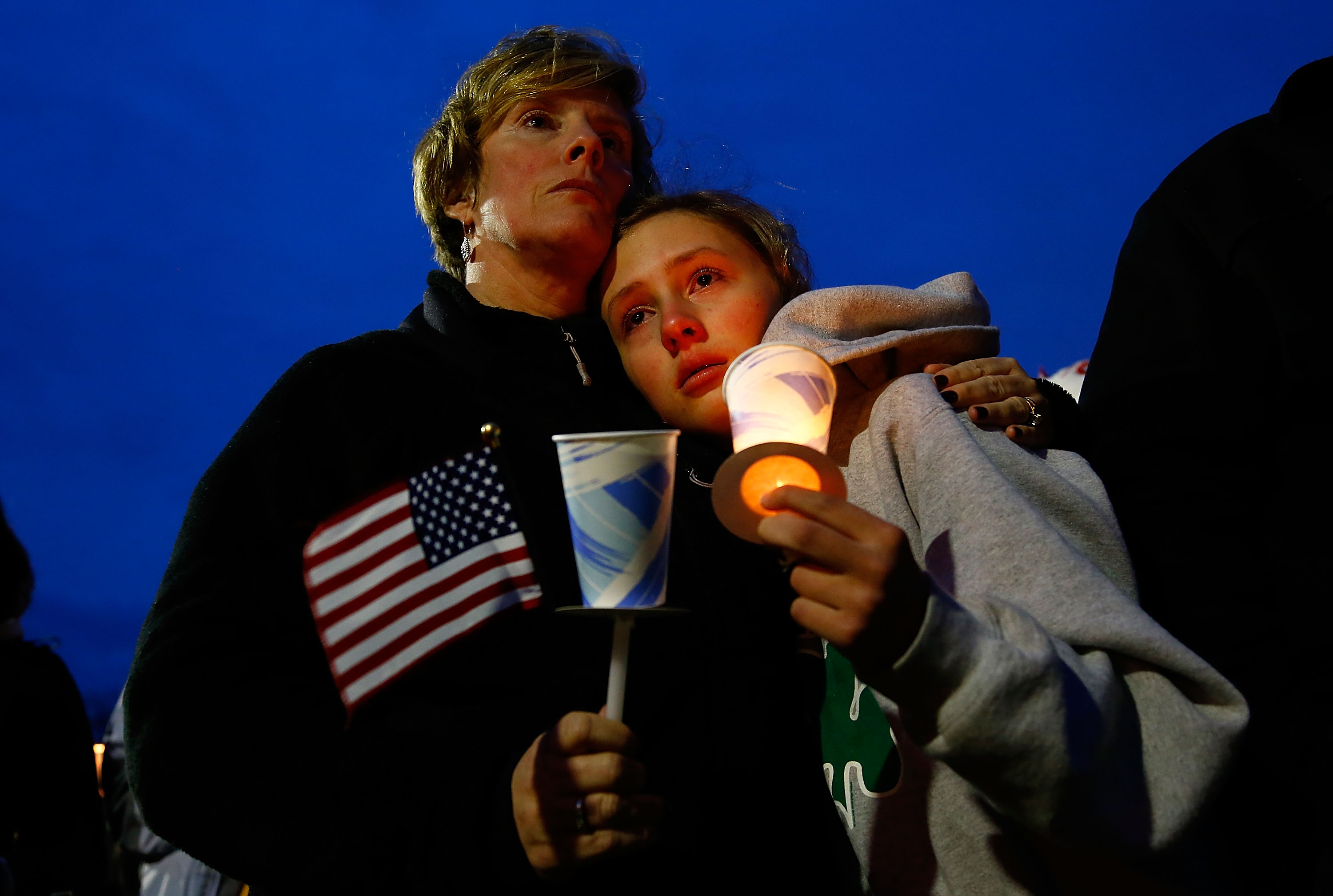
(Photo: A young girl cries with her mother during the vigil for eight-year-old Martin Richard, from Dorchester, who was killed by an explosion near the finish line of the Boston Marathon on April 16, 2013. The twin bombings resulted in the deaths of three people and hospitalized at least 128. By Jared Wickerham/Getty Images)

Face Of The Day

AFGHANISTAN-UNREST-US

An Afghan soldier belonging to the Field Artillery Division of the Afghan National Army (ANA), Kandak 6, checks the barrel of the D30 Howitzer gun prior to a test fire during a training session of ANA soldiers at Forward Base Honaker Miracle at Watahpur District in Kunar province on April 17, 2013. Budget cuts and war fatigue in Western capitals mean the 100,000 soldiers left serving in NATO’s International Security Assistance Force are packing up and taking off as the mission prepares to close next year. By Manjunath Kiran/AFP/Getty Images.

What If Life Ended At Forty?

Tyler Cowen entertains the idea:

I predict many people would become much stricter in their morals and more religious, and they will have children quite early. Other people would attempt to maintain a collegiate lifestyle through their death at age forty.  There would be a polarization of outcomes and approaches to life.  Old age as an equalizer, and as an enforcer of responsible savings behavior, would be gone. The likelihood of warfare would rise, if only because the sage elderly won’t be around and male hormones will run rampant.

“Whiskey And Women”

Tara Clancy tells a coming out story:

When I called my dad and told him I was gay, I expected it to go okay for one specific reason: he had a couple of very good gay friends, pals from his local bar in Queens whom he lovingly called “old-school gays” and about whom he sometimes bragged, “And they don’t make ‘em like that anymore!” But apparently the way he felt for his gays didn’t much matter. When I told him I was gay, he flipped out and insisted I fly to Atlanta to talk in person—”Now!” Click.

Three days later, we got in his car and drove, his only words “We’re going to a hotel.” Two hours passed, he and I silent and motionless, the pope swinging left and right. Another hour, and we were on a one-lane road in the middle of the Blue Ridge Mountains. Then I started to think what you might be starting to think: “Hotel, my ass!” Just as I started to imagine how he’d shoot me—or worse, throw me into some “pray-the-gay-away” Jesus camp—a billboard appeared. A woman not unlike the St. Pauli girl, with blond braids and huge, ahem, beer steins, smiled down at us. Next to her, in giant German Gothic lettering, it said, “Welcome to Helen, Georgia! A recreated Alpine village.”

The story is better heard than read, especially with Tara’s thick Queens accent, so check out the above video from The Moth. Watch more of her storytelling here.

Boston’s Finest: Not Just The Cops

Sarah Kliff is amazed that, as of now, all of the marathon’s wounded have survived. Atul Gawande identifies reasons why Boston’s hospitals were ready:

Talking to people about that day, I was struck by how ready and almost rehearsed they were for this event. A decade earlier, nothing approaching their level of collaboration and efficiency would have occurred. We have, as one colleague put it to me, replaced our pre-9/11 naïveté with post-9/11 sobriety. Where before we’d have been struck dumb with shock about such events, now we are almost calculating about them. When ball bearings and nails were found in the wounds of the victims, everyone understood the bombs had been packed with them as projectiles. At every hospital, clinicians considered the possibility of chemical or radiation contamination, a second wave of attacks, or a direct attack on a hospital. Even nonmedical friends e-mailed and texted me to warn people about secondary and tertiary explosive devices aimed at responders. Everyone’s imaginations have come to encompass these once unimaginable events.

Cool Ad Watch

A schmaltzy but powerful project in self-perception:

Longer version here. Update from a reader:

The first problem, clearly, is that the artist knew the intent of the project (and no doubt was being paid handsomely by Dove).  That’s strike one.  What’s more, in every case he knew whose face he was drawing, be it “I” or “she”.  That’s strike two.  Strike three is that the artist couldn’t help but be influenced by the varying tones used to convey, on the one hand, mild self-criticism and, on the other, a warm admiration for others’ features.

Sorry if I seem cynical about this whole thing.  There may in fact be both a really interesting and a really poignant story to be told here about self-image.  But, for that to happen, you’d need a legitimate study.

Owning The Genome

A case before the Supreme Court this week addresses the question of whether companies should be able to patent specific genes:

The biotech company Myriad Genetics is defending patents that give it exclusive control over two genes linked to breast cancer. Critics have argued that Myriad merely “snipped” the genes from the human genome, and that this no more deserves patent protection than “snipping” a leaf from a plant or removing a liver from a human body. … Justice Elena Kagan compared Myriad’s patent to finding a rare plant in the Amazon with medical properties. “It takes a lot of ingenuity and a lot of effort to actually find that plant, just as it takes a lot of effort and a lot of ingenuity to figure out where to snip on the genetic material. But are you saying that you could patent that plant because it takes a lot of effort and a lot of ingenuity to find it?”

Jerry Coyne views Myriad’s patent as “exploitative, greedy, and unfair”:

No company should own a gene, and this is an explicit violation of patent law, which argues that natural substances cannot be patented. … Yes, Myriad discovered that these genes were associated with cancer, and developed a way to assay mutations, but what should be patented is the diagnostic process, not the gene itself. Others can—and have, in the case of cystic fibrosis—developed and patented tests without patenting the gene, so several companies offer diagnosis for that gene.