A Threat To Free Speech In Israel

Marc Tracy considers a Knesset bill that would ban the use of the word “Nazi”:

Nazi analogies are always fraught, their deployment frequently a sign of flailing desperation or ulterior motive on the part of the deployer; there’s a reason we have phrases like Godwin’s law (which states that Internet arguments, no matter the topic, are virtually certain to include Nazi analogies if they go on long enough) and reductio ad Hitlerum (coined, I learn from Wikipedia, by Leo Strauss!). In Israel, the comparison is problematic twice more: Because the Jews were in many ways the Nazis’ most important victims, and because the contingent circumstances of Israel’s founding cannot be understood without reference to the Holocaust.

But it seems to me that the Holocaust’s uniqueness should actually make it an extremely useful heuristic for understanding the world, even and especially in an Israeli context. We can use its special awfulness to wake up to events in our own time that might be less but still plenty awful. Reasonable adults, after all, understand that to compare someone to a Nazi—even, off-the-cuff, to call someone a Nazi—need not be an argument that the person in question is the equivalent of a Nazi. (As for unreasonable adults who do mean to argue such equivalence, they can be dismissed and disgraced. Again, see: free speech.) Similarly, reasonable Israelis might shun anti-Semites who are eager to paint the comparison while simultaneously appointing to themselves the burden not to resemble the Jews’ greatest persecutors. A healthy Israeli society would assimilate legitimate critiques and better itself.

Tom Wilson also opposes the bill on free speech grounds:

It may well be the case that Israel’s high-pitched political discourse has a problem with the flippancy with which unthinking accusations of Nazism are made, but the idea that the solution to the low quality of public debate is more laws to limit free speech is wrongheaded. The ease with which Haredi and far-left activists have the tendency to charge Nazism at centrist politicians who clearly have no such sympathies with any aspect of Nazi ideology is silly if not unforgivably offensive, but making it illegal is hardly a proportionate or well considered way of dealing with this practice. Irving Kristol was quite right when he explained that Israel’s young political culture lacked a certain intellectual depth and required the infusion of the greats of Western thought. Solving the problem of Israel’s troubled political discourse will be a long process, requiring a lot more than clumsy top-down legislation. Although, if this bill does pass Israelis will at least have to get far more inventive in the future. Perhaps Israel’s politicians can look forward to being compared to Pol Pot and Ceausescu from now on.

Abby Ohlheiser links the proposed ban to other Israeli laws governing speech:

As striking as the “Nazi” ban is, the measure would join a number of existing restrictions on free speech in the country. Israel already bans anyone who demeans Israel’s democratic character or its status as the “state of the Jewish people” from running for office, as the Forward points out, and a number of similar laws have been used to keep many Arab parties and politicians out of elected offices. In 2011, Israel banned all boycotts against the state or its settlements in the West Bank, a popular protest tool used by those who oppose Israel’s settlement building on land that Palestinians would like to use to build their own state in the future.

Eylon Aslan-Levy points out that the law would “jail half the cabinet”:

1. It would be illegal to refer to the Green Line as “Auschwitz borders”. Deputy Foreign Minister Ze’ev Elkin, Housing Minister Uri Ariel, Tourism Minister Uzi Landau and even Prime Minister Benjamin Netanyahu himself could all find themselves behind bars for using Abba Eban’s provocative phrase to describe Israel’s borders before 1967.

2. It would be illegal to compare anyone to Goebbels. Foreign Minister Avigdor Lieberman was acquitted on corruption charges, but another prosecution beckons if he calls Turkey’s Prime Minister Erdogan “the successor to [Nazi propagandist] Joseph Goebbels” again; his comparison of a Palestinian Authority letter to the contents of Der Stürmer would also land him in hot water. [Update: Transportation Minister Yisrael Katz would also be guilty of accusing Channel 2 of broadcasting Goebbels-like “Nazi propaganda”.]

3. It would be illegal to compare Mahmoud Ahmedinejad to Hitler. Prime Minister Netanyahu (again!) could find himself in prison for repeating comments comparing the former Iranian president to the Nazi dictator. President Shimon Peres has made similar remarks, but at least he has presidential immunity to fall back on to avoid prosecution.

I don’t know. Maybe the ban wouldn’t be so bad after all.
Political Animals

Damon Linker argues against granting animals human rights:

I’m all in favor of treating animals decently, with special sensitivity to their pain and suffering. By all means, let’s pass stricter regulation of factory farming and laboratory experimentation. But the basis of these reforms should not be any quality we presume the animals themselves to possess. It should grow out of an expansion of the sphere of human concern and sympathy, along the lines of the old aristocratic ideal of noblesse oblige — the notion that one’s superiority obliges one to act nobly toward commoners. In other words, we should treat animals decently not because they’re just like human beings, but rather because they’re not.

The animal rights movement, by contrast, invariably takes the opposite tack — either reducing us to the level of animals or attempting to raise them up to ours. Both should be resisted. … [T]o demonstrate that it possesses inviolable rights, a chimp or bonobo would need to do nothing less than “stand up and, led by a love of justice and a sense of self-worth, insist that the world recognize and respect its dignity.” That’s what it would take to prove that the members of an animal species possess the same intrinsic moral worth as human beings. Anything short of that is an expression of human self-deception. And blindness about all that we are. Losing sight of that reality and truth in an act of advocacy-driven conceptual obfuscation is simply too high a price to pay, even for the promise of alleviating the suffering of our closest cousins in the animal kingdom.

Earlier Dish on giving human rights to chimps here and here.

Obama’s NSA Reform Speech: Reax

Watch the entire 40-minute presentation from the president here. Brian Fung outlines the immediate policy changes that will stem from the speech:

The NSA won’t get to decide when it pulls information from the phone records database. Until now, intelligence analysts have been able to “query” the database so long as they’ve determined a given phone number is subject to “reasonable, articulable suspicion.” Critics have said that gives the NSA too much power to snoop on people. So Obama is going to require that whenever an analyst wants to query the database, they’ll have to get permission from the secret Foreign Intelligence Surveillance Court first. The FISA court has not previously been in the position of approving individual requests.

When the NSA does query the database, they can’t go as far. Given a certain phone number, the NSA is currently allowed to look at any phone number that is connected to the first, any number that is connected to that number, and any number that is connected to that number. It’s what people in the industry call the “three hops” rule, for the three degrees of separation from the original number. Effective immediately, however, analysts will now be limited to making just two hops. It’ll limit the range of people who will potentially fall under the NSA’s gaze.

Noah Feldman is unimpressed:

On the surface, these proposals sound pretty substantial — but they aren’t. In a game of Six Degrees of Osama bin Laden, the move from three “hops” to two is minimal. If the suspected target phone numbers belong to people in the U.S., the odds are good that they have called some widely used number — the Comcast helpline, for example. Anyone else who has ever called that number would still be within bounds. Your friends’ friends are still two hops away, even if your friends’ friends’ friends’ are now not within the standard range. Ask yourself: Would the intelligence community have agreed to the three to two reduction if they thought it would substantially reduce their capacity to monitor terrorists?

Querying the bulk database only after a judicial finding sounds much better. Yet the president never said that he was talking about an individualized or specific judicial finding. The Foreign Intelligence Surveillance Court has already approved the most general requests imaginable. Those that already exist could well be included in the words “after a judicial finding” — which would mean no change at all during this “transition.” And what, pray tell, counts as a “true emergency” in the context of counterterrorism?

Jason Koebler focuses on how the reforms will affect foreign surveillance:

The United States doesn’t have any particular obligation to respect the privacy rights of foreign citizens. Obama had a point when he said “no one expects China to have an open debate about their surveillance programs, or Russia to take the privacy concerns of citizens into account.” But if Obama wants to establish good will abroad—and he almost certainly does—it’s not a good look to be spying on everyone, everywhere, for any reason. Friday, Obama said he’d extend at least some of the privileges designed to protect Americans’ privacy to foreigners.

The President said he’s directed the Department of National Intelligence and Attorney General Eric Holder to restrict the use of data that the NSA and other intelligence agencies collect and to limit the length of time US agencies are able to retain information they collect on foreigners.  He also said he will, for the most part, stop spying on the personal communication of foreign heads of state, as long as they are allies.

Sort of. As always, the devil is in the details. … Obama said that he reserves the right to “monitor the communications of heads of state and government of our close friends and allies” if there “is a compelling national security purpose.”

Julian Sanchez points to what the president left unresolved:

Obama’s speech left open the possibility that bulk collection might continue with some third party — which would in effect be an arm of government — as a custodian. If records are left with phone carriers, on the other hand, it’s important to resist any new legal mandate that would require longer or more extensive retention of private data than ordinary business purposes require. It was disappointing, however, to see that many of the recommendations offered by Obama’s own Surveillance Review Group were either neglected or specifically rejected. While the unconstitutional permanent gag orders attached to National Security Letters will be time-limited, they will continue to be issued by FBI agents, not judges, for sensitive financial and communications records. Nor did the president address NSA’s myopic efforts to degrade the security of the Internet by compromising the encryption systems relied on by millions of innocent users. And it is also important to realize that changing one controversial program doesn’t alter the broader section 215 authority, which can still be used to collect other types of records in bulk—and for all we know, may already be used for that purpose.

Greenwald asserts that the whole point is to further entrench the existing system:

By design, those proposals will do little more than maintain rigidly in place the very bulk surveillance systems that have sparked such controversy and anger. To be sure, there were several proposals from Obama that are positive steps. A public advocate in the Fisa court, a loosening of “gag orders” for national security letters, removing metadata control from the NSA, stricter standards for accessing metadata, and narrower authorizations for spying on friendly foreign leaders (but not, of course, their populations) can all have some marginal benefits. But even there, Obama’s speech was so bereft of specifics – what will the new standards be? who will now control Americans’ metadata? – that they are more like slogans than serious proposals.

Ultimately, the radical essence of the NSA – a system of suspicion-less spying aimed at hundreds of millions of people in the US and around the world – will fully endure even if all of Obama’s proposals are adopted. That’s because Obama never hid the real purpose of this process. It is, he and his officials repeatedly acknowledged, “to restore public confidence” in the NSA. In other words, the goal isn’t to truly reform the agency; it is deceive people into believing it has been so that they no longer fear it or are angry about it.

Stewart Baker, on the other hand, worries that these reforms will undermine the NSA’s capabilities:

This turned out worse for intelligence than was expected, especially on 215 and the rights of foreigners.  The President opened the door to “privatizing” the 215 program without any idea of how to do that, which simply will encourage legislative proposals that make the program unworkable while we’re waiting for the AG to decide how to implement the President’s notion.  Meanwhile, he quite arbitrarily decides to eliminate the third hop search of phone networks, no matter what, and to go the the FISC for every search, barring emergencies.  This builds in what could be weeks of delay before searches are conducted and adds to the FISC’s workload.  All to solve a theoretic risk of abuse.

On foreign protections,  it’s even worse.  The principles on protecting dissent and avoiding ethnic and religious targeting are written broadly.  If applied broadly they would prevent us from monitoring people who think Americans should be killed for religious or ethnic reasons.  NSA has a deeply compliant and lawyer-ridden culture.  If the directive can be interpreted to prohibit something, NSA employees will not do it, even if the interpretation is damaging to national security.  That’s how they’ve behaved over the last thirty years and that culture won”t change.  But the limits they observed before were on intelligence practices that touched Americans, where the agency was always hesitant and cautious.  At the same time, the agency was encouraged to be aggressive, innovative, and relentless in pursuing foreign targets. Now the President is pushing all that hesitance and caution into the area where NSA has been most effective.  It is likely to produce a generation of intelligence failures driven by a risk-averse National Security Agency.

Lastly, Linker asks us to put ourselves in the president’s shoes:

The disturbing fact is that in the months since Edward Snowden and his megaphone Glenn Greenwald first became civil libertarian folk heroes, there has been a been a precipitous rise in self-righteous silly talk in the U.S. and abroad about the ominous threats posed by the very act of government surveillance. Sure, it would be wonderful if we didn’t live in a world in which people plotted to kill as many Americans as possible. But we don’t live in that imaginary world. In the world we do live in, there are many such plots, as well as weapons with which those individuals could potentially kill many thousands of Americans.

How great are these threats? This is certainly a matter of dispute. But even though the efficacy of the NSA’s spying program is in question, it’s still eminently reasonable and morally defensible for the president to exploit this tool to its fullest extent within the law. Acting otherwise would be a monumental act of irresponsibility. This is something Obama himself (like many past presidents) has grudgingly come to understand.

The Masochism Of Theater Lovers

Emma Brockes argues that Broadway is “the last bastion of a certain kind of thinking, which is: if it hurts, it must be working”:

For many of us, going to the theater is still bound by notions leftover from school that art is occurring and we’d better knuckle down and enjoy it, or else. If it’s uncomfortable, all the better, and everything is set up to encourage this mindset: making you wait outside the theatre, no matter the weather, until the last possible moment.

Even in the West End, where the seats are as small but the tickets at least cheaper [than in New York], you’re allowed to mill in the foyer long before showtime – and then marshaling you brusquely across the threshold, past the bar where you can drop $20 for a gin and tonic and on to your seat, where, getting up to let others pass, you threaten to pitch forward into oblivion, never to return. (Unless you’re in the expensive seats, where all you suffer is the indignity of a chest or knee bump with the person you’ll be listening to breath for the next two hours.) At the end of the performance, you are chucked out a side-door into an alley by the dumpster. …

The odd thing is that these conditions persist in an age when all forms of entertainment are subject to such fierce competition. As the tech expo, CES, has been demonstrating this week, the sophistication of home entertainment is such that it is a wonder any of us ever leaves the house. Even going to the movies, at $20 a shot, looks increasingly unappealing in the face of new 4S screen technology: “four times sharper than HD,” say the releases, which Netflix among others will be filming in this year and will presumably make reality look like a shabby also-ran. In such a climate, you would think theaters would make an effort to coddle their patrons, but perhaps they know something we don’t.

How Will The Recession Change Us?

McArdle wonders about the long-term psychological affects of the financial crisis:

The economy does seem to be easing back into a slightly more normal pattern of jobs and growth (at least, as long as we think that the dismal December jobs report was a fluke, rather than a harbinger of worse to come). But it still faces a big test: Can people who survived the Great Recession shed the fear they acquired during those wretched years? The people who survived the Great Depression, particularly its early years, bore permanent scars. There were labor market scars – then, as now, being out of work for a long time was not good for your long-term earnings prospects. And there were psychological scars. My grandfather used to hide money in the house in case the banks closed, to the point where my grandmother found $10,000 stashed in a teapot she was about to donate to the church jumble sale. (Thank heavens she decided to clean it first!) U.S. household savings rates began to decline just as the last children of the Great Depression began to retire and let the baby boomers take over, and while a lot of factors contributed to that, struggling through the Great Depression may have made those generations more conservative in their financial habits.

A recent study suggests that growing up in a recession has a lasting effect on young people’s belief in a just world:

It turns out that a severe regional recession strikingly alters the attitudes and beliefs of individuals growing up there. Recessions do alter perceptions, especially of people between the ages of 18 and 25. Recession-influenced respondents expressed a stronger preference for government redistribution and tended to believe that success in life was more a matter of luck than hard work; as a result they are also more likely to vote for a Democratic president. Four points are worth noting:

  • First, the effects of a severe recession experienced are large when the individual is between the ages of 18 and 25 – the so-called formative age – during which social psychologists think most of social beliefs are formed; the effects are not so strong when the recession is experienced later in life.
  • Second, these effects are permanent because attitudes of recession-stricken individuals remain significantly altered many years after the severe recession ends.
  • Third, we control for individuals’ endowments such as income, level of education, and ownership of a house that could also have an impact on beliefs. We thus measure the direct effect of a recession on beliefs; this effect could be even bigger if we added also the indirect effect through the personal endowments, which are also affected by a recession.
  • Fourth, our estimation represents a lower bound of the effect of a recession on beliefs because our identification strategy relies only on regional shocks implicitly ignoring the effects of nationwide recessions.

That same pattern is found in an analysis of the World Value Survey, which includes data from 37 countries. When we worked with this larger sample of countries, we also found that coming of age in a lousy economic environment breeds the belief that success in life depends more on luck than effort, which in turn leads to more support for social welfare policies.

The Art Of Protest

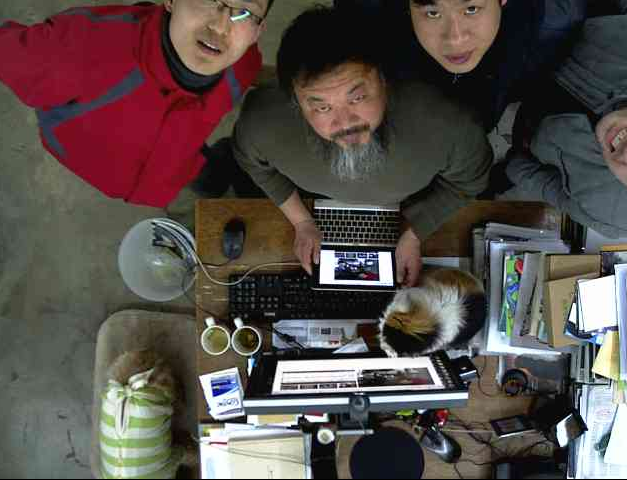
Weiweicam 2

In an interview with Der Spiegel, Ai Weiwei discusses self-surveillance and the possibilities of the Internet:

Ai: When I counted that [the Chinese government] had installed 15 cameras around my house, I decided to install four further cameras inside my home – one in my bedroom, one at my desk and so on. I thought: If you want to know everything about me, then I’ll broadcast and show everything to you. Then I went live with the webcams.

SPIEGEL: Do you consider that to be art or politics?

Ai: Both. I applied their tactics in order to push them into another more philosophical light and to wait and see what happened.

It didn’t take long for them to call and ask me to please turn off the cameras. I said: “You want to know what I’m doing. Hundreds of thousands of others want to know as well and have been following me for days.” It became a big event. They said: “Please turn off the cameras.” I asked them if it was a suggestion or an order – it turned out it was an order. Then I switched them off.

SPIEGEL: The Internet is strictly censored in China, but it is still brimming with ideas and criticism.

Ai: That’s why the Internet is the best thing that ever happened to China. It turns us into individuals and also enables us to share our perceptions and feelings. It creates a culture of individualism and exchange even though the real society doesn’t promote it. There isn’t a single Chinese university that can invite me to give a talk. Even though I know there are many students who would like to hear what I have to say.

SPIEGEL: How do these limitations affect your work?

Ai: It doesn’t really affect me because I work and live in the Internet. My virtual life has become my real life.

(Screenshot from Ai’s now-defunct overhead webcam via Wikimedia)

Is The US Too Corrupt For Single-Payer?

Ezra wonders:

The key to a single-payer system is that the government sets prices. Usually, it empowers boards of independent experts who set those prices low. [Uwe] Reinhardt’s argument is that in the United States, health industry interests have so much sway over Congress that the prices would end up being set by health-care interests.

“When you go to Taiwan or Canada,” Reinhardt said, “the kind of lobbying we have here is illegal there. You can’t pay money to influence the party the same way. Therefore the bureaucrats who run these systems are pretty much insulated from these pressures. Here you have basically a board of directors in the House Ways and Means Committee that gets money from lobbyists both at the regulatory writing stage and during normal operations. And they can call an administrator and demand they stop something from happening.”

The question in any argument like this is the counterfactual. Outside of Medicare, Medicaid and some other government-run health systems, prices are set by health-care interests now. But they’re much lower in Medicare and Medicaid than they are for private insurers. So it’s simultaneously possible for the U.S. government to be much worse at setting prices than, say, France’s government, but still be able to negotiate much lower prices than private insurers can manage. Still, Reinhardt’s argument is a reminder that the simple fact that a policy worked in another country does not mean it will work in this country.

A Whale Of A Documentary

Noah Davis notes how Blackfish, the documentary about killer whales at SeaWorld that was just snubbed for an Oscar nomination, took almost a year after its premiere at last year’s Sundance festival to go from obscurity to enormous popularity:

On one hand, it’s amazing it took Blackfish this long to explode given that it’s a well-done film about animal cruelty, a subject Americans jump all over. On the other, it makes you realize how many steps it takes to break through the noise. Consider the path:

Sundance to theaters to cable to Netflix, a chain 12 months in the making. And it’s not as though the film was ignored at each step. Blackfish garnered positive press everywhere it played, landing write-ups in major newspapers and on websites. There was an easy, relatable narrative, one that people would feel good (or self-righteous) about telling their friends. Blackfish is sharable, not in a LOL Cats way but in a “look at how caring/socially conscious I am” and “in a people really like animals” way. It’s the type of thing people put on their Facebook pages or share on their Twitter feeds. And still, it took a year to spread.

I think the bigger point here is that the thing “everybody’s talking about” isn’t really being talked about by everybody. It’s being talked about by people you know. I’m guilty of this, too. I only watched it because a close friend recommended it to me. Before I started researching this piece, I assumed it came out of nowhere. I had no idea it was shown on CNN, much less played at Sundance. It wasn’t on my radar, and then it was, and then it was everywhere. The Blackfish phenomenon continues to grow, and it’s having at least some tangential effect. SeaWorld’s stock has dropped almost nine percent since July 19 and more than six percent in the last month.

Update from a reader:

It was with great disappointment that I saw that Blackfish lost out on a well-deserved nomination. I work in the wildlife tour industry (the film ends with a trip on a boat similar to ours!) located in the Salish Sea. What Sea World does to the orcas is a crime against nature. The film accurately exposes this and needs to be seen. Whether it should win or not is another question. (The film on the Indonesian mass killers, The Act of Killing, is the most compelling and original piece of filmmaking I have ever watched.)

Another notes that “Seaworld stock soared with the news of Oscar snub”:

Shares of SeaWorld Entertainment surged 8.39 percent on Thursday to close at $33.59 a share, the stock’s highest level since August. On a day with little news about SeaWorld, based in Orlando, Fla., it’s not a stretch to suggest that the Oscar snub was fueling the stock’s rise.

Email Of The Day

Every now and then, one comes along that seems to capture it all:

It is with a lot of thought that I am renewing my subscription to The Dish this year. There are a lot of pros for me – I support you going independent and trying to figure out a sustainable way to “do” new media. I adore the way The Dish presents all sides of the issues, by linking to a variety of sources. And I know that I will find thoughtful, smart links on all sorts of things that I never would have known about. I am going to see The Inexplicable Dina Martina for the fourth time next week and I never would have known about her but for you. THANKS!!

But there are also cons. The main one being, well, YOU. The fact is you are kind of a blowhard. And a drama queen. Plus, also, you’re wrong. A LOT. Sometimes I wonder why I keep reading someone with such knee-jerk initial reactions (to insane wars, to mildly flubbed debates, to brain dead women being propped up by the state in order to fulfill some religious freaks’ rules). And don’t get me started on your devotion to your god. I never, EVER read the dish on Sundays – I’d rather burn in hell. And, yes, I know, you generally DO come around to the sane, humane way of thinking about things. You apologize, you re-think, you humble yourself. But your first reaction is just such a big pose to act like you know everything. I’m not asking you to stop – it’s obvious you can’t – but just know that a lot of people won’t, and don’t, give you the second and third chance to get it right.

All I can say is if you were a cat person, I’d be outta here.

RIP Dusty.