Native Dress

Lauren Sherman checks in on the place of sponsored content in fashion blogging:

[W]hile fashion has been slow to adapt digitally in so many ways, it was one of the first group of marketers to embrace native advertising. When fashion bloggers emerged in the mid-2000s as the new influencers, brands developed “gifting” programs to seed their products. A handbag line, for instance, would send a top 10 blogger the latest style in hopes that she might write about it, or post a photo of it on her blog with a link back to the brand’s e-commerce site. It wasn’t so different than the business of celebrity placements, when brands give a star a pair of jeans or a leather jacket in hopes that she’ll wear it in a well-publicized paparazzi photo.

However, as blogs transformed from diaries to media properties, bloggers began asking for more.

If they were going to post about the product, they wanted to be compensated for the post as well– in addition to the commissions they were making via affiliate links. Today, native advertising can be quite sophisticated. One of my all-time favorite examples of native advertising is a Juicy Couture-sponsored video, where stylist/Glamourai blogger Kelly Framel interviews Carlyne Cerf de Dudzeele [seen above]. This was soon after “In Vogue: The Editor’s Eye” had come out: Cerf de Dudzeele waxed on about why she loved track suits, and Framel — a genuine fan of the famous stylist — asked her the right questions. Sure, it didn’t save Juicy Couture from combustion, but it was a nice little Hail Mary moment. Nars’s video series with Garance Doré and the Man Repeller are more recent examples of likeable native advertising. Both Dore and TMR founder Leandra Medine are believable Nars customers, which makes the already fun videos — watch them here and here — all that more compelling.

But as more and more bloggers find their audiences fleeing URLs for other platforms — namely Instagram — and brands have begun to think harder about what they want from these partnerships, frustration has bubbled up on both sides. Bloggers argue that brands aren’t upfront about what they’re looking for in terms of tangible results, and brands argue that bloggers are unable to deliver anything tangible. The champagne might still be flowing, but the party is wrapping up for unhappy brands and frustrated bloggers.

Fashion journalism, of course, has always been less a conflict of interests than a mashup of them. But it’s all so subjective that any idea of objectivity is remote. Nonetheless, it’s always great to find a writer who is indifferent to all this payola, whose taste is her own, whose prose caters to no subsidy. But how on earth can they make a living these days? The internet lets a thousand flowers bloom, but, in the end, only a handful get the water and the fertilizer, let alone the care and attention of the experienced gardener/editor.

Mandatory Vacations?

Megan McArdle proclaims that employers “shouldn’t just give their employees vacation days; they should force them to actually leave the office and go on vacation”:

I don’t really need to extol the benefits to an employee of a few days off, but I will say that everyone needs to take a break. Over time I’ve noticed that if I go too long between holidays — more than about three months — I start to feel like I’m forcing it, plodding through the day’s stories rather than actually attacking something I’m interested in. That’s a pretty common experience among the people I know. Periodically, you have to stop and give the well a chance to refill. I don’t think it’s an accident that creative people frequently report having breakthroughs after they’d stopped working for a bit and started thinking about something else.

She insists that “even the most upstanding, outstanding employee should not be so vital to your firm’s operations that you cannot afford to let them go for a week or two”:

What if this person leaves the firm? What if they are killed in a car crash? Periodically preparing to do without this person means that if and when they do depart, you will not be plunged into an instant crisis.

The Business Of Coming Out

Apple Unveils iPhone 6

Apple CEO Tim Cook officially exited the closet yesterday:

For years, I’ve been open with many people about my sexual orientation. Plenty of colleagues at Apple know I’m gay, and it doesn’t seem to make a difference in the way they treat me. Of course, I’ve had the good fortune to work at a company that loves creativity and innovation and knows it can only flourish when you embrace people’s differences. Not everyone is so lucky.

While I have never denied my sexuality, I haven’t publicly acknowledged it either, until now. So let me be clear: I’m proud to be gay, and I consider being gay among the greatest gifts God has given me.

Leonid Bershidsky points out that “Cook is the first chief executive of a Fortune 500 company to come out in public”:

Members of this exclusive club are still unsure whether that’s wise, and just a few years ago, it wasn’t. In 2007, John Browne resigned as chief executive of BP after being outed by a British tabloid. He has since written a book about being a closeted gay in big business. “To a headhunter I would have been seen as ‘controversial,’ too hot to handle,” Browne wrote. “Sadly, there were some people, mostly from the business world, who never again displayed any warmth to me.”

Browne regretted choosing to live a double life rather than setting himself up as a role model for other gay executives — something Cook has done now with his candid, touching essay. Still, he had strong motives for staying in the closet — stronger ones than an inclination toward privacy, which Cook, no publicity hound either, has successfully overcome. As head of a large corporation, one has to deal with important people from cultures where homophobia is a way of life. Under Browne, BP had a major joint venture in Russia, where President Vladimir Putin has approved laws against the “propaganda of non-traditional sexual orientation.”

Along those lines, one Russian lawmaker has already proposed banning Cook from the country. And Chinese social media users widely ridiculed the announcement:

Crude puns and derogatory remarks relating Cook’s orientation to Apple products often seemed to drown out praise for his courage and support for his company’s wares. One particular joke, repeated so often in the hours immediately following the release of Cook’s article that the state-run Guangming Daily reported it as a typical netizen reaction, played on the Chinese term “bent man,” slang for gay man. “No wonder the iPhone 6 bends so easily!” wrote user after user. (Tales of the ultra-slim iPhone 6 bending under light pressure have circulated both in the United States and abroad since the iPhone’s release in September.)

Tim Teeman wonders how Cook will deal with such intolerance:

His most radical statement of intent, and one which will be fascinating to see if he holds true to—and if so how practically and volubly, comes at the end: “We’ll continue to fight for our values, and I believe that any CEO of this incredible company, regardless of race, gender, or sexual orientation, would do the same. And I will personally continue to advocate for equality for all people until my toes point up.”

If Cook is serious, then arguably he has just become—indeed made himself—the single most powerful and highest-profile advocate for gay equality globally. How he intends to practically parlay that will be fascinating to watch.

Apple, for example, is in talks to sell the iPhone in Iran, a country where homosexuality is a crime punishable by death. Incidences of gay men being hanged in public have been graphically reported upon. If Cook is to be taken at his word, one would expect him to make some public statement about Iran’s record, as he prepares to do business with the country. His stirring essay makes clear his desire to be an advocate and activist, but it does not specifically lay out how he intends Apple to do business with deeply homophobic countries like Iran.

Issie Lapowsky hopes that Cook’s announcement will help other business managers and employees to come out:

The problem is more acute than you might think. With a recent study, Deloitte University’s Leadership Center for Inclusion examined a phenomenon that sociologists refer to as “covering,” where people will attempt to mask part of their identity in the workplace, and it revealed just how pervasive—and potentially damaging—the practice is among members of the LGB community.

The study surveyed more than 3,000 employees at businesses across the country to determine what percentage of them admit to covering at work, and why they feel the need to do it. The study included people of a variety of races, genders, and sexual orientations, and found that while 61 percent of all respondents said they had covered, a whopping 83 percent of gay respondents said they had. That’s more than black respondents, female respondents, and any other minority group surveyed (the transgender sample size was too small to be included).

Claire Cain Miller makes clear why Cook’s statement matters:

Though there have been chief executives at the upper tiers of corporate America who are gay, they have consistently declined to be identified as such. That sent a similarly strong message to young people, said Sam Altman, president of Y Combinator, a prominent Silicon Valley start-up investment firm and incubator.

“Shame is the wrong word, but there’s some sense of lack of comfort when it goes widely acknowledged and not said,” said Mr. Altman, who is 29 and gay. He said he remembers thinking in high school that as a gay person, he could never become a venture capitalist because the industry was too much of a traditional old boys’ club for him to be included. Mr. Cook has become “an incredibly important role model, and I think people underestimate how important that is in what people think they can do with their lives,” Mr. Altman said.

And Casey Newton savors the moment:

There was a time when I struggled to come to terms with myself; when I felt alone; when I scanned the horizon looking for someone to point the way forward for me. There was a time when the only other gay men I knew were the ones I saw in TV and movies, and they seemed nothing like me. It feels embarrassing to say now that what I wanted back then was a role model — someone confident in himself, powerful, a real leader — to give me permission to be myself. But I very much did.

And many still do, particularly younger people, and particularly younger people growing up in the more rural and religious parts of America. Someday, maybe someday soon, we’ll hear about how Cook’s essay today helped someone there through a difficult time. And then we’ll hear it again, and again, and again.

Update from a reader:

I guess I’m all alone here. To me, Tim Cook is the Jodie Foster of corporate America. Unlike Ricky Martin who said something to the effect of “If I knew back then how good telling the truth feels, I would have done it a long time ago,” Cook and Apple are spinning their message for maximum exposure and publicity. Despite last June’s “outing” on CNBC, Cook and Apple remained coy, and even yesterday’s announcement proclaimed that Cook has never denied who he is. The whole thing seems fishy to me. We have a wealthy and powerful leader of an adored company making a safe announcement once he’s in a comfortable position. Rather than showing that Apple is an open and tolerant organization what this seems to say is that like Jodie’s path to stardom and success, the closet can be a useful career strategy if you play it right.

We should all be glad that Cook is now feeling safe, open, and proud about who he is and let the homophobes know they need to get over themselves, but as a role model, Cook‘s credentials are somewhat weak. He played it safe on the way up, and now he wants to play the hero and get the admiration. Until his role moves beyond symbolism, I am withholding my praise.

(Photo: Apple CEO Tim Cook announces the Apple Watch during an Apple special event at the Flint Center for the Performing Arts in Cupertino, California on September 9, 2014. By Justin Sullivan/Getty Images)

Colorado’s Black-Market Cannabis

Jacob Sullum reports on its persistence:

“The black-market prices are definitely lower than recreational prices,” says Michael Elliott, executive director of Colorado’s Marijuana Industry Group. “The taxes are a big reason why, the new testing requirements, the packaging requirements, and basically this whole hurdle of the extraordinary expenses people have had to go through to open these businesses. Another reason is that the businesses have had limited supply.”

But, as prices fall, the black-market is going to shrink:

Kayvan Khalatbari, co-owner of Denver Relief, a medical dispensary that started serving recreational consumers in July, says after-tax prices in that market average $50 to $60 per eighth. He expects those prices to plummet by next year, however, as growers ramp up production and new suppliers enter the market. As of October 1, dispensaries no longer have to grow 70 percent of their inventory, and businesses dedicated to cultivation will be allowed.

“I would not be surprised, given the flood that’s going to happen, if we see $10 and $15 eighths by early next year,” Khalatbari says. “I would believe that. I could see ounces being sold for $50. I truly see that happening, because there is going to be so much competition [and] people are becoming so efficient in their production. They’re automating much more. We’re seeing best practices settle in. There’s less risk in operating because people are operating at a higher level. I think we’re going to become a very efficient industry very quickly. We’re going to see competition, and we’re going to see prices hit rock bottom early next year.” At that point, he predicts, the black market will dwindle away.

Serial Killers Aren’t That Sharp

Criminologist Scott Bonn concludes that “the image of the evil genius serial killer is mostly a Hollywood invention”:

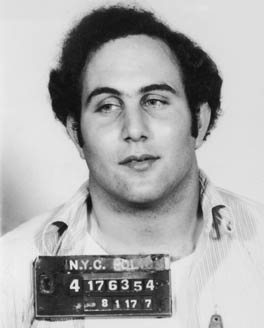
Hollywood has established a number of brilliant homicidal maniacs like John Doe in the acclaimed 1995 film Se7en. Doe personifies the berkowitz_arrest201stereotype of the evil genius serial killer who outsmarts law enforcement authorities, avoids justice and succeeds in his diabolical plan. … Real serial killers generally do not possess unique or exceptional intellectual skills. The reality is that most serial killers who have had their IQ tested score between borderline and above average intelligence. This is very consistent with the general population. Contrary to mythology, it is not high intelligence that makes serial killers successful. Instead, it is obsession, meticulous planning and a cold-blooded, often psychopathic personality that enable serial killers to operate over long periods of time without detection.

One famous example of less-than-brilliant planning:

David Berkowitz is one of the most infamous serial killers of all time, though he is more commonly referred to as the Son of Sam. In the 1970’s, the Son of Sam terrorized the people of New York City, murdering six people and prompting a police operation known as Operation Omega, comprised of 200 detectives trying to stop him before he could kill again.

So how did they finally catch the infamous murderer? A parking ticket. Berkowitz had parked his car in front of a fire hydrant before heading off to get his murder on, and a woman witnessed him tearing up the parking ticket and later reported it to the police. Just think about the fact that the Son of Sam may very well never have been caught were it not for his easily avoidable mistake of parking in front of a fire hydrant.

(Photo of Berkowitz via Wiki)

Over-Salt Of The Earth

Brian Merchant flags a study claiming that salt degradation “has caused tens of billions of dollars worth of damage, mars an area of cropland the size of Manhattan every week, and has hit nearly one-fifth of the world’s farmland so far”:

“Salts have damaging effects whether they are in excess amounts in the human body or in agricultural lands,” Manzoor Qadir, the lead author of an eye-opening new study on the subject, published by the United Nations’ Institute for Water, Environment and Health, told me in an email conversation. “If salt degradation goes on unchecked, more and more land will be highly degraded leading to wasteland,” he said. “Restoring such lands will not be economically feasible at all.”

Alison Bruzek provides more details:

Rainfall and irrigation systems designed for lots of drainage usually keep salt from building up in the soil. But as climate patterns shift and more farmers irrigate without sufficient drainage, evaporated salt is crusting on top dirt clumps around the world — especially in places like Central Asia. Normally, soil has anywhere from zero to 175 milligrams of salt per liter. Once that level exceeds 3,500 milligrams per liter, it’s next to impossible to grow anything, including major crops like corn, beans, rice, sugarcane and cotton. …

No one had really studied the economic impacts of salt-damaged land, says Qadir. But now that the UN Food and Agriculture Organization has projected that we need to produce 70 percent more food by 2050, the salinity problem is becoming a much higher priority issue. On the 1-to-10 scale of land sustainability problems, “erosion is an 8 … high-saline soils is a 2 problem,” Chuck Benbrook, research professor at the Center for Sustaining Agriculture and Natural Resources at Washington State University, tells The Salt in an email.

The Trappings Of Mourning

https://twitter.com/Paste_Design/status/526825773991079936

Hillary Kelly muses on an exhibit at the Metropolitan Museum:

Mourning clothesalong with other facets of griefwere highly regimented in Victorian England and nineteenth-century America. As the curator’s note explains, “Mourning through sartorial display, a duty chiefly assumed by women, followed a series of stages marked by changes in fabrics and colors.” Exacting codes defined which fabrics and colors were acceptable at particular stages of grief: For the first months after a death, only “lusterless” black dresses were acceptable. As time passedand for a widow one expected to wear mourning clothes for a full two yearsthe strictures slowly loosened, and the severity of the attire deceased.

The loss of such traditions has its drawbacks:

The mourning period is a nebulous and tricky thing to navigate in modern life. The boyfriend of a very close friend died in an accident the summer after our freshman year of college. The most agonizing conversations I remember having with her revolved around the expectations others placed on her grief rather than the death itself: When would she “get over it”? How long was she going to remain single? Did she ever think she’d get married? When she began dating another person, she confronted all kinds of unkind judgment from those who thought she’d “moved on” too quickly and wondered (yes, out loud) if she’d really loved the boyfriend who had died.

Would mourning clothes have helped her or hindered her? So often we think of the strictures of the Victorians as constraining, but there is a sense in which their very formal propriety feels appropriate and even comforting. If you exclude certain religious traditionssitting shiva, for examplein which the processes immediately following death are heavily prescribed and demand an explicit and relatively lengthy interruption of everyday life, modern grief is missing a sense of etiquette and deliberatenessa set of outward signs for the bereaved to use as signals.

No Relief For America’s Sickest State

Sarah Varney covers Mississippi’s experience with Obamacare:

“There are wide swaths of Mississippi where the Affordable Care Act is not a reality,” Conner Reeves, who led Obamacare enrollment at the University of Mississippi Medical Center, told me when we met in the state capital of Jackson. Of the nearly 300,000 people who could have gained coverage in Mississippi in the first year of enrollment, just 61,494—some 20 percent—did so. When all was said and done, Mississippi would be the only state in the union where the percentage of uninsured residents has gone up, not down.

Why has the law been such a flop in a state that had so much to gain from it? When I traveled across Mississippi this summer, from Delta towns to the Tennessee border to the Piney Woods to the Gulf Coast, what I found was a series of cascading problems: bumbling errors and misinformation; ignorance and disorganization; a haunting racial divide; and, above all, the unyielding ideological imperative of conservative politics. This, I found, was a story about the Tea Party and its influence over a state Republican Party in transition, where a public feud between Governor Phil Bryant and the elected insurance commissioner forced the state to shut down its own insurance marketplace, even as the Obama administration in Washington refused to step into the fray. By the time the federal government offered the required coverage on its balky HealthCare.gov website, 70 percent of Mississippians confessed they knew almost nothing about it.

Beutler finds it “all the more galling when you recognize that, for the time being at least, Mississippi is actually paying for this outcome”:

For the next couple years, the Medicaid expansion would cost Mississippi $0. … The combined effects of non-expansion are striking. State spending on Medicaid will grow faster next year in states that declined the expansion than in states that accepted it. As Kevin Drum wrote for Mother Jones on Monday, non-expansion states “actually prefer spending more money if the alternative is spending less but helping their own poor with medical coverage.”

The Best Of The Dish Today

Today, I compared the current mid-terms to a “primal moan“. A reader differs:

I see it as a long belch prompted by indigestion, with a bile finish. And it will only get worse with the prospect of Hillary vs. the GOP nut jobs looming on the horizon. I’m 49 years old and I’ve always been highly engaged politically, but I am perilously close to saying “fuck it” and not paying attention anymore. I will always vote but I feel my energy is better spent elsewhere.

I feel his pain and blog through it every day.

Meanwhile, the “catcalling” video remained a Rorschach test for Dish readers; as did the question of “sexual assault” while both parties are drunk. In another fascinating round of responses to our book club discussion of Waking Up, Sam Harris’ scientific Buddhism got knocked around a bit today by actual Buddhists. I rather enjoyed the spectacle. Oh, and this helps.

The most popular post of the day was Catching Catcalls On Camera; followed by A Declaration of War On Francis.

Many of today’s posts were updated with your emails – read them all here.  You can always leave your unfiltered comments at our Facebook page and @sullydish. 22 more readers became subscribers today. You can join them here – and get access to all the readons and Deep Dish – for a little as $1.99 month. Gift subscriptions are available here. Dish t-shirts are for sale here, including the new “Know Dope” shirts, which are detailed here.

See you in the morning.