Arming Both Sides In The Surveillance Debate

Over the weekend, Barton Gellman reported, based on documents from Snowden, that 90 percent of people whose online communications the NSA intercepts are not the agency’s intended targets. But Gellman also claims that the program has provided more valuable intelligence than Snowden’s fan base would like to acknowledge:

The surveillance files highlight a policy dilemma that has been aired only abstractly in public. There are discoveries of considerable intelligence value in the intercepted messages — and collateral harm to privacy on a scale that the Obama administration has not been willing to address. Among the most valuable contents — which The Post will not describe in detail, to avoid interfering with ongoing operations — are fresh revelations about a secret overseas nuclear project, double-dealing by an ostensible ally, a military calamity that befell an unfriendly power, and the identities of aggressive intruders into U.S. computer networks.

Stewart Baker calls the 90 percent statistic in the article’s lede “a phony,” noting that any investigation into a target’s communications will cover the correspondence of many people who are not the target:

Maybe the Post is performing some far more sophisticated calculation, and they didn’t bother to explain it, despite its prominence in the story.  If not, though, the inherent bias in the measure is such that it demands an acknowledgement . (After all, it allows you to say “half of all account holders in the database weren’t the target” if the agency stores a single message sent to the target.) This is something that any halfway sentient editor should have recognized. Which raises this question:  I’ve heard of newspapers chasing stories that are “too good to check.”  Does the Post think that Gellman’s are too good to edit?

Though he also finds the premise dubious, Wittes admits that “the story raises a valid question”:

Is the agency minimizing U.S. identities and communications in all situations in which it should?

The details it provides are inadequate to venture an opinion on that subject. And once again, the story raises a tension that is to some degree inherent in the agency’s project: A valid overseas target who is in communication with people in the United States is, for obvious reasons, of particular interest. He will also, however, by the nature of the activity that gives rise to that interest, be in contact with more U.S. persons than many other people will. And that means that incidental collection affecting U.S. persons will be greater. Minimization is a key protection for U.S. persons, but you don’t want minimization of information that may be of foreign intelligence value. Wherever you draw the line here—or, rather, the many lines—you’re going to pay costs both in privacy and in effectiveness. You’ll retain information that is utterly innocuous and corrosive of people’s privacy and you’ll minimize information that will prove to have value. The question is how much of each harm you are willing to tolerate and when you want to err on which side of the line.

Furthermore, Digby is troubled by the story’s revelation that the NSA “treats all content intercepted incidentally from third parties as permissible to retain, store, search and distribute to its government customers”:

You just don’t know what personal information about innocent citizens you’re going to need until they do something you need it for. (Or maybe, you never know, you need their cooperation on something and having this sort of info make the “persuading” just a little bit easier…) Best to keep as much information stored about everyone as possible. After all, the government may need to target you for something someday and it would be a shame if they didn’t have all of your communications stored in a nice digital file somewhere. Just in case.

Friedersdorf uses the piece to slam the NSA’s defenders:

They have no choice but to admit that the NSA was so bad at judging who could be trusted with this sensitive data that a possible traitor could take it all to China and Russia. Yet these same people continue to insist that the NSA is deserving of our trust, that Americans should keep permitting it to collect and store massive amounts of sensitive data on innocents, and that adequate safeguards are in place to protect that data. To examine the entirety of their position is to see that it is farcical.

Here’s the reality. The NSA collects and stores the full content of extremely sensitive photographs, emails, chat transcripts, and other documents belong to Americans, itself a violation of the Constitution—but even if you disagree that it’s illegal, there’s no disputing the fact that the NSA has been proven incapable of safeguarding that data. There is not the chance the data could leak at sometime in the future. It has already been taken and given to reporters. The necessary reform is clear. Unable to safeguard this sensitive data, the NSA shouldn’t be allowed to collect and store it.

Recent Dish on the NSA’s online surveillance program here.

Map Of The Day

dish_painkillersusa

A new report from the CDC measured prescription painkiller use across the country:

Southern states — particularly Alabama, Tennessee and West Virginia — had the most painkiller prescriptions per person, the report said. For example, in Alabama, there were 143 prescriptions for opioid prescriptions written for every 100 people. That’s about three times the rate seen in Hawaii, which had the lowest rate among U.S. states, with 52 prescriptions per 100 people.

The rate of prescriptions for oxymorphone, one type of opioid painkiller, was about 22 times higher in Tennessee than in Minnesota, which had the lowest rate of prescriptions for that drug, the report said. Prescription rates for long-acting/extended-release painkillers, and for high-dose painkillers, were the highest in the Northeast, particularly in Maine and New Hampshire, the report said.

Such wide variations in prescriptions for painkillers cannot be explained by differences in the health of people in different states — that is, pain-related health issues don’t vary much by region, the CDC said. Rather, the differences may indicate a lack of consensus about when it is appropriate to prescribe painkillers, the report said.

Quote For The Day

“Abu Khdeir’s murderers are not ‘Jewish extremists.’ They are the descendants and builders of a culture of hate and vengeance that is nurtured and fertilized by the guides of ‘the Jewish state’: Those for whom every Arab is a bitter enemy, simply because they are Arab; those who were silent at the Beitar Jerusalem games when the team’s fans shouted ‘death to Arabs’ at Arab players; those who call for cleansing the state of its Arab minority, or at least to drive them out of the homes and cities of the Jews.

No less responsible for the murder are those who did not halt, with an iron hand, violence by Israeli soldiers against Palestinian civilians, and who failed to investigate complaints ‘due to lack of public interest.’ The term ‘Jewish extremists’ actually seems more appropriate for the small Jewish minority that is still horrified by these acts of violence and murder. But they too recognize, unfortunately, that they belong to a vengeful, vindictive Jewish tribe whose license to perpetrate horrors is based on the horrors that were done to it.

Prosecuting the murderers is no longer sufficient. There must be a cultural revolution in Israel. Its political leaders and military officers must recognize this injustice and right it. They must begin raising the next generation, at least, on humanist values, and foster a tolerant public discourse. Without these, the Jewish tribe will not be worthy of its own state,” – the editors at Ha’aretz.

The Bias Against Black Dogs

A sad fact:

Black dogs get euthanized at higher rates. They linger at pounds and adoption agencies for black-dogslonger than light-colored dogs, and they are less likely to find a home. Marika Bell, director of behavior and rehoming for the Humane Society of Washington, D.C., says the organization has been tracking animals that have stayed at their shelters the longest since March 2013. They found that three characteristics put a pet at risk of becoming one of these so-called “hidden gems”: medium size, an age of 2-3 years, and an ebony coat.

What kind of nefarious psychological quirk would prevent someone from adopting a dog based on fur color?

Animal welfare experts believe the discrimination arises from a pack of factors. The mythology around black dogs is grim. (The Grim, from Harry Potter, is a “large, black, spectral dog that haunts churchyards” and augurs death.) A 2013 study by Penn State psychologists revealed that people find images of black dogs scarier than photos of yellow or brown dogs—respondents rated the dark-furred animals less adoptable, less friendly, and more intimidating. And while the association between obsidian and evil is more explicit for cats, dogs have to contend with a culture, post-Samuel Johnson and Winston Churchill, that symbolizes depression as a coal-colored hound.

Update from a reader:

Maybe people are swayed by mythology against adopting black dogs, but I’ve always felt like there was a much simpler explanation.  This is a picture of my two dogs (well, sadly, the yellow one is no longer with us):

December 21 008 2

Who did you notice first? Who do you spend more time looking at?  The yellow one.  It’s true of every single picture I have of the two of them together.  The lighter-colored dog, even when she’s off to the side of the picture, is the one who becomes the focal point – to the point where frequently people don’t even notice that the black dog is even there until he’s pointed out.

The fact is is that the human eye is kind of lazy.  We’re drawn to lighter-colored objects that aren’t as difficult to focus on, where the contours are easier to make out and the features easier to identify.  It’s not necessarily prejudice; it’s an unfortunate quirk of biology.  And it’s not just our eyes; cameras have difficulty with dark subjects as well.  So, when it comes to a web page filled with pictures of dogs in need of adopting, it’s easy for your eye to just skim right over the black lab mix and on to the yellow hound mix or the white greyhound.  When you go to visit the shelter, you’re more likely to notice the light-colored dog than the dark colored one, and so you’re more likely to take the light-colored dog home.

Still, I support promoting awareness of the phenomenon, because there are a lot of awesome black dogs out there who need homes.  It was my husband who spotted our black dog on the web page of the same rescue we had gotten the yellow one from.  He had languished in foster care for quite a while, despite being young and healthy.  He’s been with us for almost six years and he is one of the best dogs I have ever had in my life.  It’s a shame to think that the laziness of the human eye could have prevented him from coming to live with us.

(Image via Petfinder. Shena, an adult pit bull mix, is available for adoption from Rebound Hounds Res-Q in New York)

The Shocking Truth

New research suggests that people prefer getting electric shocks to being alone with their thoughts:

[Researchers] report on 11 experiments. In most, they asked participants to put away any distractions and entertain themselves with their own thoughts for 6 to 15 minutes. Over the first six studies, 58 percent of participants rated the difficulty at or above the midpoint on a scale (“somewhat”), and 42 percent rated their enjoyment below the midpoint. In the seventh study, participants completed the task at home, and 32 percent admitted to cheating by using their phones, listening to music, or doing anything but just sitting there. … Participants rated the task of entertaining themselves with their own thoughts as far less enjoyable and more conducive to mind-wandering than other mellow activities such as reading magazines or doing crossword puzzles.

In the most, ahem, shocking study, subjects were wired up and given the chance to shock themselves during the thinking period if they desired. They’d all had a chance to try out the device to see how painful it was. And yet, even among those who said they would pay money not to feel the shock again, a quarter of the women and two thirds of the men gave themselves a zap when left with their own thoughts. (One outlier pressed the button 190 times in the 15 minutes.) Commenting on the sudden appeal of electricity coursing through one’s body, [researcher Timothy] Wilson said, “I’m still just puzzled by that.”

Tom Stafford resists the interpretation that people simply don’t like thinking:

It’s possible that there is a White Bear Effect here – also known as the ironic process theory. Famously, if you’re told to think of anything except a white bear, you can’t help but think about a white bear. If you imagine the circumstances of these studies, participants were told they had to sit in their chairs and just think. No singing, no exploring, no exercises. Wouldn’t that make you spend your time (unpleasantly) ruminating on what you couldn’t do?

In this context, are the shocks really so surprising? The shocks were very mild. The participants rated them as unpleasant when they were instructed to shock themselves, but we all know that there’s a big difference between having something done to you (or being told to do something) and choosing to do it yourself.

Although many participants chose to shock themselves I wouldn’t say they were avoiding thinking – rather they were thinking about what it would be like to get another shock. One participant shocked himself 190 times. Perhaps he was exploring how he could learn to cope with the discomfort. Curiosity and exploration are all hallmarks of thinking. It is only the very limited internally directed, stimulus-free kind of thinking to which we can apply the conclusion that it isn’t particular enjoyable.

Moving On Up

In a review of Lifted: A Cultural History of the Elevator, David Trotter examines how the lift shaped society:

Rich people realised that the stuff they’d always enjoyed doing at ground level was even more enjoyable when done on the top floor; and that being able to do it there at all was a useful display of 2551038097_9ba7d4635e_zthe power wealth brings.

In 1930s New York, the twin towers of the new Waldorf-Astoria hotel, which rose from the 29th to the 43rd storey, constituted its unique appeal. ‘Below the demarcation line of the 29th storey, the Waldorf-Astoria, although expensive, was accessible to everyone; above the line began an exclusive region of suites of as many as twelve rooms with private butler service.’ The upper floors of tall buildings, once given over to staff dormitories, had become what [author Andreas] Bernard calls an ‘enclave of the elite’. The Waldorf-Astoria’s express elevators, travelling direct to the 29th floor, were as much barrier as conduit. Such discrimination between elevators, or between elevator speeds, played a significant part in the design of those ultimate enclaves of the managerial elite, the penthouse apartment and the executive suite. In 1965, the penthouse still had enough ‘unheard-of glamour’ to lend its name to a new men’s magazine.

(Photo by Flickr user Gustavo)

Grounded In Fact

Tim Allen, a professor at the London School of Economics, specializes in researching ethnic conflict, forced migration, and development aid. In an interview, he explains why in-person fieldwork is so crucial to understanding international development efforts. He takes Uganda’s Lord’s Resistance Army as an example:

The external perception is that this is a mad group abducting children, not unlike Boko Haram who may well have learnt some of their methodology from the LRA. Actually, the vast majority of those abducted are young adults who might be trained to fight. There was also an interest in taking prepubescent girls because they were thought not to be HIV positive. Those girls were married, using local idiom, to commanders and were not raped indiscriminately. The most disturbing thing is that most of them were reasonably positive about the experience.

Of course some were severely traumatised, but the idea of abducting women for marriage has deep roots in this society. Many women talk about having been captured by their husbands. I’m not excusing this in any way, but they take a local custom of abducting women into marriage and play upon it. Also, the effects of 19th-century slave-raiding, involving large-scale abductions, still resonate here. Working at the local level reveals all sorts of things.

Previous Dish on the LRA here, here, and here.

Echoes Of Emerson

Joshua Ferris shares why he came to prefer the “historically informed, politically conscious, biographically interrogating, socially indicting, and existentially preoccupied” work of Philip Roth to the “idiosyncratic, heightened, elaborately constructed worlds” of Nabokov:

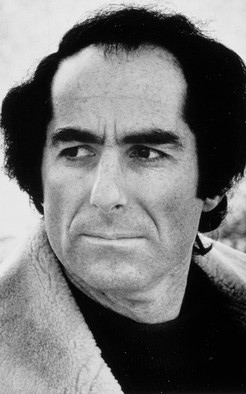
You can hear [a] great American thinker in the rhythms and repetitions of Roth’s prose: Phillip_Roth_-_1973Ralph Waldo Emerson. “I appeal from your customs,” Emerson wrote in “Self-Reliance,” “I must be myself. I cannot break myself any longer for you, or you. If you can love me for what I am, we shall be happier. If you cannot, I will still seek to deserve that you should. I must be myself.”

With uncommon felicity and characteristic lucidity, Roth demonstrates the complex, often fatal consequences of living according to Emerson’s individualist creed. That creed was given legal shelter by the founding fathers, and two and a quarter centuries later, its major dramaturge wrote The Human Stain. Roth dramatizes better than anyone, more so even than Whitman, how Emerson’s elliptical and oracular essays might play out in real life, the consummations and ravages of its single-minded pursuit.

It’s this that I turn to Roth for, which I do now more than Nabokov: for his urgency and relevance, for his argumentation and applicability. He is not as high-minded, nor as metaphysical, nor as sensuous or poetical. But he’s furthering a native tradition of thought that extends through time to this country’s deepest political impulse, namely, the imperial inviolability of the person. There is no higher art than that.

Previous Dish on Roth here, here, and here.

(Photo via Wiki)

A Switch For Consciousness

Scientists seem to have discovered one:

In a [new study], Mohamad Koubeissi at the George Washington University in Washington DC and his colleagues describe how they managed to switch a woman’s consciousness off and on by stimulating her claustrum. The woman has epilepsy so the team were using deep brain electrodes to record signals from different brain regions to work out where her seizures originate. One electrode was positioned next to the claustrum, an area that had never been stimulated before.

When the team zapped the area with high frequency electrical impulses, the woman lost consciousness. She stopped reading and stared blankly into space, she didn’t respond to auditory or visual commands and her breathing slowed. As soon as the stimulation stopped, she immediately regained consciousness with no memory of the event. The same thing happened every time the area was stimulated during two days of experiments (Epilepsy and Behaviordoi.org/tgn).

The Best Of The Dish This Weekend

Pamplona Running Of The Bulls

The horrifying kidnapping and almost instant murder of three Israeli Jewish teens was only bested by Bib Netanyahu’s disgustingly Cheney-esque response: “May God avenge their blood.” To have the leader of a democratic country bless the concept of revenge after such an inflammatory event is quite something. It is not something that George W Bush engaged in publicly after 9/11, which was a thousand times more deadly than the foul crime on the West Bank. It is not something any leader seeking to keep his country civil and united would ever do.

So when a sectarian revenge fantasy becomes real – and a young Palestinian teen is burned alive in response – I think the prime minister bears some responsibility. But then he bears responsibility for so much: the relentless settlement of the West Bank, destroying any chance for a two-state solution (by clear design); the sharp deterioration in Israel’s relations with Europe, Turkey, and the United States, as a result; and the devolution of Greater Israel into a situation where sectarian revenge killings are now part of the fabric. It seems increasingly clear to me that Netanyahu should be seen less and less as a democratic figure like a European prime minister, and more like a democratically elected Middle Eastern sectarian figure, like Maliki. With the same potential consequences.

And here, for good measure, are two IDF soldiers beating the 15-year-old American cousin of the murdered Palestinian teen, allegedly caught in a violent protest:

Another video of the beating is here. If it looks like something the basij do in Tehran, you’re not far off. The State Department has issued a statement in response.

Meanwhile, we spent the weekend noting how spirituality is not all there is to religion; and that democracy may well produce a new kind of tyranny. We featured a creepy new Cronenberg short; a gorgeous floral time-lapse; and a reflection by yours truly on how to be an American and an Englishman.

Plus: sex after 60; getting off with your iPad (literally); and the anti-depressant qualities of Botox.

The most popular post of the weekend was written by Alexis de Tocqueville; the second most popular was on the relationship between narcissism and porn addiction.

You can always leave your unfiltered comments at our Facebook page and @sullydish. 15 more readers became subscribers this weekend. You can join them here – and get access to all the readons and Deep Dish – for a little as $1.99 month.

See you in the morning.

(Photo: Revellers hold up their red handkerchiefs during the opening and the firing of the ‘Chupinazo’ rocket which starts the 2014 Festival of the San Fermin Running of the Bulls on July 6, 2014 in Pamplona, Spain. By Pablo Blazquez Dominguez/Getty Images.)