David Plouffe On Becker’s Book: “Decidedly Inaccurate”

The account Jo Becker gives of the Obama administration’s response to the issue of marriage equality is one of the few parts of the book that has not been demolished since it was published. Since her account did not square with my own memory, I asked David Plouffe to address some of the claims in the book and he was eager to do so. Plouffe ran Obama’s 2008 campaign and during the time in question was Senior Adviser To The President.

Below is a Q and A I had with Plouffe today on the events Becker purports to report. My questions are in italics. Plouffe’s answers follow:

AS:  Becker’s book argues that the president’s position seemed stalled on marriage equality in 2011 and 2012 and that he likely did not intend to evolve any further on marriage before his second term. Do you agree?

DP: Absolutely not. The President made a decision that he was ready to “fully evolve” and announce his support for marriage equality. As he put it, “If I get asked if I was still a state legislator in Illinois would I vote to recognize same sex marriages as New York State did, the answer will be yes.” So the only question was when and how to announce in 2012 he would be the first President to support marriage equality, not whether to.

AS: What were the major and minor influences that caused the president to embrace marriage equality when he did?

DP: His evolution was not contrived as some suggest, but real. He spoke powerfully to some of his reasons in the Robin Roberts interview, but also the decision not to defend DOMA was instrumental, as well as the increasing number of states that were recognizing marriage. However, his family and friends and the discussions they had were likely the single greatest influence. His ultimate support for marriage equality was arrived at in a way that while public, was not too dissimilar to the journey many of us in the country took. Also, the President believed his support for marriage equality could change the opinions of some in his electoral coalition – witness the striking change in support in the African-American community which was illustrated in the Maryland ballot initiative results in 2012.

Given the Democratic convention and the Debates, where this issue was sure to come up, and that he had personally decided to support marriage equality, the plan was to make sure the announcement was made by June.

AS: Did Biden force your hand on substance? Or just the timing? What was the president’s personal response to Biden’s public statement?

DP: Not even the timing really. We were planning to do so within a week or two. So it might have sped it up by a matter of days, if that. He was very calm about it. He understood that this would be a historic moment and years from now, if not months (which turned out to be the case for most) all that mattered would be the words he spoke, not the process to get there. I will confess to being exercised because this was a historic moment and I wanted that to be the focus, not why we were doing it or how the timing was forced. He was right, I was wrong.

AS: David Brooks argues today that judging from Becker’s book, this was a decision dominated by elite political strategists. Is that your recollection?

DP: Not all all.

DP: Once he made the decisions, it was a settled debate. All we did was help think thru the timing and some of the questions that would arise from his statement. I understand the Becker book may give people that sense. It is decidedly inaccurate. I sat beside him from his decision not to defend DOMA in early 2011 to his embrace of marriage equality on May 9, 2012. It was his call. And from my unique perch at the time, I can assure you there were no guarantees this would not cost us votes in some of the battleground states. It was one of my favorite days in the whole Obama experience. Doing something historic and right that had risk associated with it – I’m certain that’s how history will capture it, not some of the BS out there now.

AS: Was the president’s reluctance to embrace a federal right to marry a function of his caution or of his understanding that civil marriage has been a state issue in the US?

DP: The latter, exactly. Though I think he believes that ultimately the Courts and the states will move almost universally in the right direction and we certainly have seen progress on both fronts since his announcement. There really hasn’t been an issue at least in modern times that has seen this rapid support growth, and given support levels for marriage equality across the ideological spectrum of those under 35, the path is clear.

AS: Over the first term, the administration had successively endorsed the notion of heightened scrutiny for gay rights cases, had bowed out of defending DOMA in the courts and had ended DADT. How did these events change the debate about marriage equality within the administration? Or were they irrelevant?

DP: I believe that while you had to look at each individually and make decisions based on the unique core facts at hand – and any administration must – there is no doubt that each was a barrier that was overcome and the result of each pointed in the same direction towards progress. Surely some will disagree with this this, but I think the gradual progression on the issues you mention in the first three years leading up to his marriage equality statement helped ultimately build support broadly for the equality case. Some may get frustrated by this, but the President has always had a very good sense of timing, even when it seems slow or not how they would do it on The West Wing TV show. I think in this case, we will look back and understand that each chapter unfolding as it did was the right path for the overall cause.

AS: Was there a sell-by date by which time the administration believed it had to endorse marriage equality before the election?

DP: Yes – our internal clock was June. There was platform language for the convention that had to be agreed to and the debates looming and he would start doing a lot of local interviews as well as national. It would be impossible to imagine not getting the question – directly  (Are you still evolving?) or hypothetically (would you vote for it in the Illinois legislature?) We were actively working thru dates and options in the very near term when the VP made his statements on MTP.

When you read the book, you get the impression that Chad Griffin did almost all of this himself. Think about that claim for a moment. And what it says about his vision of the marriage equality movement and its hundreds of thousands of participants, gay and straight, over the last two and a half decades.

“The Original Cubicle Was About Liberation”

So says Nikil Saval, author of the new book, Cubed: A Secret History of the Workplace:

The original designs for the cubicle came out of a very 1960s moment; the intention was to free office office-space-cubicle-oworkers from uninspired, even domineering workplace settings. The designer, Robert Propst, was a kind of manically inventive figure – really brilliant in many ways – with no particular training in design, but an intense interest in how people work. His original concept was called the Action Office, and it was meant to be a flexible three-walled structure that could accommodate a variety of ways of working – his idea was that people were increasingly performing “knowledge work” (a new term in the 1960s), and that they needed autonomy and independence in order to perform it. In other words, the original cubicle was about liberation.

His concept proved enormously successful, and resulted in several copies – chiefly because businesses found it incredibly useful for cramming people into smaller spaces, while upper-level management still enjoyed windowed offices on the perimeter of the building. In that sense, the design was intended to increase the power of ordinary workers; in practice it came to do something quite different, or at least that’s how it felt to many people.

Juliet Lapidos calls the book an “impressive debut”:

Saval is of course aware that he’s telling the story of the office at a moment when it’s in flux. Personal computing and the Internet have made telecommuting feasible and the freelance economy is growing, so that many people who would have labored in a cubicle a generation ago now do their jobs at home or in coffee shops. Careful not to glorify contract labor, Saval concedes that many freelancers have not chosen to leave the permanent workforce: They’ve been pushed out. They don’t have benefits and may struggle for cash.

Still he accepts the precarious life of the freelancer as preferable to that of the old-fashioned cube-dweller. He criticizes “organizations that insist on hierarchy” and praises “the willingness of workers to discard status privileges like desks and offices.”

Previous Dish on office space here, here, here, and here.

The “Quality Of Life” In New Jersey

Chris Christie explains:

For the people who are enamored with the idea with the income, the tax revenue from [legalized marijuana], go to Colorado and see if you want to live there. See if you want to live in a major city in Colorado where there’s head shops popping up on every corner and people flying into your airport just to come and get high. To me, it’s just not the quality of life we want to have here in the state of New Jersey and there’s no tax revenue that’s worth that.

What you have here is not an argument, but a prejudice. Why is a head-shop somehow bad for a neighborhood? Why is tourism for casinos fine but for smoking a joint such a terrible thing? Why is legal pot worse for New Jersey’s reputation than the popularity of Jersey Shore and The Real Housewives of New Jersey?

And why, pray, is it a better quality of life to have less personal freedom rather than more?

“Nothing Could Be Further From The Truth”

Nathaniel Frank is the latest writer, journalist and activist to be appalled by the shoddy, shallow, dishonest journalism of Jo Becker. You will learn more about the history of the marriage equality movement in his single piece than you will in the entire 400-plus pages of Becker’s p.r. material for Chad Griffin. How Becker’s book came to be written, let alone published, remains “a major mystery that some intrepid reporter may one day unravel.”

Even Strong Black Women Get Suicidal

Following the suicide of a 22-year-old activist who founded a movement “to uplift and empower” African-American women, Josie Pickens considers the unique challenges they face when confronting depression:

It is appropriate that [Karyn] Washington’s suicide is stimulating conversation around race and mental illness. … I honestly believe we’re so accustomed to delivering the strong Black woman speech to ourselves and everyone else that we lose our ability to connect to our humanness, and thus our frailty. We become afraid to admit that we are hurting and struggling, because we fear that we will be seen as weak. And we can’t be weak. We’ve spent our lives witnessing our mothers and their mothers be strong and sturdy, like rocks. We want to be rocks. Somehow realizing I wasn’t a rock (and that I had honestly never been one), I fought my way out of bed and onto my therapist’s couch. I became exhausted with carrying all of the masks and the capes. And I knew if I didn’t get help quickly, I wasn’t going to survive.

The long-running thread “Suicide Leaves Behind Nothing” is here.

A Global Tax On The Super Rich? Ctd

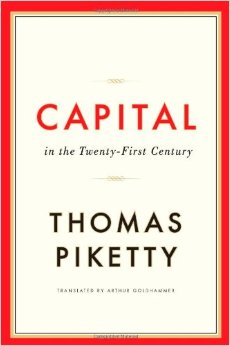
Here’s a good six-minute primer on Piketty’s new book and the progressive praise for it:

The full transcript of Krugman’s interview is here. Ryan Avent, also a fan of the book, fisks Clive Crook’s critique of Capital in the Twenty-First Century. His broader view:

Why do we care about inequality? We care about it because we are human, and we can’t help but be concerned about matters of fairness, however much economists might wish that were not the case. But what Mr Crook seems not to understand is that we also care about it because we care about living standards.

Mr Piketty’s book does an able job showing that high levels and concentrations of capital have not been a necessary or sufficient condition for rapid growth in the past, though they have often sowed the seeds for political backlash that is detrimental to long-run growth. His argument is that the living standards of many people around the rich world are now unnecessarily low, because of the nonchalance with which elites have approached distributional issues over the past generation, and that continued heedlessness of this sort will ultimately undermine the growth-boosting institutions of capitalism.

Dean Baker shares Piketty’s perspective on inequality but suggests that his global wealth tax isn’t necessary:

In Piketty’s terminology cutting back these rents means reducing r, the rate of return on wealth. Fortunately, we have a full bag of policy tools to accomplish precisely this task.

The best place to start is the financial industry, primarily since this sector is so obviously a ward of the state and in many ways a drain on the productive economy. A new I.M.F. analysis found the value of the implicit government insurance provided to too big to fail banks was $50 billion a year in the United States and $300 billion a year in the euro zone. The euro zone figure is more than 20 percent of after-tax corporate profits in the area. Much of this subsidy ends up as corporate profits or income to top banking executives.

In addition to this subsidy we also have the fact that finance is hugely under-taxed, a view shared by the I.M.F. It recommends a modest value-added tax of 0.2 percent of GDP (at $35 billion a year). We could also do a more robust financial transactions tax like Japan had in place in its boom years which raised more than 1.0 percent of GDP ($170 billion a year).

In this vein, serious progressives should be trying to stop plans to privatize Fannie and Freddie and replace them with a government subsidized private system. Undoubtedly we will see many Washington types praising Piketty as they watch Congress pass this giant new handout to the one percent.

Jeff Faux, writing in The Nation, nevertheless shrugs at the idea of a global wealth tax:

[H]e argues that the tax is technically feasible and could be gradually adopted region-by-region. Here Piketty seems out of his political depth. In order to avoid Marx’s apocalyptic conclusion, he skips around a central implication of his own analysis: that the upward redistribution of wealth also generates an upward distribution of political power that perpetuates inequality. An enforceable global tax on capital ownership would require dramatic political shifts to the left within the major economies—at least the United States, Europe, China, Japan—and unprecedented cooperation among these economic rivals to face down transnational capital and force the rest of the world to accept it. Eyes will roll.

Still, Piketty’s proposal sets a realistic marker for the level and scope of radical change necessary to deal with the grim conclusion of his quite credible economic analysis. The analysis makes hash of the conservative claim that there are “market solutions” to inequality, as well as the liberal hope that small-bore reforms will eventually achieve social justice on the cheap.

From James K. Galbraith’s lengthy review of the book:

In any case, as Piketty admits, this proposal is “utopian.” To begin with, in a world where only a few countries accurately measure high incomes, it would require an entirely new tax base, a worldwide Domesday Book recording an annual measure of everyone’s personal net worth. That is beyond the abilities of even the NSA. And if the proposal is utopian, which is a synonym for futile, then why make it? Why spend an entire chapter on it—unless perhaps to incite the naive?

Piketty’s further policy views come in two chapters to which the reader is bound to arrive, after almost41ASis1P3hL._SY344_BO1,204,203,200_ five hundred pages, a bit worn out. These reveal him to be neither radical nor neoliberal, nor even distinctively European. Despite having made some disparaging remarks early on about the savagery of the United States, it turns out that Thomas Piketty is a garden-variety social welfare democrat in the mold, largely, of the American New Deal. …

Piketty devotes only a few pages to the welfare state. He says very little about public goods. His focus remains taxes. For the United States, he urges a return to top national rates of 80 percent on annual incomes over $500,000 or $1,000,000. This may be his most popular idea in U.S. liberal circles nostalgic for the glory years. And to be sure, the old system of high marginal tax rates was effective in its time. But would it work to go back to that system now? Alas, it would not. By the 1960s and ’70s, those top marginal tax rates were loophole-ridden. Corporate chiefs could compensate for low salaries with big perks..

In sum, Capital in the Twenty-First Century is a weighty book, replete with good information on the flows of income, transfers of wealth, and the distribution of financial resources in some of the world’s wealthiest countries. Piketty rightly argues, from the beginning, that good economics must begin—or at least include—a meticulous examination of the facts. Yet he does not provide a very sound guide to policy. And despite its great ambitions, his book is not the accomplished work of high theory that its title, length, and reception (so far) suggest.

Check out the book for yourself here.

Exposing Becker’s PR Campaign

You might imagine that the Pulitzer-prize winning New York Times journalist would have attempted journalism in writing what is billed as a “definitive account” of the marriage equality movement. And if you mean by Meet the Press - Season 67journalism, being a stenographer and hagiographer for a handful of interested parties intent on spinning themselves as the new Rosa Parks, you’d be correct. No one doubts the validity and accuracy of the breathless accounts of Chad Griffin, Ted Olson and David Boies that Griffin, Olson and Boies gave directly and exclusively  to Becker.

But is it journalism never to seek any alternative views, or objective facts or actual history outside the bubble of access journalism? Is it journalism to make grand and sweeping statements about gay history, thereby revealing that you know nothing about it?

Now of course I am an interested party here, having been part of the movement for twenty-five years, but who, like so many 0thers, got wiped from history in Becker’s ridiculous book. So take my own biases into account here as well. But here’s the reasoned view of Chris Geidner, the best journalist on gay politics in the country, who has meticulously followed and covered the marriage equality movement for years. If you read one article on this book, read Geidner’s. His bottom line:

The small universe of people who constitute Becker’s sourcing for the book — and her apparent unwillingness to explore alternative reasons for or views of the developments those sources discuss — make the book a dangerous draft of history.

Geidner points out that the book is best understood as “a piece in [a] public relations campaign, orchestrated by Griffin, who is now the head of the Human Rights Campaign, the nation’s largest LGBT rights group.” It is designed to rewrite history to make an organization that was long a frustrating, infuriating laggard in the movement to be the indispensable force for real change. All the manifold facts, events, lawsuits, demonstrations, arguments, articles and books that get in the way of this PR campaign are removed, deleted, or simply ignored.

Case in point: the early, epic scene in Becker’s book in which a lone voice for equality, Dustin Lance Black’s, speaks truth to power. Geidner notes:

“If there was applause, Black didn’t remember any,” Becker writes. “Instead, he recalled an ocean of pursed lips and crossed arms, and that he was literally trembling as he walked off stage. … Tim Gill … denounced Black outright, telling the crowd he was naive and misguided.” Video from the event provided to BuzzFeed, though, shows that the speech was interrupted with applause five times. At the end, at least some members of the audience gave Black a standing ovation, the video shows.

The first words after Black’s speech were from the moderator:

Thank you. Righteous, real energy! That’s what we need! Urgency. Thank you.

If there was video of the event and you were a reporter and had a key passage describing that event, wouldn’t you want to check the video to see if your source’s account is true?

Becker didn’t – because it was irrelevant to the self-serving narratives of her exclusive sources. She also asserts, for good measure, that Black was denounced by Tim Gill – but the truth, as Geidner proves with transcripts, is simply different.

And so her book simply distorts and misleads and delivers excruciating contortions of logic and history again and again. (For even more evidence of this, see Aravosis.) Moreover, all the distortions in the book – about every moment in the movement – have the same effect: making Griffin and Boies and Olson into Rosa Parks, Martin Luther King Jr and Lyndon Johnson rolled into one. That’s why this book is such a travesty of both history and journalism and why the NYT’s publishing an extract from it is something their public editor should look into. It’s also why the movement has to take a long, hard look at its biggest organization, HRC, and ask why its executive director, for the first time in the marriage movement’s history, is trying to make one individual – himself – the alpha and omega of the entire breakthrough.

That has never happened before. And it is in effect an attack on the very movement HRC purports to lead.

(Photo: Jo Becker appears on “Meet the Press” on April 20, 2014. By William B. Plowman/NBC/NBC NewsWire via Getty Images)

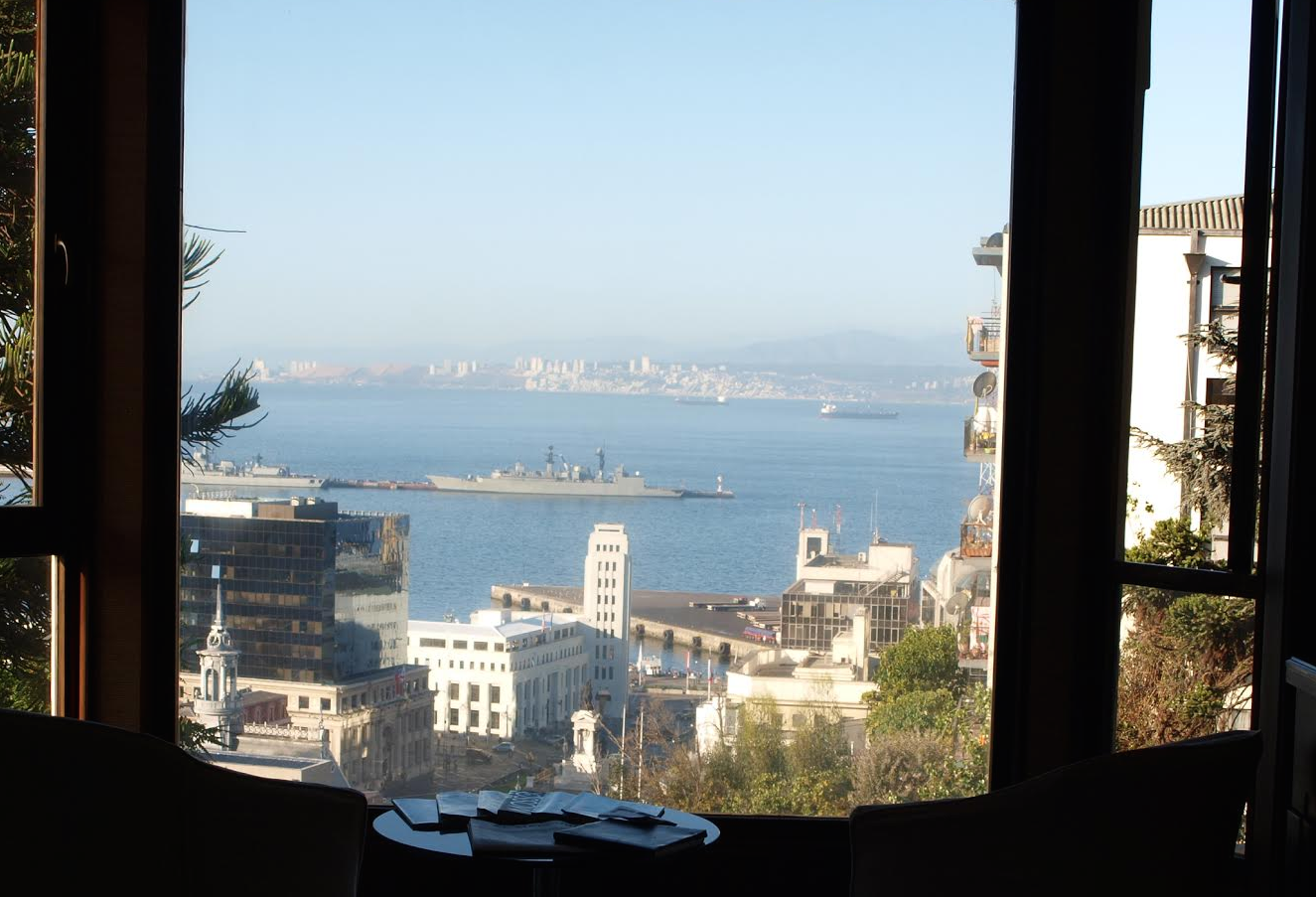
The View From Your Window Contest: Winner #201

vfwy_4-19

A reader exclaims:

Oh beautiful Málaga!

Another:

San Francisco! Or very close to it. That haze the last few days has been gross.

Another:

San Diego! (or “whale vagina”, in the native German)

Another sees Italy:

Taking a shot here, though more out of sentiment than reason. Red clay tiles and pine trees say Mediterreanean. Satellites look to be pointing northwest. Some older buildings, possibly Austro-Hungarian architecture. Statue of … Garibaldi (?) So, since I lived there for a few lovely months some 20 years ago while researching James Joyce, I’m going to say it’s Trieste, or maybe Maggia, which is just to the south. “Yes I said yes and he loved Trieste yes but he’s got it all wrong yes…”

Another thinks it’s Naples. Or maybe Marseille? Another thinks he spots a flag:

Ok, European-style buildings, warships, oil tankers, a narrow strip of water and (what looks like) the flag of the Russian navy. All signs point to the Black Sea port of Novorossiysk, Russia. Except I can’t find those buildings! So I guess I’m wrong … Ah well, hopefully I’m at least closer than the wife, who guesses Gibraltar.

Another sides with the wife:

I have spent hours looking at this, and there’s one thing Im sure of: this picture was not taken from Gibraltar.  Im going with Gibraltar anyway, because I really want that to be the answer.  Gibraltar is awesome.  It has wild apes.  Nowhere else in Europe has wild apes.

I have attached a picture of one of the apes.  Also, I may be going slowly insane staring at this window.

Gibraltar was actually the most popular incorrect guess:

First thought was San Diego – military base, semi-tropical vegetation – but after spending a few minutes looking at maps of San Diego, that doesn’t seem quite right – though it really could be almost any port in southern California.  How about Sevastopol? (It’s certainly in the news – but I’ve never been there and again, the maps don’t seem right).  Gibraltar seems a plausible fit – so I’ll go with that.  The magazine display in the foreground looks like a high-end hotel spread.  So if I had the patience and skill (I actually have some patience, but very little skill), I’d try and find a hotel window looking west over the harbor towards Algeciras.

Another looks east:

My guess is that this picture was taken somewhere along the Bosphorus in Turkey. I took a cruise down the straights a few years ago, and the cargo ships, naval vessels, river hillsides, pine needles, and satellite dishes on those balconies brought me back. Not going to get a more specific guess out of me though – about 5 minutes of searching for “Turkish naval vessles” and “hotels overlooking the Bosphorus” left me discouraged. Who are these people who can search for hours?

Two readers even guessed the Middle East, but this reader gets us on the right continent: “Cartagena, Colombia”. Another, like the majority of our contestants this week, nails the right country and city:

Holy crap – I think I finally got one.

I’m thinking it is in Valparaiso, Chile, and the view is from Pablo Neruda’s home La Sebastiana.

Not Neruda’s home, but close. Another focused on a single detail:

treeThe tree ended up being a very helpful clue for me.  It has the distinctive look of a Cook pine. Wikipedia says that Cook pines are planted abundantly in Australia, Brazil, Chile, New Zealand, Peru, Portugal, South Africa, Spain, so I figured that was as good a starting point as any.

The cars are driving on the right, which knocked out a few countries instantly. I started looking around for cities with a naval presence in the remaining countries, and bam! Valparaiso.  The picture is taken from a building overlooking Plaza Sotomayor. Another fun contest!

Another used the tree to figure out the right building:

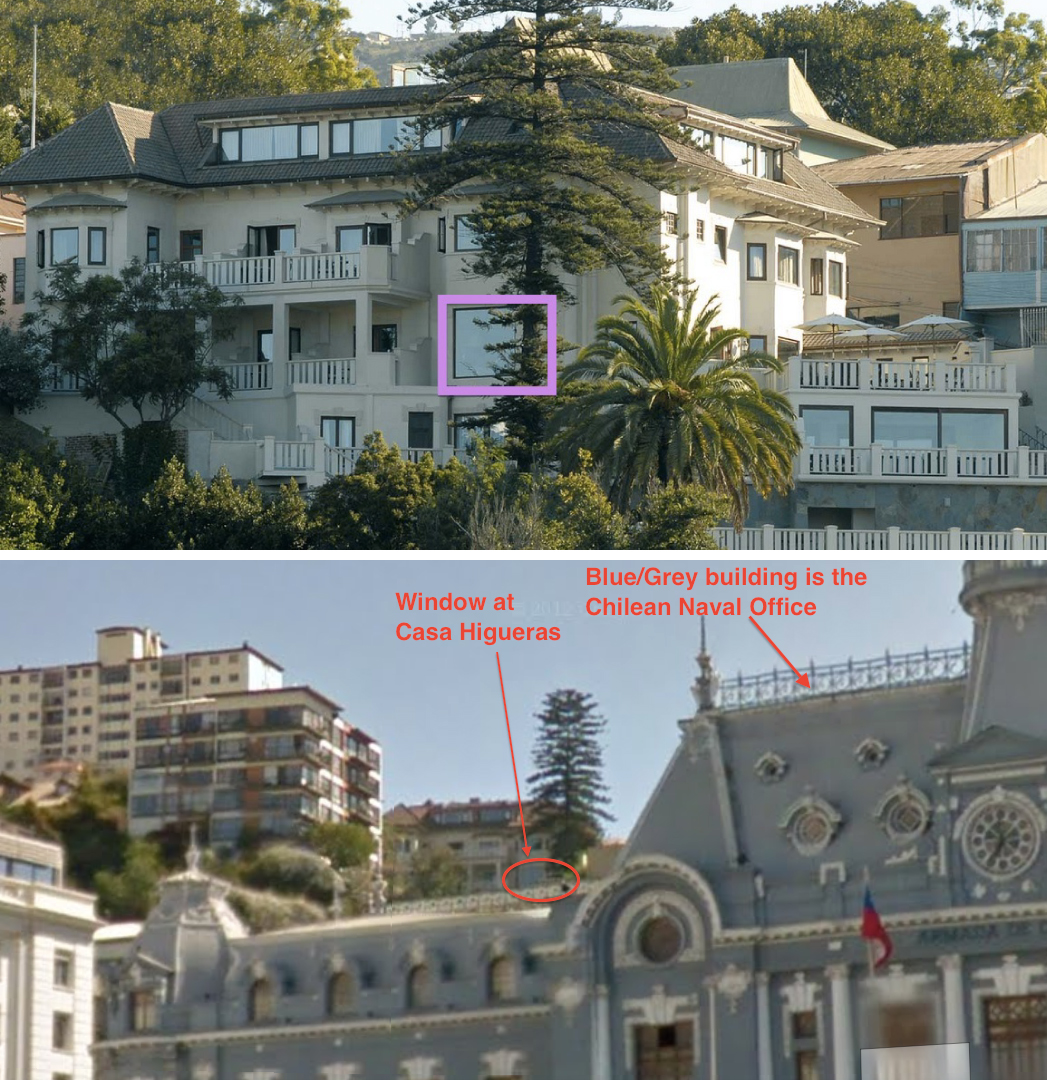
The large pine tree resembles, at least to me, a Norfolk Island Pine (Araucia–it could be another species), which I associate with the South Pacific region. As the climate appeared temperate in the photograph, I started my search in New Zealand. When that failed, I went to Chile because of its temperate coastlines and grand colonial buildings and monuments, such as those seen from the contest window. Once in Valparaiso, all the clues fell into place. The large pine tree on the hillside was dominant in many of the photographs taken from Plaza Sotomayor and of the Chilean navel headquarters. A search for hotels in the area listed Hotel Casa Higueras. The large pine tree was conspicuous in many photographs of the hotel and promotional photographs posted on travel websites looked very much like that taken from the contest window.

A long-time contestant:

I wonder if any of your other readers had a strange sense of deja vu upon seeing the view for this week’s contest. That pier with the navy destroyers … those gleaming buildings across the bay …

And then it came to me. One summer day in August 2012, I spent the better part of an afternoon studying every nuance of the photo for contest #115, trying to figure out where in the world was this magnificent port city that I had never seen before. That photo obviously left an imprint in my brain, because this week’s view was unmistakeable: Valparaíso, Chile.

Having nailed that down, a scan of Google Maps identified the statue in the foreground as the Monument to Naval Heroes in Plaza Sotomayor. Over to Google Earth, where some careful triangulation with the 3D buildings helped me line up the view just right. When I looked around that spot, I found a geotagged Panoramio photo with the name of a hotel: Casa Higueras.

And now I’m booking my ticket to Valparaíso.

A happy reader adds:

I’m guessing this week’s contest was intended to give those of us who never get it right a chance to feel good about ourselves. Thanks for showing a little mercy.

Sounds like next week might be time for a more merciless view. More than 60 people answered the correct city this week, and most of them got the hotel as well. To add some geographical context to the range of guesses, below is a map from OpenHeatMap, developed by Dishhead Pete Warden, plotting all of the entries this week (zoom in by double-clicking an area of interest, or drag your cursor up and down the slide):

This embed is invalid

Several readers took advantage of a useful clue:

Given the diversity and globetrotting nature of your readership, I imagine you’ll get a lot of correct entries for this week’s contest. I didn’t find it by identifying any of the several visible landmarks (the Naval Building, the monument to naval heroes), but by discovering the magazine with the word “MOSSO” on it that’s visible on the table.

mossoSome Googling led me to find out that Ernesto Mosso is sort of the Ralph Lauren of Chile, and may be the most interesting man in the world. He publishes a magazine called MOSSO Life, which apparently goes to a lot of hotels in Chile. It didn’t take much searching to locate the port of Valparaíso and recognize I was in the right place.

A first-time contestant:

I’ve always been a bit intimidated by the level of detail of the winning entries. But this is the second time in the last few weeks I’ve looked at the photo and thought, I’ve been there …

The first was Guam. When I saw that picture my gut told me right away it was Guam, but a cursory search of Google maps didn’t reveal any obvious location, so I figured I was wrong. When I saw the picture this time my mind was screaming Valparaiso, so I wasn’t going to be deterred. A little background: I visited Valparaiso as a merchant marine cadet back in 1991. Of all the ports around the world that I visited during my time in the merchant marine, Valparaiso was one of my favorites.

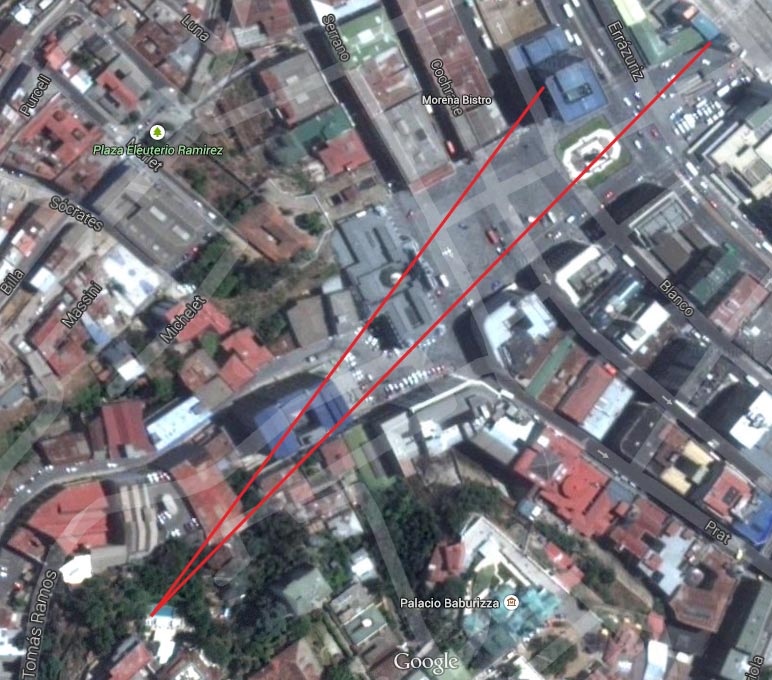
Anyway, the Navy pier in the background is a dead giveaway. Using GoogleValparaiso 1 maps I was able to draw a line from the end of the pier through the tower that is visible in the photo.
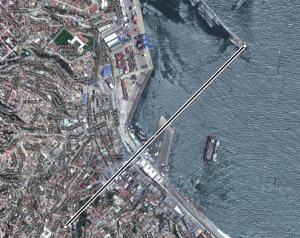
The photo looks like it was taken from a hotel on a hillside, and the line passes directly through a building on a hillside. The view from the window was likely from a hotel, since there was a neat arrangement of brochures on the table. Zooming in on the map, I was hoping Google would give me the name of the hotel. Of course, nothing is so easy, clicking on the building gave me nothing. My next hint was a street name, Higuera. So I tried a google search for “Valparaiso hotels Higuera”. Bingo. Casa Higueras.

A Boston native is struck by coincidence:

Of all days to get this view. A year ago I217415929 was staying at a quaint hostel in the Cerro Alegre neighborhood of Valparaiso from where this photo was taken when I learned of the tragic Boston Marathon bombings. We had spent that day wandering the streets Cerro Concepcion and Cerro Alegre, Plaza Sotomayor, and venturing the hills to see the home of Pablo Neruda. When we found out, we spent several hours on the phone and on Skype with relatives and friends back home to find out what had happened and to make sure that everyone we knew was okay.

So it’s fitting that a year later and on the eve of the first marathon since the bombing, I get a view of Valparaiso while in my apartment in Somerville. I’ve included one of the photos from my trip.

Another gets nostalgic:

YES – for the first time ever in a VFYW contest did I know within a couple of seconds what city I was looking at: I spent several years growing up, on and off, in Santiago, and the occasional trip to the coast would involve a visit to the harbor city of Valparaiso, and when I was little, a boat ride through the harbor. The pier in the middle of the picture, even over 40 years ago, always had a few navy ships and the occasional submarine docked on in. Harbor tours leave right on the waterfront behind the white tower in the picture.

In a country known for its nature and landscapes (Atacama desert, Andes, Patagonia) but relatively short of interesting architecture and cityscapes, Valparaiso is an exception. It was the leading commercial port on South America’s Pacific role in the late 19th and early 20th century on shipping routes between the Atlantic and the Pacific (via the southern tip of South America). Its importance was much diminished with the opening of the Panama Canal in 1914. In 2003 parts of the city were declared a UNESCO World Heritage site. For an interesting overview, click here.

Unfortunately, the city earlier this month suffered from devastating fires in the hillsides that killed 15 and destroyed over 2500 homes.

Another used some triangulation to pinpoint the right window:

In the photo, the statue in the square lines up exactly with the inside corner of the far tower, while the spire at left lines up somewhere in the middle of the bluish office building. The intersection of these lines suggest that the photo was taken from somewhere near the western edge of the white building on the map:
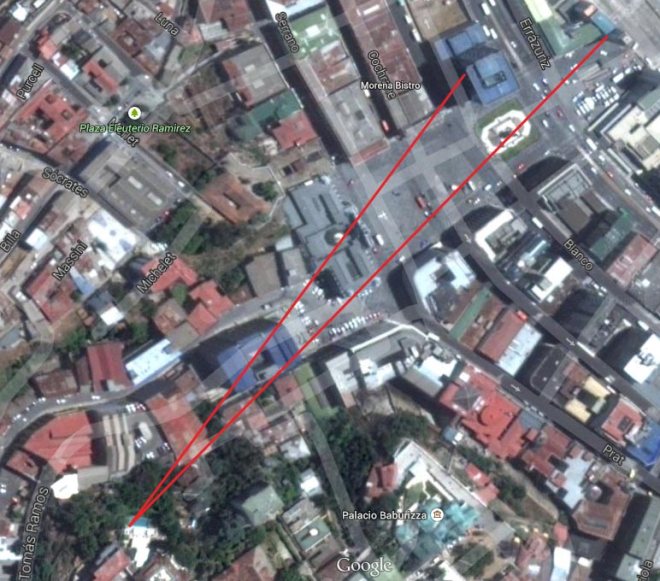
valparaiso_2

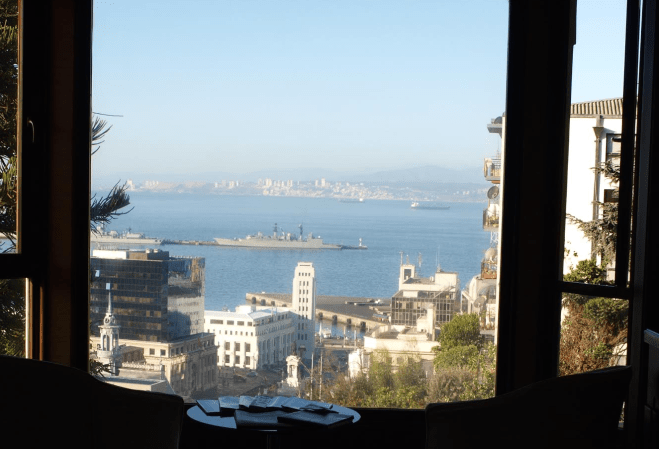
It appears that this building would have an address on Calle Higuera. Searching for that street in Valparaiso finds the hotel Casa Higueras. A Trip Advisor photo for Casa Higueras from 2011 titled “la baie vitrée du salon de lecture” shows nearly the exact scene as the contest photo, suggesting that the photo was taking from the hotel’s “reading room”:
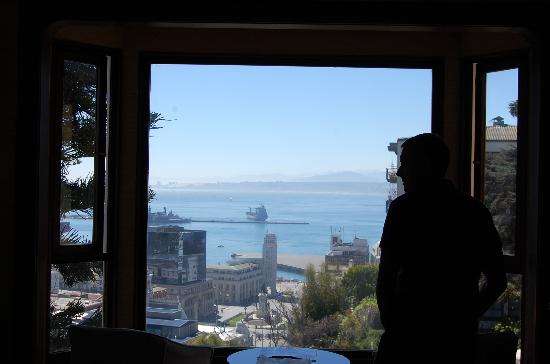
la-baie-vitree-du-salon

The inimitable Chini:

I should have known. Two days after Marquez dies, what chance was there for us not to wind up in the reading room of a South American hotel? (For the Marquez fans, when I heard that he had died I discovered that an old website that I used to go to is still kicking. Definitely worth a visit, especially for the bio.)

This week’s view comes from Valparaiso, Chile. The picture looks northeast along a heading of 40.60 degrees from the Casa Higueras Hotel over the same harbor featured in VFYWC #115.
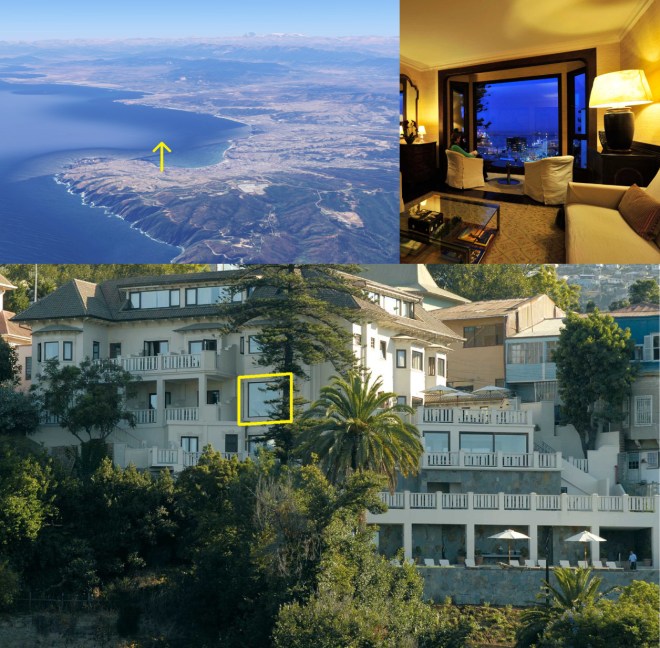
VFYW-Valparaiso-2014-Chini

Although this contest was relatively easy, it also provided my nerdiest moment yet. Upon loading the view, the very first thought that ran through my head was “That looks like a Type 22 Sheffield” – as in, the class of British frigates. And the ship in the center is indeed the Amirante Williams, a former Type 22 that was sold to the Chilean Navy. So that’s my pro tip for the week: get in a time machine, spend your childhood developing a uselessly encyclopedic knowledge of NATO ship profiles, and you too can track down views more quickly.

Another joins Chini in nerdom:
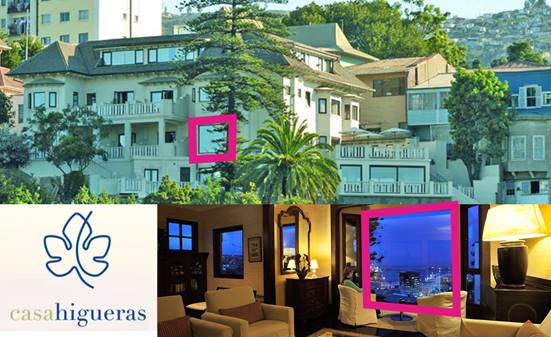
image002

outline

Simple, really.

Another has more details on the ship:

It’s a nice change of pace to be hunting ships instead of buildings. Plus, I learned a whole lot about frigates. The central warship in this week’s view is a Type 22 frigate, originally built for the Royal Navy. The Royal Navy decommissioned its last Type 22 in 2011, but several frigates sold to Brazil, Chile, and Romania remain in service. The architecture and coastline clearly suggested South America, so I took a quick look at the four Type 22s in the Brazilian and Chilean navies. The ship in question is the Almirante Williams, Chile’s only Type 22 frigate. (The Almirante Williams was previously HMS Sheffield (96), named in honor of the Type 42 destroyer of the same name that was sunk during the Falkland Islands War.) After a quick search of Chile’s naval bases, I finally ended up in Valparaiso.

One of the most detailed entries:

Every website I visited for information shows a beautiful and vibrant city. (Though of course Valparaíso is still recovering from the wildfires last weekend that left many dead and thousands homeless.)
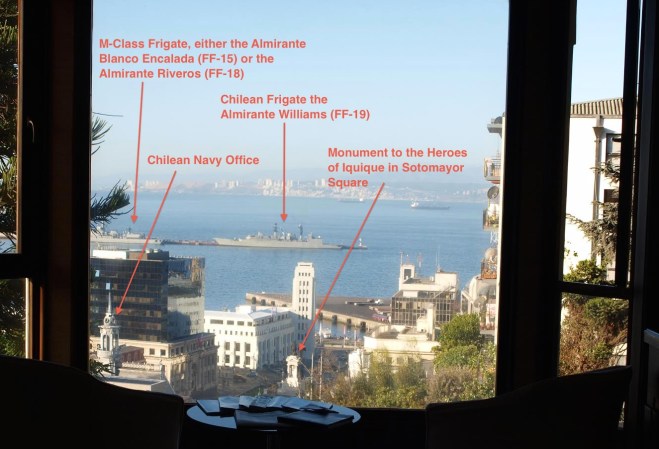
Contest photo with ships and monument labeled

The Monument to Heroes of the Battle of Iquique sits at the center of the picture above the table. Although Chile lost this naval skirmish, it won the War of the Pacific against Peru and Bolivia. As a result of securing territory from Peru and Bolivia, the Chilean border moved much further north and Bolivia became landlocked.  Bolivia has been attempting to regain access to the sea ever since, and just last week filed a lawsuit against Chile at the International Court of Justice in the Hague. I used photos of Chilean naval vessels, Wikipedia, and the navy’s own website to identify the ships.

picture-from-the-hotel-website-with-window-squared

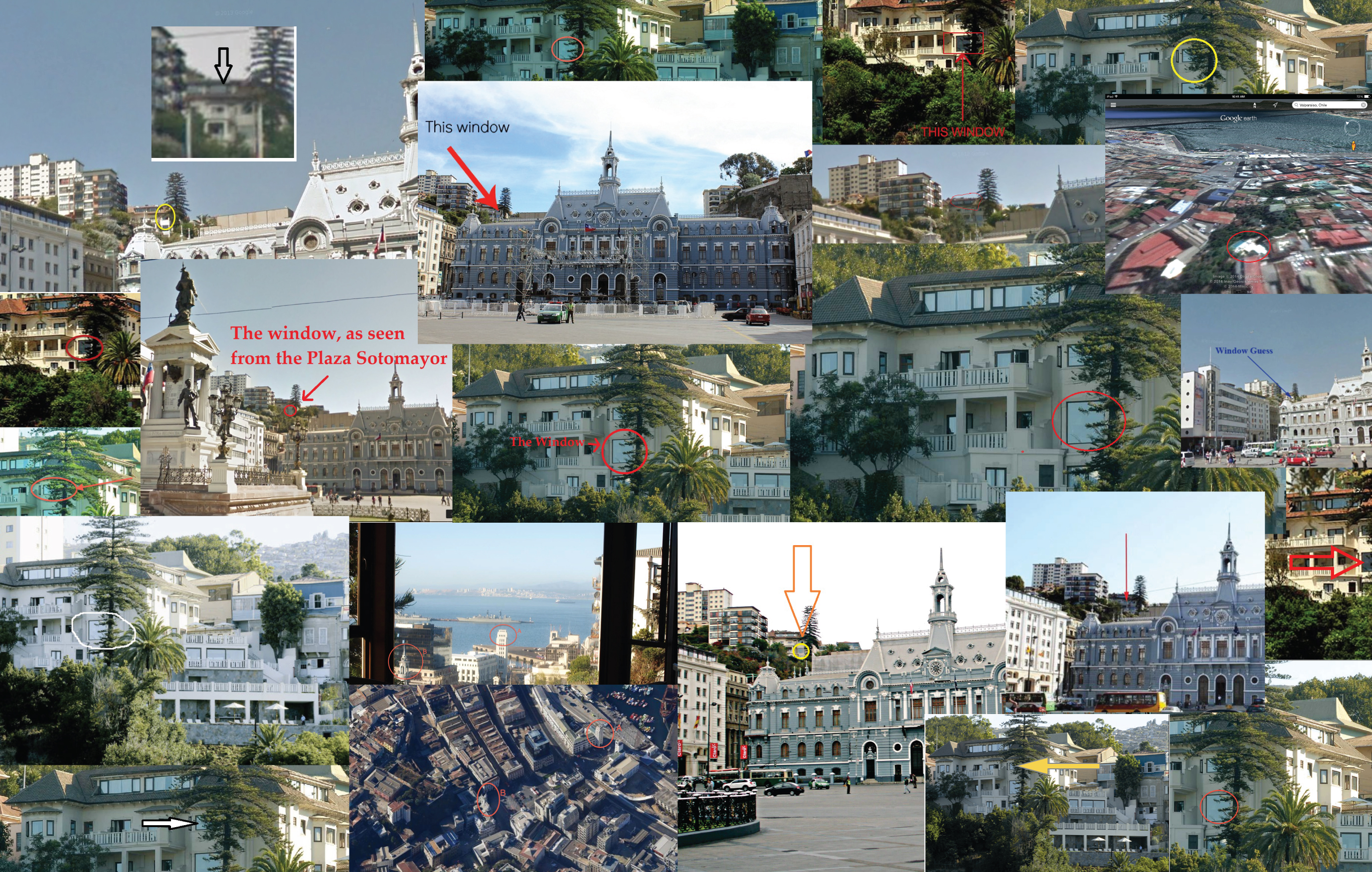
Congrats to the two dozen people who picked the right window this week. If you’re one of them, see if you can spot yours:
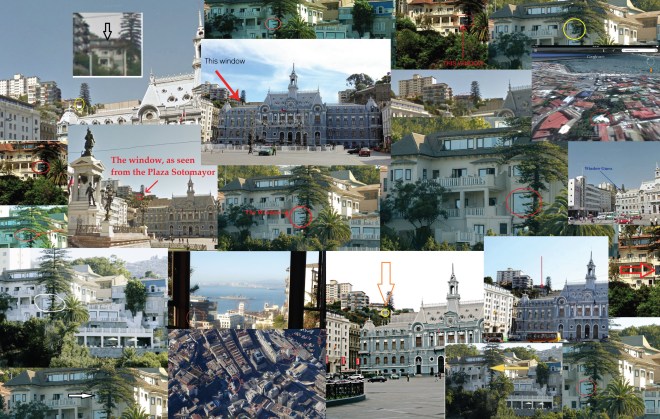
VFYWC-201-Guess-Collage

One of those belongs to this week’s winner, who had the best overall record without yet winning, having participated in 24 contests over the past few years:

I always love it when a gut feeling pays off in this contest.  When I first looked at the picture, I thought it looked like either Lisbon or Valparaiso, and Valparaiso it is. Nailing down the actual location was a little harder because Google street view isn’t especially accurate or helpful here. Long story short, it’s taken from the bay window in the reading room (thank you TripAdvisor) of the Casa Higueras Hotel atgraffiti 133 Calle Higuera in the Cerro Alegre area.

I’m too lazy to paste either of them in, and I’m sure you’ll get several other copies of them anyway, but both the hotel website and TripAdvisor have pictures out the same window, and I have to admit it’s a pretty great view.  I did attach a picture from Street View looking back up at the hotel from the plaza with the statue with the window circled.

I was in Valparaiso a couple of years ago and really loved it.  Somehow I’d totally missed the news about the devastating fire there until I was searching for this view.  It sounds like it was uphill from the historic areas, but I was sorry to hear about it.  Valparaiso is not a wealthy city, so it will be a lot to recover from.  The thing I remember most about the city is the graffiti art that you find all over, but especially up in the hills.  I attached a picture of one of my favorites that’s actually only a few blocks from the Casa Higueras.

Great job! And see everyone Saturday for the next contest.

(Archive: Text | Gallery)
Television Gets Its Day In Court

Today, SCOTUS will hear oral arguments for American Broadcasting Companies, Inc. v. Aereo, Inc. Amy Howe puts the case in plain English:

For just eight dollars a month, you get the ability to start watching a TV program – say, the Super Bowl – live on your iPhone while you are out of your house.  When you get home, you can pick up seamlessly where you left off on your television or desktop computer.  Or, you can record the entire program on a remote DVR assigned to you and watch the whole thing later on.

What could possibly be wrong with Aereo’s business model?  For ABC and the rest of the broadcast television industry, pretty much everything.  In their view, Aereo is blatantly violating federal copyright laws (and possibly jeopardizing the entire broadcast industry) by streaming live TV over the Internet without paying the networks for the right to do so.  Aereo counters that everything it does is completely legal:  the TV programs that it makes available are already broadcast for free over the public airwaves; Aereo is just making it easier and more efficient for its subscribers to watch those programs.

David Carr believes that the case could dramatically change TV:

I spent time in Hollywood last week chatting with various executives, and Aereo was described variously as “a fencing operation peddling stolen goods” and “thieves masquerading as innovators.” That’s about as friendly as it got: Aereo may be small — Mr. Diller called it “a pimple” — but it represents something mighty important. If Aereo is allowed to store and transmit signals without payment, the television industry will be profoundly reconfigured.

David Post fears that the case will modify our understanding of copyright:

What worries me about this case is its potential to make a substantial impact on some very, very basic copyright principles — the definitions, for starters, of “perform” and “performance” and “public” ad “private” and “transmit” and “work of authorship.”  These couldn’t be more foundational in the copyright world; the entire edifice of copyright law is built upon reasonably settled expectations of what they mean.  And, in turn, many hundreds of billions of dollars of economic activity is premised on the stability of that copyright edifice.

So I am very much hoping that the Justices look at this and say:  ”What a mess!!  Something has to give.  What’s the least damage that we can do to this very intricate copyright system?  What’s the narrowest possible holding we can find?”

Lyle Denniston also wonders about the narrowness of the ruling:

On legal interpretation, the broadcasters want the Court to use a broad-brush treatment, proceeding from the premise that the 1976 Act fully anticipated that there would be new technology, but maintained enduring principles that would continue to govern; Aereo, however, wants the Court to look at the legalities entirely through the specific details of the mechanisms it has made available to its customers and why they use them.

Those alternative approaches seem likely to make it difficult for the Court to find a middle ground between them, especially since each side has argued that it finds support in the Court’s own precedents before and after the 1976 copyright amendments.

What may be most challenging in this case, though, is for the Court to make sure that it does not write too broadly so that the result might stifle further digital-age innovation.  The Justice Department’s brief on the merits suggested some of the potential risks of resolving the case more broadly than the context of Aereo’s system.

Andrew Cohen weighs in:

I think the broadcast industry will prevail in this case. I think it should prevail in this case given the language of the law. I can’t imagine four justices interpreting the Copyright Act in a way that permits the lower court’s ruling to stand. But in many ways the broadcasters already have lost. Whatever else it represents, this case is a sign that the industry can no longer control its future the way it once could. It’s a sign that technology is once again pushing up against the law. And if the history of this country teaches us anything, it is that the law cannot hold back technology for long.

But, should Aereo prevail, Issie Lapowsky expects the company won’t be the big winner:

There are likely dozens of other players in the tech and television space who have been watching Aereo’s case and who will be interested in getting in on the action. Netflix is an obvious possibility. So is Amazon. Both companies are already working to move TV online. “Once the loophole is open, it’s no longer a strategic advantage for Aereo,” says Gartner media and marketing analyst Andrew Frank. “Maybe Netflix decides they’ll build some warehouses full of antennae and add that to their offerings.”

Kanojia believes that Aereo’s intellectual property and first mover advantage would protect the company from potential competitors. But Netflix and Amazon could probably release a similar product — and fast — if they really wanted to. And this is just the sort of thing they might really want to do.

Previous Dish on Aereo here. Update from a reader:

As a show runner, someone who spent many years negotiating with (and being dictated to) by TV networks, I confess to a frisson of schadenfreude at their current predicament. It’s been apparent since the old recording industry imploded that their business model was headed for the dustbin of history.

But did they try to catch the wave? Did they try to come up with something like Aereo themselves? Of course not. And why? For the same reason the content on broadcast TV is so clearly inferior to cable: the networks are terrified of anything they haven’t seen or done before. Instead of embracing the digital revolution, they tried to pretend it didn’t exist. What will save them now is that since repeal of the fin-syn rules in the nineties, they’ve been able to own studios, content generators, which will continue to supply product for newer means of distribution. Heh. From now on the survival of the businesses formerly known as networks will depend even more heavily on people like me.

Chart Of The Day

Spending Support

Larry Bartels highlights the fact “that rich and poor Americans disagree about government spending to an extent virtually unmatched elsewhere in the world.”:

In 2006, just before the onset of the Great Recession, the International Social Survey Programme (ISSP) asked people in 33 countries about “some things the government might do for the economy.” In the United States, 63 percent of the respondents favored (or strongly favored) “cuts in government spending” to boost the economy, while only 13 percent opposed (or strongly opposed) such cuts. But that was not so unusual; in 15 other affluent democracies, an average of 57 percent of the respondents favored cuts in government spending.

What is much more remarkable about the pattern of opinion in the United States is the extent to which it was polarized along class lines.