The Pot Pipelines

Jason Kersten explains the economics of trafficking marijuana through tunnels beneath the US-Mexico border:

Of all the ways pot comes across the border—in hidden compartments of cars driving through legal ports of entry, on boats and airplanes, or lugged in burlap sacks by human mules—none are as efficient and profitable as a drug tunnel. Ever since the first one was discovered, in 1990, most have been linked to a single organization, the Sinaloa cartel, now one of the largest drug-trafficking organizations in the world. They are an innovation, in fact, that is inextricably tied to the rise of both the cartel itself and its leader, Joaquín “El Chapo” Guzmán Loera, currently the most wanted man in Mexico. …

A large part of the Sinaloa cartel’s estimated $3 billion profits comes from marijuana, but weed is bulky. Huge piles of it back up in Tijuana warehouses after every harvest as brokers and the cartel scramble to find ways to get it into the United States. Building a tunnel is time-consuming and expensive, but it can pay for itself many times over in a single day. No sniffing dogs, no checkpoints, just a straight shot into the world’s largest drug market.

Previous Dish on US-Mexico drug tunnels here.

And Suddenly, The Door Just Gives Way

Screen Shot 2014-01-23 at 10.11.39 AM

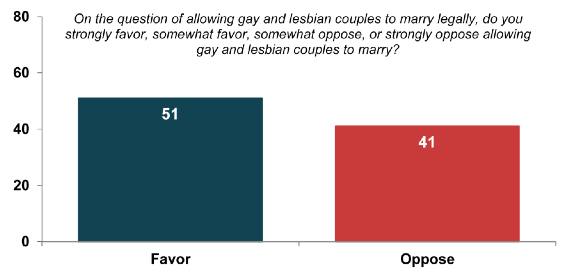
The poll above (source here), conducted last December, is arguably the critical one. It’s of Americans living in the states that ban marriage rights for gay couples. Commissioned by Freedom To Marry, it reveals the seismic shift of the last few years. It helps explain why Utah – yes, Utah, is now evenly divided over the question; and why in Virginia, the state attorney general is refusing to defend the Commonwealth’s current ban in the courts. It helps explain why Catholic high-schoolers simply cannot comprehend why their teachers can be fired simply for marrying the person they love. It illuminates why younger evangelicals are so starkly different than their resolutely anti-gay predecessors.

There are interesting regional variations, as you’d expect:

The poll shows support in non-marriage states at 51%, with strongest numbers in the Central and Western parts of the country {59% and 53% of voters respectively). Even in the South, voters are split evenly on the freedom to marry, 46% in support and 46% opposed. In addition, the poll finds that regardless of personal views, 56% of voters believe that marriage will be legal in their state in a couple of years (including 49% among marriage opponents.)

Of course, it’s way too soon to declare the battle won. Far from it. But, to be honest, I’m floored by what has happened, especially by the now-even divide in the South.

Something has fundamentally changed since the late 1980s when I first made this argument. Gay people have become human in the eyes of most straights. Not perfect and not identical – but human in our capacity for love and commitment. And that is not, in the end, a political gain. It is a moral one. And it reveals, once again, that those who despair of persuading resistant majorities of core moral arguments in America are wrong. Americans, in the end, are open to persuasion. The task for those of us on the winning side, now, is to make sure that the liberties of the losers are protected; and that this new majority is never, ever as discriminatory toward the minority as the old one.

A Tuned-Up Bike

This embed is invalid

The mechanics of the above audio:

It’s hard to believe that all of those sounds are made by a bicycle. Some of them are strictly the the byproduct of the bike’s mechanical operation, like the sound it makes when you release a brake lever. Others are created when you play different parts of the bike with a musical accessory.

For example, Johnnyrandom records the low-pitched flutter of a pick scratching on a spinning wheel, and tunes the bicycle’s spokes so he could play them with a bow like a string instrument. After capturing the sounds with a portable recorder, the different sounds were arranged and sequenced using software.

A short video on the artist’s process here. Update from a reader:

Your post reminded me of this YouTube video of Frank Zappa on the Steve Allen show. The bike playing starts about 1min in.

Getting Johns And Prostitutes Off The Hook

Aziza Ahmed argues against zero-tolerance prostitution laws:

Abolitionists typically insist that criminalization is imperative. Some have pushed for making the sale of sex illegal. Others, however, including feminists who oppose prostitution, support a different model: outlawing only the purchase of sex. They argue that criminalizing clients will force the sex industry out of business, liberating sex workers but not treating them as criminals. …

In reality, there is no convincing evidence that punishing “johns” decreases the incidence of commercial sex. Troublingly, Sweden’s sex workers report that criminalization has simply driven the sex industry underground, with dangerous consequences: Clients have more power to say when and where they want to have sex, inhibiting workers’ ability to protect themselves if need be.

She proposes treating sex work like other forms of legitimate labor:

Today, a camp of legal experts contends that the many problems sex workers face can be addressed with labor laws. If sex work were considered a legitimate economic sector, the argument goes, where work conditions, fair wages, injury compensation, and other basic employment issues were matters of law, the sex industry and those within it would be less exposed to violence and other harms.  Under a labor model, U.S. sex workers could report health risks at brothels to the Occupational Safety and Health Administration. They could unionize and lobby for stronger protections against police harassment. In the long run, they would be viewed as citizens like any other, and their industry as a safe and acceptable one.

Recent Dish on prostitution herehere, and here.

A Forgotten Firebombing

In a review of Jordan Sand’s Tokyo Vernacular, Jeff Kingston points to the city’s traumatic past:

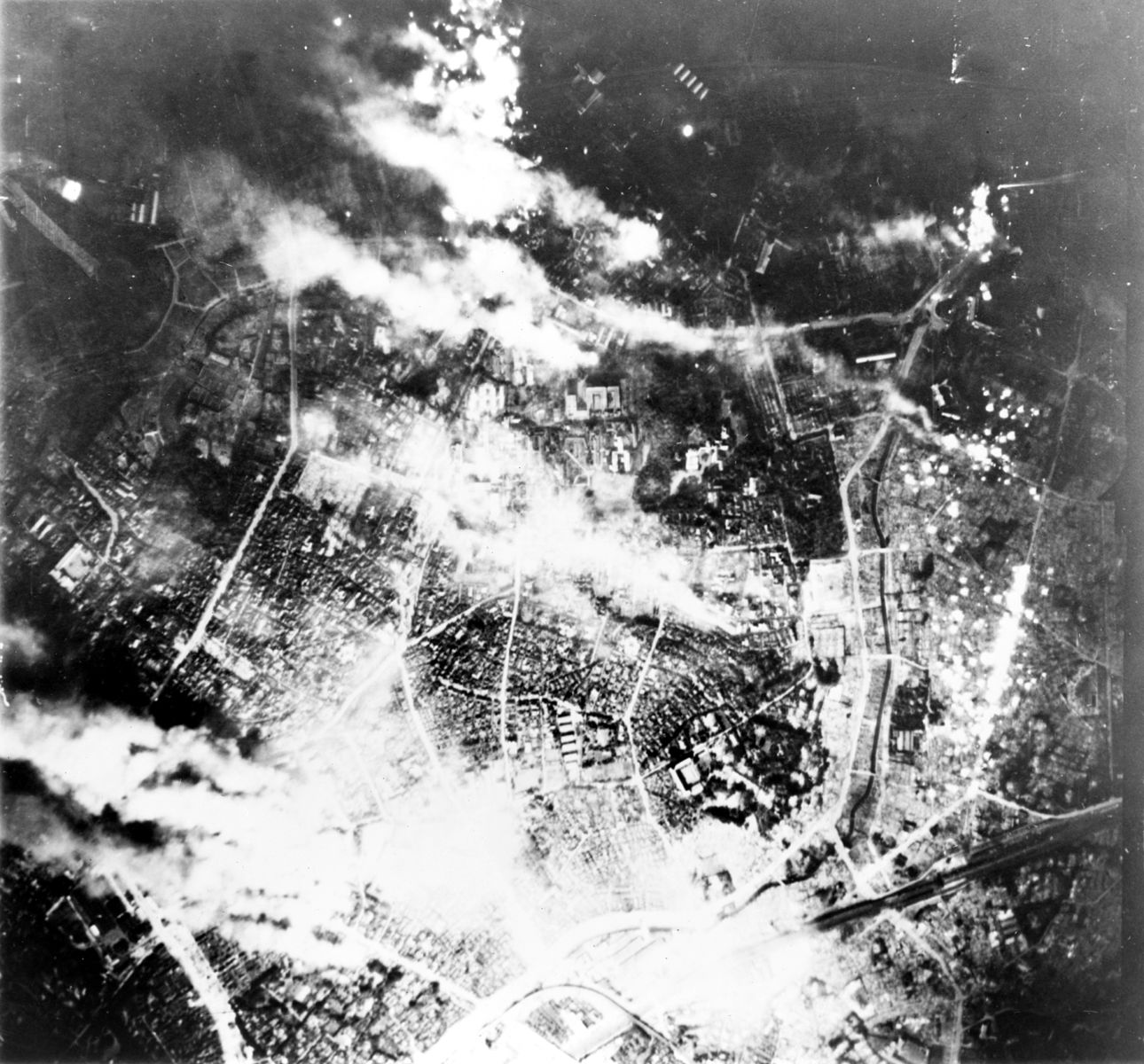
Since so many people lost friends and family in the 1945 firebombing by the United States, it is one of the most retold stories in oral histories, with accounts of spectacular dish_tokyounderfirebomb flames and the apocalyptic aftermath of a city reduced to ashes and panoramic vistas over smoldering ruins. But outside of Japan this is one of the forgotten horrors of WWII. Sand writes, “This traumatic irruption in the everyday world of Shitamachi residents […] took roughly one hundred thousand lives in the course of two hours.” Incendiaries dropped on Tokyo’s tinderbox housing combined with powerful spring winds to whip up a deadly conflagration. Oddly enough, there is no state memorial to this tragedy, and, in 1964, Emperor Showa actually bestowed an award on General Curtis LeMay, the man who was in charge of firebombing 66 of Japan’s cities, including Tokyo. He ordered a delay in the Tokyo firebombing and timed the raid to coincide with strong winds to maximize the devastation.

The firebombing of Tokyo has been swept under the national tatami mat, possibly, Sand points out, because many residents held the Emperor responsible. The Tokyo metropolitan government actually established a planning committee in 1990 for a memorial, “but this was ultimately derailed by politicians on the right and national bureaucrats.” Undeterred, in 2002 a private citizen raised funds to establish the Tokyo Firebombing Museum, but it is not listed in the guidebooks or even on Wikipedia’s extensive list of Tokyo museums.

(Image: “Tokyo burns under B-29 firebomb assault,” May 26, 1945, via Wikimedia Commons)

When Pot Is A Problem, Ctd

Readers push back on Leah Allen’s piece:

It really aggravates me when people who are obviously psychologically disabled become “pot-heads” instead of what they are: psychologically disabled and also doing that thing you don’t like and you must now blame. My father has smoked weed for as long as I can remember, and he’s your typical pot-head in my experience: president of a small business (25 employees); former president of our youth sports park; coach of every sons’ (four of us) baseball and football team; named our community’s ‘citizen of the year’; an avid swimmer and runner; and his mind is sharp and quick. I struggle everyday to be as good a father and citizen and businessman as he is. He is always there emotionally or financially for anybody and everybody.

We never smoked together until I was well into my 30s, and even then, he had to be coerced. But I am also a typical pothead: a successful attorney, father of three, community volunteer, and pretty good at all of it. (Wish I could come out of the cannabis closet.)

In conclusion, to Leah Allen: I am truly sorry that your dad is so obviously mentally disabled (abandoning your children is not something I have ever known anyone do, much less a paranoid pothead) but you’re looking in the wrong place for the answers.

Another:

Part of why I love the Dish is that as you argue or advocate for something, you are not afraid of conceding certain counterpoints where they exist.  In the case of marijuana legalization (which I am 100% for and which I enjoy a few times a month myself), I greatly appreciate your airing of Ms. Allen’s account of her father’s problem with marijuana. Her father reminds me of another “sad” and chronic marijuana user I used to know – the guy who I used to buy pot from many years ago.

Like Ms. Allen’s father, on the rare occasion he was not stoned, he also had a “sharp temper,” or was anxious, irritable and just plain miserable to be around.  While stoned he was a dreamy, sort of flaky, retro-hippie type.  Yet, I am sure marijuana was a godsend to him, that he was in essence medicating himself away from his default personality with pot.

Twelve years ago I worked at the largest (at the time) academic drug abuse research program in the world, Integrated Substance Abuse Programs at UCLA.  This was where the “marijuana as gateway drug” myth was summarily put to bed.  The myth is that a perfectly average person not prone to substance abuse could smoke a joint, and then become a helplessly addicted fiend who, before you knew it, was breaking into people’s homes for heroin money.  That is simple nonsense.  What was discovered is that for addictive personalities, yes, marijuana (and alcohol) are indeed the likely, obvious first step on the road to serious drug problems.  But it was also discovered that marijuana could be enough for the addictive personality, a destination in and of itself (such as Ms Allen’s father, and my ex-pot dealer), and was ultimately far, far easier to treat than other addictions, including alcohol.

The Best of The Dish Today

 
I just finished reading an article in The New Republic and feel the need to take a shower.

Sean Wilentz’s attempted “exposure” of Glenn Greenwald, Julian Assange and Edward Snowden is so incoherent, muddled, and, in the end, laughably trite that I actually forced myself to read it again. On the second reading, it just got worse. Somehow, opposing the NSA’s unprecedented surveillance is an attack on liberalism. Yep, you read that right. Somehow, a trio of very different people, an activist, a journalist and a whistle-blower/criminal, with transparently very different backgrounds, politics and agendas, all form something terribly dangerous to the liberal state.

Now I have lots of mixed feelings about Snowden and Assange, and have butted heads – usually productively – with Glenn for years now. And, yes, I think there’s more than a little utopian paranoia on the liberaltarian wing of those dedicated to our civil liberties. And I think Snowden should have taken his findings to the press in the US and if necessary, gone to trial, rather than run around the world seeking refuge in some truly unsavory places. But still, at the end of it all, as even Wilentz concedes, Snowden’s revelations did expose real over-reach by the NSA, and we are finally having a debate about the proper role of the surveillance state in the era of the Internet and global terrorism. More important: we would never have had this debate without him. So why all the hyper-ventilating about what the three musketeers of the anti-NSA campaign “truly believe” as if they hadn’t said so themselves a million times? Why the stupid graphics about the “heroism of fools”? Why the idiotic conceit that all three are somehow icons to every liberal in the West (when, quite clearly, they aren’t)? The great ringing conclusion of Wilentz’s cringe-inducing rant is the following:

They are right to worry, but wrong—even paranoid—to distrust democratic governments in this way. Surveillance and secrecy will never be attractive features of a democratic government, but they are not inimical to it, either.

So the huge conclusion of the piece is that it’s right to “worry” about surveillance but wrong to “distrust” democratic governments entirely. Yep you get to the end of a random assortment of anything and everything about Snowden, Greenwald and Assange that might make liberals wince to find that it’s right to “worry” but not to “distrust” the surveillance state. Seriously. There is no real argument here. There is certainly nothing new if you’ve been following this story. This, you realize, is just a classic smear. And that is all it is. A nasty, vicious, stupid smear. And you know what’s actually inimical to liberal discourse? Nasty, vicious, stupid smears. For a comprehensive take-down of this malicious, incoherent dreck, read Henry Farrell.

Today, I tried to make the positive case for persisting in the sole peaceful option for a nuclear-weapon-free Iran (as did Steven Walt). I reviewed the new HBO drama series about three gay men in San Francisco, Looking. We wondered if the latest data from the ACA showed that we still don’t understand the lives of the uninsured. And we published the latest numbers in our first subscription renewal drive.

The most popular post of the day was Exit Ezra, Smiling, followed by The Cognitive Dissonance in West Virginia.

Renew now! Renew here!

And see you in the morning.
The Need To See

An NYT Op-Doc based on the audio diary writer and theologian John Hull kept after going blind:

New research offers a glimpse at how we might someday cure blindness. Printed eye cells might be the answer:

Researchers at the University of Cambridge used a standard ink-jet printer to form layers of two types of cells taken from the retinas of rats, and showed that the process did not compromise the cells’ health or ability to survive and grow in culture. Ink-jet printing has been used to deposit cells before, but this is the first time cells from an adult animal’s central nervous system have been printed. The group hopes to develop the technology into a tool for generating new tissues that can be grown outside the eye and implanted in patients with retinal damage. Alternatively, the technique could potentially be used to insert cells directly into damaged retinas during ocular surgery, says Keith Martin, a professor of ophthalmology at the University of Cambridge, who led the research.

Gene therapy also shows potential:

A team of surgeons in Oxford have used a pioneering new form of gene therapy to stop six of their patients going blind--and it’s hoped the technique could be used to treat blindness more generally. The patients all suffer from a genetic condition known as choroideremia, which causes the light-detecting cells at the back of the eye to slowly die. Patients with the condition initially struggle to see in low-light conditions, but their sight gradually declines until most sufferers lose their eyesight completely by the time they reach middle age. Worst of all, there’s no treatment. Prof Robert MacLaren and his team, however, have been experimenting with a new technique which sees them inject functioning copies of the CHM gene—known to be faulty in these patients—directly into the retina.

Face Of The Day

US-POLITICS-ABORTION-MARCH

A man tries to stay warm as thousands of anti-abortion demonstrators hold a rally on the National Mall before walking to the US Supreme Court during the 41st annual March of Life on January 22, 2014. Held around the anniversary of the Roe v. Wade decision, the march draws thousands from around the country for a rally on the National Mall before marching up Capitol Hill to the US Supreme Court. By Saul Loeb/AFP/Getty Images.

A Good Death, Ctd

Spurred by Julie Myerson’s story, readers share their own:

My mother had a good death. She died in 2006, two days after gall bladder surgery. The surgery was “successful” and she was at home (she lived in a retirement community). I was not there but my sister was. Mother was sitting in her living room chair working a crossword and died very suddenly. Why this was a good death: 1) she wasn’t alone; 2) it was very quick; 3) it was (apparently) painless; 4) her greatest fear – losing her faculties – did not come to pass. Everything about her death was “auspicious”, and this has made my grieving process very easy. She always said, “If I ever get to where I can’t take care of myself, just shoot me.” I wouldn’t have done this but I can certainly understand the sentiment.

America’s handling of death is horribly backward. Everyone from their late 20s on (or even earlier) should have an advanced medical directive made. If you ask doctors what end-of-life treatment regime they want, invariably they select the least intrusive and aggressive option possible – because they have seen the hideous pain wrought by aggressive treatment.

Another reader:

My Dad died of heart disease. As his heart was failing, he considered surgery (even though he was already in his 80s) and the docs would have done it but for the fact he also had COPD and they knew they would never get him off a respirator if they did bypass on his heart. So I watched him come to terms with his own death (the day before he passed, he asked his doc if there wasn’t something to be done, only to be told no). He died in the Intensive Care unit after first refusing to use a bed pan and insisting he could still walk to the bathroom, and he had his last heart attack in that way. So he went out on his own terms, and I’m proud of him for not giving in, even when he had nothing left to give.

My Mom died a couple years later of complications from Alzheimer’s. Her decline was agonizing.

There came a time when my brother and I confronted her doctor about all the various prescriptions she was still taking in the nursing home, and he agreed that some of what she was getting was no longer necessary. To some degree, that might have hastened her departure, but at the same time, she was already so far gone that it made no sense to keep pumping various medicines into her, including the drug she was taking to slow the progression of her underlying disease. She actually passed away from pneumonia, and the doctor and nursing home honored our request not to take extraordinary measures even though they had never signed a medical directive.

I was present when they both passed, and though that didn’t make it any easier (no amount of forewarning can change the pain of losing a loved one), I never regretted anything we did to make their last few months easier. I have friends who think we should have done otherwise with regard to my Mom, but they are wrong.

Another:

My father died last year at this time.  My sisters and I spent his last 3 months taking turns being at his home, taking care of him and just saying good-bye.  We always knew that he wanted a natural death, did not trust doctors and wanted zero intervention. In the last months, he was genuinely frightened that someone would intervene.  It was to the point that we could not even say the word “Hospice” as it sounded too much like the word hospital and it would send him into a panic.

Every person that was allowed to enter the house had to first promise that if he had any type of event or, frankly, looked like he was about to die they would NOT, under any circumstances, call an ambulance.  He had a brain tumor and we were essentially just waiting for the end.  I think it was the greatest show of love that we could spend those last months protecting him from the medical establishment and made sure that the end of his life was as he always believed it should be.

Many people tell me they are sorry for my father’s death.  I am not sorry at all.  He had a wonderful life.  He raised three daughters, got to see all of them married, with children and in fulfilling lives and died with his beloved wife at his side.  Nothing to be sorry about at all.  He had a good death to go with his good life.

One more:

My mother’s death also was as good as I can imagine one to be. When she was diagnosed with lung cancer at age 76, her response was something like “It’s about time.” She’d been a smoker since her college days, and had tried to give it up in her 40s but then decided to stay a smoker. I think she was relieved that she would go quickly from cancer rather than have it take years with something like emphysema – but we never discussed it.

She refused chemotherapy – it might have given her a few more months to live, but she’d have started feeling awful right away. All of her family and all but one of her friends supported that decision.

When discussing what she wanted as a service, she personally shopped around for the cheapest cremation she could find. She didn’t have any directives what to do with her ashes – she said that was our problem. She read about a memorial where people sat around telling stories and eating and drinking. So she and her best friend (who also smoked since they were in college together but had given it up 20 years earlier) went to one of NYC’s swankiest funeral homes to check it out. When they asked who the deceased was, she said “Me!” Turns out New York law forbids food at a funeral home, so her friend agreed to have the memorial at her apartment.

She was given hospice care. A nurse came to visit her in her apartment weekly. She told the nurse that she didn’t believe in god or an afterlife so they discussed books every visit. The nurse gave her a comfort kit that included a low dose of some morphine. She didn’t take any till very close to the end, and was amazed at how good it made her feel. DUH. Not for the pain, but it slowed her body’s need for oxygen and she was short of breath.

She did have her doctor prescribe a presumably lethal dose – it was such a high dose that the pharmacy didn’t stock it. She made arrangement for me to pick it up, but it didn’t arrive till a day after she died.

She was in very little pain (or so she said) till the last few days. The hospice nurse had her admitted to the facility – they thought some radiation might relieve the pain for a little while. I went to see her that day and she was in good spirits. While I was there she actually made calls to her mutual fund company transferring money to an account where it would be easier for me as her executor to retrieve. She smiled and told me what fun it was making those calls. My sister who lived farther away made it up the next day and my mom passed that night. She had been given pain medication – that was her wish – so I’m sure she wasn’t very lucid at the last. I think she got the radiation treatment but I really don’t recall. It obviously didn’t matter, she wasn’t in pain at the end. It was about 4 or 5 months after her diagnosis.

The hospice was a Jewish one, and the next day I got a condolence call from the rabbi who said he’d been able to see her and pray with her the evening before she died. I thanked him and didn’t have the presence of mind to tell him that was probably what pushed her over the edge.

I have no regrets not being there as she breathed her last. We had said all we’d needed to in the weeks and months before she died.