“Merry Xmas!”

Matthew Schmitz defends the abbreviation against its religious detractors:

One of the popular indicators of the supposed war on Christmas is the use of the abbreviation Xmas. The well motivated, if grating, “Don’t take Christ out of Christmas” alludes not so subtly to the abbreviation. The former Anglican bishop of Blackburn, Alan Chesters, advised his clergy against using it. Jane Wyles, editor of the Anglican C Magazine, summed up much Christian sentiment when she criticized the “glib way people substitute Christ with this anonymous ‘X’. It’s all part of the PC picture—Christianity gets squashed into a smaller and smaller corner.” …

Xmas is, though, a much more venerable abbreviation than many suppose. The X signifies the Greek letter chi, which was traditionally combined with P, or rho, to signify the name of Christ. Constantine instructed his soldiers to scrawl the letters on their shields before the Battle of the Milvian Bridge, his victory in which led to the unlikely establishment of a Christian empire. Far from a symbol of secularization, then, Xmas carries echoes of the clash of battle that inaugurated political Christendom. The abbreviation’s use in English dates back to 1021, when an Anglo-Saxon scribe saved himself space by writing XPmas. The P was dropped but the term soldiered on: Coleridge used Xmas in his letter writing. The wags at Punch pressed it into service as a verb, Xmassing …

Middle-Income Migrants

Contrary to popular belief, migrants don’t tend to flow from the poorest countries to the wealthiest:

It is often said that the only way to reduce migration from poor countries is to boost development, but this ignores the inconvenient fact that development is generally not associated with lower levels of emigration. Important emigration countries such as Mexico, Morocco, Turkey and the Philippines are typically not among the poorest countries. Meanwhile – and against popular perceptions of a “continent on the move” – Sub-Saharan Africa is the least migratory region of the world. In fact, when you examine the data, human and economic development is initially associated with increasing emigration. Any form of development in the poorest countries of the world is therefore likely to lead to accelerating emigration. Such findings contradict conventional thinking and force us to radically change our views on migration. …

Improved access to information, images and lifestyles conveyed through education and media tend to broaden people’s mental horizons, change their perceptions of the “good life” and typically increase material aspirations. Development processes tend to initially increase both people’s ability to move and their aspirations, explaining why development often boosts migration.

A Poem From The Year

absolute

One of the things I’m proudest of, here at the Dish, is our publishing of poetry on a regular basis. We started doing it haphazardly a few years back, but this is the second year that the Dish’s poetry offerings have been arranged by Alice Quinn. Not every reader will know what an honor and privilege this is, but Alice was Knopf’s poetry editor from 1976 – 1986 and the New Yorker’s poetry editor for the next twenty years, and is now the executive director of the Poetry Society of America. To have someone of her experience and judgment be the guardian of a blog’s selection of poetry has always been a coup for us. But this year especially, in its range and depth and often piercing simplicity has been a joy.

If you love the poems, there’s something you can do to thank Alice for her work, which she does for us for the love of bringing poetry to a new medium and new audience. The Poetry Society of America, the wonderful organization Alice directs, is running a special year-end membership campaign from now until January 2nd. While supplies last, anyone who joins at the basic level of membership ($45) will receive for an extra $5 a signed, limited-edition broadside of “Keeping Our Small Boat Afloat” by Robert Bly. Any donation is tax-deductible – and for a short time, you also get a beautiful broadside in the bargain. If you want to thank Alice, sign up for your membership here.

In the week ahead, we’ll also be looking back at a few of the poems offered this year, chosen by Alice and Matt – think of it as an idiosyncratic “greatest hits” of Dish poetry. Each of these poems will include a link to the Poetry Society of America’s membership drive. The first poem we’re revisiting is below.

“Hunger for the Absolute” by Frank Bidart:

Earth you know is round but seems flat.

You can’t trust
your senses.

You thought you had seen every variety of creature
but not

this creature.

・

When I met him, I knew I had
weaned myself from God, not

hunger for the absolute. O unquenched
mouth, tonguing what is and must

remain inapprehensible—
saying You are not finite. You are not finite.

Please consider supporting the work of the Poetry Society of America here. And you can read all of our “Poems From The Year” here.

(From Metaphysical Dog by Frank Bidart © 2013 by Frank Bidart. Used by permission of Farrar, Straus and Giroux, LLC. Photo by Tristan Bowersox)

Presenting The 2013 Dish Awards!

As usual, our blue-ribbon panel – sequestered for days in an undisclosed location – has selected this year’s finalists. It was an agonizing, often nail-biting time. But we did our duty and now it’s that time of year for you to do yours. Click the links listed below and vote for the 2013 Malkin Award, Hewitt Award, Hathos Alert, Moore Award, Poseur Alert, Yglesias Award, and Dick Morris Award. Polls are also open for the Chart Of The Year, Mental Health Break Of The Year, and Face Of The Year.

And, for the first time, you can pick the year’s best Window View and Cool Ad. Yes, a Window View contest everyone can win!

The Dish Awards Glossary

You have until the end of the year to pick the prize-winners. The polls will close on Tuesday, December 31, at midnight. Winners will be announced soon after. You picked many of the entries; we just marshaled the very best (or worst) for your final selection:

Click here to vote for the 2013 Malkin Award!

Click here to vote for the 2013 Moore Award!

Click here to vote for the 2013 Dick Morris Award!

Click here to vote for the 2013 Poseur Alert!

Click here to vote for the 2013 Yglesias Award!

Click here to vote for the 2013 Hewitt Award!

Click here to vote for the 2013 Hathos Alert!

Click here to vote for the Chart Of The Year!

Click here to vote for the Cool Ad Of The Year!

Click here to vote for the Face Of The Year!

Click here to vote for the Mental Health Break Of The Year!

Click here to vote for the Window View Of The Year!

Why Is It Always About Sex?

168290943-SD

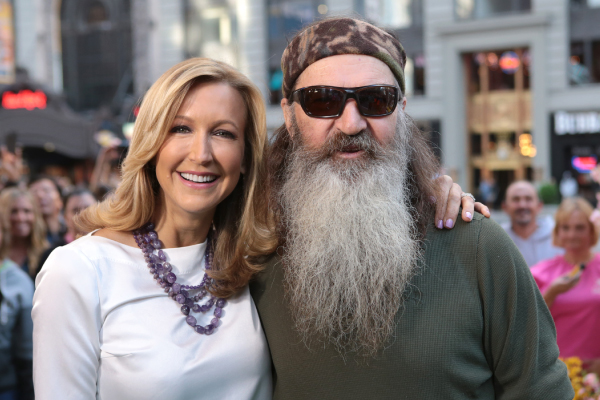
Phil of the Duck Dynasty reiterates the fundamentalist view of sin:

The acts of the sinful nature are obvious. Sexual immorality, is number one on the list. How many ways can we sin sexually? My goodness. You open up that can of worms and people will be mad at you over it. I am just reading what was written over 2000 years ago. Those who live like this will not inherit the kingdom. All I did was quote from the scriptures, but they just didn’t know it. Whether I said it, or they read it, what’s the difference? The sins are the same, humans haven’t changed […] But there’s a way out, do you want to hear the rest of the story or what? Jesus will take sins away, if you’re a homosexual he’ll take it away, if you’re an adulterer, if you’re a liar, what’s the difference?

In that last round-up of sins, Robertson puts homosexuality first, then adultery, then lying. The last two are actually in the Ten Commandments – and yet “homosexuality” is on their level, along with the view that somehow homosexual orientation can be prayed away (something that the largest Christian denomination on earth, the Catholic Church, denies). And this fundamentalist psychology then deepens:

If you break one sin you may as well break them all. If we lose our morality, we will lose our country. It will happen.

Again, as Christian doctrine, this is bonkers. There are obvious levels of sinfulness; the smallest white lie is not the same as a rape, and committing one does not mean committing them all. But you can hear the rhythms of the terrified fundamentalist psyche behind all these words. It is not enough for sins to occur (because that would make our time no different than any other); it is always the case that we are confronting a crisis of sinfulness, and that crisis is always spinning out of control into apocalyptic scenarios. So you give in to the gays, you give in to everything evil, because “if you break one sin you may as well break them all.” And if you break them all, America ceases to exist.

To recap: fundamentalism is not the same as Christianity. It has certain psychological tropes. The first is to see sexual sin as by far the worst of them and the root of all of them. The second is to see gays – whose very being represents sexual sin – as an enemy class within a society bringing about its destruction if they are not stopped or converted (see: Jews, Europe, circa 1300 – 1945). The third is to see these gays as opening the door to every other sin and evil. The fourth is to “lose our country.”

There are many varieties of Christian experience. Let’s just say I prefer the Pope’s.

Will Digital Dollars Run The World?

Carl Miller ponders a future when “normal people like you and me” commonly use digital currency like Bitcoin. “When bitcoin does indeed step over the threshold and into our world as a living currency,” he writes, “the possible challenges will make Silk Road trading seem like small fry”:

Peer-to-peer currencies reduce the ability of central banks to manipulate the money supply; have significant implications for how to track illegal transactions and may erode tax raising powers. Rubbing salt into the wound, it is now bitcoin miners, not Governments that receive ‘seigniorage‘, revenue earned by issuing the currency. Many bitcoiners are avid anarchists, who may wish and actively work to keep bitcoin separate.

In truth, no-one can be sure what will happen. Chinese authorities have in the last few days banned their banks from handling bitcoin and, anyway, it may not be bitcoin that eventually triumphs. Peercoin, Anoncoin, Zerocoin, Litecoin are all bring different strengths and benefits, from privacy and anonymity to the efficiency of the transaction. What bitcoin is however showing us is that Vires in Numeris [“Strength in Numbers”] is not ringing hollow. We will likely wake up to a world that uses currencies secured by cryptographical systems, and it is time that our social and political institutions seriously consider what this will mean for them and the people they protect and represent.

But, for Alec Liu, China cracking down proves that Bitcoin has a long way to go toward becoming a respectable currency:

[A]s much as the Bitcoin world loves to tout the latest store to accept Bitcoin, its utility in buying regular things still lags behind traditional currencies and platforms.

As we’ve already seen, Bitcoin’s ability to circumvent regulation is the sort of stuff governments won’t put up with for very long, and given Bitcoin’s reliance on centralized exchanges, it’s only a matter of time before those gateways are closed. China’s out, too. Hopeful Bitcoiners looking to India as the new hotbed of demand from a populous developing nation will likely be disappointed. The world’s second largest country by population will presumably follow the lead of its peers, while its relatively low per capita means that its citizens wouldn’t have the appetite or disposable income to make a real dent anyway. The only solution then is for Bitcoin to actually become useful.

Yglesias adds that Bitcoin has always relied on the laxity of regulators:

By using a bitcoin exchange as an intermediary, a Chinese person could sell yuan and a non-Chinese person could buy them. But this was going on more or less because the Chinese government was letting it go on. Like one of those “tax loopholes” that stays open because members of congress agitate in favor of keeping it open. Now the Chinese government has decided to close it—BTC China, the country’s main exchange won’t be taking any new deposits—and bitcoin prices are tumbling. Now if this does manage to play out that somehow the technology behind bitcoin is so sound that the PRC government can’t stop people from using it to implement exchange controls, that’ll be interesting (and probably unfortunate—judicious use of capital controls is good policy). But as of [last Wednesday] morning it looks like the party is over.

Previous Dish on Bitcoin here, here, and here.

Commuting By Color

Christopher Jobson captions:

In this new video art clip from San Diego-based filmmaker Cy Kuckenbaker, we watch as a 4-minute shot from the Washington Street bridge in San Diego is deftly edited, sorted, and compressed resulting in perfectly color-coded traffic. Kuckenbaker notes:

The source footage for this video is a 4-minute shot from the Washington Street bridge above State Route 163 in San Diego captured at 2:39pm Oct 1, 2013. My aim is to reveal the color palette and color preferences of contemporary San Diego drivers in addition to traffic patterns and volumes. There are no CG elements, these are all real cars that have been removed from one sample and reorganized.

Have We Lost Our Offline Lives?

Soraya Roberts fears we have. Clive Thompson is far less bleak:

There’s been a flood of handwringing op-eds lately about how glassy-eyed mobile-phone zombies are ignoring each other at the restaurant instead of talking to another another. I think these pundits are somewhat overblowing the frequency of this behavior, frankly. Very similar alarms were raised about the wave of supposedly society-ending isolation that would wreaked by previous newfangled media — like the telephone in the late 19th century, and the Walkman in the 80s. We didn’t suffer a social apocalypse then, and I don’t think we’re going to suffer one now.

That said, I actually think the op-ed handwringing is useful in its own way. It’s part of how a society creates social codes around new technologies. When mobile phones inched into the mainstream in the 90s, people who bought them used to answer them, every single time they rang, whenever and wherever they rang: At the dinner table, at the funeral, while having sex. It took about a decade of this behavior peaking before society collectively began to realize this was kind of terrible behavior, and we starting poking fun at it — you saw lots of jokes about it, like that “inconsiderate cell phone man” ad that used to run before movies. And eventually we moved away from the behavior. We’re probably in the middle of this curve with social media.