by Patrick Appel
(Hat tip: Flowing Data)
by Patrick Appel
(Hat tip: Flowing Data)
by Jonathan Bernstein
I suspect that's too strong, but it sure looks as if this is really going to happen:
Item: Barack Obama has done just about everything he could do in the last few weeks to put his reputation on the line over passage of the bill. Why would he do that unless he was pretty confident that it would get done?
Item: Over the last few days, it appears that the House has finally accepted that Pass, Then Patch is the logical way to do this: Steny Hoyer admitted as much over the weekend, and the leaked schedule (via Jonathan Cohn) calls for Pass on March 19, Patch in the House soon after, and Patch in the Senate beginning on March 26.
Item: Ten House Dems who voted against the bill the first time around are telling the AP (via Jonathan Chait) that they might vote yes this time around. Chait is right about the incentives here as far as public statements are concerned. I'd put it this way: there's an easily understandable story of going from no, to maybe, to yes…but it makes no sense at all to go from no, to maybe, to no.
I should emphasize here that it is very, very rare for the majority to lose a high-stakes vote on final passage on the House floor. You just don't bring a bill to the floor unless you know you're going to win. I can't imagine a reason that Nancy Pelosi and the White House would bring this to the floor knowing that they were going to lose, for some sort of spin advantage. They either know that they have the votes, or it's the biggest bluff in who knows how long. Keep watching: does the president really announce the schedule tomorrow that was leaked today? Does the Speaker really keep to that schedule, or do leaks start appearing about pushing it back a few days? I don't think so, however. I think they have the votes.
Now, they might not know which votes they have. There's still a collective action problem, because for many marginal Democrats the best outcome may be that the bill passes, but that they vote against it. Pelosi, Rahm, and the rest need to sort all of that out. There's still a lot of work to do…we still haven't seen the patch bill, and it hasn't been scored yet, and they still have to maneuver around reconciliation rules, especially on the Senate side (it shouldn't be hard — remember, the patch bill is basically all ice cream, no spinach, and stopping it won't actually stop health care reform, since it will have already passed…still, it's the Senate). But as I see it, at least based on the reporting, this is the closest they've been to getting to the finish line, even closer than they were in late December and early January.
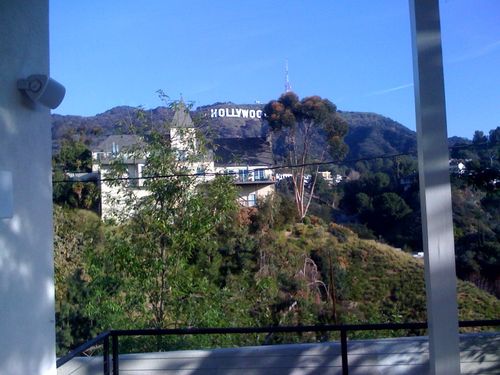
Los Angeles, California, 8.15 am
by Alex Massie
Is this actually an election it would be best to lose? There are certainly some Labour MPs and even cabinet ministers who cannot abide the idea of Gordon Brown remaining in office for a further five years. Nevertheless, Labour has more stomach for the fight than the Conservatives did before the Bonfire of the Tories of 1997.
The latest polls suggest that, while hardly steady, the Tories aren't wobbly quite so much as they were over the weekend. Then again, with at least one poll coming out every day everything assumes a greater immediate importance than might otherwise and sensibly be the case. Still, on average the Conservatives have a six or seven point lead. That's hung parliament territory.
It was Dominic Lawson, son of Margaret Thatcher's Chancellor, who suggested last week that this could be a useful election to lose. This is the sort of clever-clever stuff someone always suggests every election season. This time, for once, there could be something to it. Because this is a horrid election to win.
The public has yet to come to terms with the total absence of money, nor with the consequences of the current, unsustainable, level of debt. Just 25% of voters think the deficit is a priority. This poses a problem for the Tories since, having been caught out by agreeing to match Labour's spending plans in the past, they have decided to make the deficit the centrepiece of their economic approach.
Lawson imagines the previously unimagineable: a fourth Labour term:
Leave aside the prospect of more years under the command of such a morbid misanthrope as Mr Brown (and it is this, rather than the Prime Minister's alleged bullying, which fills his colleagues with such despair); what is the political and economic inheritance which the Labour government would bequeath to its reconstituted self? The scene would be something like the end of Conrad's Heart of Darkness, when Kurtz in a sudden moment of realisation declares: "The Horror! The Horror!"
The victim of the former rugby-playing Prime Minister's hospital pass – as he has both shattered the country's finances while also making further commitments which can not possibly be afforded– would not be David Cameron, but himself. It would be Gordon Brown, Mr Public Investment, who would have to cut state expenditure on a scale which has never before been done in this country – a guarantee of vicious internecine conflict between the Labour Party and its main financial backers, the public-sector trade unions; either that or face such a buyers' strike on the part of international investors in Britain's vast debt as would require the final humiliation of a second Labour Government having to throw itself on the not so tender mercies of the International Monetary Fund.
By this reckoning a fourth term would be just as damaging to Labour as a fourth term was to the Conservatives when John Major won his own surprise, come-from-behind, victory.
But there is one crucial difference: defeat and then, more importantly, the sadly-timely death of hte party leader, John Smith, persuaded Labour that they really had to change and change for good. quiet anguish of the past few years is how much of that change Labour squandered and how little reforming return it got for its spending investment. Winning in 1992 didn't do the Tories many favours, but it was very important for Labour. That will not be the case this time.
The Tories are supposed to have been through their purgatorial reforms. If decontaminating the party brand and trying to refashion an idea for a new kind of Toryisim, fit for the 21st century, proves insufficient then what on earth would be left?
Sure, another five years in office could destroy the Labour party too, but only after it had, after more than a century of trying, slain the Tory dragon for once and forever. In this sense, then, the stakes are as high for the parties as they are for the country.
Governing without money and in an age when the public hates politicians won't be much fun but all that can be said for winning is that, as is usually the case, it's a little bit better than losing.
by Chris Bodenner
Gotta click through for the full effect.
by Patrick Appel
Douthat's column yesterday called talked up Mitch Daniels as possible presidential contender. Chait has also had kind things to say about him. George Packer spots a rather major weakness:
Daniels was Bush’s head of the Office of Management and Budget from 2001-2003 (what happened to the surplus inherited from Bill Clinton during those years is a separate story). He was responsible for forecasting the budget in the event of a war with Iraq. His number came in at fifty to sixty billion dollars.
by Jonathan Bernstein
I think I'm going to start working on a list of things that reporters and political junkies really want to see, even though they make no sense (and I'm certainly a political junkie, so I'm guilty of this in my non-analytic moods, too) . Heading the list: the live filibuster, and a brokered convention. Neither of them, if they happened today, would do anyone any good, or for that matter have any relationship at all to the classic Hollywood versions, but that doesn't seem to keep people from thinking that they must be the solution to something.
Then there's having a politician saying what he really thinks (not sure if I should link to Beatty or Biden on that one).
Closely related, although I guess somewhat different, is the notion that Mayors of New York or really rich guys should run for President of the United States or other high office.
What else should be on this list?
by Patrick Appel
Cohn sketches out a timeline. Chait counts noses.
by Alex Massie
Roger Ailes redefines realism:
I see myself between the Hudson River and the Sierra Madres. I do not see myself at the Beverly Wilshire Hotel or Le Cirque here in New York. Those are people who aspire to different things. They’re the chattering class. They’re the people who think Ahmadinejad wants to have a chat with us and that we haven’t been reaching out to him enough. No, actually, Ahmadinejad wants to cut our heads off and blow us up with nuclear weapons. He’s made that clear. There is something about those people that makes them think, “Oh, he’s just kidding.” No, he’s not kidding. He wants to kill us.
I tend to be a realist about things.
Emphasis added. The Iranian regime is many things, most of them severely unpleasant, but it hardly poses an existential threat to the United States. The principal beneficiaries of any pretense that it does are actually Ahmadinejad and his cronies who are flattered by a frothing silliness that is almost hysterically unrealistic.
 The Dish