The Enrollment Pace Picks Up

Josh Green puts the latest Obamacare numbers in perspective:

[T]he Congressional Budget Office predicted that 3.3 million people would sign up for insurance through the exchanges by the end of last year. That obviously didn’t happen. But after essentially losing two month to technical problems, Obamacare appears to be gaining ground. It’s nearly reached that 3.3 million figure two-thirds of the way through January. It no longer seems inconceivable that 7 million could sign up by March 31st, as the CBO had originally projected.

Philip Klein adds a caveat:

HHS still hasn’t disclosed how many of those who have selected a plan through the health care law have actually paid for it, which is how insurers typically define enrollment.

Cohn’s analysis:

[T]he new figure does mean that people are using the system, in large numbers.

And while total enrollment is still short of what initial projections had suggested, the rate of enrollment seems to be right in line with what the experts, including government forecasters, had expected. A now-infamous internal HHS memo had predicted that a little more than 1 million people would sign up for coverage in January. The newly released data means that about 800,000 have signed up this month—and there’s still a week to go.

Sargent reviews Obamacare polling:

A solid majority thinks there are good things in the law, even if it needs changes, while barely more than a third supports the idea that it’s a disaster that must be eliminated entirely. The latter is driven almost entirely by Republicans. Among them, 69 percent support repeal, while independents tilt in favor of keeping it by 65-35.

One part of Obamacare that is proving popular:

A solid majority of Kentucky Republicans support the state’s decision to expand Medicaid under Obamacare, according to a new poll, standing in stark contrast to Senate Minority Leader Mitch McConnell’s opposition to the provision.

The Foundation for a Healthy Kentucky poll, reported by NPR-affiliated WFPL, found that 60 percent of self-identified Republicans said they support expansion. In total, 79 percent of Kentuckians agree with Democratic Gov. Steve Beshear’s decision to expand coverage to low-income people under the health care reform law.

Time To Drop The Ball?

For those like me who need a primer on American football:

Steve Almond wonders whether watching the Super Bowl is immoral (NYT):

There are two basic rationalizations for fans like myself. The first is that the N.F.L. is working hard to make the game safer, which is flimsy at best. The league spent years denying that the game was causing neurological damage. Now that the medical evidence is incontrovertible, it has sought to reduce high-speed collisions, fining defenders for helmet-to-helmet hits and other flagrantly violent play. Its most significant response has been to offer $765 million to settle a class-action lawsuit brought by more than 4,500 former players, but a judge recently blocked the settlement. It simply wasn’t enough money.

The second argument is that players choose to incur the game’s risks and are lavishly compensated for doing so. This is technically true. N.F.L. players are members of an elite fraternity that knowingly places self-sacrifice, valor and machismo above ethical or medical common sense. But most start out as kids with limited options. They may love football for its inherent virtues. But they also quickly come to see the game as a path to glory and riches. These rewards aren’t inherent. They arise from a culture of fandom that views players as valuable only so long as they can perform.

Update from a reader, who points to the below video to say it “reminds me of what Bill Maher said a coupla years ago” – comparing the economic systems of professional football and baseball:

 
Update from another reader:

Not only is the NFL socialist internally, it’s socialist externally. So are other major league sports. They get the city or the county or the state or a combination of them to build them stadia. I don’t have a source for this, but the only NFL stadium built without government subsidies of one sort or another is Met Life in East Rutherford, which is shared by the NY Jets and the NY Giants. But there are other hidden subsidies lurking. The massive roadways to support the Meadowlands. The train station that makes it possible for them to use the Met Life stadium for the Superbowl. The work NJTransit did at Seacaucus Junction station. NJTransit is going to be running a modified weekday schedule for that Sunday. That’s costing a lot of money. And giving ticket holders bus service if they don’t want to use the train.

The subsidizing goes on and on and one. In the meanwhile they get billions of dollars for the telecasts, merchandizing etc. And pay themselves very very well. It’s not just the players pulling down millions a year. It’s the coaches and the assistant coaches and the marketing director etc. And it’s not just the NFL. I’m sure you read a bit about what went on with the Barclay’s Center in Brooklyn. The Port Authority is busy spending 100 million to rebuild the PATH station in Harrison so a minor league soccer team can have games a few blocks away. They suck great big drafts of socialistic subsidies out of the system.

Recent Dish on Beinart’s moral qualms with the sport and his son here. Recent coverage of the blocked NFL settlement here.

Fighting Over America’s Interests

Zack Beauchamp kicks national interest off its pedestal:

In getting a handle on the basic foreign policy issues of our day — how to think about the NSA leaks, or what the hell to do about Syria — the basic intellectual divide isn’t the one you’d immediately think of. It’s not the split between Left and Right, or civil libertarians and security state hawks, or interventionists and non-interventionists.

It’s between those who buy into the cult of America’s national interest and those who don’t.

The cult worships at the altar of American selfishness, the idea that the United States is justified in doing anything — including invading a “crappy little country” and ignoring the systematic slaughter of innocent foreigners — if it further America’s “interests” in some vague fashion.

Damon Linker argues instead that American foreign policy is “far more often led astray by an excess of moralism”:

In political terms, it is perfectly legitimate for a resident of Wichita to feel more of a duty to help the victims of a natural disaster in the city’s downtown than for residents of other parts of Kansas, and for residents of Kansas to feel more of a duty to help than residents of other states, and for citizens of the United States to feel more of a duty to help than citizens of other countries. Morality makes no such distinctions, but politics does. And there’s nothing shameful about it. (For more on the legitimacy of politics, I recommend the writings of its greatest living theorist, Pierre Manent.)

None of which is meant to deny that the parochialism of politics needs to be tempered by universalistic moral considerations. It does. But the U.S. has quite enough of it already. The nation’s founding documents and civil religion conceive of democracy in emphatically moral and universalistic terms. The Judeo-Christian faith of many Americans draws on concepts derived from natural law as well as the prophetic tradition of moral exhortation and denunciation. And finally, progressive ideology appeals to universalistic imperatives and ideals of universally accessible public reason.

All of this adds up to an over-abundance of moralism in American public life. And nowhere is its influence more pernicious than in the realm of foreign affairs, where do-gooderism far too often leads to confusion, misguided policy recommendations, and (paradoxically) immoral outcomes.

Preventing Another Runaway Primary

For its 2016 nomination process, the RNC has adopted several new rules intended to avoid an extended primary that ground up Romney in 2012 (but which ultimately helped Obama in 2008 following his marathon run against Clinton). Over to Weigel:

The new rules, as just approved, allow only four states to lead the first month of balloting: Iowa, New Hampshire, South Carolina and Nevada. (The rules put these contests in February, but in previous years an arms race has ended up putting the contests at the front of January.) Florida will not jump into the first month.

What’s left? Any election (presidential preference caucus, primary) between March 1 and March 14 will operate under proportional representation. Any contest after March 14 can go proportional, or assign delegates on a winner-takes-all basis. Any state that defies these rules (or the timing rules) will lose one-third of all delegates, or nine elected delegates plus the normal three RNC member-delegates—whatever’s larger.

Ambers’ takeaway:

The end result is that the party has conspired to nominate the most electable conservative candidate and quickly. Challengers must prove themselves much earlier. Deep pockets and good field organizations will become more important relative to free media generated by tactical maneuvers and conservative radio hosts.

But not everyone in the party agrees that a shorter process is a good idea:

“Anytime you talk about limiting access and [debate] opportunities, it helps the frontrunner. It really makes me nervous,” said former Iowa Republican Party Political Director Craig Robinson, who is now editor in chief of the state party’s website. “There’s not much time to compete once you figure out who’s real or not. You don’t want to space it out so if you don’t win Iowa or New Hampshire, you don’t have a chance.”

Larison doubts the shorter schedule will have its intended effect:

Now that they are going back to a more compressed schedule, that greatly improves the chances of whoever fills that front-runner role ahead of the voting. This makes it much more likely that what could potentially be the most wide-open, competitive Republican nomination contest on record will be turned into a rapid coronation of whoever happens to be in the lead at the start. That will probably mean that the party will once again choose another relative moderate distrusted by large numbers of conservatives, and who will suffer from the same lack of enthusiasm that afflicted McCain and Romney.

Jonathan Bernstein thinks a shorter primary season makes a fringe candidate more likely, not less:

By compressing the calendar, you increase the danger that a mediocre or worse candidate could get hot at just the right time and wrap up the nomination before the party has time to stop it.

Drum downplays those fears but concedes that he could be unpleasantly surprised come 2016. His advice to both parties:

Make your primaries as similar to a general election as possible. That would mean, for example, ditching the Iowa caucuses, since the kind of retail politics that win in Iowa are irrelevant to success in November. What you want is a candidate that can raise lots of money; appeal to lots of people; and has a good media presence. That’s what wins general elections these days, and a successful primary season is one that gives the advantage to those qualities.

Cillizza theorizes that Rand Paul could benefit from the new rules:

The compression of the calendar and the likelihood that Iowa, New Hampshire, South Carolina and Nevada will have February all to themselves makes coming out of those four states with some momentum all important. No potential candidate — up to and including Jeb Bush — is better positioned, at least at the moment, to run strong in all four states.

FHQ considers how the states are likely to react:

The bottom line for now is that the national parties are doing exactly what one would expect them to do. While they are still susceptible to rogue states, the national parties have gotten more sophisticated in their responses to them. The traditionally-exploited loopholes have largely been closed.

Want rogue states in 2016? Look at the usual suspects FHQ has been mentioning for months. It won’t be Florida. It’ll be Arizona, Michigan, Missouri and North Carolina. And start looking to the end of the calendar too. We may see some creative rogue states in 2016.

The Cognitive Dissonance Of The One Percent

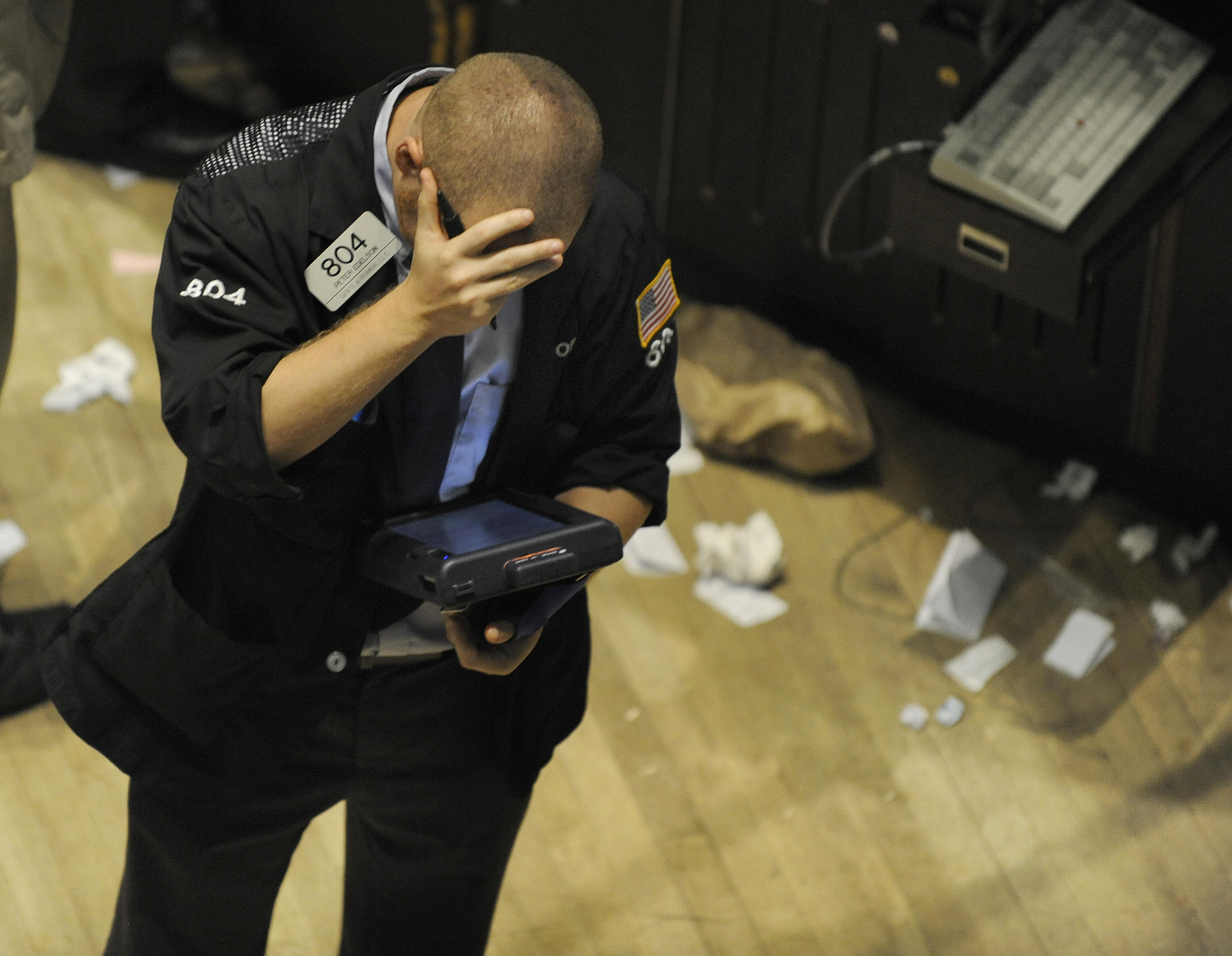
A trader reacts on the floor of the New

There has been plenty of well-deserved derision directed at the billionaire fretting in the Wall Street Journal that the super-duper-rich like him are headed for concentration camps. Paul Krugman fires an AK47 into the world’s smallest barrel here; while Josh Marshall has a must-read. Josh is actually trying to understand rather than simply excoriate the completely bizarre idea that the Obama administration is a populist, socialist threat to a capitalist system it all but saved from itself:

It is that mix of insecurity, a sense of the brittleness of one’s hold on wealth, power, privileges, combined with the reality of great wealth and power, that breeds a mix of aggressiveness and perceived embattlement.

I’ve been a little taken aback too by the attitude of the Wall Street class, after they royally fucked up the entire global economy, were bailed out by the rest of us, still get Dimon-style compensation, and have enjoyed one of the sharpest booms in stock prices since 2009. At some point, you have to ask: WTF? But here’s the empirical data on how hard the one percent have had it over the last few decades:

Average_Federal_Tax_Rates_Top_1_Percent-thumb-615x480-109671

Well, yes, they have returned to pre-Reagan levels of taxation. But the tax take is still roughly where it was in the mid-1990s and I don’t recall Clinton being perceived as a socialist or howls of protest from the wealthy as the economy boomed in the tech boom bubble. Josh notes, for example:

It’s worth remembering that Bill Clinton pushed through a reasonably substantial tax hike on upper income earners in 1993. President Obama meanwhile largely maintained the tax policies of George W. Bush, the guy who had in essence repealed Clinton’s tax increase. These are all facts that are hard to ignore.

So whence the anger and the panic? Josh thinks, as my shrink would say, that it is multi-determined. Is it adjusting to a president who, though he is a pragmatist in his record, is nonetheless more progressive in outlook than any president since the conservative revolution of the late 1970s (of which Carter, in some ways, was a part)? Is it classic in-group isolation that fosters ideological extremism? Yes and yes. But I’d add a couple of factors to the mix.

The first is the triumph of victimology in political discourse. It began on the hard left, of course, in the 1990s, as every member of a minority group was designated a victim, and all were allegedly on the verge of being targeted or discriminated against. Godwin’s Law had to be constantly invoked back then as well. But today, what began on the left is ubiquitous on the right: those denying marriage rights to gays are in fact the real victims of lefty intolerance; whites, not blacks, are the real victims of our racial politics; and men are now the real victims of the feminized, big government left (see Hume; Brit, et al.). If you want to free-base on far right victimology, just track down the rhetoric of Sarah Palin. According to her, Christians now live in constant fear of legions of Obama’s jack-booted thugs, i.e. Wal-Mart greeters wishing them “Happy Holidays.”

The second factor, I’d argue, is actually self-awareness. This is entirely speculative, but many of these extremist plutocrats must surely know, somewhere in their psyches, that they collectively failed – and failed terribly – in self-regulating and thereby protecting the very capitalist system they depend on for so much.

These masters of the universe had to go cap in hand to the federal government to bail out their sorry, incompetent asses. They were revealed not as brilliant engineers of our collective wealth, but as enablers of the debt-mania, tech-hubris and bubble-creating that destroyed so much from 2007 onwards. They were exposed as something much worse than greedy; they were revealed as incompetents whose mistakes and over-reach created untold misery and hardship for countless millions. Their own self-image – again, somewhere deep down – must have shattered a little.

People respond to revelations of their own incompetence in different ways. But the proudest – and this group of people are not exactly renowned for humility – can sometimes respond by internalizing an ever more extreme version of their own previous mindset. They cannot compute the fact that they failed, and so they have to construct a version of reality that insists it was all someone else’s fault, and then build Twitter Goes Public On The New York Stock Exchangeon that an ideology of their own unrelenting heroism, which is now, on their minds, unfairly impugned.

And the only target of blame that can plausibly fill the gap is the federal government. Anything lesser would actually diminish the one-percent’s self-perception as masters of the universe, and require some adjustment in an ideology that has been cast as eternal truth since 1980. Hence the early 2008 myth that the government alone created the economic crisis through too-cushy mortgages – when the vast majority of shady mortgages were in the private sector. And because the one percenters’ collective humiliation has been so great and so public – even the Pope won’t absolve Larry Kudlow of his heresies any longer! – you get the kind of anguished psychology behind Tom Perkins’ absurd paranoia (which makes the neocons’ habitual resort to the anti-Semite card look relatively mild).

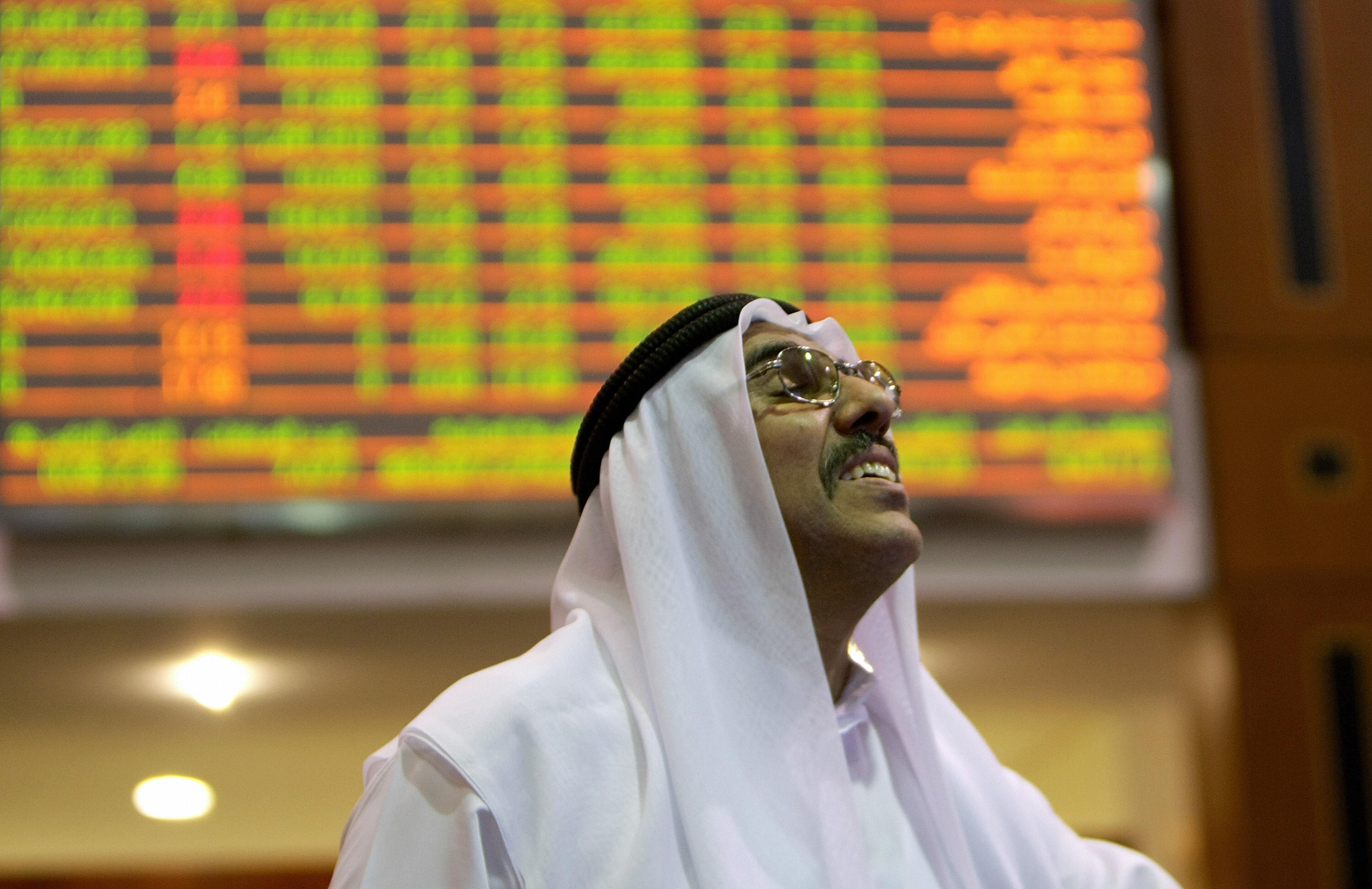
You know who they remind me of? Dick Cheney and Don Rumsfeld after 9/11. Both were responsible for the collapse in national security that enabled 9/11 to take place. Both were sold to the public as safe hands behind a jejune young president. And both were anything but safe hands – in fact, they acted like reckless, panicked, and blinkered chickens with their heads cut off. Both simply could not internalize the obvious fact of their own failures – because both had long regarded themselves as national security “masters of the universe.” Their An Emirati trader looks at the prices ofself-understanding could not adjust; it was too fixed by then.

But they are both very intelligent men and knew, deep down, the extent of their incompetence. Their reaction was to up the ante, not unlike Tom Perkins’ crazy. So they did not rationally reflect on the reasons for the failure to protect Americans from 9/11, they assuaged their buried guilt by turning the fight into an even greater battle between good and evil, by putting their previous belief in an unfettered presidency on steroids, authorizing torture on a massive scale, and embracing policies, like the war in Iraq, that could both erase memories of their own incompetence and yet also project that incompetence onto an even larger stage, with even worse results in terms of human life and economic and security costs.

When cornered, the sequestered, guilt-ridden, but psychologically rigid mindset does not reflect. It cannot see the broader picture. It cannot even publicly acknowledge what it must internally understand somewhere: that it played a part in the catastrophe that has now led to public shaming. And they worry deeply that this buried truth, if embraced by the politically influential, could come back to bite them yet. That worry is as rational as their response to it is irrational. If only they could know it, Obama is the best friend they could have in times like these. He wants to defend the capitalist system from its fatal, unregulated flaws. And it’s only by doing that can the one percenters’ wealth-creating dreams have a chance of being realized. If only they could see that. And if only they could adjust.

(Photos: scenes from the crash of 2008 and from Twitter’s IPO from Getty Images.)
Another Debt Ceiling Debacle?

The GOP appears to be committed to repeating past mistakes:

It would be, McConnell suggested, “irresponsible” to avoid a debt-ceiling crisis.

McConnell is hardly alone; many Republican lawmakers are making similar threats. Rep. Jason Chaffetz (R-Utah) said over the weekend that the White House will have to give congressional Republicans something “impressive” in order to entice GOP officials to do their duty and avoid crashing the economy on purpose.

And what, pray tell, might this “impressive” gift be? What do Republicans want before they start hurting Americans on purpose? By all accounts, they’re still working on the ransom note in this latest hostage strategy, but they appear to have narrowed the list to the Keystone XL pipeline or eliminating “risk corridors” in the Affordable Care Act in the hopes that consumers will be forced to pay higher premiums.

Oy. Chait sighs:

A clean debt-ceiling bill can’t pass the House, you say? Then how come a clean debt-ceiling bill passed the House three months ago by a vote of 285–144? And how come, nine months before that, a clean debt-ceiling increase passed the House by the same margin? The Journal reports on the demands being hopefully floated by various Republican factions without mentioning at any point that the House did in fact raise the debt ceiling without policy concessions the last two times.

Yglesias piles on:

We have already seen this movie! Multiple times! The way it goes is that the clean debt limit “can’t pass the House” because of party cartel situations. Then Democrats argue, rightly, that it would be dangerous to allow the threat of economic chaos to be used as a lever of policy and they won’t back down. Then John Boehner admits he was bluffing and allows the clean debt limit to pass the House, with most Republicans voting no but a bipartisan majority in favor. We’ve seen it. Several times. The only thing possibly accomplished by doing this again is dealing some minor damage to the economy with unnecessary waiting and uncertainty.

Stalled On The Road To Freedom

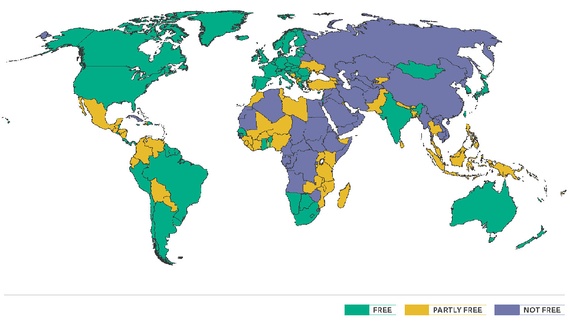
Freedom map

For the eighth straight year, Freedom House’s “Freedom in the World” report has registered a global decline in civil liberties:

“There just haven’t been any really significant breakthroughs in the important authoritarian powers that resisted democratization in the past 30 years—Russia, the other Eurasia countries, the Middle East, China, Iran, Venezuela,” Arch Puddington, vice president for research at Freedom House, told me.

The leaders of these countries, Puddington added, have learned from the collapse of the Soviet Union not to make major, uncontrollable reforms, and from the Color Revolutions in Ukraine and Georgia not to permit a pro-democracy, oppositional civil society to flourish. They are “modern authoritarians,” according to the report’s terminology, who “[d]evote full-time attention to the challenge of crippling the opposition without annihilating it, and flouting the rule of law while maintaining a veneer of order, legitimacy, and prosperity.”

Despite these setbacks, Ulfelder points out that democracy is not in retreat:

Freedom House looks at the data from a different angle than I do, calling out the fact that the number of declines in scores on its Political Rights or Civil Liberties indices outstripped the number of gains for the eighth year in a row. This is factually true, but I think it’s also important to note that many of those declines are occurring in countries in the former Soviet Union and the Middle East that we already regard as authoritarian. In other words, this eight-year trend is not primarily the result of more and more democracies slipping into authoritarianism; instead, it’s more that many existing autocracies keep tightening the screws.

Keating sees little movement in either direction:

I think it’s true that what we’re seeing is more a matter of fluctuation within countries that are long-standing members of one category or another. There hasn’t been a major trend toward countries either fully adopting democracy or abandoning it for quite some time. But as my old colleague Christian Caryl argued in a recent debate on this subject sponsored by the Economist, the important thing to remember is that “many citizens do not see democracy as an end in itself. People want freedom, to be sure, but they also yearn for economic growth, social justice and security. When elected leaders fail to produce these public goods, voters can hardly be blamed for their disillusionment.”

What Good Is Foreign Aid?

Last week an annual letter from the Bill & Melinda Gates Foundation sparked a passionate debate over that question between Jeffrey Sachs and William Easterly in the pages of Foreign Policy. From the Gates letter:

The lifesaving power of aid is so obvious that even aid critics acknowledge it. In the middle of his book White Man’s Burden, William Easterly (one of the best-known aid critics) lists several global health successes that were funded by aid. Here are a few highlights:

  • “A vaccination campaign in southern Africa virtually eliminated measles as a killer of children.”
  • “An international effort eradicated smallpox worldwide.”
  • “A program to control tuberculosis in China cut the number of cases by 40 percent between 1990 and 2000.”
  • “A regional program to eliminate polio in Latin America after 1985 has eliminated it as a public health threat in the Americas.”

The last point is worth expanding on. Today there are only three countries left that have never been polio-free: Afghanistan, Pakistan, and Nigeria.

Recent Dish on polio here. Fareed is on board with Gates:

Savings people’s lives, making them healthy and ensuring that they get an education is not simply and deeply a moral thing to do – it has practical benefits as well. These people now work, earn a living, and help make their countries less reliant on aid. Many countries that received large amounts of foreign aid from the West are now developed enough that they don’t need it anymore: among them, China, Mexico, Brazil, Malaysia, Singapore, South Korea, Morocco, Peru. In fact, China is now a big donor of foreign aid.

But Easterly dissents (paywalled), arguing that the public health revolution “is a story of many actors rather than conspicuous heroes”:

The contribution made by philanthropists and politicians should not be overplayed. Yet, if aid is a feeble instrument of economic progress, it is nonetheless a powerful tool of self-aggrandizement for the western elite. “We” are important because we are the rich people giving aid, the political leaders of the poor countries that receive it and the experts who broker the exchange.

True, some aid programs have targeted sickness with triumphant success. Mass vaccination campaigns kept millions of children from dying of measles and smallpox. Unicef promoted oral rehydration therapy to fight diarrheal diseases that used to cause far more deaths. But even if health aid has been a success, it does not follow that most progress on health is due to aid.

Gideon Rachman, who interviewed Gates at Davos, pushes back:

Gates does not argue “most progress” on health is down to aid. He simply argues that in certain cases, with certain diseases, aid can be really important. And if it does indeed keep millions of children from dying – surely it is worth doing? The alleged vanity of Gates or his audience in Davos seems a small price to pay for that.

Development economist Chris Blattman cautions:

Plenty of aid projects have huge impact. There’s a paradox, though: even though so many projects work, aid in total doesn’t have the association with growth or development we’d expect to see. Some of the finest minds in development (like Angus Deaton) think aid is fundamentally flawed, with good reasons. The evidence that aid projects are associated with growth is amazingly absent. This is frustrating for those of us (including me) who believe in aid. My guess is that we throw a lot of good money after bad, and most aid is much more wasteful than it needs to be. But I think aid basically works and can do better.

Jeff Bloem zooms out:

The aid debate currently just asks the question “does aid work?” Perhaps we should be asking questions like: “Under what conditions does aid make a difference?” “What can we do to increase the efficacy of aid?” and “What kinds of aid should we continue and what kinds should we abolish all together?” …  Economists have been debating the big questions for decades. See J.M. Keynes vs. F.A. Hayek. While these debates make for some great YouTube videos (Keynes vs Hayek Part 1 and part 2) they don’t really teach us anything substantive about how the world works.

The debate between Sachs and Easterly should probably be over, but not because either “won the debate.” The topic just needs to focus on smaller (more specific rather than bigger and more general) and better debates.

Subscribing On Sunday

[Re-posted from earlier today]

Quite a while back, I wanted to create at the Dish a real online conversation about the last things and the first things – as well as the present things. In due time, the Dish’s weekend has emerged, from my original ramblings and readings and now curated and edited by the Dish team, led by Jessie Roberts, elevated by Alice Quinn, and deepened by Matt Sitman. We’ve created, I hope, a very rare place online that takes Saturday_Poemsome time in the week to gather and air the best ideas, arguments, insights in online writing about literature, love, death, philosophy, faith, art, atheism, and sexuality.

In one of our reader surveys, we discovered that 50 percent of Dish readers are believers and 50 percent are non-believers. Where else do you find that kind of mix online or in the culture at large? I know it drives a lot of readers nuts that we actually take religious faith and experience seriously at the Dish – but I also know that many others of you really appreciate what we do here each weekend, and, even when you disagree strongly with stuff I write or we link to, see the importance of a civil space for this vital conversation.

My own belief is that you cannot understand politics today without also understanding religion – whatever your beliefs may be. And, while I am obviously a believing Christian, I hope the Dish is a place where a passionate atheist can also read views and arguments consonant with her own. It’s the conversation that counts. Or rather: the civil conversation.

kcpoem2So forgive me for interrupting this Sunday’s coverage by asking those of you who value its unique mix to renew your expiring subscription here, if you haven’t yet, or to subscribe for the first time here, if you never have. Just ask yourself how much this coverage is worth to you over a year and pay your own price. If you’ve read something that made you think, or spurred your imagination, or provoked a memory, or generated a prayer, or cemented your atheism, ask yourself how much that experience is worth, compared with everything else you pay for.

I know things are tight, which is why we aren’t changing our basic subscription of $1.99 a month and $19.99 a year, but if you can give more, we will plow those resources into this part of the weekend and into consolidating Deep Dish’s coverage of these questions as well – see The Untier Of Knots, my essay on Pope Francis as a prototype of how we hope at some point to start commissioning  and publishing essays as well as curating and commenting on them.

And thanks for being here each week. I’ve learned so much and hope to learn so much more in the years to come.

Renew now! Renew here! Or subscribe for the first time here!

A reader quotes another who isn’t a big fan of Sunday Dish:

The fact is you are kind of a blowhard. And a drama queen. Plus, also, you’re wrong. A LOT. Sometimes I wonder why I keep reading someone with such knee-jerk initial reactions (to insane wars, to mildly flubbed debates, to brain dead women being propped up by the state in order to fulfill some religious freaks’ rules). And don’t get me started on your devotion to your god. I never, EVER read the Dish on Sundays – I’d rather burn in hell.

I too hate the Sunday content, and often disagree with you (at least in the interval before you come around) but I renewed my subscription for $100 yesterday when I originally intended to send $50. This is why: You published this letter, when none of your readers would ever have known if you had simply discarded it. Just try to imagine Limbaugh doing such a thing.

A new subscriber, on the other hand, doesn’t mind all the God stuff:

It is important to me to point out that I have not found, elsewhere, a more vocal Christian who also engages with the world-as-it-is. You have managed to simultaneously embrace your faith without having to demean the world around as obstacles, enemies or contradictory. It is the first time I have seen my faith reflected in a public persona. You manage to speak about your own faith with poignance, without doing so in a way that comes off as agenda-driven, heavy-handed, or argumentative.

So, I always find it curious how some find it off-putting.  I, as you, find value in people describing the things that bring them passion – even if I do not agree. You offer counter-points to your own views – and not caricatures, but rather the best arguments of your opponents.  That is rare today.  I’ll pay for that.

From an M.Div.:

If there’s one category of reader comment I really, really, really wish you’d stop featuring, it’s your readers who whine incessantly about the fact that you are a Christian. The degree to which these class of folks will just sort of go out of the way to try to remind you that you are somehow less intelligent for these reasons is just amazing. I mean, it’s just so insufferable. “I read you, you link to interesting things, you share different sides of the debate, but by goodness, you are just so stupid what with the praying and the kneeling!” It’s like they can’t fathom an interesting, well-rounded person who happens to not believe in the gospel according to Richard Dawkins.

I know that you should keep highlighting these readers out of principle, but if no one ever writes to say thank you for a Sunday that takes me places I want to actually go from time to time, then consider this message that thanks.

A Death Blow To Net Neutrality, Ctd

Readers push back on Matthew C. Klein’s claim that net neutrality amounts to “one-size pricing” and “an effective subsidy” for high-bandwidth users:

I have worked for a web-hosting company for over a decade, and customers are absolutely charged for how much bandwidth they use. I’m certain that The Dish pays for how much bandwidth it uses. Klein can’t even hide behind the wiggle words “same rates” because larger customers get a volume discount and pay a lower rate per megabit than smaller customers, so in reality the all-text websites “subsidize” the video-streaming sites. For example The Dish pays more for its bandwidth than Netflix on a per-megabit basis.

The real issue here is that the ISPs are accustomed to selling more bandwidth than they are able to provide. When service ultimately degrades, they are forced to build out infrastructure to support what they have sold. Yes, this is expensive, but it’s a matter of customers getting what they paid for. One way to avoid the cost of building out infrastructure is to prioritize packets for your largest customers so they never feel the effects, while the little guy gets screwed. Even better if you charge a fee for this “service.”

Another adds:

The telco/cable duopoly is trying to confuse the issue. What they don’t like to pay for is Internet backbone capacity. If the traffic is on their network (local to the Verizon or Comcast network), the ISP does not pay for this traffic. They only pay for traffic that hits the “real” internet. There are many ways to reduce the internet backbone bill. Verizon/Comcast could install proxy servers that cache popular content. They could set up peering so that the Verizon network can talk directly to Amazon or Youtube. To me, this is just another cash grab, and it shows how incredibly corrupt our political system has become. The death of net neutrality will cost each of us a lot more than we think.

Another:

I used to sympathize with the argument that the ISPs paid for the infrastructure to support the Internet, and should not be forced to subsidize content providers. I see the moral and logical appeal of that point.

However, that argument assumes that Internet infrastructure is a normal commodity that can be sold or created by others to increase competition. For example, say a downtown area contains only one parking garage that only accepts Ford cars or charges $50/day. Someone else will likely build another parking garage that accepts all cars to take advantage of the irrational discrimination against non-Ford cars. Or someone will build a new garage and charge less than $50. If there are not enough cars to fill both garages, the first garage will have to lower its rate, benefiting consumers and allowing the market to work.

Internet infrastructure, like power lines or telephone wires, does not work that way. It is extremely onerous to build. So much so that only one of the most cash-flush and influential companies in the world (Google) has seriously attempted to challenge the incumbents by building new infrastructure, as it did in Kansas City. The incumbents’ infrastructure also just piggybacks on preexisting phone and cable TV networks. I concede they have to maintain the infrastructure, but it’s not like they paid billions upon billions of present dollars to build new infrastructure, the way a new entrant into the industry would. ISPs are more like utilities than a typical business in the current setup. If they want the monopoly, perhaps they should be regulated like utilities. I bet they’d love that.

Another raises a free-speech concern:

If someone can pay for faster, ‘premium’ delivery of information, why can’t they also pay to slow, or even block the service of their competitor?

For all these reasons, and having studied this some more, I’m emphatically for net neutrality – for reasons of democratic equality in online speech in an economically unequal age. Can we not have one oasis in which one argument is always just as accessible as any other. This, after all, is the great thrill of the democratic web. Every page is like every other page; that principle of a core check on power.