Anti-Americanism Is Here To Stay

Supporters Of Ousted President And Opponents Continue To Wage Street Battles

Marc Lynch observes that, in Egyptian politics, “anti-Americanism is a surefire and cost-free political winner”:

Typically, this would be the time for me to call for renewed public diplomacy to try to combat anti-American misconceptions and convince Egyptians of American intentions. But let’s be real. American efforts to push back against the most outlandish allegations are certainly worthwhile, but have obvious limitations. No, American battleships are not moving toward Egypt to launch an invasion. No, Ambassador Patterson did not conspire with the Muslim Brotherhood or offer to sell the pyramids to Israel. No, Obama is not a member of the Muslim Brotherhood and isn’t going to be impeached over secret payments to them. All well and good, but entrenched opinion is unlikely to be moved.

Meanwhile, Tarek Masoud traces Morsi’s missteps:

[T]he sin of the Muslim Brotherhood was not that it failed to work with liberals, but that it failed to work with the old regime. For the almost the entirety of its time in power, the Brotherhood has demonstrated a remorseless, unyielding obsession with rooting out Mubarak’s National Democratic Party from Egypt’s political life. This extent of the obsession was on full display in one of the last speeches of Morsy’s presidency. Before a crowd made up of equal parts dignitaries and rowdy Muslim Brothers from the provinces, he railed against the remnants of the ancien regime — commonly called the fulul — and then took a few minutes to tell an unflattering story about a man named Kamal el-Shazly, who was Mubarak’s parliamentary enforcer — and who has been dead since 2010.

This odd detour into what is now ancient history reveals the extent to which Morsy and his Brothers viewed as Egypt’s primary problem as not the crumbling of its economy or the decay in public order, but the continued presence of Mubarak’s allies and appointees in almost every corner of the state apparatus. “One year is enough,” the president declared, suggesting that the gloves were soon to come off and a full-blown purge was in the offing. In the end, he was the one who was purged.

(Photo: A man displays a poster picturing the crossed face of U.S. President Barack Obama as tens of thousands of people attend a rally in Tahrir Square against ousted Egyptian President Mohamed Morsi on July 7, 2013 in Cairo, Egypt. By Carsten Koall/Getty.)

“Even If You’re A 300-Lb Black Kid, You Still Wanna Be Calvin” Ctd

CH940127_JPG

Another ode to Watterson’s genius:

I was given my first “Calvin and Hobbes” collection by an older cousin when I was about ten years old and it was incredible. At first what captivated were the dinosaur strips. Watterson seemed to see these magnificent animals through the same lens as I did and I could read and reread and just stare at his art for hours. My parents would give me other books for birthdays and Christmases, but I’d go out and spend my own money on them when I’d save enough. I would swap books with friends. In school for an assignment where we had to act out a scene from our favorite book I got together with a few friends and we turned one of the bully, Moe, stories into a little skit.

As I got older I could all of a sudden start to appreciate some of the intellectualism and philosophy Watterson would weave into the stories. For the first time I read his introductions to the collections or some of his contemporaries and I developed an appreciation for the toil of the work of being a comic book artist. Even now to think about what it took to produce that level and volume of drawing, inking, coloring AND writing boggles the mind.

I have a pretty good collection of the books now, and when my seven-year-old nephew was visiting with his family and looking for something to do, I gave him Homicidal Psycho Jungle Cat. Like the younger version of me, right now he likes the drawings and the more visual gags. But I knew I had helped perpetuate the legacy of Calvin and Hobbes when I went to visit him a few weeks ago and he had his own copy of it. I’m planning on helping him complete the collection by giving him the rest of my books. It’s a wonderful thing to pass along the magic.

Another reader points to a compilation of “25 great Calvin and Hobbes strips”. Browse previous Dish on C&H here.

The Building Blocks Of Urban Recovery

Alec MacGillis is unsure that Detroit has them:

We’ve heard so much about all the vacant buildings in Detroit and the budding return of deal-seeking hipsters that there’s an assumption that the city is just waiting to be discovered by a wave of new residents of the sort that are flooding into Brooklyn and Washington but also, in smaller numbers, parts of Baltimore, Philadelphia and Pittsburgh. What this misses is one of Detroit’s cruel ironies: while it has many, many vacant buildings available for a song, it lacks the sort of housing stock on which urban renaissances are born.

The “urban renewal” wave of the 1950s and ’60s was more disastrous in Detroit than anywhere else—to make room for a web of new expressways (built partly to speed travel among the big auto plants on the periphery), the city knocked down not only a major African-American neighborhood (thus contributing to the racial tensions that spawned the 1967 riots) but also a swath of buildings on the southwest corner of downtown, exactly the sort of warehouses and small factories that have been reborn as loft apartments and condos in other cities. There are also precious few of the brownstones and other rowhouses that are so popular with gentrifiers in other cities. As Jane Jacobs explained years ago, cities thrive on density, but Detroit, for the reasons described above, was always more spread out than other big cities. What is mostly left for housing, with the exception of rejuvenating pockets like the Midtown area around Wayne State and the Detroit Institute of Art, are some breathtakingly handsome Art Deco towers downtown in various stages of vacancy, and a sea of single family homes scattered across the vast expanse, offering less than ideal raw material for the sort of bikes-and-coffee-shop comeback we’ve seen in other cities.

Yglesias notes another handicap Detroit suffers – a lack of major universities:

The overall higher education sector in the United States takes a lot of criticism these days, but in part precisely because of the things that make it seem kind of bloated and inefficient it’s a very valuable urban amenity. Universities both create little neighborhood-level retail clusters around them, and along with medical facilities become the twin pillars of a regional knowledge-based economy. Of course cities can thrive without necessarily playing host to a prestigious private university or a public university flagship campus (San Antonio, for example) but for lots of older cities hit hard by the macroeconomic trends of the 1970s and 1980s the existence of major universities has provided a foundation for rebuilding.

Face Of The Day

Daniel_Bryan_beard

A reader writes:

As a push to increase the Dish’s pro wrestling coverage – one of the few controversial topics you don’t cover, according to that study – I submit the attached picture of current WWE wrestler Daniel Bryan.  Even better than the picture is his catch phrase, “Respect The Beard”.

Update from a reader:

With your two mentions of pro wrestling in one day, I would be remiss not to share with you the latest project I’m working on: Total Divas! The show focuses on seven female wrestlers, one of whom, Brie Bella, is the live-in girlfriend of Daniel Bryan. The tag line of the show should be “What’s real and what’s wrestling?” as it is produced by the same production company that has brought us eight seasons of Keeping Up With the Kardashians. Sadly it focuses more on boyfriend trouble and cat-fights than on the struggles of women trying to make it in the predominantly male business. But one aspect of the show that is interesting (and WWE sanctioned) is that it throws back the curtain on what goes into the highly choreographed performances that occur in the ring. (Never call it “fake.”)

Electrifying trailer after the jump:

Another reader:

I saw your post about Daniel Bryan and “Total Divas” and my jaw dropped.  I’m a longtime fan of the blog and I WORKED on “Total Divas”. I would take breaks between the scenes and read your blog.  Now seeing both of these together? My mind is officially blown.

The Sounds Of Elitism

Robin James looks at two recent NYT stories on urban noise through the lens of Luigi Russolo’s 1913 futurist manifesto The Art of Noise (pdf):

Russolo was worried that traditional musical sounds were too pure to have any affective punch:

In the pounding atmosphere of great cities as well as in the formerly silent countryside, machines create today such a large number of varied noises that pure sound, with its littleness and its monotony, now fails to arouse any emotion (Russolo, 5).

Russolo thought we needed industrial noise to reinvigorate art music. “We get infinitely more pleasure imagining combinations of the sounds of trolleys, autos and other vehicles, and loud crowds,” he argues, “than listening once more, for instance, to the heroic or pastoral symphonies” (6). Modernist aesthetics value transgression and difficulty. The ability to tolerate and appreciate noise was a sign of avant-garde taste; so, cultural elites stereotypically valued “noisy” works, while the unwashed masses preferred kitsch. In the Times article, this modernist association between noise tolerance and privilege is reversed: sensitivity is a privilege reserved for those with means to protect themselves from it and preserve their delicate aural/affective palate, and noise-tolerance is the effect of exposure. …

You can even see this reversal in contemporary pop music aesthetics: mainstream pop–from the Biebs to Skrillex–is really noisy, while hipsters and NPR listeners prefer traditionally pretty, harmonious, folk-y, “new sincerity”-style artists.

Update from a reader:

This is as lazy as Thomas Friedman basing a column on a chat with a cabbie and as wrong as Peggy Noonan’s take on the IRS.

First, the use of the useless word “hipster” alongside NPR listenership as flags of privilege is lazy and tautological. Even if one charitably (in this context) interprets “hipster” as “trust fund kid”, I dare James to come to a show at Brooklyn’s Death by Audio or one of promoter Todd P’s more extreme events and come away insisting that “hipsters” don’t like noise. Likewise, I’d argue that the majority of free jazz fans today are probably NPR listeners. And can we merely stipulate that not all NPR listeners share the musical tastes of the producers who select the acts on the network’s air, as well as that a lot of “hipsters” like Skrillex?

Second, I don’t think it’s folks from Washington Heights, East New York, or Newark who flock to Lincoln Center to see performances of works by Boulez, Messiaen, Ligeti, etc. Or at Poisson Rouge on nights when noisier acts are playing.

Second, WTF does James mean by “noise” here? Bieber’s music is profoundly simple and euphonious. Skrillex is more complex but not by much. So it’s noise because it includes the same high-in-the-mix samples as so much other music today? If so, where would James put the original recyclers of the title of Russolo’s manifesto, The Art of Noise? Because at least here in the U.S., that band’s popularity was confined to college kids and … hipsters.

This is where blogging fails: when it attempts to offer instant and contrarian responses to more reasoned writing. I suggest a new Dish award, or at least a flag alongside the Poseur and Hathos alerts, for cultural analysis this lazy and jejune.

The Art Of Editing

Miranda Rizzolo draws on her experiences at the LA Review of Books:

[E]diting is a true partnership with the writer, a collaborative art form that must be preciously guarded and passed down to the next generation.  As interns, we don’t just proofread; instead, we are encouraged to learn and practice real editing.  We learn to remove jarring repetitions, seeking instead the kind of repetition that is sprinkled deliberately through a piece, echoed words or images that help form a cohesive narrative.  We learn the difference between line edits — sentence-by-sentence adjustments for clarity and flow — and heroic edits — the “not entirely unironic” phrase for major restructuring or rewriting.  Above all, we learn to make every change with one goal in mind: the preservation of the writer’s voice…

I always thought the creation of a story was solely the job of the writer (or even the actor).  But editors, too, are creators, meticulously combing paragraphs for problems they must then inventively solve, imaginatively crafting and re-crafting sentences as they work alongside writers to shape a piece into the most powerful, compelling story it can be.

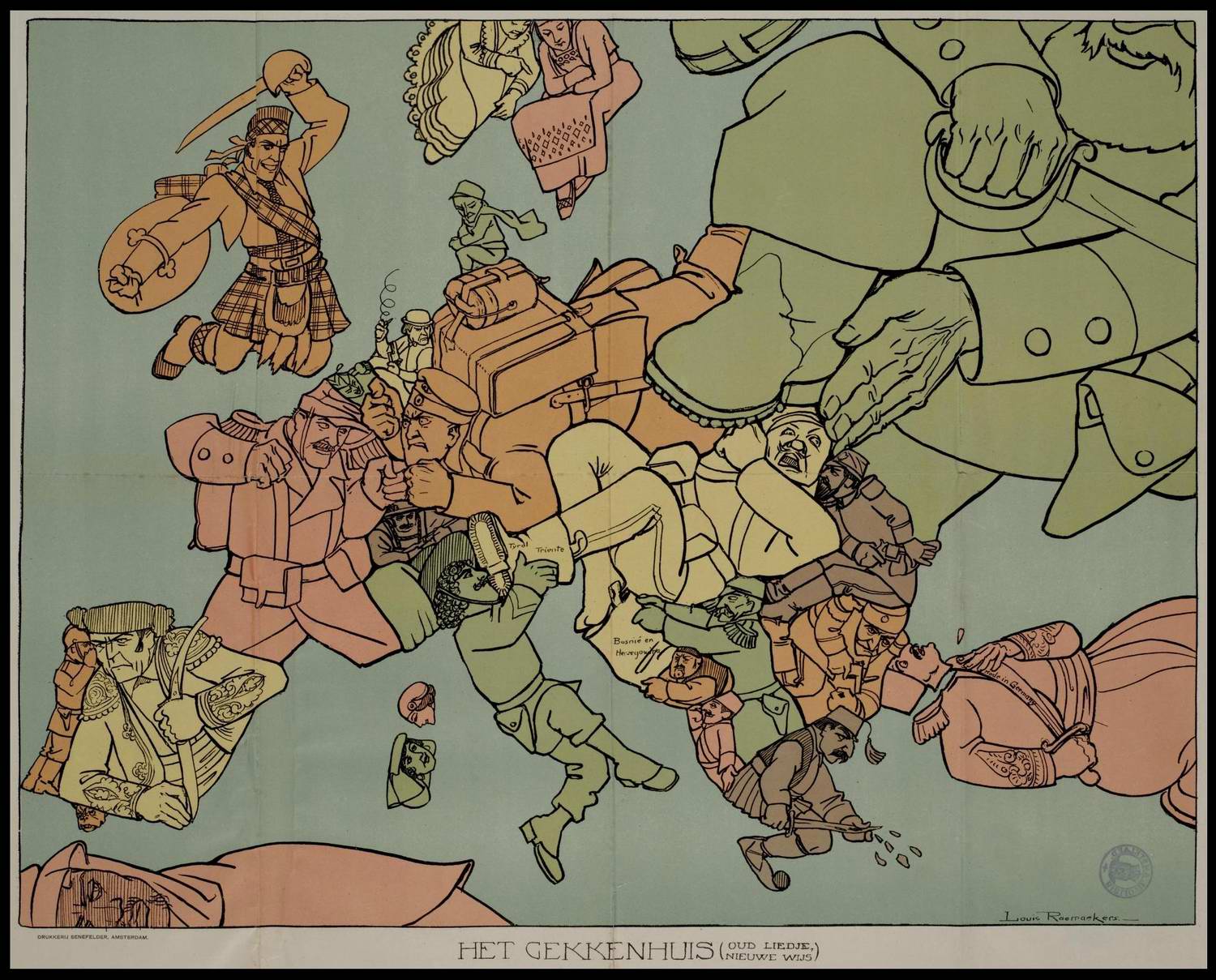
Maps As Propaganda

14c

Laura Mallonnee studies the subject:

[M]aps as visual systems have never been objective, but are susceptible to manipulation–especially political censorship. Before statistics were widely available online from entities like the U.S. Census or the Center for Disease Control, the only mapmakers were either governments or large companies that could invest the capital to both gather the data and map it. Neil Alan, the current president of the North American Cartographic Information Society, pointed out that as a condition for its presence in China, Google currently lists the land contested in the Chinese-Indian border dispute as Chinese territory. Even color choice can be powerful. “Red is a warning, cautionary color, so you right away jade the readers by choosing the colors that you do,” he says.

In 2012, China put a map on its passport laying claim to a host of disputed territories, while in 2011, India forced The Economist to censor every copy of an issue featuring a map of Kashmir. In 2005, Mark Monmonier, author of How To Lie With Maps, wrote that maps by their nature are especially vulnerable to manipulation:

Most maps are massive reductions of the reality they represent, and clarity demands that much of that reality be suppressed. The mapmaker who tries to tell the whole truth in a single map typically produces a confusing display, especially if the area is large and the phenomenon at least moderately complex. Map users understand this and trust the mapmaker to select relevant facts and highlight what’s important. … When combined with the public’s naive acceptance of maps as objective representations, cartographic genrealization becomes an open invitation to both deliberate and unintentional prevarication.

Recent Dish on the power of maps here, here, and here.

(Image of a Dutch map from 1915. More propaganda maps here: “They were obtained from the University of Amsterdam website where you can zoom in to high magnification. [via Briefe an Konrad]”.)

Suicide Leaves Behind Nothing, Ctd

A reader writes:

I want to echo what your reader said about his connections tethering him to the world.  I 5663fc34-2dfb-4287-9f83-f3af4dcf2da3-1absolutely share the sentiment.  I have an objectively great life, full of privilege, but I feel as if I’m always carrying around a massive dark truth about reality.  At some point in my early 20s, I read a lot of existential philosophy and have been managing an existential crisis ever since.  I purposely create responsibility and connections in my life to keep myself from being able to consider ending it.  If I didn’t have my dog to take care of (and a family some day in the future, hopefully), I’d look at life in a “I could take it or leave it” manner.

Another reader:

I’ve never really responded to any of your posts but I felt compelled to write in about your new thread on suicide. Describing suicide as “among the most selfish acts” really resonated with me. In fact, it’s the exact lesson I learned after my failed (thankfully) suicide attempt at the age of 14.

I was in a coma for three days and I woke up to absolute devastation around me.

My parents, brother, and friends were horribly affected. For years afterwards my mother suffered from a sort of PTSD, having frequent and intrusive flashbacks to the memories of finding me unresponsive in my bed, carrying me to the car, and driving me to the hospital. At the age of 14, I learned that my life is really not mine alone to do what I please. Although I had no “dependents” (my own children, an animal), I realized that other people’s happiness, emotional and physical wellbeing did depend on my continued existence.

I am now 27, and though I have struggled off and on with thoughts of suicide throughout my young adult life (thankfully less and less as I grow older), I have never seriously considered taking my life again. It probably seems morbid, but I would often picture my family and friends if I were to take my life again, how terrible it would be for them, and it gives me a strange motivation to keep on going.

At the age of 14, I simply was not able to comprehend the complex ways that my life intersected and affected those around me. Whenever I hear or read about teenagers taking their life, I think about how it might be possible to impart this same lesson on young people without needing a failed suicide attempt to learn it.

Another:

My brother committed suicide three years ago.  Suicide leaves many questions, and not enough answers.  I did a lot of reading on suicide after my brother died to try and find some answers.  You might be interested in the research by Dr. Thomas Joiner.  His theory on suicide is right on the mark, in my opinion.  Three pillars: 1. Burdensomeness, which leads to the mistaken belief that your death is worth more than your life to others 2. Loneliness/Alienation 3. A fearlessness of death that builds up over time.  All three need to come together at the same time, like a perfect storm.

Another:

My father committed suicide about two years ago, and one of the hardest things to think about is whether he knew how much his family all loved him. We know he loved us. We don’t see his suicide as some big middle finger at us. But what keeps me up at night is wondering whether, in his last moments, he understood how deeply we wanted him in our lives. If he knew that and still committed suicide, so be it. His was the result of a long and terrible struggle with depression, and I can appreciate that he desperately needed to find peace. But if he left us without knowing that; if his depression prevented him from seeing it – well, what a terrible world.