Get Us To $420K!

Right now, renewals have brought in $414,000 for our second year of independence. If you believe, as we do, in the urgency of ending the prohibition of marijuana, and think the Dish has helped generate a real and constructive debate on the matter, here’s an idea. Renew now or [tinypass_offer text=”subscribe for the first time”] to get us to the critical $420K. Maybe we can even do it by 4.20 pm, just in time for today’s Mental Health Break. As soon as we reach that target, I’ll post the news. Feel free to, er, celebrate at that point, if that’s your thing.

Renew now! Renew here! And we’ll continue the fight. Update from a reader:

I’ve loved this blog since you were solo with a tip jar, so there was never any doubt about renewing.  But in honor of your request, I did it TODAY for $4.20 per month (bet I’m not the only one). I’ll think of you and the great journalism of the Dish every time I see it on my statement.

Another is nudged off the couch:

Fine. FINE. I subscribed. The stoner appeal finally did it.

The View From Your Window

image (7)

Somerset, England, 2 pm. Update from a reader:

I recognized the shot immediately. It’s Burrowbridge Mump. When I first went there, my English girlfriend and I took a room at the pub just next door after a long day of touring. Sandy asked the landlord, “Where are we, actually?” The landlord said, “Athelney is just down the road.”

“Where King Alfred burned the cakes!” said Sandy. “Where King Alfred burned the cakes,” agreed the landlord. I later asked Sandy what the point of the burnt cakes story was. “No point,” she explained, “It’s just that King Alfred burned the cakes in Athelney. Everyone knows it.”

I have marveled ever since that the English people have kept this tale going for century after century. The only history book I found it in was written for children in the Victorian era. And it was fun to read David Harspool’s 2006 book Why Alfred Burned the Cakes. It’s an examination of Alfred, the legends that attached to him, and how such legends are made and adapted over time.

Quote For The Day

“On the foreign policy front … I find myself wondering why we cannot regard another country, in this case, Iran, as just that, one more country which we would regard as neither friend nor foe, with whom we are prepared to deal on a day-to-day basis, neither idealizing it nor running it down, keeping to ourselves (here, of course, I am speaking about our government) our views about its domestic political institutions and practices, and interesting ourselves only in those aspects of its official behavior which touched our interests – maintaining in other words, a relationship of mutual respect and courtesy, but distant,” – George Kennan, intellectual architect of containment of the Soviet Union, in his diary, March 8, 1998 (via TNR).

Burma’s Religious Civil War

Graeme Wood reports from Burma, whose glasnost has done little to ease the plight of its Rohingya Muslims:

[O]n the streets of Rangoon, Burma’s Great Unclenching is a beautiful thing. The Burma I first visited in 1998 was a snakepit of secret police and muzzled dissent. But last fall, I heard people openly express love for the leader of Burma’s democratic opposition, Burma Muslims face Buddhist FuryNobel Peace laureate Aung San Suu Kyi. On every street corner, kiosks sold dozens of vibrant tabloids free from routine censorship. Burma’s economic isolation once forced foreign visitors to pack in bundles of crisp hundred-dollar bills. Now brand-new ATMs disgorge money just like in Paris or Buenos Aires.

But Arakan state looked a lot better when things were still clenched.

Muslims and Buddhists who recently lived with each other peacefully now squat on opposite sides of barbed-wire fences and plot each other’s elimination. Old women and children too infirm to run from raiding parties have been speared or beaten to death in their homes. The fortunate ones are fleeing to other countries on overladen, leaky boats. In Sittway, the state capital, Buddhists have surrounded the old Muslim quarter, starving its residents into submission. “It’s a concentration camp,” a diplomat in Rangoon told me.

The U.S. government has sent diplomats to monitor Arakan, and at key junctures in the blossoming of bilateral relations, Obama has brought up the Rohingya issue. But the Rohingya are, so far, unlucky casualties of progress, and their ongoing ethnic-cleansing hasn’t been enough to sour Obama’s rapport with the Burmese president, Thein Sein. Nor, it seems, has it managed to stir the outrage of Aung San Suu Kyi, whose lack of comment has made activists, once piously reverent, now treat her as something between demoness and fool.

(Photo: In March 2013 in the he city of Meiktila, Muslims were attacked by Buddhist extremists. Khaing Thinzar Oos, aged 23, holds a photograph of her younger brother, who was murdered in the violence. The waves of anti-Muslim violence has paralyzed Burma and threatens the democratization of the country. By Jonas Gratzer/LightRocket via Getty Images)

The Pot Pipelines

Jason Kersten explains the economics of trafficking marijuana through tunnels beneath the US-Mexico border:

Of all the ways pot comes across the border—in hidden compartments of cars driving through legal ports of entry, on boats and airplanes, or lugged in burlap sacks by human mules—none are as efficient and profitable as a drug tunnel. Ever since the first one was discovered, in 1990, most have been linked to a single organization, the Sinaloa cartel, now one of the largest drug-trafficking organizations in the world. They are an innovation, in fact, that is inextricably tied to the rise of both the cartel itself and its leader, Joaquín “El Chapo” Guzmán Loera, currently the most wanted man in Mexico. …

A large part of the Sinaloa cartel’s estimated $3 billion profits comes from marijuana, but weed is bulky. Huge piles of it back up in Tijuana warehouses after every harvest as brokers and the cartel scramble to find ways to get it into the United States. Building a tunnel is time-consuming and expensive, but it can pay for itself many times over in a single day. No sniffing dogs, no checkpoints, just a straight shot into the world’s largest drug market.

Previous Dish on US-Mexico drug tunnels here.

And Suddenly, The Door Just Gives Way

Screen Shot 2014-01-23 at 10.11.39 AM

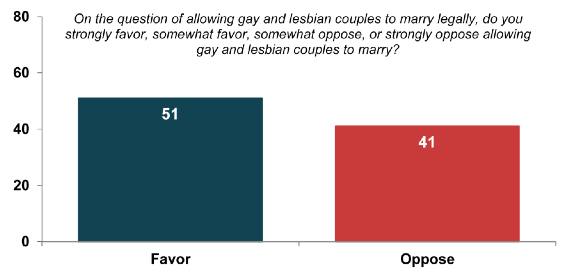
The poll above (source here), conducted last December, is arguably the critical one. It’s of Americans living in the states that ban marriage rights for gay couples. Commissioned by Freedom To Marry, it reveals the seismic shift of the last few years. It helps explain why Utah – yes, Utah, is now evenly divided over the question; and why in Virginia, the state attorney general is refusing to defend the Commonwealth’s current ban in the courts. It helps explain why Catholic high-schoolers simply cannot comprehend why their teachers can be fired simply for marrying the person they love. It illuminates why younger evangelicals are so starkly different than their resolutely anti-gay predecessors.

There are interesting regional variations, as you’d expect:

The poll shows support in non-marriage states at 51%, with strongest numbers in the Central and Western parts of the country {59% and 53% of voters respectively). Even in the South, voters are split evenly on the freedom to marry, 46% in support and 46% opposed. In addition, the poll finds that regardless of personal views, 56% of voters believe that marriage will be legal in their state in a couple of years (including 49% among marriage opponents.)

Of course, it’s way too soon to declare the battle won. Far from it. But, to be honest, I’m floored by what has happened, especially by the now-even divide in the South.

Something has fundamentally changed since the late 1980s when I first made this argument. Gay people have become human in the eyes of most straights. Not perfect and not identical – but human in our capacity for love and commitment. And that is not, in the end, a political gain. It is a moral one. And it reveals, once again, that those who despair of persuading resistant majorities of core moral arguments in America are wrong. Americans, in the end, are open to persuasion. The task for those of us on the winning side, now, is to make sure that the liberties of the losers are protected; and that this new majority is never, ever as discriminatory toward the minority as the old one.


A Tuned-Up Bike

This embed is invalid

The mechanics of the above audio:

It’s hard to believe that all of those sounds are made by a bicycle. Some of them are strictly the the byproduct of the bike’s mechanical operation, like the sound it makes when you release a brake lever. Others are created when you play different parts of the bike with a musical accessory.

For example, Johnnyrandom records the low-pitched flutter of a pick scratching on a spinning wheel, and tunes the bicycle’s spokes so he could play them with a bow like a string instrument. After capturing the sounds with a portable recorder, the different sounds were arranged and sequenced using software.

A short video on the artist’s process here. Update from a reader:

Your post reminded me of this YouTube video of Frank Zappa on the Steve Allen show. The bike playing starts about 1min in.

Getting Johns And Prostitutes Off The Hook

Aziza Ahmed argues against zero-tolerance prostitution laws:

Abolitionists typically insist that criminalization is imperative. Some have pushed for making the sale of sex illegal. Others, however, including feminists who oppose prostitution, support a different model: outlawing only the purchase of sex. They argue that criminalizing clients will force the sex industry out of business, liberating sex workers but not treating them as criminals. …

In reality, there is no convincing evidence that punishing “johns” decreases the incidence of commercial sex. Troublingly, Sweden’s sex workers report that criminalization has simply driven the sex industry underground, with dangerous consequences: Clients have more power to say when and where they want to have sex, inhibiting workers’ ability to protect themselves if need be.

She proposes treating sex work like other forms of legitimate labor:

Today, a camp of legal experts contends that the many problems sex workers face can be addressed with labor laws. If sex work were considered a legitimate economic sector, the argument goes, where work conditions, fair wages, injury compensation, and other basic employment issues were matters of law, the sex industry and those within it would be less exposed to violence and other harms.  Under a labor model, U.S. sex workers could report health risks at brothels to the Occupational Safety and Health Administration. They could unionize and lobby for stronger protections against police harassment. In the long run, they would be viewed as citizens like any other, and their industry as a safe and acceptable one.

Recent Dish on prostitution herehere, and here.

A Forgotten Firebombing

In a review of Jordan Sand’s Tokyo Vernacular, Jeff Kingston points to the city’s traumatic past:

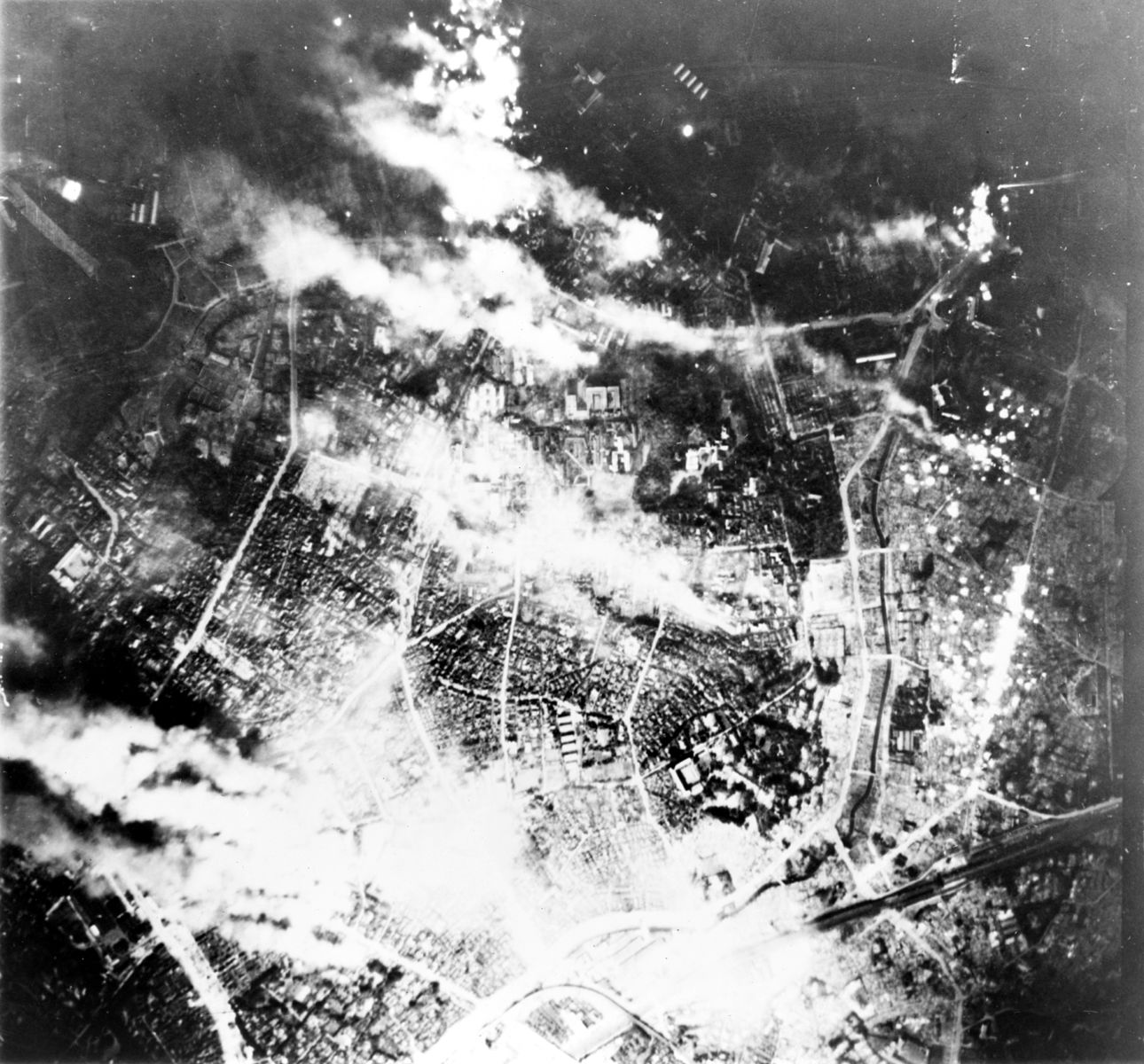
Since so many people lost friends and family in the 1945 firebombing by the United States, it is one of the most retold stories in oral histories, with accounts of spectacular dish_tokyounderfirebomb flames and the apocalyptic aftermath of a city reduced to ashes and panoramic vistas over smoldering ruins. But outside of Japan this is one of the forgotten horrors of WWII. Sand writes, “This traumatic irruption in the everyday world of Shitamachi residents […] took roughly one hundred thousand lives in the course of two hours.” Incendiaries dropped on Tokyo’s tinderbox housing combined with powerful spring winds to whip up a deadly conflagration. Oddly enough, there is no state memorial to this tragedy, and, in 1964, Emperor Showa actually bestowed an award on General Curtis LeMay, the man who was in charge of firebombing 66 of Japan’s cities, including Tokyo. He ordered a delay in the Tokyo firebombing and timed the raid to coincide with strong winds to maximize the devastation.

The firebombing of Tokyo has been swept under the national tatami mat, possibly, Sand points out, because many residents held the Emperor responsible. The Tokyo metropolitan government actually established a planning committee in 1990 for a memorial, “but this was ultimately derailed by politicians on the right and national bureaucrats.” Undeterred, in 2002 a private citizen raised funds to establish the Tokyo Firebombing Museum, but it is not listed in the guidebooks or even on Wikipedia’s extensive list of Tokyo museums.

(Image: “Tokyo burns under B-29 firebomb assault,” May 26, 1945, via Wikimedia Commons)

When Pot Is A Problem, Ctd

Readers push back on Leah Allen’s piece:

It really aggravates me when people who are obviously psychologically disabled become “pot-heads” instead of what they are: psychologically disabled and also doing that thing you don’t like and you must now blame. My father has smoked weed for as long as I can remember, and he’s your typical pot-head in my experience: president of a small business (25 employees); former president of our youth sports park; coach of every sons’ (four of us) baseball and football team; named our community’s ‘citizen of the year’; an avid swimmer and runner; and his mind is sharp and quick. I struggle everyday to be as good a father and citizen and businessman as he is. He is always there emotionally or financially for anybody and everybody.

We never smoked together until I was well into my 30s, and even then, he had to be coerced. But I am also a typical pothead: a successful attorney, father of three, community volunteer, and pretty good at all of it. (Wish I could come out of the cannabis closet.)

In conclusion, to Leah Allen: I am truly sorry that your dad is so obviously mentally disabled (abandoning your children is not something I have ever known anyone do, much less a paranoid pothead) but you’re looking in the wrong place for the answers.

Another:

Part of why I love the Dish is that as you argue or advocate for something, you are not afraid of conceding certain counterpoints where they exist.  In the case of marijuana legalization (which I am 100% for and which I enjoy a few times a month myself), I greatly appreciate your airing of Ms. Allen’s account of her father’s problem with marijuana. Her father reminds me of another “sad” and chronic marijuana user I used to know – the guy who I used to buy pot from many years ago.

Like Ms. Allen’s father, on the rare occasion he was not stoned, he also had a “sharp temper,” or was anxious, irritable and just plain miserable to be around.  While stoned he was a dreamy, sort of flaky, retro-hippie type.  Yet, I am sure marijuana was a godsend to him, that he was in essence medicating himself away from his default personality with pot.

Twelve years ago I worked at the largest (at the time) academic drug abuse research program in the world, Integrated Substance Abuse Programs at UCLA.  This was where the “marijuana as gateway drug” myth was summarily put to bed.  The myth is that a perfectly average person not prone to substance abuse could smoke a joint, and then become a helplessly addicted fiend who, before you knew it, was breaking into people’s homes for heroin money.  That is simple nonsense.  What was discovered is that for addictive personalities, yes, marijuana (and alcohol) are indeed the likely, obvious first step on the road to serious drug problems.  But it was also discovered that marijuana could be enough for the addictive personality, a destination in and of itself (such as Ms Allen’s father, and my ex-pot dealer), and was ultimately far, far easier to treat than other addictions, including alcohol.