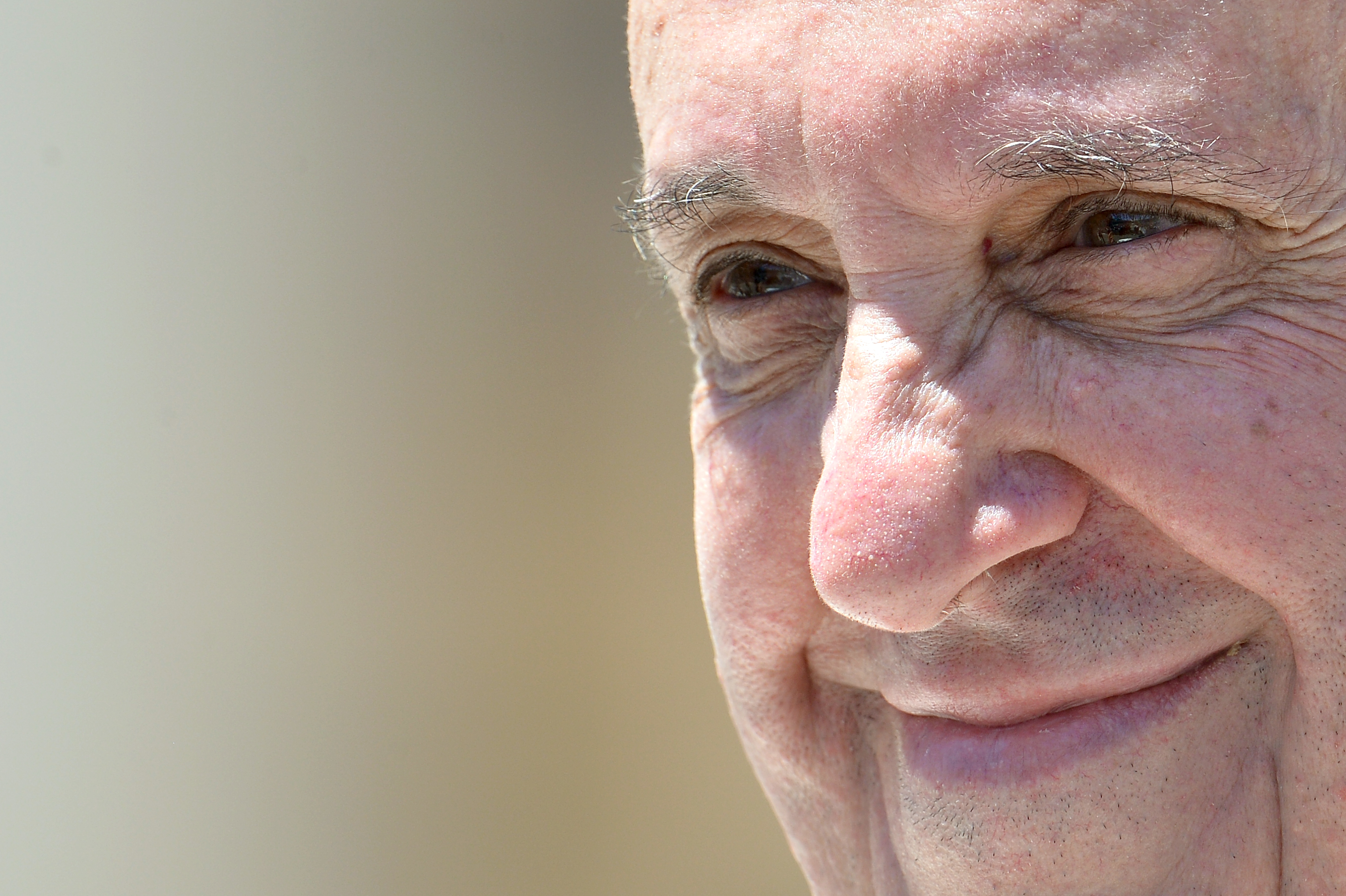
Your Future Selfie

we-are-narcisses

Douglas Coupland imagines the next logical steps to the phenomenon:

Will there be even more selfies in the future? Yes! Billions more, but the next selfie wave is going to be the 3D selfie, one in which one scans oneself and then prints out one’s 3D effigies in MakerBots at the mall or, as 3D printers become insanely cheaper (which is happening as I type these words), at home on the kitchen counter for $1.95. There still won’t be many printed photos in our future – nobody, in the end, seems to want them – but prepare to be inundated by small MakerBot plastic busts everywhere you look, modified and unmodified:

him, her, me, them, them-with-devil-horns, her-with-three-eyes, you with a fork stuck into your forehead. It’s going to be fun, yet the weird thing about a printed-out bust is that it’s not quite the third dimension, and it’s not quite the second dimension either. It’s like photography posing as sculpture – a 2½th dimension.

The key word there is posing – the next wave of 2½D selfies will, with even more effectiveness, allow all of us to pose and put forth a model of who we think we are, as opposed to who we actually are. And what’s wrong with that? Artists have been doing it for thousands of years – and in the 21st century, with all of this kick-ass new technology we’re all, if nothing else, artists.

Speaking of artists and selfies, Chloé Curé and Bertrand Lanthiez just launched “We are Narcisses”, an interactive art project that adds a new dimension to Ovid’s myth:

[Curé and Lanthiez] used a mirror, water and a speaker to create the anti-selfie mirror. The mirror uses the natural distorting effect of water to alter your image as you look into it. Using sound to change the water vibrations and reflection, the anti-selfie mirror distorts the reflection more the longer someone looks into it.

Above is a GIF from the project. A longer look:

A Long Drive To Get An Abortion In Texas, Ctd

The Fifth Circuit ruling from earlier this month that upheld Texas’s strict new abortion law – and would force most of the state’s abortion clinics to shut down – has been blocked by SCOTUS:

The justices addressed two parts of the Texas law that the United States Court of Appeals for the Fifth Circuit had provisionally let stand while it considered an appeal. One of them required all abortion clinics in the state to meet the standards for “ambulatory surgical centers,” including regulations concerning buildings, equipment and staffing. The other required doctors performing abortions to have admitting privileges at a nearby hospital. The Supreme Court, in an unsigned order apparently reflecting the views of six justices, blocked the surgical-center requirement entirely and the admitting-privileges requirement as it applied to clinics in McAllen, Tex., and El Paso.

Justices Antonin Scalia, Clarence Thomas and Samuel A. Alito Jr. said they would have allowed the law to be enforced.

Amy Davidson compares the abortion ruling to another Fifth Circuit decision issued yesterday, which will allow Texas to enforce its voter ID law in the upcoming election:

These legal fights are about access, but they’re also about timing.

Texas bans abortions after twenty weeks. Women’s lives are not always set up in ways that allow them to simply drive hundreds of miles away, on any day they like, without making what can be complicated arrangements for work, school, or child care. For some, even gas money becomes a factor. (In that way, it would have worked as a regressive tax, too.) By the time everything is in place, a woman may have lost the chance to control her body and her future. And once you haven’t voted in an election, you’ve lost your chance—the vote won’t be re-run.

Robyn Pennacchia reviews why the admitting privileges requirement is spurious:

While this might sound reasonable if one doesn’t think too hard about it, the fact remains that you do not actually need your doctor to have “admitting privileges” in order to go to a hospital. If an emergency happens, you just go to the hospital emergency room, and they are required to care for you regardless of who your doctor is, whether or not you have even seen a doctor in the last 15 years, the reason you are there, and, indeed, whether or not you have insurance. In practice, a doctor having “admitting privileges” means pretty much nothing–but many hospitals, particularly in Texas, will not issue them to doctors performing abortions for fear of retribution from conservative donors and lobbyists.

Jonathan Adler expects more abortion-related news out of SCOTUS in the near future:

This case is likely to return to the Supreme Court later this term, and other abortion cases may reach the One First Street as well.  Most observers expect some or all of this law will be upheld by the Fifth Circuit, which would create a circuit split. (The U.S. Court of Appeals for the Seventh Circuit struck down similar requirements last December, and SCOTUS denied certiorari over the summer.) …

This is not the only abortion case that appears headed to the court.  As I noted here, the appellate courts are split on the constitutionality of state-level restrictions on the use of abortion-inducing medications.  Several states have enacted laws barring the off-label use of such drugs to induce abortions. As I understand it, such restrictions make it very difficult to use such drugs as abortifacients.  Such rules have been upheld in several circuits, but not in the Ninth, and a cert petition is now pending in that case. (Arizona filed last month and replies are due November 10.)

Going Against The Grid

dish_siena

Art historian Erik Spiekermann observes that asymmetry is typical of “the spaces that make us feel at home and make us want to spend time sitting in cafes and watching children”:

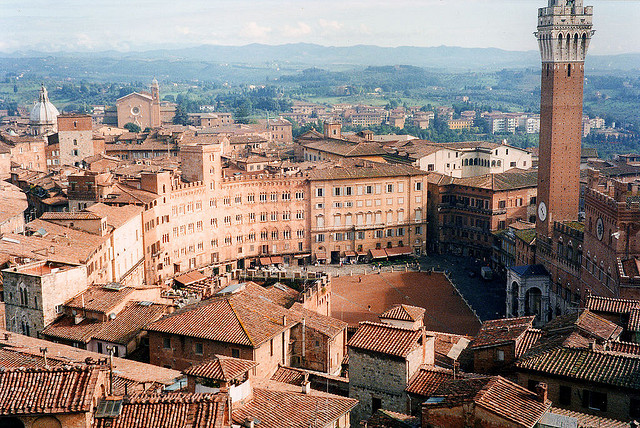
The best example of a large public space with human proportions is probably the Piazza del Campo in Siena, the city’s beautiful scallop-shaped market square. Not only do the buildings follow a very weird curve around its perimeter, but the square’s floor is shaped like a shallow bathtub. If you set out to walk toward the tower of the Palazzo Pubblico which dominates the space, you soon realize two things: it is nowhere near the center and its entrance is a whole floor lower than the street surrounding the square. It takes a lot longer to get there from one of the cafes around the side than you first think, because of the way the floor is shaped and the distance visually foreshortened by lines of stone that fan out from the tower side of the square.

If you travel to other famous cities in Italy, you’ll soon notice that all their central squares feel comfortable because they follow the same pattern: they always dip at some point, never have a geometrically measured center, and always have a circumference that defies easy definition from a pedestrian standpoint.

The Greatest Show In Your Butt, Ctd

A reader joins the TMI:

Sleeping through a colonoscopy is a missed learning opportunity, as Martha Nussbaum notes. My experience last month was even cooler. I got to learn a bunch of new vocabulary in Japanese as I live in Tokyo. The doc here was also surprised that I declined sedation, and kept asking if I felt any discomfort. Nothing more than a tweak here and there, on the corners. What was wonderful was to see how tiny the tools have gotten. The snake cable is amazing how it can be directed; how it can change tools from camera to irrigator to clippers. That last tool came in handy when we discovered a polyp. She spent about 5 minutes isolating it, dousing it with an antibiotic fluid, and using a small wire loop to clip it, all included in the cable. Then she inserted five tiny staples to suture the cut, and then irrigated again. She even gave me a picture at the end of the procedure.

At the risk of winning guffaws from the back of the class, I didn’t feel a thing. Many readers, however, disagree with Nussbaum:

I just subscribed this month, so I guess it’s time to start participating.

The statement that a colonoscopy is painless is pretty misleading.  Some people may be lucky enough to have a painless one, but the one I had without functioning sedation was pretty excruciating.  And I say that as someone who once let her parents drive home for four hours on a windy road before letting them know I broke my collar bone.

Another:

Well, good for Nussbaum.  It may be painless for her, but I’ve had five colonoscopies and the first one was very painful, and I have a pretty high pain threshold, or so I’ve been told.  I think her comment is misleading and comes off as bragging.

Another:

I could not disagree with Nussbaum more strongly about foregoing anesthesia for a colonoscopy!  I had one almost 10 years ago (yay, it’s almost time for my next one!) and the VERY BEST PART of the whole procedure was the Propofol to put me under.  Now, I understand that this is the drug that Michael Jackson overdosed on, so too much is not good, but for someone who has long struggled with insomnia and fitful sleep, it gave me such a heavenly experience I’ve never forgotten it.  It’s positively delightful, a sweet and yet deep unconsciousness, and when it wears off, you are not the least bit groggy or hung-over, totally unlike any of the anesthesia cocktails used for major surgeries.  I was only upset that the nurses would not let me sleep a little longer.  If I really wanted to see my innards, I’m sure they would be happy to provide me with a DVD or digital recording to watch later with my loving family and friends …

And another:

Not to over-share – hah! It’s Friday night on the Dish! Time for over-sharing – but not all colonoscopies involve blackout sedation.  When my partner had hers, she was put out like a light.  My first, at a different hospital and after hers, I expected to also be put out, but I just had that “twilight” thing going on.  I was awake but not all there, the doctor was talking to me, I declined the offer to see what was up in there.

When I want to watch highlight films of my body, it won’t involve those interiors. Straight guy panic, perhaps, but also just the Ick Factor.  I don’t even like looking at my x-rays or MRIs.  We all have our boundaries …

Another points to a set of colonoscopy jokes:

The all-time best: “So doc, can you get a picture? Just to show my wife that my head is NOT in there.”

Fight Prohibition With A New Dish Shirt!

know-dope-shirts

So we figured as we put out our first round of Dish merch that, every now and again, we might offer a special message t-shirt, if the moment was right. And with less than a month to go before seismic votes on legal cannabis in Oregon, Alaska and my home-town of DC, why not create a t-shirt for legalization for Dishheads – especially those of you who enjoy our daily 4.20 pm Mental Health Breaks and those who choose to subscribe at $4.20 a month (for some reason). Legal cannabis has been a cause here since 2000, and, along with marriage equality and the Obama candidacy, has been easily the most successful. But we’re not there yet – so try these on for size.

Buy the standard “Know Dope” t-shirt here. Buy the DC one here. All you Oregonians out there, get your version here. Alaskans, yours is here. All of the shirts are just $20. And all of them help us keep this blog able to pay its way as well. So if you just want to help us out, and take a stand for personal freedom and drug sanity, you know what to do.

A big thanks to the t-shirt’s designer, Dave Stenken (aka BiggStankDogg), whose other work you can peruse at TeePublic or his Facebook page. And another thanks to our BustedTees guy, Jerzy Shustin, for helping us launch our latest merch (our regular Dish t-shirts are still always available here). If you end up getting a “Know Dope” tee, email us a pic at dish@andrewsullivan.com.

The Tories And Israel

Here’s a straw in the wind. The Daily Telegraph is in many ways the bastion of British (or rather English conservatism). I worked for it as an intern in the summers of 1984 and 1985, while I was also moonlighting in Margaret Thatcher’s personal policy shop. (My contribution was a paper arguing for an aggressively pro-environmental stance for conservatism, which died a very quick and sudden death.) Back in those days, it was still literally on Fleet Street in a great mausoleum of a building that was the model for the paper in Evelyn Waugh’s classic novel, Scoop. It was then edited by the man Waugh lampooned as “William Boot” in the novel, William Deeds, an astonishingly sane, charming and decent man, and seconded by the man who shepherded me into the higher arts of hackery – even if I simply never mastered the functional alcoholism which was the Fleet Street rule in those days.

Which is a long way of explaining why the paper that championed Thatcher, that has a soft spot for UKIP, and that is by and large to the right of David Cameron, just ran a piece that no right-of-center outlet in the US – save The American Conservative (peace be upon them) – would ever dream of running. It’s about Israel, and it follows the British parliament’s overwhelming but non-binding vote to recognize a Palestinian state as a way to put some pressure on Israel to stop its continued assault on the land and homes and dignity of the Palestinians it controls. Money quote:

If you need proof of just how friendless Israel’s hard-Right government has become, consider the statements last night from MPs who would normally count themselves the country’s natural allies.

Arch-Tories such as Nicholas Soames (whose grandfather Winston Churchill is Israeli prime minister Benjamin Netanyahu’s political hero) spoke eloquently in favour of Palestinian statehood … Not a single MP on either set of benches dared to express support for Israeli policies such as this summer’s devastating assault on Gaza or the ever-expanding settlement project (which experts warn may be about to destroy any chance of dividing Jerusalem between the two sides as part of a future peace deal). And Israel was criticised in terms that until recent years were considered taboo: Labour MP Andy Slaughter’s comparison of the West Bank occupation to South African apartheid drew only murmurs of assent around the chamber. Even most of those who expressed misgivings about the motion preferred to follow the Tory leadership and abstain rather than openly oppose it.

Alan Duncan, former Tory minister, and shadow leader of the Commons, yesterday let it rip as well:

Since 1967 Israel has continuously and systematically built outside its legitimate borders and has claimed its neighbours’ land as its own. Israeli settlements are the worst, most destructive, aspect of the military occupation, an occupation which has become the longest in modern international relations. The continued expansion of settlements demonstrates that the occupier has little or no intention of ending that occupation or of permitting a viable Palestinian state to come into existence …

This illegal construction and habitation is theft, it is annexation, it is a land grab – it is any expression that accurately describes the encroachment which takes from someone else something that is not rightfully owned by the taker. As such, it should be called what it is, and not by some euphemistic soft alternative. Settlements are illegal colonies built in someone else’s country. They are an act of theft, and what is more something which is both initiated and supported by the state of Israel…

Occupation, annexation, illegality, negligence, complicity: this is a wicked cocktail which brings shame to the government of Israel. It would appear that on the West Bank the rule of international law has been shelved. One should not use the word ‘apartheid’ lightly, but as a description of Hebron it is both accurate and undeniable.

Netanyahu knows the American Congress will continue to enable this “wicked cocktail,” as long as fundamentalist end-times Christians and the American Jewish Establishment have anything to do with it.  But soon, the American Congress will be all Israel’s got in the Western world. And the US will become as isolated as well.

The Relatio: The Old Guard Strikes Back

VATICAN-POPE-AUDIENCE

There’s been quite a bit of pushback, as I predicted, to the revolutionary pastoral content of Pope Francis’ Synod on the Family. But what some are missing, I think, is that the word “pastoral” is critical here. It does not mean “doctrinal”. There is no indication that the Synod intends even to relax strictures against re-married Catholics from receiving Communion, let alone its formal doctrines about the impermissibility of any sexual intimacy or committed relationships for gay people for our entire lives. Instead, it seems to me, the Synod’s mid-term Relatio is arguing that insisting on these exclusions, and using harsh language to describe them – “living in sin”, “intrinsically disordered” etc – does nothing to bring people into a greater communion with the church and its teachings. In fact, the emphasis on such categories of the damned risks creating a smaller, more rigidly orthodox church, devoted to sustaining and revering certain doctrines, in ways that make evangelization effectively impossible. So, yes, this Synod is a response to the collapse of the church in the West – intellectually, morally and institutionally – under John Paul II and Benedict XVI.

The church right now is losing so many in their 20s and 30s, never to return, not because they have rejected the core teachings of Jesus, but because these stern strictures – coming from a hierarchy of celibates, child-abusers and their enablers – appall them in their rigidity, cruelty and indifference to the complex lives we fallible humans lead. A church that throws out a devoted couple of 43 years because they got a civil marriage license is a perfect emblem of that problem. So too are the abrupt firings of teachers in Catholic schools for the sin of pregnancy! When I asked recently if the Church has a future in America, this is what I was thinking of. And Pope Francis sees this so clearly. Rocco Palmo reminded us yesterday of previous words from Francis that help make sense of what is now happening:

I see clearly that the thing the church needs most today is the ability to heal wounds and to warm the hearts of the faithful; it needs nearness, proximity. I see the church as a field hospital after battle. It is useless to ask a seriously injured person if he has high cholesterol and about the level of his blood sugars! You have to heal his wounds. Then we can talk about everything else. Heal the wounds, heal the wounds…. And you have to start from the ground up.

“The church sometimes has locked itself up in small things, in small-minded rules. The most important thing is the first proclamation: Jesus Christ has saved you. And the ministers of the church must be ministers of mercy above all. The confessor, for example, is always in danger of being either too much of a rigorist or too lax. Neither is merciful, because neither of them really takes responsibility for the person. The rigorist washes his hands so that he leaves it to the commandment. The loose minister washes his hands by simply saying, ‘This is not a sin’ or something like that. In pastoral ministry we must accompany people, and we must heal their wounds.

“How are we treating the people of God? I dream of a church that is a mother and shepherdess. The church’s ministers must be merciful, take responsibility for the people and accompany them like the good Samaritan, who washes, cleans and raises up his neighbour. This is pure Gospel. God is greater than sin.

Notice that he seeks a balance between the “rigorist” of pure doctrinal judgment and the “lax” priest who abandons the teaching of the church. The point here is that the church has veered far too far in the direction of the rigorist after veering too far in the lax direction – and now needs mercy and listening and humility to re-engage those wounded or excluded or repelled by the recent past. And the way too many churches have treated gay people or divorced people or young cohabiting couples in the last three decades has been more like the Pharisees than Jesus.

But, of course, one also senses in Francis something that was very hard to discern in his predecessors and that places him more in the tradition of Cardinal Newman. It’s clear he believes that doctrine can develop, with new understandings of human nature. Here’s another passage from Francis on that very theme:

Human self-understanding changes with time and so also human consciousness deepens. Let us think of when slavery was accepted or the death penalty was allowed without any problem. So we grow in the understanding of the truth.

Exegetes and theologians help the church to mature in her own judgment. Even the other sciences and their development help the church in its growth in understanding. There are ecclesiastical rules and precepts that were once effective, but now they have lost value or meaning. The view of the church’s teaching as a monolith to defend without nuance or different understandings is wrong.

After all, in every age of history, humans try to understand and express themselves better. So human beings in time change the way they perceive themselves. It’s one thing for a man who expresses himself by carving the ‘Winged Victory of Samothrace,’ yet another for Caravaggio, Chagall and yet another still for Dalí. Even the forms for expressing truth can be multiform, and this is indeed necessary for the transmission of the Gospel in its timeless meaning.

[My italics.] I believe, for example, that we have grown in our understanding of what homosexuality is and who homosexual persons are. And yet the church – after accepting that the orientation is a given and blameless in 1975 – subsequently attempted to rein that understanding back, most notably in then-Cardinal Ratzinger’s brutal letter of 1986 and subsequent references to gay people as somehow inherently threats to the church. I just don’t think it’s possible, after reading and studying Francis’ own faith-journey and intellectual development, that he sees gay people that way. And so, while he will not change doctrine, he can still change the way gay people are treated pastorally, and declare that our gifts should be valued, our presence welcomed. That is the impact of the current shift.

At the same time, once you change the pastoral dimension, and see gay people as human, and our relationships as in many ways valuable and loving, I find it hard to believe the doctrine can remain unaltered in perpetuity. I think of how the church shifted its understanding of other faiths in the Second Council, or how it shed its still-resilient anti-Semitism in the same era. I don’t think this is Machiavellian, as Damon has it. And I don’t believe it is about “liberalization.”

I think it’s about truth – and how we humans can grow in our understanding of it through history. I think Francis is simply ahead of most of us, and patient with history and aware of how slowly and incrementally a church can change. He knows he will not live for ever. But the seeds he has sown – some on barren ground and some on fertile earth – will sprout and grow and transform us in the end. This, at least, is my faith: we grow in the understanding of the truth.

(Photo: Pope Francis smiles after his weekly general audience in St Peter’s square at the Vatican on June 12, 2013. By ALberto Pizzoli/AFP/Getty Images)

Patient Three

A second health worker who had cared for Ebola patient Thomas Eric Duncan has contracted the virus:

The second worker was immediately isolated and tests conducted after they reported coming down with a fever on Tuesday. Test results came back overnight confirming the diagnosis, and interviews immediately began to identify anyone the person may have come in contact with, so they could also be monitored for symptoms. More than 100 people are currently being watched after having come in contact with Duncan before he entered the hospital. …

As news of the new infection broke, more information has been revealed about the care that Duncan received when first trying to gain treatment, and not all of it is good. National Nurses United, a California-based union, has made a number of claims about poor preparation and infection control on behalf of the nursing staff at Texas Health Presbyterian Hospital. Among the charges are claims that Duncan was left in an open room with other patients “for hours,” employees were given substandard protective gear, and hazardous waste piled up to the ceiling.

By the CDC’s account, the hospital was ill prepared to handle an Ebola patient and improvised safety protocols on the fly:

“They kept adding more protective equipment as the patient [Duncan] deteriorated. They had masks first, then face shields, then the positive-pressure respirator. They added a second pair of gloves,” said Pierre Rollin, a CDC epidemiologist. … He said the hospital originally had no full-body biohazard suits equipped with respirators but now has about a dozen. Protocols evolved at the hospital while Duncan was being treated, he said: “Collecting samples, with needles, then you have to have two people, one to watch. I think when the patient arrived they didn’t have someone to watch.”

The CDC itself was also slower to act than it should have been:

CDC Director Thomas Frieden expressed regret Tuesday that his agency had not done more to help the hospital control the infection. He said that, from now on, “Ebola response teams” will travel within hours to any hospital in the United States with a confirmed Ebola case. Already, one of those teams is in Texas and has put in place a site-manager system, requiring that someone monitor the use of personal protective equipment. “I wish we had put a team like this on the ground the day the first patient was diagnosed,” he said. “That might have prevented this infection.”

Boer Deng details how complex these hospital safety protocols can be:

It is hard to track just what goes wrong if a misstep occurs, says Maureen O’Leary, secretary of the American Biological Safety Association. A case of Ebola reported in Spain last week involved a nurse trainee who admitted that she broke protocol by touching her face with a gloved hand after handling patient waste. Removing protective items that were used during care is complicated by the specificity of the process by which it must be done: “Using a gloved hand, grasp the palm area of the other gloved hand and peel off first glove; Hold removed glove in gloved hand; Slide fingers of ungloved hand under remaining glove at wrist and peel off second glove over first glove,” the CDC’s glove-removal instructions read.

The meticulousness is necessary to distinguish between the contaminated parts of a gown or facemask and the parts that are safe to touch. Contamination often can’t be seen, so even the smallest deviation might create a problem, says Ken Anderson of the American Hospital Association. For this reason, “the sequence of removal is key” to prevent clean surfaces from touching dirty ones. The CDC recommends two possible protocols. Both end with washing hands thoroughly (for the duration of two rounds of “Happy Birthday to You,” according to Anderson).

Amesh Adalja proposes a way to ensure that any future Ebola patients are treated at facilities that are prepared to handle them:

[W]e should seriously consider designating certain medical centers as our primary response centers for any further cases that are treated in the US. Such is the model employed for many diseases including trauma, burns and strokes. In fact, such a regionalization model organically arose during the H1N1 influenza pandemic, when smaller hospitals worked in a hub-and-spoke model to transfer their sickest patients to major medical centers—a phenomenon I studied. Such tiering of levels of care is being implemented now in the UK, which has treated one airlifted Ebola case successfully.

Yes, This Is A Pastoral Revolution: Your Thoughts

Readers react to the big news of the week:

Perhaps to see where Francis is going, you should also consider the homily he gave Monday morning prior to the release of the Relatio:

This picture taken 21 March 2007 shows a“The scholars of the law also forgot that the people of God are a people on a journey, and when you journey, you always find new things, things you never knew before,” he said. But the journey, like the law, is not an end in itself; they are a path, “a pedagogy,” toward “the ultimate manifestation of the Lord. Life is a journey toward the fullness of Jesus Christ, when he will come again.” The law teaches the way to Christ, and “if the law does not lead to Jesus Christ,” he said, “and if it doesn’t get us closer to Jesus Christ, it is dead.”

Read the whole thing, it’s beautiful and very telling of where Papa Bergoglio is trying to take the church. It also is perhaps one of the best critiques of the modern understanding of natural law. Natural law does not evolve (so yes, the conservatives are right in one respect), but we’re on a journey and God reveals more of himself and his law to us on this journey.

I’m with you, Andrew; I cried tears of joy when I saw the Relatio, and burst to tears again upon reflecting upon the homily preached only hours before. But it’s going to be an uphill battle, and already the knives are drawn from certain prelates, especially the outspoken probably soon-to-be-former Prefect of the Apostolic Signatura – Raymond Leo Cardinal Burke.

A small dissent:

I think you’re too harsh when it comes to JP2 and Benedict.  JP2 came at a time when there was utter confusion.  He had to clarify teaching.  Benedict is an intellectual, a theologian.  Francis is at heart a pastor.  Can’t we appreciate different leadership attributes and characteristics?

Another dissent of sorts:

I wish I could be as excited about Pope Francis as you are, but as a woman who has been serving as organist in a very large Catholic parish for 1 1/2 years, I am actually losing enthusiasm and feeling left out.

I know that the LGBT community deserves this attention.  The issue is hot; it is smart to talk about it now.  I also believe it is heartfelt on Pope Francis’s part – after all, he has spent most of his life amongst men, many of whom are gay, so his direct experience has given him much to ponder and work out in his own mind.  (Ditto the bishops)

I understand that all revolutions can’t happen at once, e.g. it seems to be common thought that priests will be allowed to marry before the revolution of women being allowed to serve in diaconate or priesthood.  OK great, and I totally think priests should be allowed to marry; but here again, it is men before women.

Having had no prior experience with the Catholic church and being very excited to have started my tenure at the time of the new pope, I am sorry to say that I’ve come to see that women are indeed second-class citizens in the Catholic church.  They are there to serve the men.  OK, we are all here to serve humanity, but since the Church is a male hierarchy, that means the women serve the men.  I see it all over the place and am sick of the dynamic.

Having said my sour-grapes piece, I do honor that this is an exciting time for you as a gay Catholic, and I am truly happy for you in that.

Another draws attention to what Benedict’s right-hand man is up to:

The Synod is entering its second week, and as a cradle Catholic, I’ve been watching it as closely as possible.  I was born and brought up after Vatican II, and I understand only too well the reasons why Pope Francis called this Synod and what he hopes to achieve from it.

To be frank, I was touched by the Pirolas’ testimony about the gay son of their friends.  My late sister had a childhood friend who is gay and who is so well-loved he is like a brother to me.  You can imagine how upset I was by Cardinal Burke’s statements, and I don’t wonder why he was roundly criticized. I wonder, though, have you heard about Arch. Ganswein’s interview with Chi? He’s saying that same things Cardinal Burke says about homosexuals being “intrinsically disordered”, and he even said that nothing much would change after the Synod. How different from Pope Francis’ very merciful declaration “Who am I to judge?”

I try to follow Church-related news as best I can, and it really distresses me that for a long time now, Archbishop Ganswein says so many things that contradict Pope Francis’s direction for the Church. Now, there’s this interview with Chi, and right smack in the middle of the Synod.

Another reflects:

My brother died last month. He lived in Sullivan County, New York, and attended a parish run by Franciscans. At his funeral, the pastor made some remarks that turned around my whole concept of the Church, which I’ve stayed away from except for family weddings and funerals for decades.

Father acknowledged and was very harsh about the message of the Church in recent times. He talked about how we were all looked on as sinners first, last, and only. He was very plain that he found this approach wrong, damaging, and in need of reversal. He then went on to speak about my brother (who was a devoted parishioner) in a way that highlighted John’s humanity, devotion, and grace. I was filled with happiness that John had had this man as his priest, as my brother had a touch life and relied heavily on his faith.

I’m sad to report that a day after the funeral the priest suffered a stroke. He was already frail; deacons performed most of the Mass while Father sat to the side. I haven’t had a report on his condition lately, but I hope that he is recovering.

I regret that in my rejection of Catholicism as I learned it (and as a gay man, as I experienced its rejection of me), I didn’t understand the fullness of a spiritual life possible in some corners of the Church, a fullness that my brother lived.

My lesson from this is to not think I know what is in a person’s heart or mind, or what comprises their faith, until I’ve taken the time to speak with them and hear them. I never spoke to my brother about these things; I just assumed what his mindset was from the fact of his strong faith. My loss, now, but hopefully not in the future.

(Photo by Getty)

How Long Will Midterm Voters Skew Right?

Ronald Brownstein discovers that “the racial and generational difference in participation between presidential-year and midterm elections is long-standing; it’s the more recent divergence in preferences that has resulted in the GOP’s midterm advantage”:

[T]he turnout gap has already contributed to the whiplash nature of modern politics, with voters careening back and forth between the two parties. This instability has encouraged both sides to treat every legislative choice primarily as an opportunity to score points for the next election. Oscillation, in other words, has encouraged polarization.

But the best news for the Democrats is that, whatever happens this year, eventually demographic change will overwhelm the turnout gap.

While Millennials and minorities still participate at lower rates in midterms than in presidential elections, their presence is inexorably growing on both fronts: the minority share of the vote in off-year elections jumped from 14 percent in 1994 to 23 percent in 2010, and this year will likely come in somewhere between that figure and the 28 percent from 2012. If Republicans can’t attract more votes from the growing numbers of minorities, Millennials, and white-collar white women who have powered the Democrats’ success in recent presidential elections, demographics will ultimately threaten the GOP’s hold on the House, too. “Obviously the Democratic presidential coalition continues to expand,” notes Ruy Teixeira, a leading liberal analyst of voting patterns. “Eventually you reach the point where even turnout differentials aren’t enough to derail it.” That’s an encouraging long-term prospect for Democrats—but it may be cold comfort if lagging turnout among their best voters contributes to another brutal midterm this year.