In support of his new book, John Corvino has produced a series of video that provide succinct versions of his core arguments. The first tackles a common trope in debates about gay people, “Love the sinner, hate the sin”:
In another installment, he gets to the, uh, bottom of anal sex:
Yale senior Bijan Stephens is pessimistic about his job prospects after graduation:
[Millennials are] cynical because we have to be. America’s economy is self-destructing, wealth inequality is at historic highs, and there’s a chronic shortage of employment, especially for recent grads. According to a Rasmussen report, released on Feb. 5, only 15% of American adults think that their children will be better off than them. That’s a bleak number. What’s worse are the unemployment rates for recent college graduates, astronomically high rates of underemployment, and the phenomenon of long-term negative economic effects—termed “scarring”—that happen as a consequence of recessions. …
[M]y friends and I all know people who graduated from Yale and haven’t been able to find jobs that pay better than minimum wage afterwards: they work as bartenders and in sandwich shops, doing unpaid internships, living on tips. There are only four weeks of classes left in my college career, and I’m still unemployed. It doesn’t surprise me that we’re a generation of cynics. Do we—the kids—stand a chance?
I just can’t find that much pity for someone with a Yale degree who’s having trouble finding a job. Stephens cites statistics that highlight some very real problems faced by graduating college seniors in this tough economy, but these problems are undoubtedly much worse for the 99.9% of undergraduates who don’t have an Ivy League degree.
As a Stanford graduate myself, I think I can empathize with what Stephens is going through to a certain extent. It can be stressful trying to find the right career path to take, and I’ve noticed a tendency to restlessness among some of my peers who are dissatisfied with what they are doing but worried about leaving their jobs due to the economy. Two years ago, I did that myself, leaving my fairly cushy energy consulting job to go back into academia in a new field. Since then, I’ve had an underlying anxiety about whether I made the right choice and what my job prospects will be when I finish my graduate program. But I have found it important to keep in mind that this anxiety is a result of my own choices, not the result of society stacking the deck against my success.
If you are lucky enough to attend an Ivy League school, you definitely stand a chance. What you do with that chance, however, is up to you.
Here’s our second poem from Robert Bly, “Something to Do for Aunt Clara”:
There’s something we hold to in the morning. Maybe
It’s just the light, or the way the clock by the bed
Changes slowly, or how wall paintings gradually
Become clear, or the good weight of the eiderdown.
Maybe it’s all the books here in this room.
And the sound of dishes rattling, and the teenagers
Waking up, and a child muttering to herself. Now we have time
For the last few sips of coffee before we go to the funeral.
Josh Horgan thinks social sciences (“softies”) are still struggling to find their place in the shadow of the hard sciences:
Softies look askance at the aspirations of hardies—with good reason. The recent recession provides a powerful demonstration of social science’s limits. The world’s smartest economists, equipped with the most sophisticated mathematical models and powerful computers that money can buy, did not foresee—or at any rate could not prevent—the financial calamities that struck the United States and the rest of the world in 2008.
He says this difference is just where the softer sciences can play to their strengths:
Protons, plasmas and planets are oblivious to what scientists say about them. Social systems, on the other hand, consist of objects that watch television; listen to the radio; read newspapers, journals, books, and blogs; and consequently change their behavior. In other words, social-science theories can transform societies if people believe in them. …
So we are left with a paradox: Although social science is in many respects quite weak, it can also be extraordinarily potent in terms of its impact, for ill or good, on our lives. Think of all the harm done in the name of Marx—and of social Darwinist and free-market theorists, from Herbert Spencer to Milton Friedman.
For the philosophy geeks among you: this seems reminiscent of the theories of Lester Frank Ward, the forgotten American Aristotle (with impressive mutton chops) who wanted a system of “applied sociology” to fall somewhere between pure science and political activism. It remains a tricky target to hit.
Friday on the Dish, Andrew answered readers’ questions on his guilt over the consequences of the Iraq War, before letting them ask both Rod Dreher and Josh Fox anything. Elsewhere, we rounded up analysis of the poor jobs report, continued to watch the Senate evolve on equality and considered Mark Sanford’s scandal and its aftermath. Dominic Tierney picked apart the right’s hypocrisy on deadly weapons, Bouie expected slow, gradual progress on gun control, and the NRCC pulled a Buzzfeed.
In other political coverage, we kept an eye open on Hamas and met America’s number one jihadi while Bill Gardner uncovered a morbid map of the country. We exchanged with readers over fracking and its effect on emissions, remained skeptical on the significance of hydrogen technology, and weighed the costs and benefits of the soda ban.
Later we contrasted novels with their TV adaptations, spotlighted the work of poet Robert Bly, and asked if we should strike the set of Romeo and Juliet. David Hilfiker blogged through the fog of brain damage, Jimmy Stamp pieced together the history of the chess set and readers added more to the thread on modest weddings. Jeff Robbins stuck up for Yahoo’s no-work-from-home policy and Rebecca Shuman urged English majors to abandon hope, all ye who enter grad school.
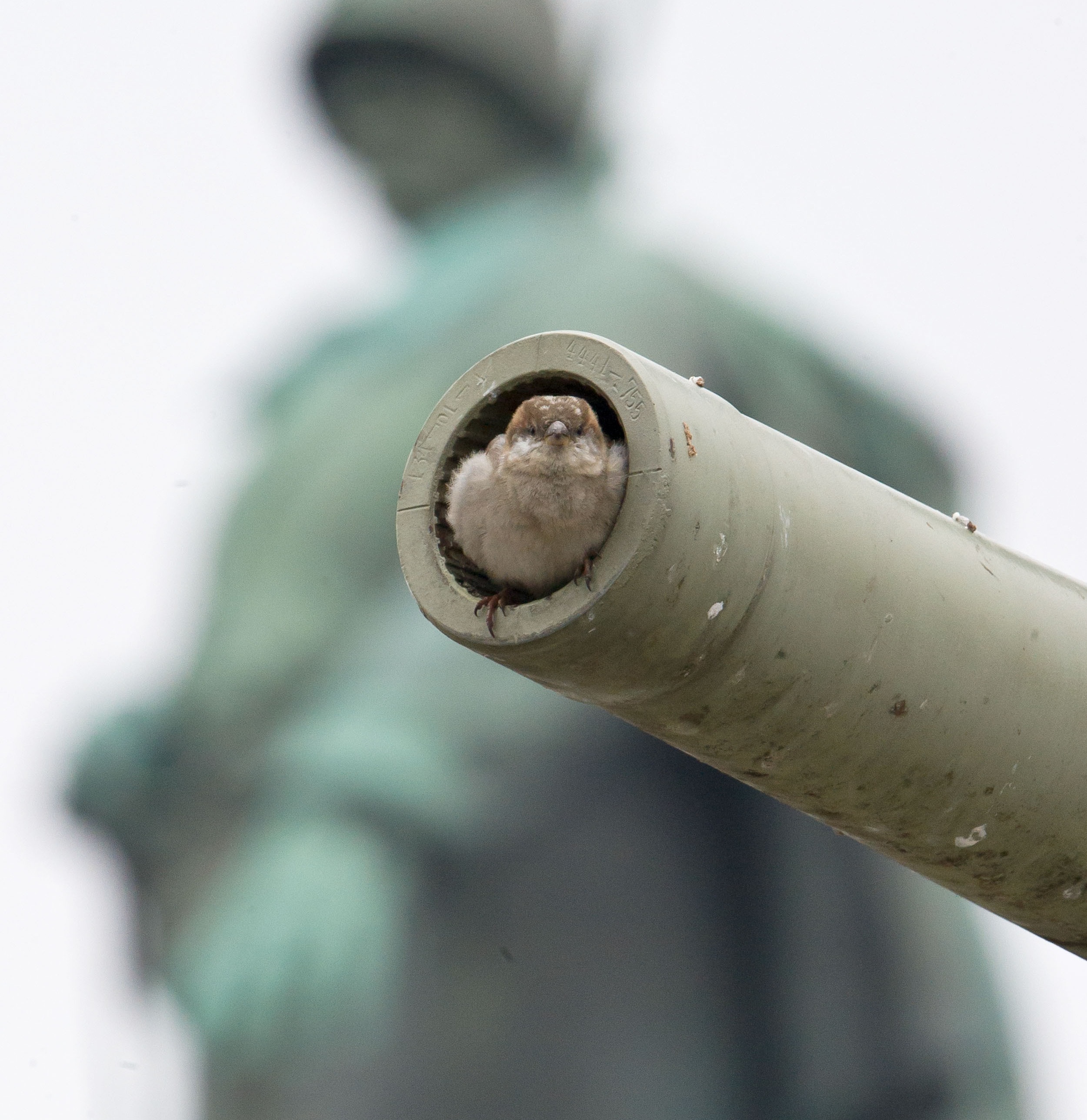
We also nibbled on Whole Foods fast food, questioned stretching, and discovered an unknown sparrow by Berlin’s Unknown Soldier in the Face of the Day. Finally, we stopped by Lyon, France in the VFYW, observed two visions of Normandy in Cool Ad Watch and played another level of Billy Graham’s Bible Blaster for the MHB.
–B.J.
The rest of the week after the jump:
Thursday on the Dish, Andrew answered readers on why he changed his mind on Iraq, Harry Enten found support for immigration reform at critical mass, and Pew measured escalating support for post legalization. Felix supplied a fairly grim reason to sweat the bitcoin boom, Iraq asked Obama to pass the drones, and we checked in on the Gitmo hunger strike. We also surveyed the coming inter-activist skirmishes over fracking, discovered another cholera scandal rocking the UN, and Shafer yearned for a new vocabulary for North Korea coverage.
Elsewhere, we continued to argue libertarianism vs. Christianism, questioned the efficacy of the presidential pulpit, Harry Levine described the appeal of stop-and-frisk from a cop’s perspective, and Cowen factored alcohol into the pursuit of gun control. Brian Merchant found out how much Republicans like renewable energy, we considered cutting back on the GOP’s traveling debate roadshow in 2016. Readers spoke up about the low budget weddings, disapproved of UPenn’s no-smokers policy, and doubted any connection between the tactics of the NRA and Black Panthers.
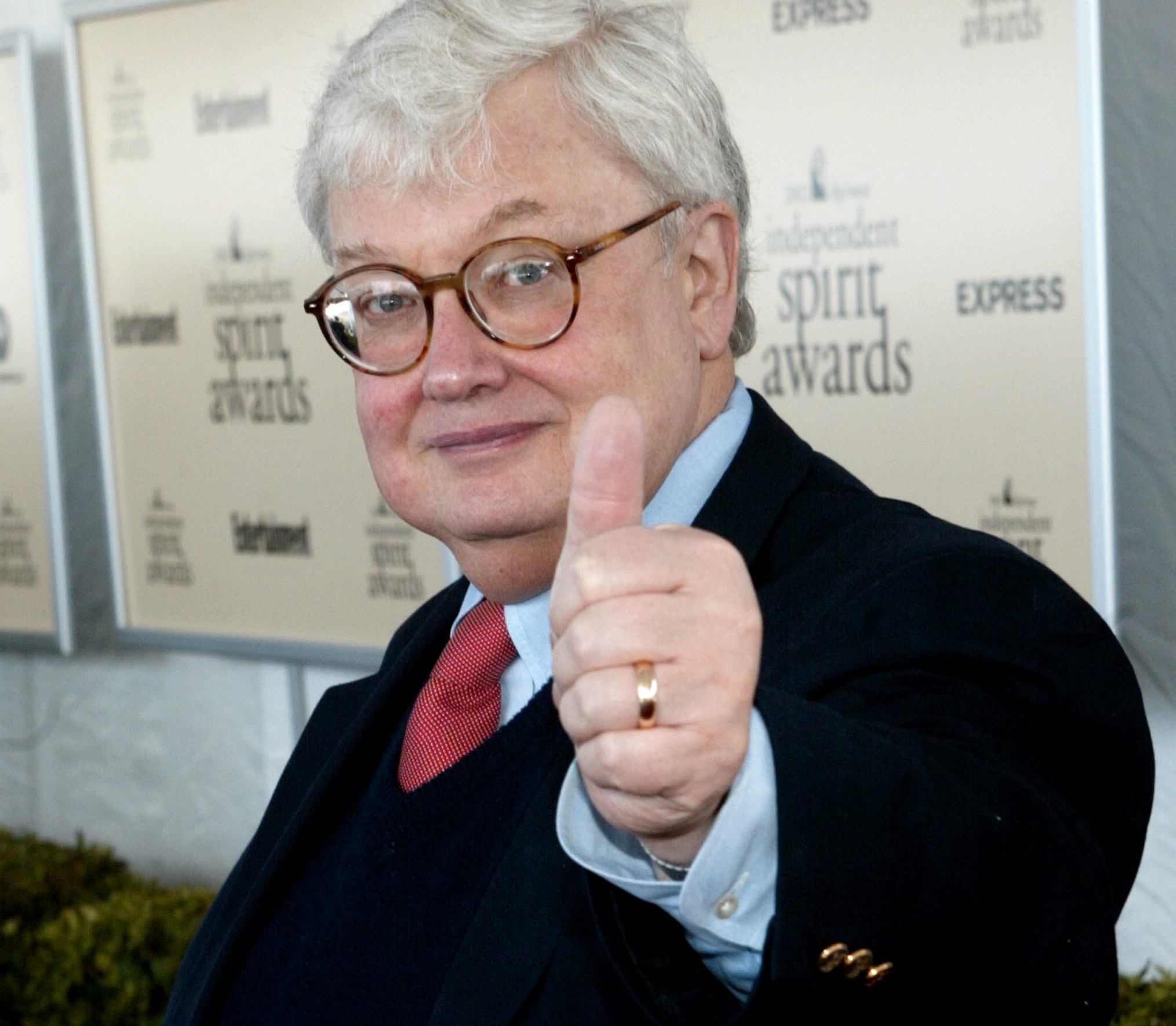
In assorted coverage, we paid respects to the late, great Roger Ebert, let readers ask Josh Fox anything, and remembered Bruce Springsteen’s intense relationship with the Big Man. We read the brochure for pot’s Nappa Valley, flagged some major Sully bait, and heard readers sound off on the limits of graphic war imagery.
Later, Oppenheimer explored the limits of his parenting skills, Richard Nieva spotlighted the share-economy and its discontents, and we considered the status of Pixar films in light of the Nemo-sequel. We met a member of the US chemical battalion in the Face of the Day, made it through the MHB bit-by-bit and took a breath in North Galiano Island, British Columbia for the VFYW.
Wednesday on the Dish, readers asked Andrew where federalism begins and ends, Nick Beaudrot kicked off a discussion on blogging as a way of life and Matt Sitman looked at Pope Francis as a Jesuit. Suderman caught up with the hiccups in Obamacare, Weigel measured lack of interest in the sequester and Pareene wondered if we’ve seen the last of the Clinton hacks. We discussed the economic reasons of the “decline” of marriage, checked in on the demise of the Euro, and Adam Alter noticed a connection between a hurricane’s name and how much we give for relief.
We caught Americans running drugs on the Mexican border, kept considering the plight of the snitch, and welcomed terrorism back to the silver screen. We pondered the significance of teacher cheating, asked if we’re hardwired for language and toured a lonely, lonely shopping center. Elsewhere, we updated readers on the Dish experiment, unearthed the very first Face of the Day, and readers sounded off on the restaurant EZ pass. Kate Crawford differentiated data and truth, Calvin Trillin extolled the joys of the floating editor, while Zoe carried on the marriage-surname discussion (and announced some exciting news).
Later, Moynihan cringed at his Wikipedia entry, we eyeballed how many of our fellow citizens go for UFOs and trutherism, and readers shared their experience of sensual sneezes. We reckoned with the power of Wagner and revisited Ware’s broken leg as Evan Selinger opened a drawer of old thank you notes. Andy Greenwald said a good word for bulk watching Game of Thrones while Woodman defended the misuse “literally.”
Finally, we looked out on London for the VFYW, spotted tiny tourists beneath a big Face of the Day, took a somber look back at Fraggle Rock for the MHB.
Tuesday on the Dish, Andrew expressed his disbelief on the advances of the gay rights movement while readers vented over yesterday’s guest post from Mr. Rick Astley. Ed Kilgore doubted that the GOP’s libertarians will threaten its Christianists, Frum raised his eyebrow at a Hillary victory, and we sized up the new Democratic coalition. Bernstein encouraged one Supreme Court Justice to step downa and Judis spotlighted the problems with America’s trickledown recovery. On the foreign beat, Graeme Wood took a hyperinflation vacation in Iran, Larison rebuked Jackson Diehl on the legacy of Iraq, and David Bosco warned of a new African intervention for the UN.
In assorted coverage, readers kept up the debate on taking husbands’ names, Oppenheimer demanded conservatives stay consistent on the “decline” of marriage, Dylan Matthews measured the exponential rise of Senatorial support for equality. A reader gave a personal account of narcoanalysis, we measured the benefits of early marriage, and found out that Google is against sponsored content (Vice, not so much). Tahir Hemphill pieced together an almanac of rap and Megan Garber paid respects to the word “whom,’ and Jordan Weissman analyzed Amazon’s buyout of Goodreads. We also looked out from a whale’s eyes and checked in on Ware while Mark Graham did a global survey of Wikipedia editors.
Later, we tested the limits of working out of the office, Steve Mann showed us his proto-proto Google Glass, and we tracked how dull food gets tasty. Ian Crouch muted the blaring Inception trailer music and we detected evidence of the class structure in reality TV. We met some of the activists in Uruguay’s marriage equality movement in the Face of the Day, sat in awe of another beatboxer for the MHB before visiting Tirana, Albania in today’s VFYW contest and Shannon, Ireland in the regular VFYW.
Monday on the Dish, Andrew signed off for vacation, but not before leaving a new ‘Ask Anything’ video. Meanwhile, we sized up the stakes in the Korean peninsula, Ackerman suggested we ditch the term ‘WMD,’ and Matt Taibbi described the difficulty of knocking down bad laws. We checked in on the chances of a GOP resurgence and the state of immigration reform, explained why the government won’t help us with our taxes and discovered that shale gas won’t hold up progress on renewable energy. Rob Walker told the story of a man forced to rat on criminals, readers continued the delicate thread on “gay rape” and kept up the appraisal of our public defenders.
Elsewhere, Noah Berlatsky stuck up for pricey weddings while we continued the threads on prenups and taking on a husband’s name. Readers pushed further on Justice Roberts’ possible blind spot on the definition of marriage, others defended the idea of political ‘evolution’ on the question, and the World Values survey tracked the progress of gay rights worldwide.
In more assorted coverage, Christopher Jobson came across found art in the age of Google, we witnessed the new found relevance of fanboys, learned some sneezes come from being hot and bothered. Also, we we questioned the authenticity of the Harlem Shake meme and later found the original version of “reality” entertainment was as staged as it is now.
Later, we browsed some dictator kitsch as Dirk Brockmann followed cash around the country and readers responded to Tomasky’s call for a more efficient restaurant check. We agonized over Kevin Ware’s compound fracture, watched cola cans score medical supplies, and asked whether Adderall will become a commonplace energy fix. Touchscreens were put to the test in the MHB, before we remembered that bunnies can be scary in the Face of the Day and spent a moment in Chengdu, China for the VFYW.
Last weekend on the Dish, Andrew praised the radical Christianity of Pope Francis, told us about his inspiring trip to West Point to speak to the military academy’s gay-straight alliance, and announced he was taking a breather.
We also provided our usual eclectic mix of religious, books, and culture coverage. Fittingly, we emphasized matters of faith, doubt, and philosophy, with Marilynne Robinson musing on the Resurrection, Paul F.M. Zahl making the religious case against drones, Karen Armstrong urging us to believe in a grown-up God, and Thomas Holgrave considered the complex traditionalism of young Christians. Julia Kaganskiy profiled programmers exploring the similarities between scripture and code, Alice Bolin recalled the benefits of reading like a child, Helen Rittlemeyer plumbed the parallel lives of DFW and Coleridge, and Francis Gino explained how what we wear impacts the likelihood of our cheating.
In literary and arts coverage, David Biespiel pondered the ways we live in the wake of Allen Ginsberg’s Howl, the publication of Willa Cather’s letters defied her dying wish, and Edward Jay Epstein remembered Nabokov’s Dirty Lit. Ben Schrank described why he’s drawn to writing female characters, Danny Nowell re-read Walker Percy, and Harold Augenbraum profiled Proust’s young love. Avi Steinberg detailed why teaching creative writing in prison is so important, Barry Hannah proffered the reasons for writing, Maria Bustillos penned a love letter to editors, and Julia Fierro contemplated the challenge of novelists writing about sex. Stephen Marche was disappointed by the Kindle’s lack of development, Kate Hakala mourned the decline of steaminess on the big screen, James Parker putThe Real Housewives franchise under the microscope, and Patrick Radden Kaffe was fascinated by the brainstorming sessions for Raiders of the Lost Ark. Read Saturdays poem here and Sunday’s here.
In assorted news and views, coughing in a quiet music hall meant more than you think, Roy Peter Clark downplayed claims of a plagiarism pandemic, Tomasky grew tired of waiting for his restaurant checks, and wine declined in France. Dinosaur sex proved to be complicated, Barry Schwartz continued the conversation about marriage and love, and Alison Gash chronicled how same-sex adoption victories were won. Cool Ad watch here, MHBs here and here, FOTDs here and here, VFYWs here and here, and the latest window contest here.
Even though he admits that gun massacres are “statistically rare,” Gopnik wants to do much more to prevent them. Money quote:
Though, from a cold-blooded accounting point of view, we might be able to survive many more 9/11s, the shiver that one feels writing that sentence reveals its falseness. The nation might survive it, but we would not, in the sense that our belief in ourselves, our feeling for our country, our core sense of optimism about the future, would collapse with repeated terrorist attacks. And so it is with gun massacres, whether in Aurora or Newtown or the next place. Our sense of what is an acceptable and unacceptable risk for any citizen, let alone child, to endure, our sense of possible futures to consider—above all, our sense, to borrow a phrase from the President, of who we are, what we stand for, the picture of our civilization we want to look at ourselves and present to the world—all of that is very much at stake even if the odds of any given child being killed are, blessedly, small. Laws should be designed to stop likely evils; it’s true, not every possible evil. But some possible evils are evil enough to call for laws just by their demonstrated possibility. There are a few things a society just can’t bear, and watching its own kids killed in the classroom, even every once in a while, is one of them.
(Photo: Rounds of .223 rifle ammuntion sits on the counter at Sportsmans Arms on April 2, 2013 in Petaluma, California. In the wake of the Newtown, Connecticut school massacare, California State lawmakers are introducing several bills that propose taxing and regulating sales of ammunition. Another bill is aimed to require a background check and annual permit fee to purchase any ammunition. By Justin Sullivan/Getty Images)
David Hilfiker, diagnosed with a “progressive cognitive impairment” which is “almost certainly Alzheimer’s” in September 2012, is blogging the deterioration of his capacities:
Friday I decided to walk the family dog and join my grandchildren at the nearby park. The dog sometimes slips out of her collar and needs a simple harness to keep her on-leash. But after at least ten minutes of confusion, trying unsuccessfully to figure out how to put the harness on, I had to settle for the collar, stuff the harness in my pocket and, after I’d reached the park, ask my 8-year-old granddaughter Madeline to put the harness on.
But Hilfiker says he doesn’t feel any shame about his confusion:
I’ve been through this [kind of helplessness] before: I suffered from a severe depression for decades before I realized the cause was an organic brain disease. During that period, I was ashamed of my inability to enjoy life; I considered a character defect that I should have been able to overcome. After I understood that the cause of my depression was an unavoidable chemical imbalance in my brain, however, the shame disappeared. I was still helpless, but I didn’t have to “try harder” to get over it.
It’s the same thing now. I’m not embarrassed when I can’t remember ever meeting a person with whom I had a long conversation recently. I’m not frustrated when I can’t fix a simple problem with my file drawers. My helplessness is unavoidable. I am not going to get better no matter what I do; my capacities will decline further. This is not my fault.
So I don’t fight my inabilities. I can accept this part of myself as real. The sadness continues but not so much the pain of helplessness.
A sparrow sits in the muzzle of a former Soviet T-34/76 tank at the Soviet Memorial in Berlin’s Tiergarten on April 5, 2013. By Tim Brakemeier/AFP/Getty Images.
All of the responses to your post about the stigma of cheap weddings pretty much underline the point Noah Millman was making in his response to Ross Douthat’s column. Douthat asked proponents of marriage equality to own up to the fact that the rise in interest in same-sex marriage has coincided on a timeline with the “decline” of marriage in our society and to admit that there might be some connection, whether it is apparent or not.
I believe the exact opposite. At a time when so many societal factors, including economics are making marriage less and less popular, the fight for marriage equality is one of the few things that actually promotes the benefits of marital bliss.
Two of your commenters point out that the typical wedding doesn’t cost $27,000, but actually costs $15,000. And what does that say to the larger point? That marriage is so inconsequential to so many heterosexuals that a price tag of $15,000 (not $27,000) is enough to dissuade them from tying the knot. And keep in mind that’s not the minimum cost of getting married… that’s just the cost of having a wedding that keeps up with the Joneses. And again, that price tag isn’t just dissuading people from having a big wedding… it’s keeping them from getting married altogether, something you could do at City Hall for a minimal cost.
That’s part of the bigger point. For a lot of people, getting married is as much about the wedding as it is about declaring your eternal love. It’s about dieting down to your best weight ever, buying an expensive outfit you’ll never wear again and inviting all your friends to witness it in the hopes they’ll talk about, tweet about it, envy you for it and shower you with enough gifts to offset the cost of throwing the party in the first place.
Weddings and marriage are all about stigmas, and once large parts of society removed the stigma of living together and raising children without the party and without the paper, similarly large segments of society just opted out of the whole thing. Once we stopped stigmatizing divorce and went from a society that wouldn’t elect a divorced President to one that doesn’t blink at having morality preached to it by a thrice-divorced man, divorce rates shot up too.
At a time when the sanctity and status of marriage appear to be at an all time low, the fight for marriage equality is reminding us that marriage can still be a beautiful and treasured institution. Suggesting that it is part of the problem is akin to noting that every time there is a fire, fire trucks show up and maybe if we got rid of the trucks, we’d have a lot fewer fires.
Gay activists, or simply the rising visibility of gay couples, have made marriage cool again. They’ve raised its value in my eyes, or rather made me a little more conscious of its value, which is pretty much the same thing. And I think that the drive for gay marriage has raised the institution’s value materially by making the whole society think hard about what it’s really about.
The west has valorized marriage for true love, as the free choice of two people who decide they’re right for each other, for more than a century. That ideal was getting a little worn around the edges, pecked at by perspectives from biology, and psychology, and probability, and economics, and political ideology — and by postmodern skepticism generally. In real terms, too, the institution as we knew it has eroded, thanks first to divorce and then by advancing tide of out-of-wedlock births.
Gay marriage is not going to change that, or arrest change in this ever-changing but indestructible human institution. But it has made the enduring reality of individual choice and the eternal viability of lifelong commitment and the value and utility of two-parent families a bit clearer.
Bill Gardner flags an article [paywalled] that found “female mortality rates increased in 42.8% of counties (male mortality rates increased in only 3.4%).” The geographic breakdown of female mortality rates is mapped above:
This trend is amazing in a historical context. Overall US life expectancy had been increasing steadily over the decades. Before seeing data like these, I had the simple view that increasing life expectancy was part of a general increase in human well-being, powered by the steady growth in economic well-being. In fact, US GDP per capita increased from $24,400 in 1992 to $44,600 in 2006 (in current US $). This is a huge shot for the average American (although it was less for the median American). But a large subgroup of women was apparently left behind.






 The Dish