Why Can’t The IRS Do Your Taxes?

by Zoe Pollock

For most Americans, it could:

Imagine filing your income taxes in five minutes — and for free. You’d open up a pre-filled return, see what the government thinks you owe, make any needed changes and be done. The miserable annual IRS shuffle, gone. It’s already a reality in Denmark, Sweden and Spain. The government-prepared return would estimate your taxes using information your employer and bank already sent it. Advocates say tens of millions of taxpayers could use such a system each year, saving them a collective $2 billion and 225 million hours in prep costs and time, according to one estimate.

But the TurboTax lobby is strong: 

[Maker of the tax software] Intuit has spent about $11.5 million on federal lobbying in the past five years — more than Apple or Amazon. Although the lobbying spans a range of issues, Intuit’s disclosures pointedly note that the company “opposes IRS government tax preparation.” … Roughly 25 million Americans used TurboTax last year, and a recent GAO analysis said the software accounted for more than half of individual returns filed electronically. TurboTax products and services made up 35 percent of Intuit’s $4.2 billion in total revenues last year.

Paul Waldman adds:

For many people, this wouldn’t work. Let’s say you have a lot of investment income, which varies from year to year. Or you’re a freelancer, and your income comes from multiple sources and your expenses also vary. But many people just have one source of income (their job) and a stable set of deductions, and this kind of thing would work perfectly well, saving them the $40 or so it would cost for Turbo Tax, or the even greater expense of going to a tax preparer.

Why Take His Name? Ctd

by Chris Bodenner

Screen Shot 2013-04-01 at 1.31.16 AM

The above screenshot (click to enlarge) from our Urtak survey shows how 58% of female readers are planning to keep their name after marriage compared to 83% of male readers. Also, 6% of married readers hyphenated their last name in marriage and 7% of unmarried readers are planning to do the same. Explore all of the results here. Below is another big follow-up to one of our most popular threads this year:

I don’t think that anyone has mentioned yet the professional concerns around changing your last name to your spouse’s upon marriage, in an age where your “brand” is very much linked to your online identity and it’s a given that potential employers are going to be googling job applicants. While you can always change your last name easily on social media sites like Facebook, Linkedin, Twitter, etc., it’s basically impossible to go back and change it on the masthead of your law journal, the articles you wrote for your college paper, the announcement for the scholarship you won, or the acknowledgements page of your professor’s book that you helped research. Put simply, an increasing number of women today will have racked up a list of accomplishments under their birth names prior to marriage, so I’d rather be searched as “Jane [Maiden Name]” than “Jane X” upon marrying Mr. X. I’d think that a good number of us are reluctant to give up the online “brand”/professional identity that we’ve been building for years.

Of course, the fact that you can find absurd amounts of information about virtually everyone through a quick online browse works in the other direction as well. Hence, a name change might be beneficial for those who have past indiscretions tied to their maiden names and would like to “start over.”

Another factor that hasn’t been raised thus far is divorce. Many divorced Americans who had taken their spouse’s name revert to their original name, even before they consider another marriage and yet another name change. Perhaps millennials are more likely to keep their name in marriage due to all the name-changing they saw from their remarried and re-remarried boomer parents, the most divorce-prone generation. Another reader:

For my first 23 years, I had no middle name.  My mother tried to spare us the dilemma of having to choose whether to use our middle name or our maiden name when we did get married (she chose the latter).  So for the government, my middle initial was ‘N’ for none.  If I had to have a middle name (again, for government documents) it was ‘NMN’ for no middlename.  So I was very glad to finally get a middle name when I married.

Another has advice for parents:

Here is a solution that my grandparents came up with. You hyphenate last names when you get married. When your children grow up and get married, they keep half the hyphenated name from the parent of the same gender as them (or they can just pick one in the case of same-sex couples) and take half of their spouse’s last name. This allows for the continuation of lineage through surnames, while still eliminating the gender imbalance in the process.

Another:

I swear this is not apocryphal; I know these people; they were at my wedding. His name is Bent. Her maiden name is Dover. They decided NOT to hyphenate.

Another:

My wife and I are late-20s Philadelphians who both felt attached to the family history behind our last names. We decided over a beer one night to flip a coin and avoid the hyphenated circus.

We flipped a coin outside the bar and she won so, I took her last name. You should have seen the social security office when I went in. The woman behind the desk didn’t know how to enter a man making a marriage-based name change, and whispered the scenario to her coworker like I was doing something I should be embarrassed about. I’ve gotten similar vibes from her small town extended family as well. Meh. I only know one other person in all my urban Northeast network where the man took a woman’s name and it’s my cousin in Brooklyn (who also doesn’t know anyone). I recommend the coin toss.

Another:

The best ever solution to the last name question was a rock-paper-scissors match between the best man and the man of honor (the bride’s best friend was a guy), played during the wedding ceremony.  A win by the best man meant the couple would take the groom’s name, ditto for the bride’s name if her attendant won.  What to do in the event of multiple ties had not been considered.  This became more important when both attendants threw a tie six times in a row.  While hybridnames were considered, the couple elected to soldier on until the tie was broken by the best man, and the couple have happily shared the groom’s name ever since.

Another:

I didn’t take my husband’s name, and probably for the worst of all possible reasons: spite. Back when we were still dating in college, we went out one night with another couple. The other guy mentioned to my now-husband that his girlfriend had told him she planned to keep her name if they married. My husband (who possibly wasn’t aware I was within earshot), laughed at him and said, “No wife of mine is gonna keep her last name!” To which I immediately replied, “Oh, really?”

Prior to that, I would’ve taken his name without a second thought. But I’m contrary by nature, and the moment he implied I had to take his name was the moment I knew I wouldn’t. I hate it when someone tells me I have to do something.

For the record, we celebrated our 19th wedding anniversary last month. And I generously allowed our son to have his dad’s last name.

The Radical Christianity Of Francis

Pope Francis Attends Easter Mass and Urbi Et Orbi Blessing in St. Peter's Square

What has struck me the most about the new Pope is his reticence. Benedict XVI was as bewilderingly bejeweled in his prose as he was in his elaborate, fastidious outfits. Francis seems to be following his name-sake, who rarely preached as such, but whose actions spoke far louder than any Latin. “Spread the Gospel everywhere – if necessary with words” was the saint’s alleged remark. It was certainly his way of life, although I doubt Pope Francis will suddenly break out into a spiritual dance or song, as Saint Francis was wont to do.

And so Francis was of few and plain words, as he emerged at first: “Bueno Sera” before urging people to go to bed soon. He has simply let the ornate and elaborate vestments of his predecessor fall from his body, as Saint Francis did in renouncing his worldly inheritance from his father. He has spoken of the need to protect Creation from the forces of pure exploitation and greed; he has reiterated Jesus’ message to visit the sick in hospital and the incarcerated in prison. He has washed the feet of a Muslim female juvie. He has refused the Papal throne and its palatial residence. And he has done all this almost instantly. No words could have said as much.

The reaction from the arch-traditionalists, especially in Liturgical matters, has been just a notch short of outright hysteria. One of the new, young priests, who came of age under the counter-revolution of Wojtila and Ratzinger, registers his bafflement at the washing of women’s feet:

I am a young, recently ordained priest. Tonight, I planned on preaching about the Eucharist and the institution of the priesthood. How can I speak about such things – the self-offering of Christ, the 12 viri selecti – when our Holy Father is witnessing to something different?

I feel like going up to the congregation and saying, “I don’t have any idea what the symbolism of the washing of the feet is. Why don’t we just all do what we want.” How hard this is for young priests.

How hard for a young priest to have to grapple with the idea that in Christ, there is “neither male nor female.” Or that some Pharisaical rules, designed to protect the powerful, are what Jesus came to disarm with the power of love, outreach, and embrace of the other. No: what matters to this priest is that those who are selecti are viri, i.e. men, that the washing of the feet is about the supremacy of the male priesthood, not the humility of a God who places the last first and the first last. There is some awkward resistance from the Ratzinger faction as a whole:

“The pope does not need anybody’s permission to make exceptions to how ecclesiastical law relates to him,” noted conservative columnist Jimmy Akin in the National Catholic Register. But Akin echoed concerns raised by canon lawyer Edward Peters, an adviser to the Vatican’s high court, that Francis was setting a “questionable example” by simply ignoring the church’s own rules.

“People naturally imitate their leader. That’s the whole point behind Jesus washing the disciples’ feet. He was explicitly and intentionally setting an example for them,” he said. “Pope Francis knows that he is setting an example.”

The inclusion of women in the rite is problematic for some because it could be seen as an opening of sorts to women’s ordination.

There is no sign that Francis will move to end that ban – although what a day for the church that would be! There are signs rather that Francis wants to break out of the zero-sum dynamic of those issues for a while and reaffirm the central truths of the faith: that the force behind all of creation is love, that Jesus revealed this in his words and in his actions, that those who believe they have everything have nothing, and that those who are marginalized, poor, alone, afraid and vulnerable are by those very facts more capable of seeing God in the world. We have to become more like them to find Jesus, and less like ourselves.

This is a Pope who follows Jesus’ example by simply showing, not telling. Francis of Assisi is the obvious precedent. But this man is a Jesuit as well, an order founded by Saint Ignatius:

St. Ignatius had been a Basque soldier, as well as something of a ladies’ man, until his conversion while convalescing after a cannonball shattered his leg. In his writings, most notably in his “Spiritual Exercises,” St. Ignatius espoused a theology based on loving deeds rather than loving thoughts or words. St. Ignatius calls us not merely to worship Christ but to imitate him.

My italics. Deeds over words; love over law. In the end, the way a human being acts is what his or her religion is. And a spiritual leader can say so much more without words, because he is describing something beyond human understanding. In the washing of a young woman’s feet – from another universe of doctrine – you are witnessing the surrender of law to love. You are witnessing Jesus’ constant resurrection in our world – every day, somewhere, in someone, opening up to the sun, like flowers in springtime.

(Photo: Daffodils in front of St. Peter’s Basilica as final preparations are made before Pope Francis delivers his first ‘Urbi et Orbi’ blessing from the balcony of the Basilica during Easter Mass on March 31, 2013 in Vatican City, Vatican. By Christopher Furlong/Getty Images)

The Decline And Evolution Of Sex Scenes

A very NSFW scene from Game of Thrones, discussed below:

Kate Hakala mourns the decline of steaminess on the big screen:

The zeitgeist favors both family-oriented films and flicks full of special effects and gun violence, which are cheap to produce, over realistic, provocative depictions of human sexuality. Sex scenes require rehearsing, clearing of no-nudity clauses, the development of chemistry, and the hiking of R ratings, whereas CGI takes a computer and some imagination. The latter will time and time again have a wider audience. In 2012, out of the top 20 grossing films of the year, only four included any sex scenes, and only one of those, Ted, was R-rated.

And the resounding trend I see on the internet’s “Best Movie Sex Scenes” lists* is that they all feature movies that are mainly over ten years old. In fact, the last movie to top the box office that included a truly hot and heavy love scene was Titanic (who could forget that smudged hand print on the car window?), but that was a depressingly long sixteen years ago. … We may have now become a culture that feels safer watching a city be bombed to death with their mom than they feel safe watching somebody feeling pleasure next to their mom.

Alison Natasi rounds up actors’ and directors’ opinions on the awkwardness of shooting a sex scene. Jason Kehe tracks the migration of such scenes to television and sees an artistic evolution of the form:

When the adaptation of George R. R. Martin’s fantasy novels first aired in spring 2011, it swelled with sex—par for the course in HBO’s True Blood era. But there was a difference this time: Characters spoke in these scenes. And not just pillow talk, either, but epic discussions of dynasties, subterfuge, and redemption. We learned about the Lannister siblings while a character was downing wine and being serviced by a topless prostitute. Dragon lore got discussed during one extremely NSFW bath. Then the coup de grâce: a major character delivering a five-minute monolog while two women get it on in the background. Even the competition couldn’t hide its admiration. “Nobody gets to talk for two pages about power!” says Julie Plec, executive producer of The Vampire Diaries, CW’s sex-lite answer to True Blood.

So forget sex. It’s “sexposition” now—a way for cable writers to keep your attention while educating you on plot, background, and character.

Can’t We Get An EZ-Pass For Restaurants?

Tomasky is tired of waiting for his check:

Who among my fellow Americans enjoys this ritual? You ask for the check. The waiter walks away. He brings it. He walks away again. You put your card in the little sleeve. You wait. The waiter picks it up. He walks away again. Eventually, after reciting the specialsat one table and opening a bottle of wine at another, he returns. And finally, 20 minutes after you were ready to leave, the restaurant is ready for you to leave.

Within those 20 minutes is contained not just the customer’s inconvenience, but a national crisis and disgrace. America suffers from a terrifying restaurant technology gap. Throughout much of the world, this tedious ritual has been dispensed with. At tables from London to Istanbul, from Casablanca to French Polynesia, when the diner is ready to leave, the waiter reaches for her or his handheld device, runs the credit card, hands over the receipt, and that’s it. Gone in 60 seconds.

In a follow-up, he continues to kvetch:

My little essay was a plea for the industry to introduce the hand-held credit-card machine that we find…well, basically everywhere in the world except America.

I know many of you think you know the reason, that it has to do with the difference between US and European credit cards, that chip business, which prevents fraud. But that’s bullshit. … The chip business is just an excuse. The fact is that restaurants don’t want to invest in the technology, and they don’t because Americans aren’t clamoring for it. I guess because people at the Cheesecake Factory just like to sit there and sit there after consuming those 5,000-calorie meals. The NRA (not that NRA–the National Restaurant Association!) has polled the question and found out that 52 percent of Americans would avail themselves of table-side check-out. Again, these 48 percent just confuse me to no end. Maybe now that Americans have embraced gay marriage, we can move on to restaurant efficiency.

Sex On The Page

Julia Fierro contemplates a challenge of many novelists:

When I asked literary writers about their experience writing sex, their responses ranged from, “I am terrified of sex scenes!” to “I fear the reader will think I’m a pervert, or terrifically immature, or both.” Why do so many literary writers fear writing about sex? Why do we add to the collective anxiety by celebrating The Literary Review’s “Bad Sex Award” — the annual public humiliation and literary stoning of one published writer?

In my experience as both a writer and a teacher, this fear of writing about sex is tied to the fear of sentimentality that takes root in a writer’s formative years. Writing instructors chastise writers in class — a setting that can feel quite public — when the writer risks sentiment, which a naïve writer might mistake for emotion. Writers accrue a kind of scar tissue, blocking their ability and their confidence to imply emotion, inevitably leading to a clouding of meaning in their work.

Meanwhile, Amanda Hess wonders when erotica will be taken seriously:

Fifty Shades has only cemented erotica’s reputation as juvenile, poorly-constructed, and—perhaps most damning—totally feminine.

In a world where most mainstream pornography is filmed with a male viewer in mind (and often, with guys manning the camera and the promotional machine), written erotica has been traditionally more accessible to women, who can produce it cheaply and anonymously, with few resources, no institutional support, and reduced risk of public shaming. That’s only reinforced the idea that women prefer to read their smut as opposed to watching it—and that they’re so hard up, they’ll accept whatever amateur bodice-rippers are offered to them.

The Internet has changed only some of that. Online, it’s easy to click away from traditionally feminine stuff and into “some crazy fetishes and things that are clearly not ‘girly,’ ” [Lux Alptraum, publisher and editor of the sex-centered blog Fleshbot] says. “Erotica can be Harry/Draco slash fiction. It can be aliens raping farmers. It can be whatever you want, and it doesn’t have to be in this soft purple packaging with the heaving bosoms and Fabio.” (Trust: I’ve read plotlines on Literotica.com that would not be legal to film in the United States.)

Why Does Marriage Deepen Love? Ctd

In a review of Barbara Fredrickson’s Love 2.0, Barry Schwartz latches on to another theory:

“Do you love your spouse?” becomes the wrong question; “Are you loving your spouse?” is the right one.

A critic might quarrel with Fredrickson for calling these moments of resonance “love” rather than something else. Why not keep “love” as we have always used it and coin a new term for the moments of positivity that Fredrickson is talking about? I don’t think this is a big deal, but, aside from helping to sell books, the virtue of redefining love in this way is that it encourages people to think hard about whether what they’ve been doing in the service of love is actually meeting its objective. And I can’t overemphasize how striking the evidence is that Fredrickson marshals in support of her position. Not just psychological evidence, which would be important enough. But also neural evidence, neurochemical evidence, cardiovascular evidence, and even evidence of effects on gene expression. This line of work may end up changing both what we mean by love and what we take as evidence for love and its effects.

Letters On Lockdown

Former prison librarian Avi Steinberg describes why teaching creative writing in prison is so important:

Many people who came to my classes were eager to improve their skills at writing letters. Prison is a lot like the 19th century. Letter writing continues to thrive there. There is a particular urgency to writing in prison—a letter is the difference between having a relationship with a person on the outside or not. Writing is the relationship. Like those old Victorian letters, the prose itself is heated by this dynamic.

There are so many ways in which creative writing is suppressed in prison.

So much of writing in prison is associated with sheer malice and with legal warfare (inmates and staff members are constantly writing grievances and incident reports). There is little free speech in prison and no private property. Your cell can be searched at any time and your writings can be confiscated. Anything you say can and will be used against you—that’s the literary culture of the place.

And suppression could come in other, less obvious forms. Many inmates had gone through addiction recovery programs that incorporate writing assignments into their regimens. Perhaps this kind of writing serves its therapeutic purpose but, from a literary perspective, it’s stifling. It trains people to tailor their stories to the tastes of recovery-think, and to strangle these stories with the homogeneous language of the program. After I saw the 10th consecutive essay that described how someone had “hit rock bottom” I realized that I would have to figure out how to get my students to write in their own voices.

The Weekly Wrap

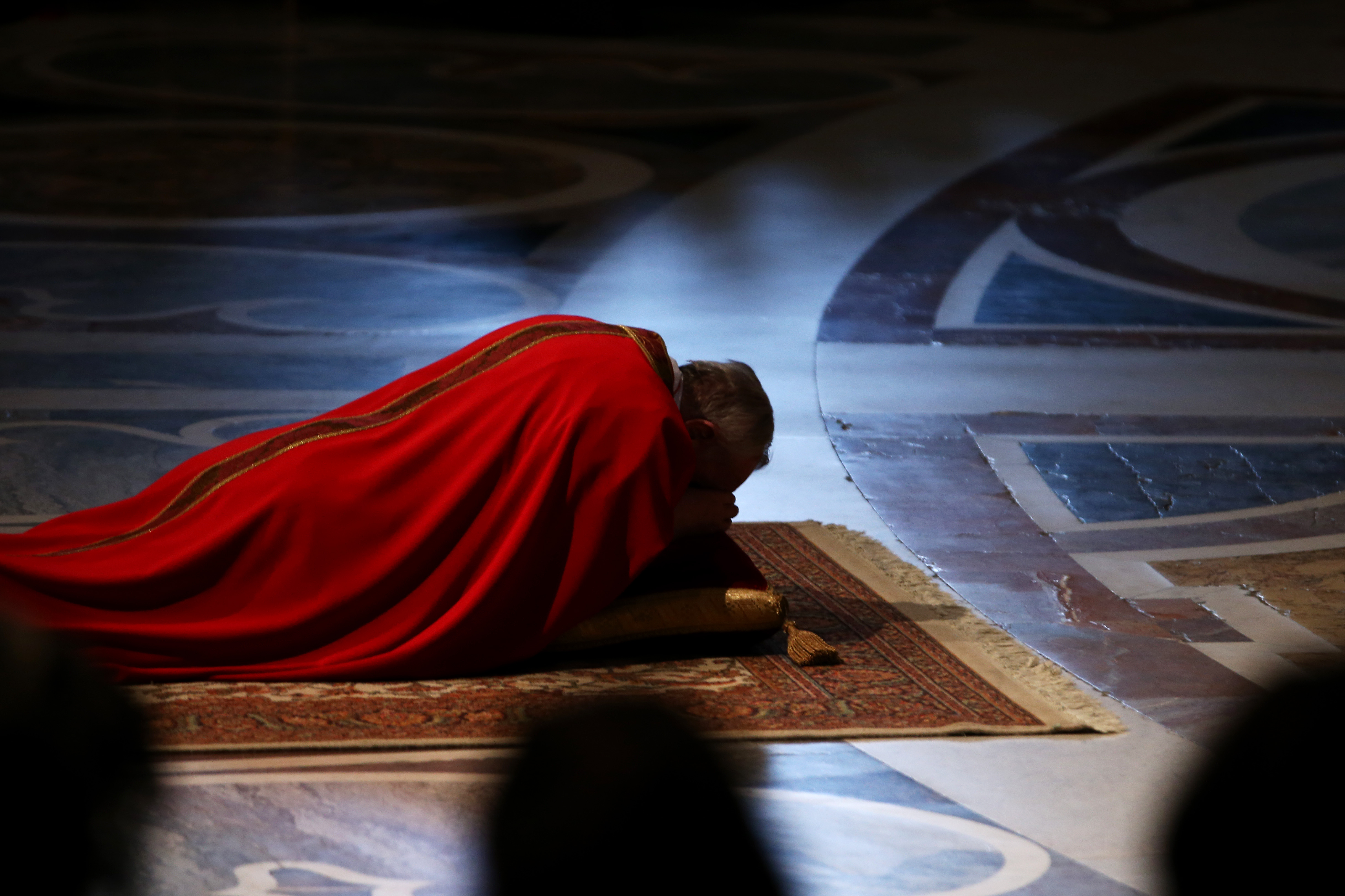
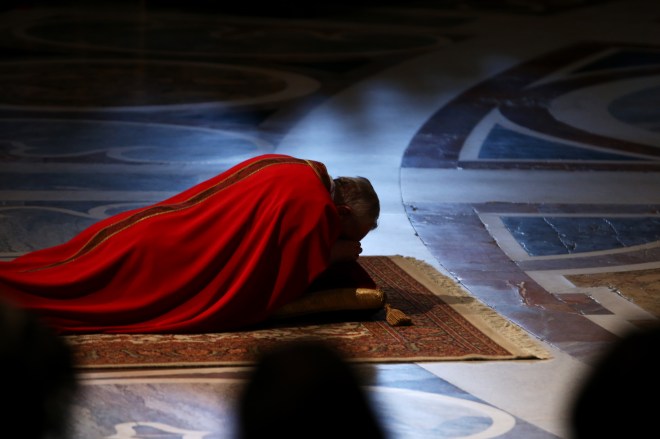
Pope Francis Attends Celebration Of The Lord's Passion in the Vatican Basilica

Friday on the Dish, Andrew responded to reader dissent on Bill Clinton’s gay rights record, explored the implicit distinction between infertile straight couples and gay couples in marriage equality arguments, turned objectification back on men. In honor of Good Friday, he sent a prayer out to David Kuo and all others suffering hardships as Franz Wright provided us with some verse to contemplate and Pope Francis distinguished himself through his humility.

In political coverage, Greenwald found humor in a divorcées defense of “traditional marriage” as Rush Limbaugh threw up the white flag on marriage equality, and Al Tompkins asked for television access to SCOTUS. John McWhorter criticized “evolving” politicians, John Podheretz finally got Obama, Timothy B. Lee disputed the Mercatus Center’s definition of freedom, and the Iraq War’s cost continued to climb.

In assorted news and views, Daniel Victor debunked a Twitter #myth, Conor Friedersdorf saw more paranoia than protectiveness in Bloomberg’s surveillance, and Will Oremus weighed the ethics of genetic screening. Readers pushed back on the paucity of public defenders, debated pre-nups, and provided perspective on sexism in the tech industry. Elsewhere, they traced male-on-male adulation from Casablanca to True Romance, and shared their experiences with gay rape. George Zornick revealed the high toll at home for victims of military sexual abuse, Marines ran out of doors to kick down, and Michael Zwerin jazzed up World War 2.

Meanwhile, we squirmed at the sight of blood, Penn hospitals fired smokers, and Kleiman shifted the drug war’s focus to booze while Europeans substituted home-brewed narcotics for heroin. Spring break failed to stimulate and Aaron Carroll distanced himself from whiny doctors. Christian Wiman based his religion on shared suffering, E.B. White despaired at an early example of sponsored content, and John Vidal blamed the unseasonably cold weather on global warming. We said “buenos dias” in the VFYW, and narrated nunchuck practice in the MHB, while the easter bunny made an early appearance in the FOTD.

– D.A.

(Photo by Dan Kitwood/Getty Images)

The rest of the week after the jump:
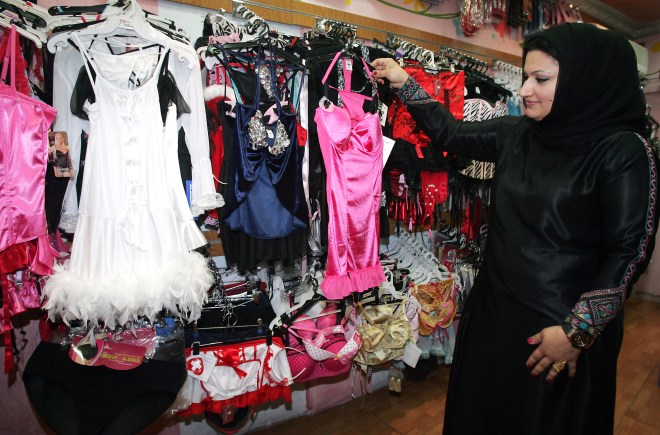
TO GO WITH Lifestyle-Gulf-Bahrain-social

(Photo by Adam Jan/AFP/Getty Images)

Thursday on the Dish, Andrew traveled the long road from persecution to equality, highlighted key DOMA moments, and hammered the Clintons for their opportunism on marriage equality. Elsewhere, he was encouraged by the Atlantic’s movement on sponsored content.

In politics, history repeated itself with concerns about children in unconventional marriages, Tom Goldstein balanced DOMA and Prop 8, and EJ Graff prepared for the marriage equality fight to continue beyond the DOMA ruling. Maggie Gallagher waited for divine judgment as the anti-equality movement continued to fade. The Greater Israel Lobby kept the West Bank under Israeli control, marijuana reform marched on, and the War on Terror aggravated the recession while torture thwarted justice.

In miscellaneous coverage, Frum traced the origins of America’s gun culture, a reader plugged domestic uses for drones, and a dongle divided the tech community. Ronald Bailey looked ahead to smaller farms, Reuven Brenner cashed in on early graduation, and Jake Blumgart cheered on his alma mater with sweatshop-free apparel. Marriage created the commitment that strengthened relationships, a reader shared his pre-nup horror story, and we crunched the numbers on rape in the gay community.

Elsewhere, The Americans impressed, Ferris Jabr toned with the help of tunes, and readers mouthed off on our monthly subscriptions. Buzz Bissinger splurged on Gucci, Mark Dery considered the American love of the British Monarchy, and anti-Semitism lingered in Britain. Jon Hamm’s privates begged for privacy, the Economist  unveiled modern attitudes toward sex in the Arab world, and TNC felt more afraid in Paris than on the streets of Baltimore. We traded german shepherds for St. Bernards in the MHB, attended a retro lesbian wedding in the FOTD, and watched a backyard blizzard in the VFYW.

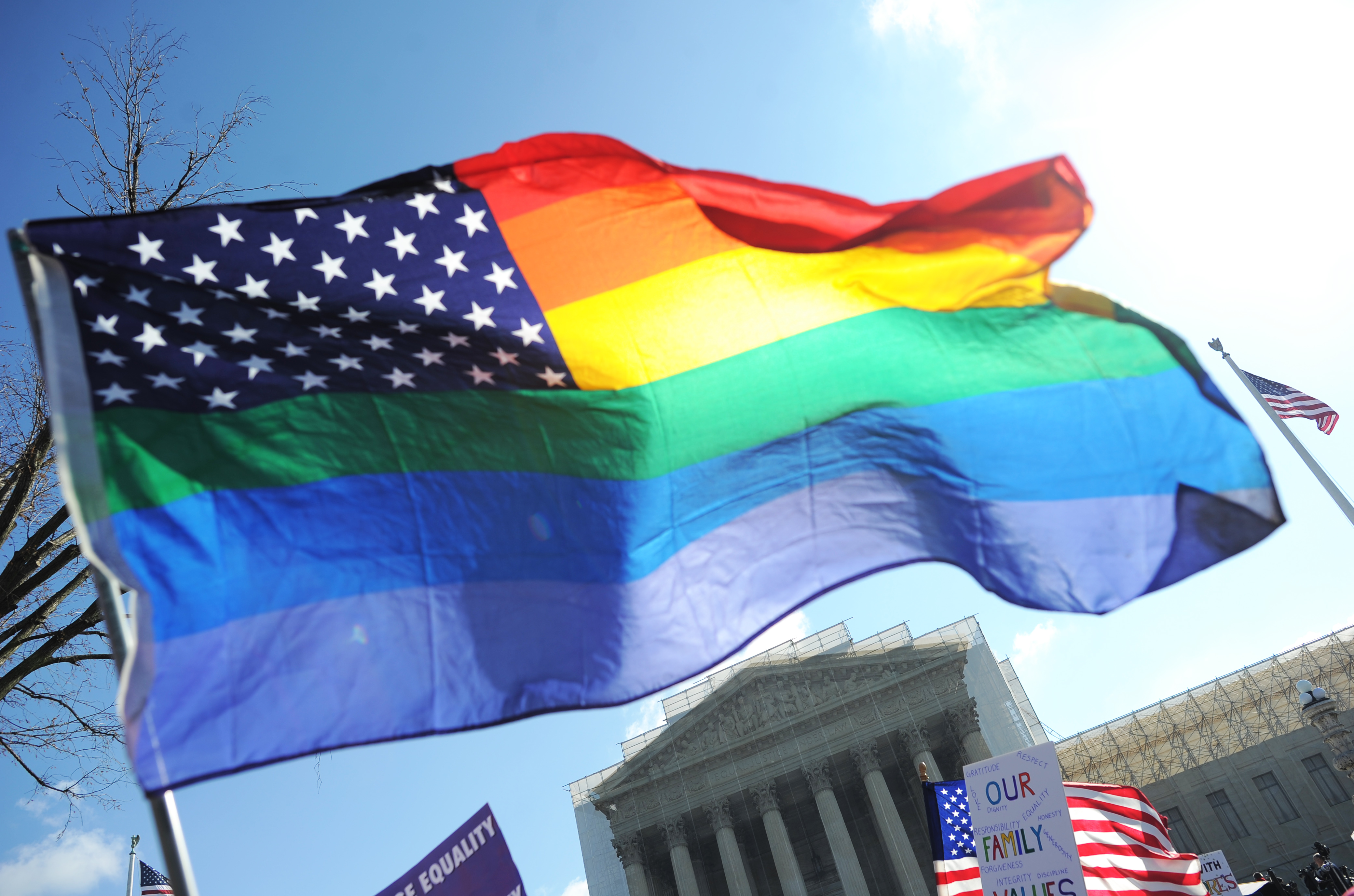
US-JUSTICE-GAY-MARRIAGE

(By Jewel Samad/AFP/Getty Images)

Wednesday on the Dish, Andrew dove into the arguments in today’s DOMA hearingencouraged anti-equality advocates to lead by example rather than oppressing others, and applauded the influence of the younger generation on their parents. Elsewhere, he prophesied a dismal future in journalism and refused to look away from the ongoing violence in Syria, which has now spilled over into Lebanon.

In Supreme Court coverage, Jon Rauch searched for a graceful out for the justices on Prop 8, while Dale Carpenter predicted an inconclusive ruling and we peeked into the courtroom as readers looked for a comprehensive ruling. NOM blew a tone-deaf dog-whistle, Nate Cohn lowered his expectations for the South’s support of marriage equality, and a trickle of equality endorsements turned into a flood, while we wondered who would be next. SCOTUSBlog gave us the odds on DOMA, Kennedy got right to the key point, and Ari Ezra Waldman explained why the “standing” issue applies for DOMA. While Ezra Klein found plenty of children who could benefit from a stable household, Edie Windsor overcame discrimination, with or without the government’s approval, and provided us with an enthusiastic FOTD.

In assorted news, Tony Dodge argued that the Iraqi Civil War was avoidable, readers waded into the debate over graphic war imagery as we explored blood-phobia, and technology made medical cost projections impossible to trust. Gary Becker tied immigration to the birth rate below the border, the recession forced families to call hotels home, Silicon Valley struggled with sexism, and readers disputed the comparison of Weez’s hacking and entering an unlocked house.

Meanwhile, an edibles maker chimed in on mellow highs, John Jeremiah Sullivan revealed our ignorance of animal consciousness, and two British papers joined the ranks of the metered. Channing Tatum gave George Clooney the thumbs up, TV watchers exercised their control, and Game of Thrones gave us a fantastic history lesson. We traveled to the Great White North in the VFYW, bopped with a big baby in the MHB, and VFYW contestants homed in on Hastings-on-Hudson.

US-JUSTICE-GAY-MARRIAGE

(Photo: Jewel Samad/AFP/Getty.)

Tuesday on the Dish, Andrew examined the differences between his appearance on Charlie Rose and the WSJ’s editorial, hoped that the benefits of marriage would soon be equal opportunity, parsed the arguments, and celebrated the early signs of a moderate outcome. Elsewhere, Douthat described a world without the Iraq war and Boris took a beating from the British press.

As the Supreme Court heard arguments in Perry v. Brown, past SCOTUS decisions bucked popular opinion, Cass Sunstein explained the benefits of a narrow ruling, and Greenwald heralded the defeat of defeatism. Josh Barro made the fiscal case for marriage equality as Frum completed his turnaround, McArdle connected marriage equality and “traditional morality,” and Allahpundit looked ahead to marriage equality’s role in the 2016 primaries. Nate Silver found hope in marriage equality’s steady polling advances, as Republicans divided along demographic lines and Christie picked the wrong side of a Jersey wedge issue. We took Twitter’s temperature on the hearing, compared Perry to Roe as readers chimed in, and applauded straight allies. Scalia and Olson exchanged questions, we reviewed “standing,” Lyle Denniston played out the possibilities in a deadlock, and Dale Carpenter read the tea leaves, as even the lawyers had trouble making predictions. After all this time, MLK Jr.’s and Hannah Arendt’s words continued to ring true, and the struggle for marriage equality was nothing new.

In assorted news and views, a reader pointed out Weez’s wrongdoing, Freddie deBoer poo-pooed the Pebble watch, smartphones proved a popular target for thieves, and robots took over the valet stand. Carl Zimmer defended “basic research,” money mattered in March Madness, and we envied the “sleepless elite” while distracting ourselves to get rid of earworms.

Meanwhile, we pondered prenuptial agreements, Elizabeth Samet questioned the belief that soldiers make the best politicians, Brits narced on their neighbors, and TNC dove into the deep end to learn french. A butterfly perched precariously in the FOTD, we stopped by Senegal in the VFYW, and peeked in on panda playtime in the MHB.

US-POLITICS-OBAMA

By Brendan Smialowski/AFP/Getty Images

Monday on the Dish, Andrew teamed up with a liberal lawyer to promote marriage equality, applauded the truth evident in Will Portman’s coming out, and called attention to the lack of data showing any harm to children of same-sex couples. Meanwhile, he cheered Rand Paul’s sanity on pot, drew parallels between conservativism and taoism, regretted the US’ choice to embrace torture in order to depose a torturer, and explained the new monthly subscription option on the Dish.

In political coverage, Obama worked his magic in Israel and struggled to reclaim his earlier levels of popularity. Ben Merriman considered conservativism in Kansas, the justice department jailed another hacker, and Julia Ioffe investigated Russia’s role in the Cyprus banking scandal. On the eve of the Prop 8 hearings, Tim Murphy set the deadline for marriage equality evolutions.

In assorted coverage, we added more details on name-changing customs at home and abroad, educational attainment was inherited, clinics offered à la carte pricing, and Rob Rhinehart gave up solids. Christian Caryl brought war imagery to the fore and Hitler convinced with his conviction. While goats thrived on global warming, Eduardo Porter worried about natural gas leakage, Tom Chatfield tried out a better keyboard, and David Zax reached the limits of his innovation.

As Passover began, Maxwell House monopolized the Haggadah, while elsewhere a reader sought a softer high, and Matt Soniak explained why toothpaste ruins orange juice. George Eliot couldn’t fool Charles Dickens, Lord Byron gave rise to vampires without writing a word, and Piers Anthony coped with his unhappy childhood. German shepherds frolicked in the MHB, and winter stuck around past its expiration date in the VFYW and the FOTD.
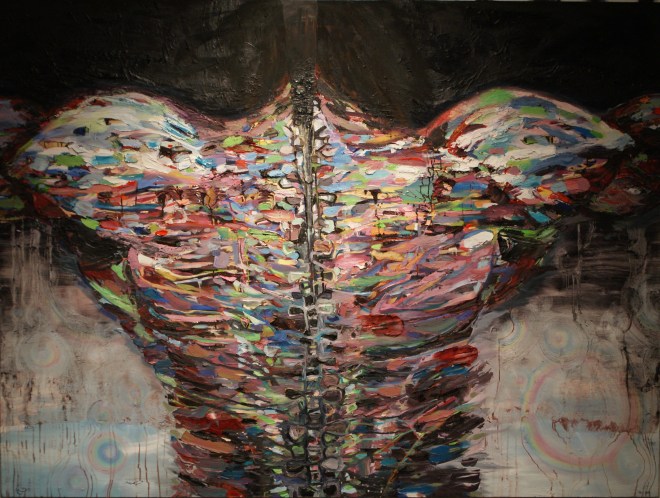
SONY DSC

(“The Deposition” by Dominique Ovalle)

Last weekend on the Dish, we provided an eclectic mix of religious, books, and cultural coverage. In matters of faith, doubt, and philosophy, Thomas Merton taught us how to pray, Reinhold Niebuhr found the essence of Christianity, and Jody Bottum pondered the ways Pope Francis eludes contemporary political categories. Dominique Ovalle urged us to believe in the beautiful, Marc Hopkins investigated the ways jazz music can contribute to Christian worship, Valerie Weaver-Zercher sized up the market for Amish romance novels, and Richard L. Rubenstein remembered a guru’s advice about outgrowing religion. Andrew Ferguson argued that philosophical materialism can’t be lived, Emma Woolerton revealed why Lucretius presented his philosophy in the form of poetry, Kurt Gray explained why playing the victim is the best way for a guilty person to escape blame, and Caitlin Doughty noted the benefits of confronting one’s own death.

In literary and arts coverage, T.R. Hummer mused on a possible recording of Walt Whitman, Darryl Pinckney recalled an embarrassing  encounter with James Baldwin, and Tom Jokinen asked if a certain amount of infatuation led to writing good biography. Brad Leithhauser contemplated various authors’ versions of Hell, Colin Dickey surveyed the literary career of opium addict Thomas De Quincey, David McConnell discussed his book about six notorious killings committed by straight men against gays, and Grady Hendrix fondly looked back at MAD magazine’s film satires. David Mamet ruminated on the role of the dramatist, the herbalist Olivia Laing considered the symbolism of Shakespeare’s plants, Greg Bottoms penned an open letter to photographer William Eggleston, and Tom Bissell thought about the literary potential of the video games. Read Saturday’s poem here and Sunday’s here.

In assorted news and views, Lizzie Plaugic unpacked a report on marriage among the millenials, a couple survived long-distance dating with the help of technology and the photogenic dog they shared, Eric Jett lamented missing the golden age of the booty call, and Garance Franke-Ruta offered a theory about why women have difficulty climbing the corporate ladder. Peter Foges told us all about rose champagne, Martha Harbison wondered if some beer drinkers could be addicted to hops, and Katie Arnoldi described how cartels have seized control of the human trafficking business. MHBs here and here, FOTDs here and here, VFYWs here and here, and the latest window contest here.

– M.S. & D.A.

Toe-Tapping Among The Goose Steps

James Hughes rediscovers Michael Zwerin’s Swing Under the Nazis: Jazz as a Metaphor for Freedoma book that Stanley Kubrick considered adapting to film:

In the skies over London, we learn that a Luftwaffe ace tuned into the BBC while crossing the Channel, hoping to catch a few bars of Glenn Miller before bombing the radio antenna. On the ground, when the Royal Air Force rained bombs on Vienna, a trombonist in a Nazi swing band “would stick his trombone out the window and play ‘St. Louis Blues‘ instead of hiding in the cellar.” (In order for that particular jazz standard to pass muster in Vienna, the title was first changed to “Sauerkraut.”) …

[But not] all accounts are as lighthearted. Zwerin mourns the Jewish musicians who clung to life by entertaining guards in concentration camps, and those on the run, like Eric Vogel, a Czech jazz trumpeter who soaked his valves in sulfuric acid when Nazis invaders began confiscating instruments. The acid served “to keep anyone from playing military marches on a jazz trumpet.”