Dish Awards: The Year’s Biggest Poseur?

A Poseur Alert is awarded for passages of prose that stand out for pretension, vanity and really bad writing designed to look like profundity. Thus far, this year’s top vote-getter is from Susan Elizabeth Shepard and Charlotte Shane on one of the age-old sex positions:

69 confronts us with an unfortunate truth: it is a distinctly capitalistic, efficiency-emphasizing endeavor that erases the unique personhood of each participant by relying on a crude approximation of how human bodies fit together if human bodies are conceived of as identical, two-dimensional figures like the numbers of its name. … The position also echoes the service economy in its demand (mainly on women) of a convincing performance of pleasure. It’s not enough to simply be present and to competently do the job that’s asked of you by your lover, you must also appear to simultaneously enjoy said lover’s ministrations, regardless of the delicate balancing requiring to keep from suffocating him or breaking his nose. This is a form of emotional labor like that demanded from baristas, servers, and sex workers; not only do you have to do a good job, you have to like it.

The current runner up was written by Mark Bauerlein about tattoos:

As a friend put it to me: A tattoo isn’t the Word made flesh, but the flesh made word. It may strike old-fashioned types as pedestrian narcissism and adolescent conformity, and sometimes it surely is. But in a deeper and more troubling way, it is canny and subversive artifice, spiced with a moralistic claim to personal liberation. A tattoo is a personal statement but also an anthropological position that accords with the prevailing transvaluations of our time. It’s a wholly successful one, too, judging from the entertainment and sports worlds, and youth culture. With the mainstreaming of tattoos, another factor in the natural order falls away, yet one more inversion of nature and culture, natural law and human desire. That’s not an outcome the rationalizer’s regret. It’s precisely the point.

Vote for one of the above, or any of the other three finalists, here. After that, cast your votes for the 2014 Malkin Award, Hathos Alert, Yglesias Award, Cool AdFace Of The Year, and the year’s best Chart, Mental Health Break and View From Your Window. This is also the first time you can help choose the Map Of The Year and Beard Of The Year as well! Polls will close on New Year’s Eve, so be sure to register your choices before then:

Please note: due to there not being enough nominees this year, we will not be issuing a 2014 Hewitt Award, Moore Award, or Dick Morris Award. You can learn more about those and all our awards here.


A Poem From The Year

9722024610_f768258614_k

“Hunger for Something” by Chase Twichell:

Sometimes I long to be the woodpile,
cut-apart trees soon to be smoke,
or even the smoke itself,

sinewy ghost of ash and air, going
wherever I want to, at least for a while.

Neither inside nor out,
neither lost nor home, no longer
a shape or a name, I’d pass through

all the broken windows of the world.
It’s not a wish for consciousness to end.

It’s not the appetite an army has
for its own emptying heart,
but a hunger to stand now and then

alone on the death-grounds,
where the dogs of the self are feeding.

Please consider supporting the work of The Poetry Society of America here.

(From Horses Where the Answers Should Have Been © 1998, 2010 by Chase Twichell. Used by permission of Copper Canyon Press. Photo by Nick Harris)

When The Self Is Lost

Gracie Lofthouse investigates depersonalization disorder, which is “characterized by a pervasive and disturbing sense of unreality in both the experience of self (called ‘depersonalization’) and one’s surroundings (known as ‘derealization’)”:

Dr. Elena Bezzubova, a Russian psychoanalyst who treats people with depersonalization in California, calls it a painful absence of feeling. “A mother comes to me and says, ‘My son is in prison, I received a letter from him. I do not care, but it bothers me. Please prescribe me something to cry.’”

It might be the implications of the numbing, as opposed to the actual numbing itself, that cause the most distress. Have you ever played that game when you repeat a word over and over again until it loses all meaning? It’s called semantic satiation. Like words, can a sense of self be broken down into arbitrary, socially-constructed components?

That question may be why the phenomenon has attracted a lot of interest from philosophers.

In a sense, the experience presupposes certain notions of how the self is meant to feel. We think of a self as an essential thing—a soul or an ego that everyone has and is aware of—but scientists and philosophers have been telling us for a while now that the self isn’t quite as it seems. Psychologist Dr. Bruce Hood writes in The Self Illusion that there is no center in the brain where the self is generated. “What we experience is a powerful depiction generated by our brains for our benefit,” he writes. Brains make sense of data that would otherwise be overwhelming. “Experiences are fragmented episodes unless they are woven together in a meaningful narrative,” he writes, with the self being the story that “pulls it all together.” InThe Ego Trick, Julian Baggini writes that people are, as the 18th century philosopher David Hume wrote in A Treatise of Human Nature, “bundles of different perceptions.” “The unity [of self that] we experience, which allows us legitimately to talk of ‘I,’ is a result of the Ego Trick—the remarkable way in which a complicated bundle of mental events, made possible by the brain, creates a singular self, without there being a singular thing underlying it,” Baggini writes.

Lovecraft Never Dies

Charles Baxter explores the persistent appeal – as well as persistent racism and misogyny – of H.P. Lovecraft. He considers how his fiction represents faith, writing that “what accompanies Lovecraft’s depictions of living death is a fundamental conviction that there is something wrong with the whole idea of resurrection, mostly because there is something wrong with life itself. The greatest hope of Christianity is, in these stories, a terrible outcome fervently to be avoided”:

His three best stories, “The Colour Out of Space,” “At the Mountains of Madness,” and “The Dunwich Horror,” can all be read as inversions of Christian themes, as Houellebecq first noted. “The Colour Out of Space” contains a travesty of the Pentecost, “The Dunwich Horror” a travesty of the Incarnation, and “At the Mountains of Madness” a travesty of resurrection, which also appears elsewhere in graveyard-kitsch form in “Herbert West: Reanimator.” Whenever anybody or anything is brought back to life in a Lovecraft story, the resurrection is always botched, and the return to life is catastrophic. Since life itself is a form of sleepwalking anyway, the descent of the “foul” Pentecostal flame in “The Colour Out of Space” can only bring more destruction and misery, the God of these stories being a malicious trickster.

As for the afterlife, or the life to come, the unlucky resurrected ones dwell in various subbasements and oubliettes where they give off “a deep, low moaning” that is “hideous with the pent-up viciousness of desolate eternities.”

In Lovecraft, all the eternities are desolate. When not made out of spare parts and jolted to life by electrical means, the resurrected are hidden away, “leaping clumsily and frantically up and down at the bottom of [a] narrow shaft.” This is not just the depiction of horror but of genuine suffering, the suffering of those perpetually imprisoned and unable to die.

Haunted by the failure of death that can result in zombiism, the stories repeatedly quote “the mad Arab Abdul Alhazred”: “That is not dead which can eternal lie,/And with strange aeons even death may die,” an utterance not of hope but of inconsolable despair. Like “The Rime of the Ancient Mariner,” the stories are haunted by death-in-life and by the prospect of a life after this one that may be even worse than the one you have now.

Face Of The Day

dish_fotdsat27

Philip Kirkman and Shannon McLaughlin, an engaged couple, created a calendar of NYC taxi driver pinups for 2015:

Back for year two, we hit the streets of New York to photograph some of the city’s best-humored taxi drivers. These drivers put a face to one of the most dedicated workforces in NYC, driving day and night to transport New Yorkers and our guests alike.

This year’s calendar features three returning All-Stars and 10 new drivers, and debuts our first ever husband and wife driving duo. The drivers are shown in a playful mix of work and leisure, including a playdate with nine adorable puppies from Animal Haven shelter in Manhattan and some sensuous cookie consumption at New York’s favorite bakery, Levain.

See more pictures from the series, as well as calendars available for purchase, here.


Muses Speak Out

Chloe Schama explains what it felt like to find herself in her ex’s novel:

I stayed up late that night and finished the manuscript, reading with a strange sense of honor. Isn’t it every woman’s fantasy, to some extent, to be someone’s muse — to feel as though her beauty, intelligence, and grace are so extraordinary that they inspire not just devotion but art? I’d never admit to desiring celebrity, but that doesn’t mean that I’d turn down the chance to be immortalized — or at least captured for a moment — by someone else. At art museums, I’ve always played a game: Matisse or Picasso, Manet or Degas, Rembrandt or Rubens — whom would I prefer to sit for?

But there was horror mixed with the honor. I’d never asked myself: Bellow or Roth, Hemingway or Fitzgerald, Tolstoy or Dostoyevsky? It seemed too terrifying to be made three-dimensional — to be faced with someone else’s portrait of your psyche. If the depiction seems to miss the mark, but includes just enough to make you recognizable, then you’d have to wage an endless personal PR campaign with anyone who came in contact with the text: No, reader, you don’t know me. But if the novel contained some shades of truth — perhaps the attributes you don’t share widely (aren’t they always the most compelling?) — then you face an even scarier prospect: Yes, reader, you know parts of me before we’ve ever met.

On a related note, Karley Sciortino considers why, aside from the allure of being a muse, many of us romanticize the idea of dating artists:

Last winter, Bret Easton Ellis had Kanye West as a guest on his podcast, and part of their conversation centered around the reality of being someone who creates things. Kanye mentioned that he felt particularly self-aware of the artist’s tendency to oscillate between periods of inflated ego and periods of self-loathing. It’s an intense life — there’s the pain of creation, padded by periods of downtime where one feels compelled to escape reality. And stereotypically, sex and drugs have been sedatives for that intensity. But that oscillation can make for a charged romantic relationship. One minute the artist appears so amazing and confident that you can’t help but open your legs, and the next minute they suddenly plummet and become vulnerable and insecure, and need you to open your arms to comfort them. In my experience, despite the fact that artists think they want to be with someone smart and critical, who challenges them — deep down most really just want to be babied. And this is why the artist is appealing not only to those seduced by rebellion and celebrity. It’s also attractive to the nurturing type. Some people love a fixer-upper.

The View From Your Window Contest

VFYW-C-237

You have until noon on Tuesday, January 6, to guess it. City and/or state first, then country. Please put the location in the subject heading, along with any description within the email. If no one guesses the exact location, proximity counts.  Be sure to email entries to contest@andrewsullivan.com. Winner gets a free The View From Your Window book, a new Dish mug,  or two free gift subscriptions to the Dish. Have at it.

Last week’s contest results are here. Browse a gallery of all our previous contests here.

Living With Half A Brain

Tom Stafford considers what a woman who was born without a cerebellum — and lived a largely typical life — reveals about neuroscience:

This case points to a sad fact about brain science. We don’t often shout about it, but there are large gaps in even our basic understanding of the brain. We can’t agree on the function of even some of the most important brain regions, such as the cerebellum. Rare cases such as this show up that ignorance. Every so often someone walks into a hospital and their brain scan reveals the startling differences we can have inside our heads. Startling differences which may have only small observable effects on our behaviour.

Part of the problem may be our way of thinking. It is natural to see the brain as a piece of naturally selected technology, and in human technology there is often a one-to-one mapping between structure and function. If I have a toaster, the heat is provided by the heating element, the time is controlled by the timer and the popping up is driven by a spring. The case of the missing cerebellum reveals there is no such simple scheme for the brain. Although we love to talk about the brain region for vision, for hunger or for love, there are no such brain regions, because the brain isn’t technology where any function is governed by just one part.

What Freud Got Right

The New Republic recently retrieved from their archives a classic essay by W.H. Auden on Freud’s enduring insights. Auden, writing in 1952, claimed that even if his specific theories were disproven, Freud “would still tower up as the genius who perceived that psychological events are not natural events but historical and that, therefore, psychology as distinct from neurology, must be based on the pre-suppositions and methodology, not of the biologist but of the historian.”

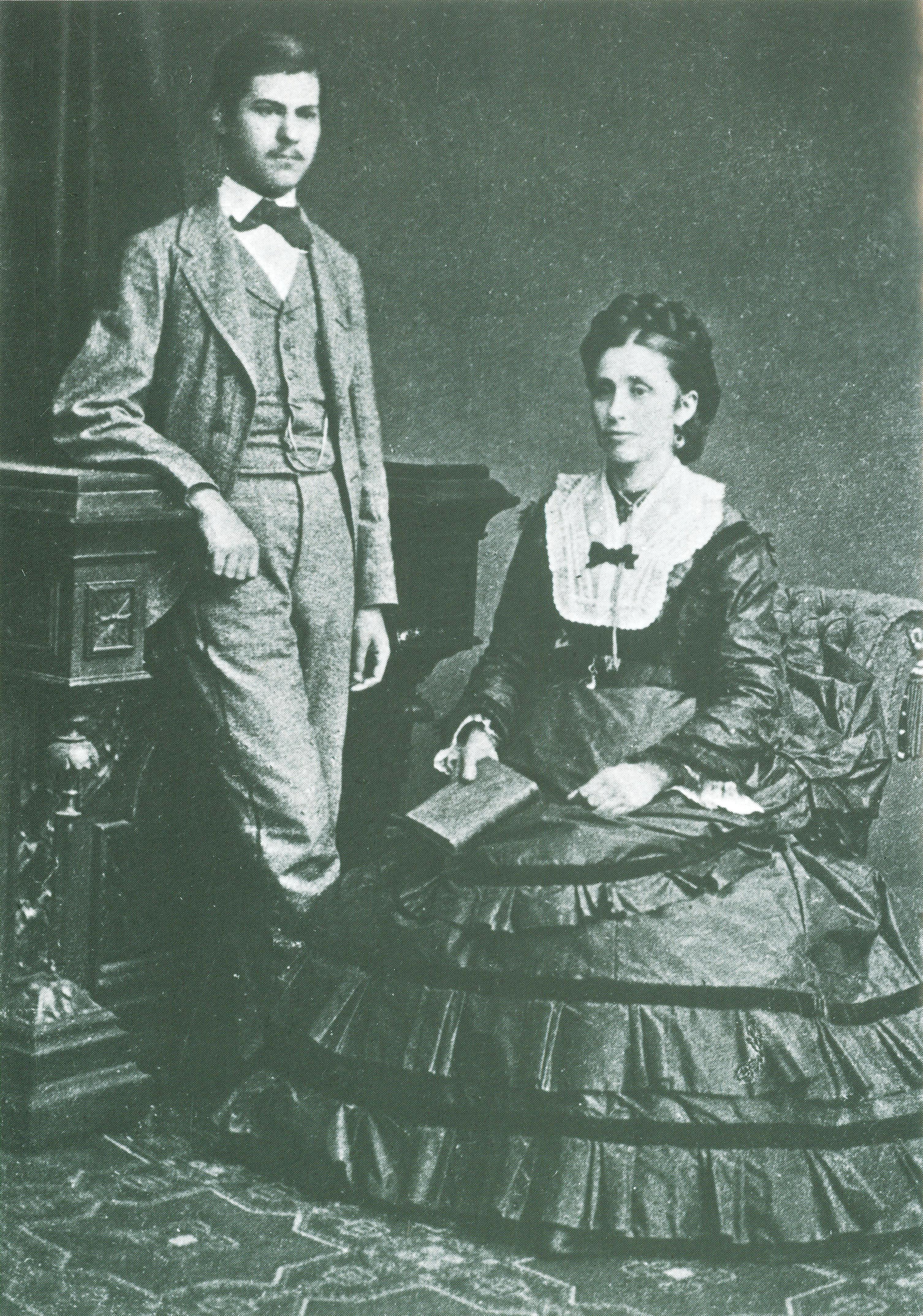
AmaliaFreud (1)As a child of his age who was consciously in a polemic with the “idealists” he may officially subscribe to the “realist” dogma that human nature and animal nature are the same, but the moment he gets down to work, every thing he says denies it. In his theories of infantile sexuality, repression, etc., he pushes back the beginnings of free-will and responsibility earlier than even most theologians had previously dared; his therapeutic technique of making the patient relive his past and discover the truth for himself with a minimum of prompting and interference from the analyst (meanwhile, one might add, doing penance by paying till it hurts), the importance of Transference to the outcome of the therapy, imply that every patient is a unique historical person and not a typical case.

Freud is not always aware of what he is doing and some of the difficulties he gets into arise from his trying to retain biological notions of development when he is actually thinking historically.

For example, he sometimes talks as if civilization were a morbid growth caused by sexual inhibition; at other times he attacks conventional morality on the grounds that the conformists exhaust in repression the energies which should be available for cultural tasks: similarly, he sometimes speaks of dream symbolism as if it were pure allegory, whereas the actual descriptions he gives of the dreaming mind at work demonstrate that, in addition to its need to disguise truth, it has an even greater need to create truth, to make historical sense of its experience by discovering analogies, an activity in which it shows the most extraordinary skill and humor. In a biological organism, everything was once something else which it now no longer is, and change is cyclical, soma-germasoma; a normal condition is one that regularly reoccurs in the cycle, a morbid one is an exception. But history is the realm of unique and novel events and of monumentsthe historical past is present in the present and the norm of health or pathology cannot be based on regularity.

(Photo of Freud in 1872 at age 16, with his mother Amalia, via Wikimedia Commons)