Evan Soltas points out that Americans are retiring later and later in life:
The Gallup Organization, a polling firm, asks working Americans when they expect to retire. In 1996, the average answer was 60; in 2012, it was 67.
Why is it happening? For two reasons. First, some Americans work longer because they want to. This applies especially to those who’ve made higher-than-average earnings during their working lives or have white-collar jobs. Their health allows it — their life expectancy has increased significantly.
But some are retiring later because they have no choice. The wage stagnation of the past decade and loss of savings (including housing equity) during the recession are forcing them to delay retirement.
Rebecca J. Rosen encourages men to angle their support for professional women in line with Lean In:
For too long, achieving equality has been seen as women’s burden. People (myself included) were disappointed by Marissa Mayer’s shirking of the feminist label, but few ever ask America’s male CEOs whether they consider themselves feminists. A recent “pop-up book club” from The Guardian asked “women of the internet, [to] gather around” to re-read Betty Friedan’s classic The Feminine Mystique. Again and again, we leave men out of the conversation about gender equality — a conversation whose success depends on their participation. …
[Sheryl Sandberg’s] book is laced with examples of men who have made a conscious effort to make their workplaces more equal, such as the case of a Goldman Sachs executive who instituted a universal “breakfast or lunch only policy” so that he could meet equally with male and female junior staff with no hint of impropriety stemming from a late-night dinner with a young woman. There’s also a Johns Hopkins medical school professor who, after watching Sandberg’s viral TED talk, got rid of hand-raising (women are less likely to keep their hands up) and just called on people randomly.
A reader sounds off at length:
Why is this a “women’s issue”? Where are the men in all this?
I agree wholeheartedly that many women make choices that opt them out, slow them down, limit their career paths. I’m also in the class of women Sandberg is speaking to (in terms of my social relationships and background – I went to an Ivy League college, have a graduate degree, am economically well-off, and most of my friends are similar). At age 39, I am shocked by how many of my women friends (almost all of whom are married with children) have opted out or slow tracked themselves. The very, very few who haven’t tend to be strong individualists, have a strong sense of personal identity and ambition, and are good at creating their own paths without model or example. They just get shit done and aren’t very concerned about what other say they can or can’t do or are or aren’t supposed to do.
(Some more context on me: I’m single, childless, own a marketing agency in New York – started partly because I changed careers in my early 30s and saw that I’d either have to fight past all kinds of tired ideas of about age, career path change, etc., or just do it my own terms. And part of my reason for changing careers was about really understanding that I needed to be able to provide for myself and look for a career path that would let me have the income and flexibility to have a kid on my own.)
It’s true just getting started on this makes me realize I have plenty to say about the choices women make, but when I take a step back, I always come back to, what does this have to do with the “choices” of women? It has just as much – if not more to do – with the conventions of and expectations for men. Culturally, men are on the other side of this “choice” dichotomy. To use Sandberg’s language, if the convention for women is to “lean out”, then the convention for men is to “lean in”, and that has just as many – and really more – unaddressed consequences.
But where are the regular books and articles about that, particularly from male leaders? Where are the conversations about men growing some balls and fighting for their rights to “lean out”? Where are the men stepping up and fighting for their work/life balance? Why are all these men letting women fight their battles? All of the husbands of those above-mentioned women and friends (working in mainly in finance, media, tech) want more time with their families, feel stressed and overworked, hate feeling like they don’t have time with their families. Well, why they fuck aren’t they stepping up and fighting all these battles about choice, balance, etc.? Why is this a “women’s fight”?
The reality is all of this should be about personal choice, motivation levels, letting men and women decide within their relationships what their best working arrangements are – not letting those be driven by conventions of society (men are paid more, women sometimes get paid maternity leave, etc.) Sandberg talks about Google deciding more maternity leave was better than having women opt out and having to hire new employees. Men don’t even have this choice. Imagine, for example, if men and women were given the same leaves? How would that change the entire dynamic of opt-in/opt-out, lean-in/lean-out career choices, of family dynamics and relationships, for the lifetime of working and having children?
All of which is to say: the reason all of this is so tired is because it still comes back to the same thing: Women are fighting, struggling, working for change, for something that’s better for them, for their families, for children, while men complacently sit by and sort of just wait and see how it falls out. And, really, any men worth anything knows that working in companies where there’s gender balance across levels and roles is WAY more rewarding, so there are plenty of reasons for them to care about all of this. (I’ll reference that story on how Etsy’s work to attract female engineers actually helped them get better and more male applicants as evidence that men know working with women is good thing.)
Long email – sorry – but the feminizing of this conversation drives me insane. It’s just the same crap with a fresh coat of paint.
Previous Dish on the debate sparked by Sandberg’s book here, here and here.
Friday on the Dish, Andrew cheered Portman’s reversal on marriage equality as change accelerated, assessed the accuracy of House of Cards, and was wowed by Francis’ humility, which reflected the best of Catholicism. In political coverage, Portman blurred the line between the personal and the political on marriage equality, which put opponents in a tough spot. We criticized America for failing to adequately care for the troops as sequestration put defense spending on the chopping block. Hillary sprinted to an early lead in the 2016 polling, Nate Cohn shrugged at Obama’s ratings slip, CPAC’s diversity disappointed, and a tortured priest reconciled with the Pope.
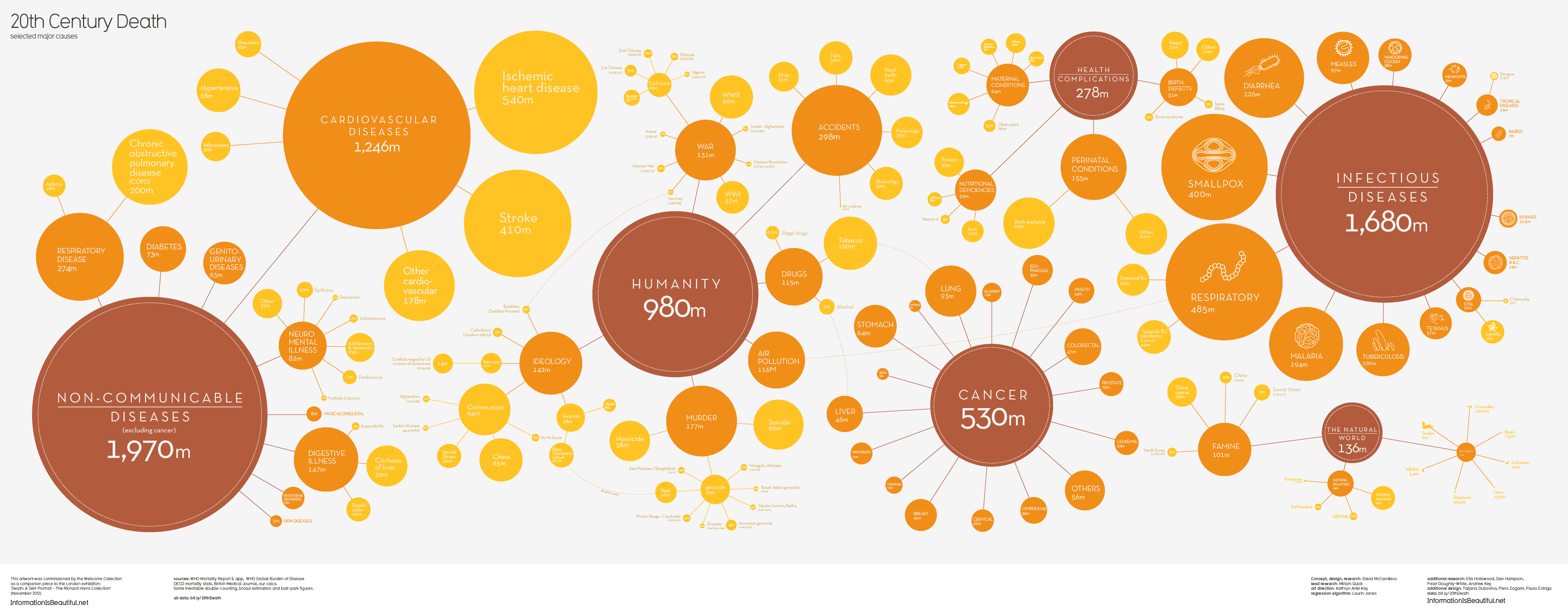
In assorted news and views, readers jumped in to defend Amazon, clarified the details of the Veronica Mars Kickstarter campaign, and enlightened us on solar energy. As the slow decline of RSS continued, we wondered what Google product would jettison next, and Zachary Seward considered the effect on dissidents in Iran and China. Science shattered our hopes for a real-life Jurassic Park, psuedoscientific paleo diets still worked to shed pounds, Dr. Leslie Kernisan prescribed downloads, and we charted 20th century causes of death.
Meanwhile, Drezner explained international politics through Girls, Evan Soltas worked out the reasons people are working later in life and Americans multitasked on the road. Newspapers found their calling, Tom Vanderbilt picked apart the legend of the perfect lock, and even the CIA couldn’t train cats. Gotye got the Gollum treatment in the MHB while the US banned frequent contributor Pogo, we checked in on CPAC in the FOTD, and jumped across the pond in the VFYW.
In politics, Obama’s approval returned to pre-election levels, Noam Scheiber tired of Paul Ryan’s games, and Boehner risked Hannity’s wrath over Obamacare. Blackwater extended the CIA’s reach beyond the rule of law, IEDs migrated into Syria, Tik Root mourned teens executed in Yemen, and Ambers found drones to be the best of our bad options. On Pope Francis’ first full day, we corrected the record and struggled for clarity regarding his ties to the Junta, and hoped that his background would make a good recession Pope. While Garry Wills revealed that he might bring the clergy down to earth, readers threw in their views and the Daily Mail quarreled with his stance on the Falklands.
Elsewhere around the web, World’s Best Dad reprogrammed a Princess to be the Heroine, Google relegated Reader to the dustbin, new technologies paved the way for more solar power, and Bas Van Abel designed a conflict-free phone. The Onion spoiled the next episode of Girls and Kickstart got a producer credit in the Veronica Mars movie, but that may not have been a good thing. The Atlantic spouted management-speak, Christian Caryl shone a light on the worst parts of the Malaysian sponsored content scandal, and the library went underground.
Lydia DePillis worried about the future of NOLA’s 9th district, Dana Becker encouraged readers to release their stress, and Rhys Southan chose suffering over eternal sleep. Yglesias advised low-income students to aim high in their college applications, readers added another layer to the debate on racism and made the case against civil polygamy. The Pet Shop Boys gave us more than we deserve while Dr. Andy Hildebrand defended auto-tune. A Guatemalan peak filled the VFYW, Pogo remixed Kenya in the MHB, and a mustache froze in the FOTD.
By L’Osservatore Romano/Getty Images
Wednesday on the Dish, Andrew greeted the new Pope in real time, and looked forward to seeing his marriage equality learning curve. At home, he flunked Paul Ryan’s budget, called out Republicans for taking obstructionism too far, and knew hope for marijuana legalization as a result of the progress on marriage equality, which continued its advancement down under. Elsewhere, he drew parallels between anti-semitism and homophobia and protested comparisons to Stalin or Hitler.
In politics, we wearied of Paul Ryan’s schtick as Derek Thompson broke down his budget, Kevin McCarthy took points off for Obama’s professorial attitude, and Rand Paul hearkened back to the “big tent” days of the GOP. Max Fisher noted ambiguity in the UN report on a murdered Gaza child, the Falklands opted to stay British. As the Conclave ended, Philip Ball cleared up the Vatican’s smoke coloring as we pulled back the curtain on the seconds before the announcement and rounded up Twitter’s reactions. Meanwhile, Garry Wills looked forward to a Pope who was “ordinary and ignorable” and Massimo Gatto deconstructed the Pope Emeritus’ ruby slippers.
In assorted coverage, Anna Clarke uncovered USPS-enabled discrimination, Robin Hanson lost sleep over couples’ bed arrangements, and Rebecca Willis blacklisted Manet from being an Impressionist. Judy Stone disputed the rationale behind employer drug tests and the drug war slowed, while Ben Goldacre pulled back the curtain on publication bias in pharmaceutical studies. Dr. Suess sucked on the silver screen, Margaret Talbot found practical advice for the trans population on YouTube, and video sites tested out some new revenue models.
We deliberated over juror questions, readers fleshed out the debate on the origins of racism, the UFC fought homophobia, and the internet revealed its charitable side. SubPop held auditions to complete the Postal Service, the VFYW looked down on Hong Kong and we listened in on the Pope’s first address in the FOTD.
Tuesday on the Dish, Andrew pushed neocons to the fringes of the Republican party, expressed his ambivalence about the Rand-Rush alliance, grimaced at Beltway clubbiness, As the Conclave began, he held on to hope for the future of the Papacy despite the lack of diversity among the Curia and chuckled at news of the Vatican’s bathhouse. Meanwhile, he responded to more reader comments on the Iraq War and unpacked another fallacy in his own support.
In the political realm, the courts iced Bloomberg’s soda ban, we negotiated NIMBY-ism for nuclear waste, and a small minority actually watched partisan cable news. Overseas, North Korea rattled the saber, as the Chinese rushed to censor Weibo and subsidized the arts.
Elsewhere on the web, a reader ran down the arguments against our using Amazon’s Affiliate program, Bruce Bartlett explained why the gains at the top haven’t been trickling down, and companies hired robot surrogates. Palin took up arms for Christmas, SXSW jumped the shark, sanitation workers kept us healthy, and we dissected the history of heart surgery procedures. Patrick Kurp grew nostalgic with age, Ian Stansel distinguished between suburbia and the suburbs, and leisure activities went longform. The fan fiction audience held no surprises, author “Acknowledgments” were either displays of gratitude or gratuitousness, and Bob Woodward penned a tone-deaf biography of John Belushi.
Autumn Whitefield-Madrano took pride in her self-care, we were traumatized by Q-tips on Girls, and the EU sought gender equality through banning porn. As an adult film actress prepped for filming in the FOTD, we featured a Sacramento Stonehenge in the weekly VFYW contest, snow fell on Flagstaff in the VFYW, and penguins tripped their way through the MHB.
Monday on the Dish, Andrew contemplated sequestration’s effect on military spending, absolved Israeli forces in the death of a Gaza child, and criticized the worldwide governmental inaction on climate. Elsewhere, he disagreed with TNC on the provenance of racism, cheered Shafer’s take on advertorials while Orwell described them perfectly, solicited the next round of “Ask Andrew Anything” questions.
In political coverage, Paul Ryan selectively accounted for the cost of Obamacare as Justin Green predicted a missed opportunity and we balanced Social Security against Medicare. Kevin Bullis highlighted the greener side of fracking and troubles in the Chinese solar market threatened American installations. Pete Wehner assigned Reagan to the RINO camp, Peter Beinart declared the Bush 2016 campaign DOA, and Rand Paul’s influence rippled outward. While Obama obscured more from the public eye, Hamas and Morsi exasperated each other, and the Guardian traced the history of some haunting images out of Syria.
In assorted coverage, The Economist audited the internet, Frank Abagnale described how modern technology would make him harder to catch, Tim De Chant saw dark clouds on the horizon for US satellites, and Evgeny Morozov explored ethical designs. Nick Holdstock weighed the merging of games and the news, Gregory Ferenstein slimmed down by standing up, and SCOTUS dissected the property rights for GMO seeds. Rachel Kolb filled in the gaps on lip-reading, monsters were nowhere to be found on ancient maps, David Leventi found beauty in dark places, and David Sessions blamed the French’s poor English on Hollywood.
Meanwhile, readers contributed their thoughts on what’s in a name, and argued against polyamory with John Corvino piling on. Garance Franke-Ruta brought Columbia back into the spotlight, women watched from outside the Conclave. Hindus in Indonesia prepared for the Day of Silence in our FOTD, a dance lesson solved racism in the MHB, the SoCal sun peeked through the clouds in the VFYW.
Detail of Piero della Francesca’s “Virgin and Child Enthroned with Four Angels”
Last weekend on the Dish, we provided our usual eclectic coverage of religious, books, and cultural coverage. In matter of faith, doubt, and philosophy, Conor Williams pondered the miracles that come from love, J.L. Wall examined an exception to the decline of the religious novel, and Kerry Howley imagined a conversation between Schopenhauer and Joel Osteen. Christian Wiman ruminated on the parables of Jesus, Jerry Saltz praised Piero della Francesca’s artistic vision, and Stefany Anne Golberg visited the Shaker Heritage Society in New York. Alan Jacobs remembered Walker Percy’s Lost in the Cosmos, readers debated arguments against polygamy, Robert Zarestksy argued that Isaiah Berlin thought like a fox, and Kiley Hamlin asked why we judge each other.
In literary coverage, W.H. Auden critiqued the gluttony of reading, Amit Majmudar found that contemporary fiction fears sentimentality, and John Fram described writing a bad book for money. John Jeremiah Sullivan movingly recalled his father’s love, Jason Resnikoff traced the evolution of the word “indescribable,” and Carmel Lobello provided a Scrabble player’s dream. Claire Barliant highlighted a library of unborrowed books, Cynthia L. Haven explored how Polish-born poet Czesław Miłosz’s became a Californian, and Mark Levine mused on what former Poet Laureate Philip Levine was like in the seminar room. Mark Oppenheimer gave tips on freelancing in the digital age, Julian Baggini held that encyclopedias always were relics, and Simon Akam mourned the distinctly American transformation of a butchered pun. Read Saturday’s poem here and Sunday’s here.
In assorted news and views, Maggie Koerth-Baker compared gun violence to climate change, Marc Tracy showed where Moneyball is bankrupt, and Chip Scanlan emphasized the power of silence for journalists conducting interviews. There proved to be an app for STD diagnosis, Conner Habib critiqued Alain de Botton’s views on sex, and Rose Surnow detailed the market for paying for cuddling. Marina Galperina gazed at webcam performers who pose like they’re in a classic work of art, Niall Connolly delved into the history and enduring popularity of “voguing,” Tom Junod looked back at Dazed and Confused, and Megan Garber cast a light on moon towers.
I love the newest MHB. Did you know that Pogo has been banned from the States for ten years?
The full story is above. Pogo has also put up a petition on WhiteHouse.gov to “Allow Mashup Artist “Pogo” (Nick Bertke) to Re-Enter the United States.” He needs 100,000 signatures by April 13, so please help if you can. Pogo has enriched the Dish over the years as the single biggest contributor to the Mental Health Break. Go here to view all of those videos.
The discussion around Google’s announcement that it will shut down its Reader service has focused largely on the impact on the American blogging crowd. Zachary Seward takes a broader view:
[M]any RSS readers, including Google’s, serve as anti-censorship tools for people living under oppressive regimes. That’s because it’s actually Google’s servers, located in the US or another country with uncensored internet, that accesses each feed. So a web user in Iran just needs access to google.com/reader in order to read websites that would otherwise be blocked. And, indeed, Google Reader has long been accessible in Iran, where it is the most popular RSS reader.
Tom Vanderbilt searches for it, but comes up empty:
What you are buying, in essence, is time. This is how locks are rated, by agencies like the Underwriters Laboratory: How long will it be able to withstand a variety of attacks. “I have always been happy to acknowledge any lock can be compromised,” Field said. “It’s just how much effort is someone going to take.”
“Anyone who says they have a lock that can never be picked is fooling themselves,” he continued. “There will be a compromise of some sort.” I was unsettled to hear this from a maker of locks, and I wanted to press him: But what about the perfect lock? What if money were no object? But I began to see I was on the wrong track. “Why would you want this elaborate thing when you’ve got windows on the first floor? People would smash windows and come in,” he said. “All you want is something that will show you a sign of forced entry. You want to protect things. If someone does break in you’ve got the insurance—that’s part of your risk management.”
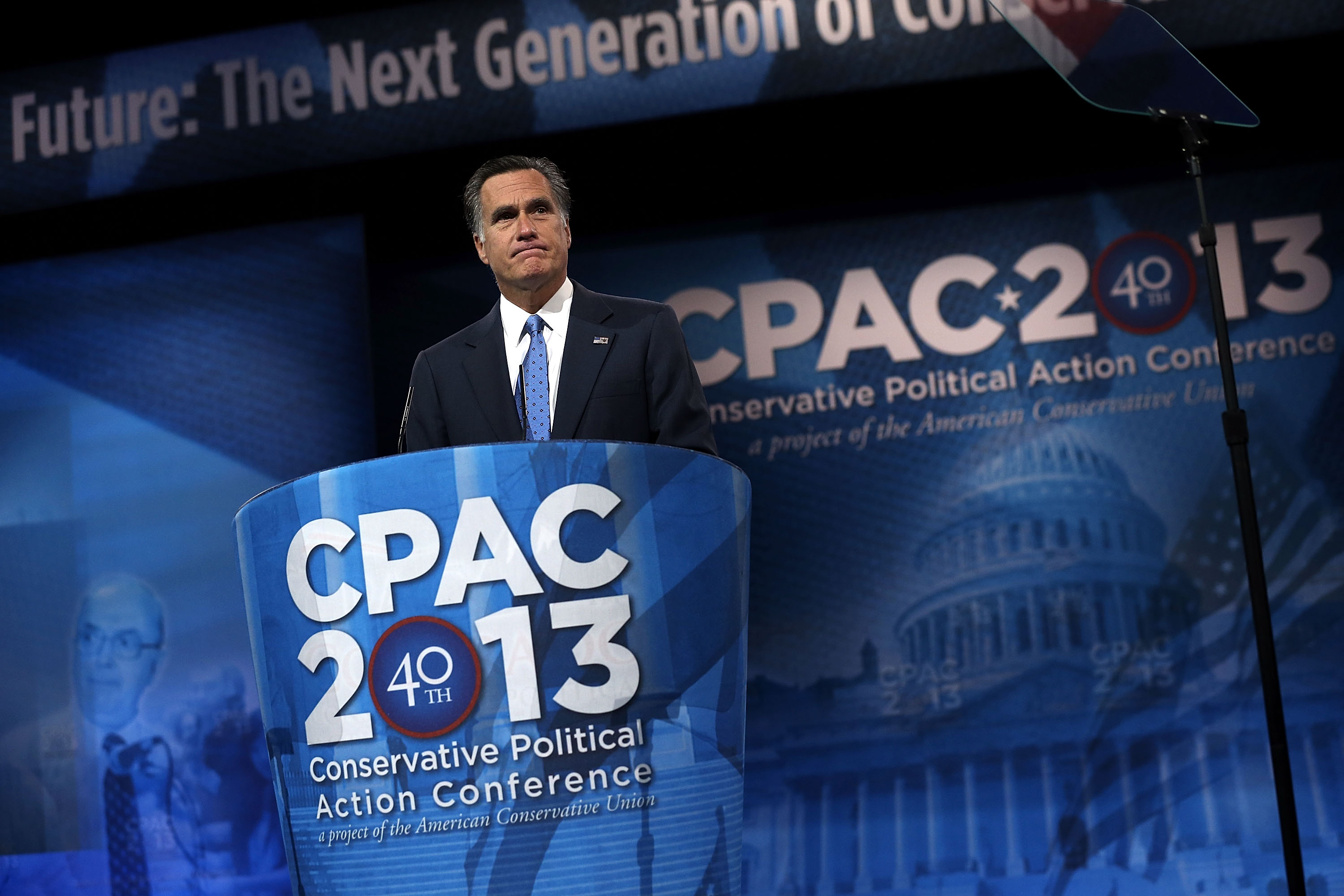
Former Republican presidential nominee Dip Chutney? … Ham Hockney? … Rom Comedy? … Rick Flambe? … Chip Ranchero? … Blake Lively? … delivers remarks during the second day of the 40th annual Conservative Political Action Conference (CPAC) in National Harbor, Maryland on March 15, 2013. By Alex Wong/Getty Images.
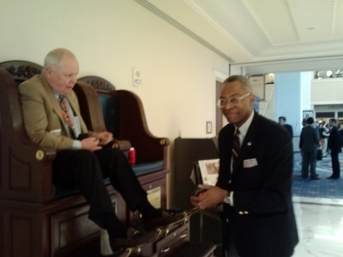
As Charlie Cook underlines how disproportionately white the GOP has become since redistricting, and as a minority outreach session degenerates into an argument about the virtues of slavery and segregation, National Review actually runs a post about the greatest thing about CPAC this year: the shoe shine:
Dino Wright, manager and owner of the shoe-shine booth, has worked at the hotel since it opened five years ago. CPAC and events like it boost business for Wright. He says he thinks it’s because he “provides a very important service to this very image-conscious group.”
Wright began shining shoes after the airline he once worked for defaulted on its pension obligations, driving him to find a source of income in retirement.
“I was able to create a pension for myself by creating an entrepreneurial activity,” Wright says. He noticed that fewer people were entering the shoe-shining profession, and “I saw that as an entrepreneurial opportunity” – an ethic that sits well with the CPAC crowd.
Joe Klein gives low marks to the Department of Veterans Affairs:
[T]he VA hasn’t set the right priorities. A Marine who was blinded and lost two limbs last year in Helmand province goes into the same queue as a Vietnam veteran who wants increased payments because his back is deteriorating with age. First-time claims need to be handled before second-, third- and fourth-time claims; 100%-disability cases need to be handled before 20% disabilities. Somehow that isn’t happening.
On top of that, Charlie Reed and Jennifer Svan report how the Air Force, Army and Marines are “dropping tuition assistance due to sweeping federal cuts”:
The official message that the Air Force was suspending all new requests for tuition assistance effective immediately, came out “stateside time yesterday,” Davis said Tuesday. “We pushed an email out this morning from the education center,” informing airmen of the change, Davis said. By the time airmen woke up Tuesday morning in Germany, they were shut out from submitting new requests for tuition assistance through the Air Force Portal. A message on the application site says in red letters: “Air Force Military Tuition Assistance Currently Not Available.” …
Sequestration, [Air Force spokesman Capt. Nicholas Plante] said, is having “devastating effects” on readiness, mobilization and the workforce. “We have to make difficult choices to preserve those types of things.”
The notoriously bloody 20th century was a lot less sanguinary than previous eras, when up to 15 percent of people lost their lives in violent conflicts. And things have gotten a lot better still since the end of World War II. Why the improvement? Pinker lists a host of positive influences, from rising IQs and the expansion of women’s rights to surges in global commerce and literacy. All these trends have pointed us away from the Devil and closer to the “better angels of our nature.”
And what is responsible for these trends? Governments! Good old-fashioned nation states, Weberian monopolies on violence. It turns out one of Hobbes’ central contentions was dead right: the most important function of political society, its primary mission, is to bring peace.





 The Dish