Living With Half A Brain

Tom Stafford considers what a woman who was born without a cerebellum — and lived a largely typical life — reveals about neuroscience:

This case points to a sad fact about brain science. We don’t often shout about it, but there are large gaps in even our basic understanding of the brain. We can’t agree on the function of even some of the most important brain regions, such as the cerebellum. Rare cases such as this show up that ignorance. Every so often someone walks into a hospital and their brain scan reveals the startling differences we can have inside our heads. Startling differences which may have only small observable effects on our behaviour.

Part of the problem may be our way of thinking. It is natural to see the brain as a piece of naturally selected technology, and in human technology there is often a one-to-one mapping between structure and function. If I have a toaster, the heat is provided by the heating element, the time is controlled by the timer and the popping up is driven by a spring. The case of the missing cerebellum reveals there is no such simple scheme for the brain. Although we love to talk about the brain region for vision, for hunger or for love, there are no such brain regions, because the brain isn’t technology where any function is governed by just one part.

What Freud Got Right

The New Republic recently retrieved from their archives a classic essay by W.H. Auden on Freud’s enduring insights. Auden, writing in 1952, claimed that even if his specific theories were disproven, Freud “would still tower up as the genius who perceived that psychological events are not natural events but historical and that, therefore, psychology as distinct from neurology, must be based on the pre-suppositions and methodology, not of the biologist but of the historian.”

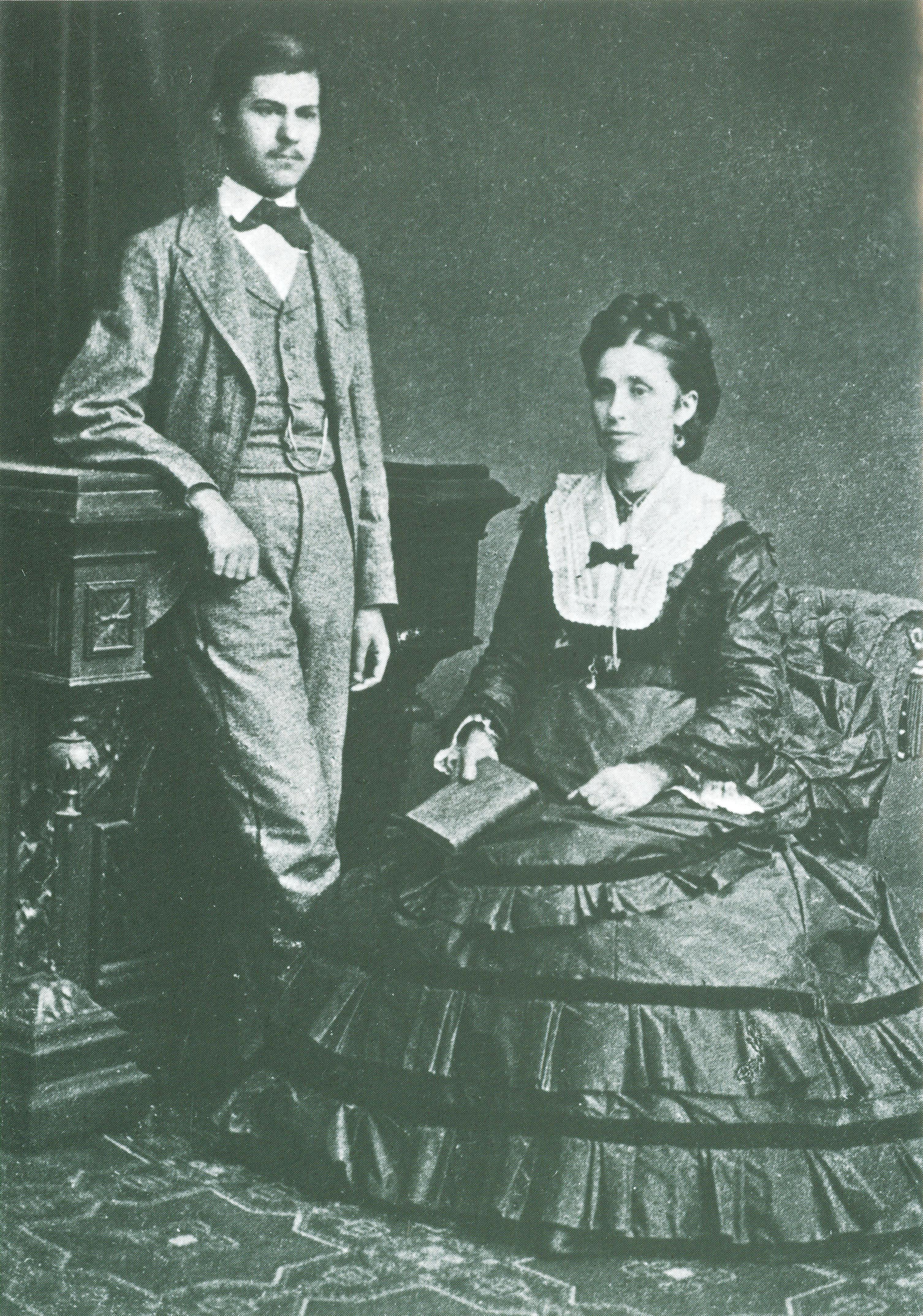
AmaliaFreud (1)As a child of his age who was consciously in a polemic with the “idealists” he may officially subscribe to the “realist” dogma that human nature and animal nature are the same, but the moment he gets down to work, every thing he says denies it. In his theories of infantile sexuality, repression, etc., he pushes back the beginnings of free-will and responsibility earlier than even most theologians had previously dared; his therapeutic technique of making the patient relive his past and discover the truth for himself with a minimum of prompting and interference from the analyst (meanwhile, one might add, doing penance by paying till it hurts), the importance of Transference to the outcome of the therapy, imply that every patient is a unique historical person and not a typical case.

Freud is not always aware of what he is doing and some of the difficulties he gets into arise from his trying to retain biological notions of development when he is actually thinking historically.

For example, he sometimes talks as if civilization were a morbid growth caused by sexual inhibition; at other times he attacks conventional morality on the grounds that the conformists exhaust in repression the energies which should be available for cultural tasks: similarly, he sometimes speaks of dream symbolism as if it were pure allegory, whereas the actual descriptions he gives of the dreaming mind at work demonstrate that, in addition to its need to disguise truth, it has an even greater need to create truth, to make historical sense of its experience by discovering analogies, an activity in which it shows the most extraordinary skill and humor. In a biological organism, everything was once something else which it now no longer is, and change is cyclical, soma-germasoma; a normal condition is one that regularly reoccurs in the cycle, a morbid one is an exception. But history is the realm of unique and novel events and of monumentsthe historical past is present in the present and the norm of health or pathology cannot be based on regularity.

(Photo of Freud in 1872 at age 16, with his mother Amalia, via Wikimedia Commons)

Our Bestsellers, Ourselves

Heather Havrilesky, scanning the last 20 years of the New York Times‘ hardcover-nonfiction bestseller lists, ponders what our country’s taste in books reveals about its readers:

As I Want to Tell You by O. J. Simpson (1995) and The Royals by Kitty Kelley (1997) yield to Dude, Where’s My Country? by Michael Moore (2003) and Plan of Attack by Bob Woodward (2004), you can almost see the support beams of the American dream tumbling sideways, the illusions of endless peace and rapidly compounding prosperity crumbling along with it. The leisurely service-economy daydreams of the late ’90s left us plenty of time to spend Tuesdays with Morrie and muse about The Millionaire Next Door or get worked up about The Day Diana Died. But such luxe distractions gave way to The Age of Turbulence, as our smug belief in the good life was crushed under the weight of 9/11, the Great Recession, and several murky and seemingly endless wars. Suddenly the world looked Hot, Flat, and Crowded, with the aggressively nostalgic waging an all-out Assault on Reason. In such a Culture of Corruption, if you weren’t Going Rogue you inevitably found yourself Arguing with Idiots. …

[T]he most popular nonfiction authors of our day might be characterized by a certain overconfident swagger, the modern prerequisite for mattering in a mixed-up, insecure world.

More often than not, these “authors” aren’t authors at all, in the strict sense of carefully pondering their ideas and diction and lovingly crafting an argument sturdy yet supple enough to carry their work over to a mass readership. In place of the William Whytes, Vance Packards, and Betty Friedans of earlier, more confident chapters of our national bestsellerdom, we have promoted a generation of alternately jumpy and anxious shouters. Generally, these public figurines fall into one of two categories: television personalities who have hired hands to cobble together their sound bites; and middling nonwriters suffering from extended delusions of grandeur. When it comes to hardcover nonfiction, a realm in which (for now at least) books often are physical objects, plunked down on coffee tables as signifiers or comfort totems, Americans don’t seem to be looking for authors or writers or artists so much as lifestyle brands in human form: placeholder thinkers whose outrage, sense of irony, or general dystopian worldview matches their own, whether it’s Glenn Beck, Barack Obama, or Chelsea Handler.

How Veterinarians Affect Human Health

Sasha Chapman explains:

The idea that there is a connection between our health and that of other animals is not new. Sir William Osler, one of Canada’s most admired physicians and a father of modern medicine, is also considered a father of veterinary pathology. He believed that his students, whether medical or veterinary, should study the anatomy and pathology of both human beings and animals. When Osler delivered the inaugural address at the Montreal Veterinary College in 1876, he titled it “The Relations of Animals to Man,” and told students it would not be long before “you find out that similarity in animal structure is accompanied by a community of disease and that the ‘ills which flesh is heir to’ are not wholly monopolized by the ‘lords of creation.’ ” Back then, in lecture halls at the Faculty of Comparative Medicine and Veterinary Science at McGill, veterinary students sat alongside medical students.

Today, such crossover training would be highly unusual.

Most doctors have little to do with animal medicine, unless they’re taking the family pet for a checkup. Likewise, vets rarely take more than a personal interest in human medicine. Each profession keeps to itself, and each tends to collect and analyze its own data separately, making it difficult to share information and identify cross-species health risks. And in the case of zoonotic diseases—those that move from animals to humans—there can be a tendency, between the professions, to develop an us-versus-them mindset. Vets are concerned with their own patients’ health, and doctors with theirs. We segregate these disciplines at our peril. Most of the emerging and re-emerging infectious diseases that have plagued humans in recent decades—including Lyme disease, H1N1, and Ebola—began in animal populations, and were first transmitted to human beings either directly or through our shared environment. Consequences can be devastating, as in the case of plague, which emerges periodically from animal reservoirs.

No, Not All Sex Workers Want To Be Saved

A&E is producing a To Catch a Predator-like show about sex workers called 8 Minutes:

This embed is invalid


Executive producer Tom Forman describes the premise:

[Kevin Brown is] a cop in Orange County who retired a couple years ago, then devoted himself full time to his church. So he was a full-time cop turned full-time pastor. As a cop, he worked vice. He saw girls who had no place else to go, who had been abused by their pimps, girls who really needed a helping hand, and what he had to do as a cop is arrest them. Now that he’s running a church, he can offer them that help.

And Brown has eight minutes to make his case to a woman each episode, hence the title. Samantha Allen pans the series:

Kevin Brown’s vigilante preacher schtick is “disappointingly unsurprising,” as Lane Champagne, a community organizer for Sex Workers Outreach Project New York City (SWOP-NYC) tells me in a phone interview.

The idea that all sex workers are victims who want to be “rescued” is so pervasive that some clients regularly try to convince sex workers to give up their trade—they just usually don’t bring a camera crew along with them. As Champagne suggests in her own critique of 8 Minutes for a sex workers group blog, Brown’s holier-than-thou angle is not a far cry from the “well-meaning but kind-of-a-dick regulars who fall in love with you and think it’s a compliment to say [things] like, ‘You’re so much better than this.’”

And in an e-mail interview, Kaelie Laochra, a sex worker who runs the popular Respect Sex Work Twitter account, agrees that clients who attempt to “save” her are often the most inadvertently insulting.

Elizabeth Nolan Brown recently called the program “an abomination that should never, ever have gotten the greenlight”:

Seeing someone’s photo online and then proceeding to track them down IRL and secretly monitor their movements would, under other contexts, be considered stalking. But apparently anything goes when your aim is to “save” women from exerting their own agency.

The Foucault You Didn’t Know

dish_foucault

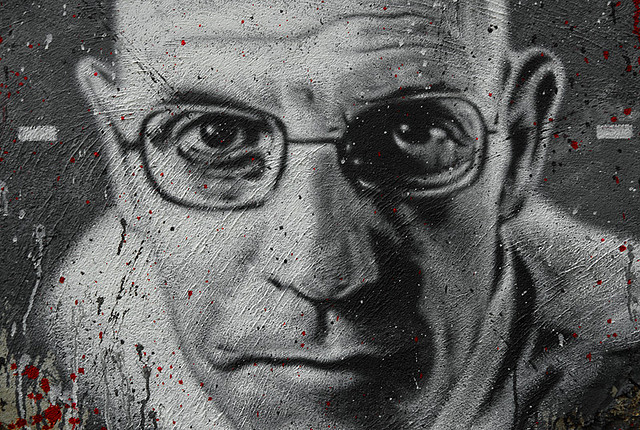
In an interview discussing a new volume of essays he edited about the French philosopher, Daniel Zamora portrays Foucault, especially in his later years, as more friendly to and fascinated by neoliberals Hayek and Friedman than many of his votaries on the academic left want to believe. Zamora claims to have been “astonished by the indulgence Foucault showed toward neoliberalism”:

[H]e saw in it the possibility of a form of governmentality that was much less normative and authoritarian than the socialist and communist left, which he saw as totally obsolete. He especially saw in neoliberalism a “much less bureaucratic” and “much less disciplinarian” form of politics than that offered by the postwar welfare state. He seemed to imagine a neoliberalism that wouldn’t project its anthropological models on the individual, that would offer individuals greater autonomy vis-à-vis the state.

Foucault seems, then, in the late seventies, to be moving towards the “second left,” that minoritarian but intellectually influential tendency of French socialism, along with figures like Pierre Rosanvallon, whose writings Foucault appreciated. He found seductive this anti-statism and this desire to “de-statify French society.” Even Colin Gordon, one of Foucault’s principal translators and commentators in the Anglo-Saxon world, has no trouble saying that he sees in Foucault a sort of precursor to the Blairite Third Way, incorporating neoliberal strategy within the social-democratic corpus.

Dan Drezner nods, telling conservatives and libertarians to take a second look at their unlikely ally:

One of the virtues of teaching at a policy school is that Foucault is not quite as central to scholarly conversations as in traditional humanities departments. That said, Zamora’s observation rings true — which is why conservatives should embrace him and his work. From a conservative perspective, the great thing about Foucault’s writing is that it is more plastic than Marx, and far less economically subversive. Academics rooted in Foucauldian thought are far more compatible with neoliberalism than the old Marxist academics.

In some ways, Zamora’s book is an effort by some on the left to try to “discipline” Foucault’s flirtation with the right. It will be interesting to see the academic left’s response to the book. But Zamora also reveals why free-marketeers might want to give Foucault another read and not just dismiss him with the “post-modern” epithet.

Update from a reader:

This being an area I am quite familiar with, let me just say that there is very little new in Zamora’s “discovery.” Only the petty bourgeois of identity politics in US academia could ever embrace Foucault as “left-wing.” And they sure did, bereft that they were of any context or any economic culture (let alone knowledge).

It’s not that Foucault is “right-wing” or “left-wing.” I am not even sure that he could be pegged on some sort of “progressive vs conservative” scale.  On the one hand, he once stated that everything that is historically constructed can be politically changed. On the other hand, he blurted out the mother of all elisions in Discipline and Punish (if I remember well): talking of the invention of biopolitics, the thrust by the modern state to catalogue, normalize and regiment living beings (with a particular focus on humans), he wrote “this all took place on the backdrop of the industrial revolution.”

And that was that for economic forces. One sentence! The gall of that man! It’s hilarious. It was a dig at a certain naive and mind-numbing strand of Stalinist historical materialism in vogue in France at the time (the irrelevant and awful Althusser, Sartre, Bourdieu: in the late ’60s-early ’70s Foucault was cleverly waging a positional war against the grand poobahs of France’s intelligentsia).

Of course this played very well in US comp-lit departments, where all things economic or material are sneered at. Now you could be a true armchair radical, no need to worry or study actual economics and the history of capitalism. Boring. Besides, Foucault himself thought it was useless. And that way, as a tenured radical on a US campus, you did not have to question the society, the economic incentives and the motivations that had lead you there in the first place. That is, the booming market for mass education in the late-sixties. Suddenly any small-town middle-class American, low on cultural capital but armed with good grades, could legitimately compete for a tenured job at any University nearby.  Fucking boomers.

Not saying it’s all bad, but hey, you must take the bad with the overall good.  Incredible development in human capital comes with a few philistines. It’s a small price to pay.

(Photo of painted portrait of Foucault by thierry ehrmann)
Battle Of The Bites

In an Intelligent Life roundtable on the world’s best cuisine, Josie DeLap argues that Iranian food is underrated:

Politics has kept Iranian food tucked away in the Tupperware box of the Islamic Republic. Other Middle Eastern cuisines are brazen. Lebanon flaunts its sophistication. Morocco flourishes its tagines, with their fruit and meat, so cleverly combined. Turkey brandishes its breads and flashes its kebabs. Who thinks of Iran?

And yet this is the source of it all. Cultivated over millennia, enhanced by numerous invasions both launched and endured, Iranian food has a subtlety and intricacy unrivalled but unrecognised—at least by outsiders. Who knows of its jewelled rice, studded with ruby barberries, flickers of sour sweetness, amid rice gold-stained with saffron, run through with shards of pistachios? Who has heard of caramelised sohan, a nutty brittle, produced mostly in Qom, Iran’s holiest city, its buttery excess so at odds with the austere piety of its creators? What of kuku sabzi, an omelette thick with fistfuls of coriander, parsley, dill, chives, tarragon, fenugreek? The world is missing out.

Katherine Rundell, for her part, sticks up for English cuisine, writing that “British food is best when it has heart, literally as well as figuratively.” Bee Wilson maintains that French is foremost:

French cuisine can be seen as passé and unhealthy. Sure, it’s delicious, but who wants to eat all that heavy meat in fancy Escoffier sauces any more? To dismiss it in this way is to neglect the fact that it has always been about much more than Michelin pretension. Its genius can be seen in delicate fish soups with a dollop of fiery rouille; rare onglet steak and salads of green beans; tiny wedges of big-tasting cheese. It’s there in the habit of avoiding snacks between meals, not from self-denial, but because hunger is the best sauce. French cuisine is the best because it’s founded on an understanding of how to square the circle of pleasure and health.

But Fuchsia Dunlop finds Chinese food does a better job:

No other culture lays such an emphasis on the intimate relationship between food and health. The everyday Chinese diet is based on grains and vegetables, with modest amounts of meat and fish, and very little sugar—a model for healthy and sustainable eating. A good Chinese meal is all about balance: even a lavish banquet should leave you feeling shufu—comfortable and well.

Dish Awards: Who Will Take The Yglesias?

The Yglesias Award is for writers, politicians, columnists or pundits who actually criticize their own side, make enemies among political allies, and generally risk something for the sake of saying what they believe. Right now one of the top two vote-getters is Glenn Beck, reflecting on the Iraq War:

In spite of the things I felt at the time when we went into war, liberals said: We shouldn’t get involved. We shouldn’t nation-build. And there was no indication the people of Iraq had the will to be free. I thought that was insulting at the time. Everybody wants to be free. They said we couldn’t force freedom on people. Let me lead with my mistakes. You are right. Liberals, you were right. We shouldn’t have.

Then, currently in the lead, is Charles Krauthammer responding to knee-jerk conservative support for Cliven Bundy:

It isn’t enough to say I don’t agree with what he said. This is a despicable statement. It’s not the statement, you have to disassociate yourself entirely from the man. It’s not like the words exist here and the man exists here. And why conservatives, or some conservatives end up in bed with people who, you know, he makes an anti-government statement, he takes an anti-government stand, he wears a nice big hat and he rides a horse, and all of a sudden he is a champion of democracy …

Look, do I have the right to go in to graze sheep in Central Park? I think not. You have to have some respect for the federal government, some respect for our system. And to say you don’t and you don’t recognize it and that makes you a conservative hero, to me, is completely contradictory, and rather appalling. And he has now proved it.

Vote for one of the above, or any of the other eight Yglesias Award finalists, here. After that, cast your votes for the 2014 Malkin AwardHathos AlertPoseur AlertCool Ad, Face Of The Year, and the year’s best Chart, Mental Health Break and View From Your Window. Plus, now for the first time you can help choose the Map Of The Year and Beard Of The Year as well! Polls will close on Wednesday night, so have at it:

Please note: due to there not being enough nominees this year, we will not be issuing a 2014 Hewitt Award, Moore Award, or Dick Morris Award. Learn more about all our awards here.