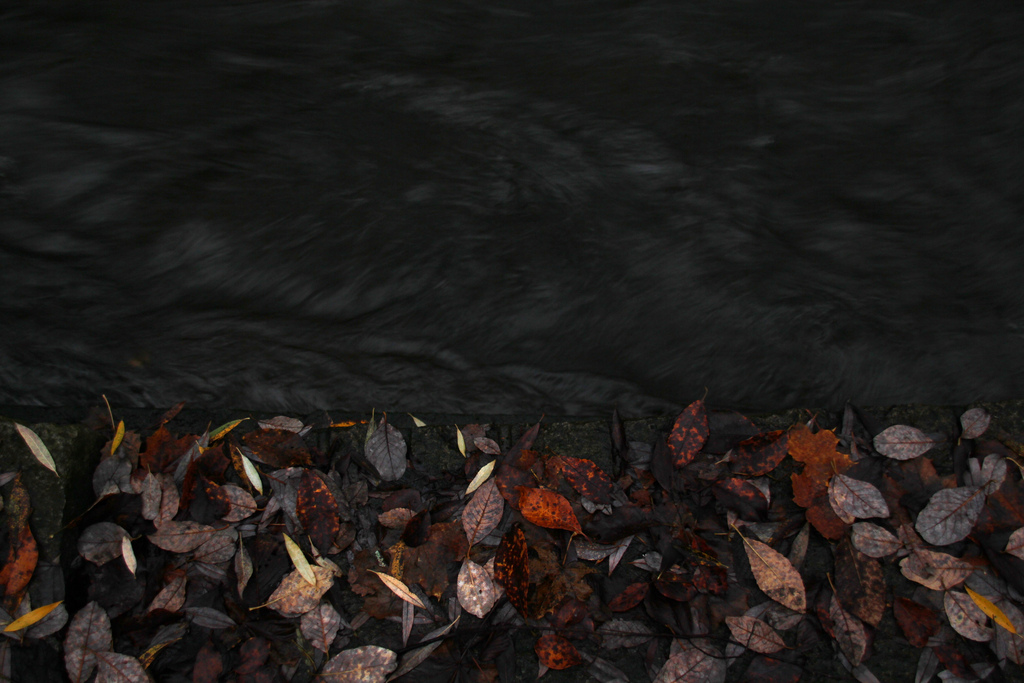
This darksome burn, horseback brown,
His rollrock highroad roaring down,
In coop and in comb the fleece of his foam
Flutes and low to the lake falls home.
A windpuff-bonnet of fawn-froth
Turns and twindles over the broth
Of a pool so pitchblack, fell-frowning,
It rounds and rounds Despair to drowning.
Degged with dew, dappled with dew
Are the groins of the braes that the brook treads through,
Wiry heathpacks, flitches of fern,
And the beadbonny ash that sits over the burn.
What would the world be, once bereft
Of wet and of wildness? Let them be left,
O let them be left, wildness and wet;
Long live the weeds and the wilderness yet.
Please consider supporting the work of The Poetry Society of America here.
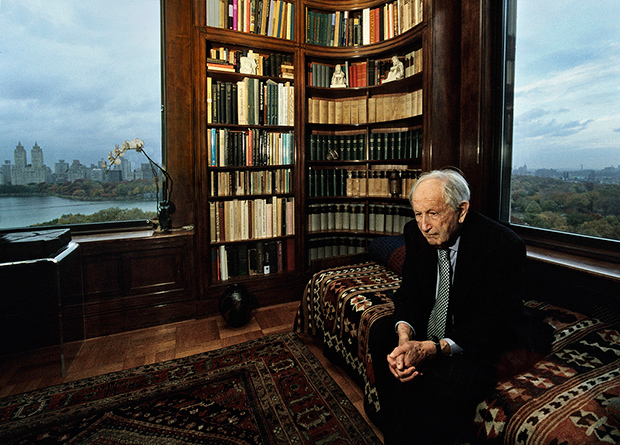
For his book Fifty Shrinks, photographer and psychiatrist Sebastian Zimmermann captured New York therapists in their offices:
The seedling ideas for the project began to take root as Zimmermann built his own practice in Upper West Side Manhattan, where he observed within himself a sense of remoteness from the outside world. While his patients shared with him intimate portions of themselves, the role of psychiatrist necessitated a detached and discrete existence.
For Zimmermann, the remedy for the psychiatrist’s exile was the photographer’s inquiry. As soon as he began capturing the offices of his friends and peers, word spread and his own position within the city’s network of mental health professionals opened doors that would otherwise have remained closed. For the artist, his psychiatric training lent itself to portraiture in the sense that both required careful attention to the barely perceptible psychological rhythms of his fellows. Where therapists mostly cast their gaze outwards, here they become the vulnerable objects of our own, their evanescent anxieties and idiosyncrasies unveiled for a single precious instant.
Heather Havrilesky offers advice to a stressed-out millennial revisiting a contentious relationship with her mother. She recommends serious self-care and being “prepared to serve the common good”:
Now, why should you be prepared to serve the common good? Because this is the realistic, adaptive, self-protective behavior of a mature adult. Instead of focusing on your own drama, you should focus on helping others. Because, look, part of you still believes that you might be able to right the wrongs of the past. The Jekyll-and-Hyde mother is tricky for this reason; her good days fool you into believing that you might be able to shake her out of her irrational attacking state. Listen to me: Your mother will never change. Going home for the holidays is not about “fixing” her or the past. It’s about tolerating the freaks you grew up with, making them dinner, giving them your unconditional love, and keeping your mouth shut. Realizing this might seem to serve them, but trust me, it serves you the most, by keeping you safer from heartbreak.
So help with the homework. Go out and buy some groceries. Do the dishes. Pour the wine. Listen. Laugh. Do the dishes again. Listen some more. Don’t expect to be in the best mood as you do these things. Do them anyway.
Meanwhile, Berit Brogaard explains what makes Christmas a hard time for divorced parents:
When sane parents separate, many judges, thankfully, divide custody equally. Each parent gets his or her fair share of custody, if at all possible. Even when it’s not possible to share the time with the children equally, judges will usually attempt to divide up the holidays evenly. The kids spend every other holiday with mom and every other holiday with dad. It certainly is in the children’s best interest to get to spend some time with each parent. Most kids, with decent moms and dads, would prefer to spend every holiday with both parents. The precious little ones secretly hope for the impossible: That their divorced or separated parents will get back together. But despite their wishes, they adjust to the situation. They have no other choice.
Nor do the parents. As we face the holidays many single parents face a very lonely time. They may be with dear family members: parents, brothers, sisters, nieces, nephews, aunts and uncles. Yet they may nonetheless feel a profound pain in their hearts, even as they watch close relatives savor the pecan pie or scream in delight when they rip open their Christmas presents. Their own children are far away.
“The recent unpleasantness at The New Republic is more than a hiccup among the country’s political and cultural and literary elite. The zone of seriousness that the journal sought to establish is today under siege. It is, alas, the object of scorn from yahoos of all parties. Writing in the special anniversary issue published to coincide with the magazine’s centennial, film critic David Thomson wrote presciently: “Even a hundred-year-old magazine, proud and illustrious, eloquent and earnest, right and wrong, may turn into vapor. We are more fragile than we think.” Those who rejoice in The New Republic‘s collapse should think twice about what they wish for,” – Steve Wasserman.
It’s that time of year again! As usual, our elite, highly-specialized blue-ribbon panel has pored over more than a thousand posts in order to select this year’s award finalists, and now it’s time for you to have your say!
Please note: due to there not being enough nominees this year, we will not be issuing a 2014 Hewitt Award, Moore Award, or Dick Morris Award. Learn more about all our awards here.
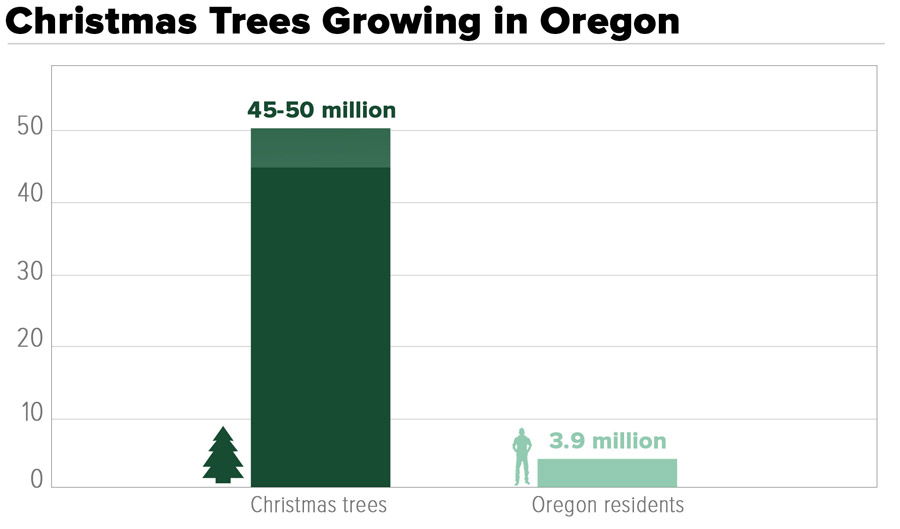
Oregon is the biggest producer in the country, and arguably the world. In this green and gray state, there are 45 to 50 million Christmas trees in the ground at any given time, which means Christmas trees outnumber humans 12 to 1.
It’s not just that Oregon has a the right climate to grow the trees (though it does) or that a state historically reliant on logging would continue to produce trees as products. Oregon is where the modern Christmas tree industry in America was born, thanks to a Nebraskan-born farmer named Hal Schudel.
In 1955, Hal had an enormous idea: Perhaps Christmas trees, like corn, wheat or soybeans, could be a crop. They could be bred selectively, attended to and fertilized, sheared each year into the perfect cone. A tree’s nooks and crannies that perfectly showcase your ornament collection didn’t happen by accident. They were designed. Like every agricultural product, Christmas trees are now selectively bred and groomed for what the consumer wants: the perfect color; needle retention to minimize vacuuming; dense, bushy branches that can hold the heaviest ornament; and perhaps most importantly, the scent that wafts gently through a home and announces the presence of Christmas.
Hal’s insight became Holiday Tree Farms, which started as 300 acres and now reaches 8,500 acres, is one of the two largest Christmas tree operations in the world, trading off with McKenzie Farms, also in Oregon. Holiday Tree Farms is still held by Hal’s family, and this year will ship over one million Christmas trees. Today, 98% of Christmas trees come from farms like the one first envisioned by Hal.
After 12 years and $50 million of research, Denmark has surveyed the 2,000-kilometer-long underwater mountain range that runs north of Siberia and concluded that it is geologically attached to Greenland, the huge autonomous territory that, along with the Faroe Islands, is controlled by Denmark. (Denmark’s broader strategy on the Arctic can be found here. (pdf))
As a result, the kingdom is claiming 895,541 square kilometers (556,463 square miles) of the North Pole—an area about 20 times the size of Denmark. “This is a historical milestone for Denmark… [and now] comes a political process,” the Danish foreign minister, Martin Lidegaard, said. “I expect this to take some time. An answer will come in a few decades.” …
Denmark has made four previous claims, but it has now become the first country to declare outright ownership of the North Pole. Russia hasn’t gone as far—yet. Both Russia and Canada are preparing their final bids, while the other nations may also step in.
The reason for the move:
Why the land rush for an icy wilderness at the top of the globe? Well, climate change is fast-melting the North Pole—and what is bad for the world is good for business. The area is estimated to contain 30% of the world’s undiscovered natural gas, and 15% of its oil, according to the US Geological Survey.
Dish readers have been sharing their memories of discovering that Santa isn’t real. Then there’s this famous dark tale:
A reader shares a real-life tragedy:
I remember clearly when I lost faith in Santa. My sister, at just over a year old, was diagnosed with a catastrophic illness. The presents before her birth had been many, more than the large litter of children to which I was born could aspire – new bicycles and erector sets, BB guns and Pong. The year after her diagnosis there were only a scant few gifts – three Hardy Boys books and a little robot FM radio. Why would Santa abandon my family when it needed a little joy the most? Logic answered that question. My parents had been in the hospital with her, not able to work, so time and money to shop were scarce.
There were no complaints from my siblings or me. We just wanted our family’s only little girl to be well. But it was not long after that Jesus went the way of Santa. I figured if there weren’t a jolly old man at the North Pole who brought requested gifts, there surely wasn’t a Jesus in heaven answering prayers. He certainly hadn’t answered ours.
Another reader:
As a child, my family did the whole Santa thing. But later in my youth my father told me that when he was a child, his father had adamantly refused to promote the Santa story. My grandfather’s reasoning was that if his children found out that Santa was a myth, then they might extrapolate that Jesus was also a myth. Uh. Hmm. Yup.
Another:
I stopped believing in Santa Claus the way that every good atheist should:
I looked up Santa in the encyclopedia when I was six.
Another fact-based reader:
I had a resurgence of faith at 6 when the local news reported NORAD’s tracking of Santa. Because the news! And radar! It had to be true.
A parent is befuddled:
I find myself wondering if my almost 12 year old still believes or is faking it. He has never asked about Santa‘s authenticity and still talks about him as if he is real. He even wants one of those damn Elf on the Shelf things. Maybe just to see what I would do with it every day? It is quite disconcerting. I hope he knows Santa isn’t real but I don’t want to be the one to break the news if he does not.
Strangest of all, he is so into science he is quite agnostic when it comes to God, often saying, “IF there is a God…”. I don’t know what to make of it.
A few more readers flip the script:
Having been raised in a Jehovah’s Witness household, we never believed in Santa. In fact, my younger brother got into trouble in very early grade school for for letting the cat out of that particular bag with classmates. Bah humbug!
BTW, I’m playing Santa in full regalia at our company’s holiday party tomorrow night.
The other:
I was actually raised an a-Santa-ist: Jesus was the reason for the season in my house. Thus, there wasn’t a moment when I lost that particular faith – rather, I was the kid who had to have a parent-teacher conference because I told all the other kindergartners that there was no Santa. I’m congenitally incapable of keeping my mouth shut while falsehoods are uttered in my presence, and tact is not my forte, but let’s be honest: it’s the OTHER parents who should have been called in. I got chastised for telling the truth, and they were indignant at a five-year-old who called the lies they told their children.
Back to an atheist:
I was six, and my brother was eight. We were sleeping in my mother’s old bedroom at my grandparents house. I remember rolling over in my bed and whispering to my brother, “How long do you think until Santa gets here?” My brother, who was probably tired just said, “Don’t be silly, there’s no such thing as Santa,” and he rolled over in his bed and went right to sleep.
It was quite a shock for all of about 15 seconds, and then I thought about it for a bit and realized, of course there was no such thing as Santa. It was a preposterous idea. And so I went to sleep myself and never gave it much of a second thought.
But I’ve often wondered if I would have been more upset if I were brought up with the idea of faith somewhere else? We were brought up amongst athiests and agnostics. There was no expectation that we believe in God or Jesus or the Flying Spagetti Monster, so the idea of not believing in a magic elf/man who traversed the globe giving out random presents wasn’t really a tough idea to swallow. I already didn’t believe in a supreme being. And it’s not like I wouldn’t get presents; I knew they were down there. I’m shocked when I find out someone was scared from the reveal. Of course it was fiction! How could anyone think otherwise?
Now that I am the mother of five year olds, we keep the fiction alive for them, but they have begun to question. I won’t lie to them about it. I figure I have another year and if they ask me directly, I will tell them what my brother told me, there is no such thing as Santa, but it is a fun story.
I am a mainline Protestant preacher, married with a 7-year-old son and a 5-year-old daughter. We debated about teaching the kids the Santa myth, but in the end decided that since it is such a part of popular culture, we would go along for as long as they wanted. It is all just fun, right?
Their mother, though, decided that she would never directly lie to them about Santa – or anything for that matter. So while she does fill stockings and has distinct wrapping paper for some presents that do not come from anyone else, she won’t say “This is from Santa.” When the kids ask questions about it, she says “What do you think?”
As we were decorating the tree this year, the boy announced in a soft voice “I don’t think Santa is r-e-a-l.” His mother and I both looked at each other in panic and pride. We didn’t think we would reach this point yet, but we are pleased at his reasoning skills, and his apparent understanding of the power of myth. We both praised him for spelling out the key word, and in doing so showing consideration for his sister (though another month of public school Kindergarten and she will be able to decode that word.) His mother asked “what do you think?” Then we handed him another ornament to put on the tree and left it alone.
A few days later I took the kids to a public showing of “Arthur Christmas,” in which Santa is a family title that is passed on through generations. On the way home the girl started asking questions. She was concerned, because, she reasoned, “if Santa can grow old, then maybe Santa can die!” I tried her mother’s solution: “What do you think?” Her bother quickly responded “Santa IS dead!” That landed with a thud.
I started to think of how I could save this without lying. I got ready for the tears. Then my son continued: “He is dead in that he isn’t like you or me. I think he died a long time ago, but now he can live forever and do things that normal people can’t do. That’s how he can be in so many places at once, and get presents all around the world in one night!”
I am glad that my boy has worked things out in a way that allows him to believe. I am delighted that he cares enough for his sister to speak the truth as he knows it to her in a compassionate way. I am glad that he is obviously hearing, comprehending, and applying the concept of the incarnation and resurrection. I am also very concerned about his conflation of Santa and Jesus.
So yes, in some way the myth of Santa may allow for children to later comprehend the mythic nature of Christian truth. And my kids will sort it out in time. But I don’t think that finding out that Santa isn’t R-E-A-L will keep him from discovering that Jesus IS. In fact, I think that he is learning the difference by singing Christmas carols to shut-ins, serving meals to the hungry, and working to keep up the homeless shelter we support. That isn’t Santa at work in his heart. Yes, I am a preacher, whose kids still believe, in their own way, in Santa Claus. But I am confident that they will be able to understand, eventually, that at Christmas Santa=presents and Emmanuel=presence.
As always, many thanks to you and your staff for the lively and wide-ranging discussions. I often bring you all into the pulpit with me!
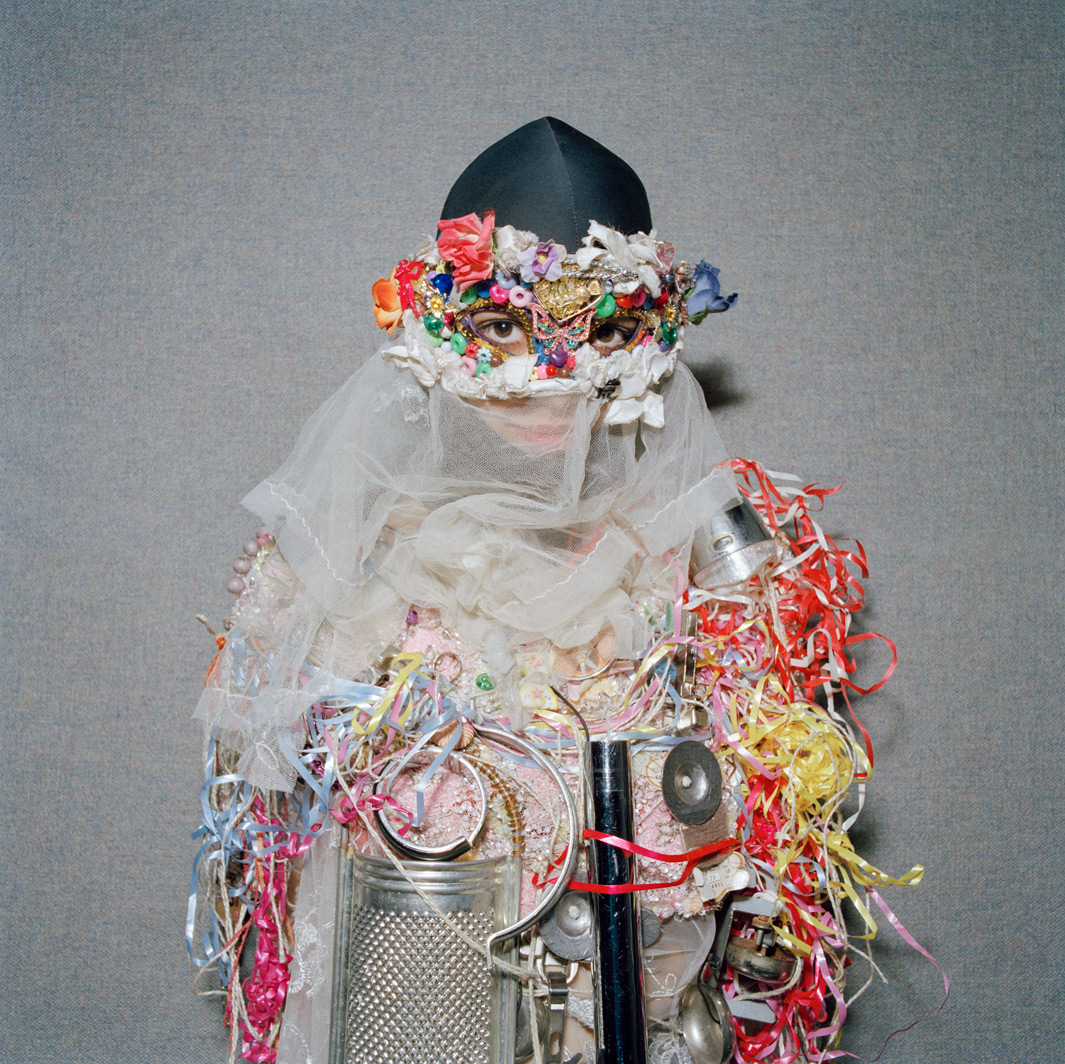
Patrick Morarescu snapped shots of performance artists:
Rather than photograph the performances, Morarescu focuses his lens on the artists right after they finish their shows, while they “still have the energy of creativity.”
“That feeling is what I want to capture in the portraits. It feels like you can still catch some traces of what happened in the performance some minutes before,” he said via email. … [W]hile he aims to evoke something of the performance in his photos, he wants viewers to see them as making unique artistic statements of their own.
“Performance art is a marginal form, one that normally happens in front of small audiences in alternative venues far from the mainstream. What makes it special is its temporal condition, the fact that this art form is destructed at the same moment that is created,” he said. “The results are ephemeral and any effort to document or register them become new products that are something different.”
 The Dish