Battle Of The Bites

In an Intelligent Life roundtable on the world’s best cuisine, Josie DeLap argues that Iranian food is underrated:

Politics has kept Iranian food tucked away in the Tupperware box of the Islamic Republic. Other Middle Eastern cuisines are brazen. Lebanon flaunts its sophistication. Morocco flourishes its tagines, with their fruit and meat, so cleverly combined. Turkey brandishes its breads and flashes its kebabs. Who thinks of Iran?

And yet this is the source of it all. Cultivated over millennia, enhanced by numerous invasions both launched and endured, Iranian food has a subtlety and intricacy unrivalled but unrecognised—at least by outsiders. Who knows of its jewelled rice, studded with ruby barberries, flickers of sour sweetness, amid rice gold-stained with saffron, run through with shards of pistachios? Who has heard of caramelised sohan, a nutty brittle, produced mostly in Qom, Iran’s holiest city, its buttery excess so at odds with the austere piety of its creators? What of kuku sabzi, an omelette thick with fistfuls of coriander, parsley, dill, chives, tarragon, fenugreek? The world is missing out.

Katherine Rundell, for her part, sticks up for English cuisine, writing that “British food is best when it has heart, literally as well as figuratively.” Bee Wilson maintains that French is foremost:

French cuisine can be seen as passé and unhealthy. Sure, it’s delicious, but who wants to eat all that heavy meat in fancy Escoffier sauces any more? To dismiss it in this way is to neglect the fact that it has always been about much more than Michelin pretension. Its genius can be seen in delicate fish soups with a dollop of fiery rouille; rare onglet steak and salads of green beans; tiny wedges of big-tasting cheese. It’s there in the habit of avoiding snacks between meals, not from self-denial, but because hunger is the best sauce. French cuisine is the best because it’s founded on an understanding of how to square the circle of pleasure and health.

But Fuchsia Dunlop finds Chinese food does a better job:

No other culture lays such an emphasis on the intimate relationship between food and health. The everyday Chinese diet is based on grains and vegetables, with modest amounts of meat and fish, and very little sugar—a model for healthy and sustainable eating. A good Chinese meal is all about balance: even a lavish banquet should leave you feeling shufu—comfortable and well.

Dish Awards: Who Will Take The Yglesias?

The Yglesias Award is for writers, politicians, columnists or pundits who actually criticize their own side, make enemies among political allies, and generally risk something for the sake of saying what they believe. Right now one of the top two vote-getters is Glenn Beck, reflecting on the Iraq War:

In spite of the things I felt at the time when we went into war, liberals said: We shouldn’t get involved. We shouldn’t nation-build. And there was no indication the people of Iraq had the will to be free. I thought that was insulting at the time. Everybody wants to be free. They said we couldn’t force freedom on people. Let me lead with my mistakes. You are right. Liberals, you were right. We shouldn’t have.

Then, currently in the lead, is Charles Krauthammer responding to knee-jerk conservative support for Cliven Bundy:

It isn’t enough to say I don’t agree with what he said. This is a despicable statement. It’s not the statement, you have to disassociate yourself entirely from the man. It’s not like the words exist here and the man exists here. And why conservatives, or some conservatives end up in bed with people who, you know, he makes an anti-government statement, he takes an anti-government stand, he wears a nice big hat and he rides a horse, and all of a sudden he is a champion of democracy …

Look, do I have the right to go in to graze sheep in Central Park? I think not. You have to have some respect for the federal government, some respect for our system. And to say you don’t and you don’t recognize it and that makes you a conservative hero, to me, is completely contradictory, and rather appalling. And he has now proved it.

Vote for one of the above, or any of the other eight Yglesias Award finalists, here. After that, cast your votes for the 2014 Malkin AwardHathos AlertPoseur AlertCool Ad, Face Of The Year, and the year’s best Chart, Mental Health Break and View From Your Window. Plus, now for the first time you can help choose the Map Of The Year and Beard Of The Year as well! Polls will close on Wednesday night, so have at it:

Please note: due to there not being enough nominees this year, we will not be issuing a 2014 Hewitt Award, Moore Award, or Dick Morris Award. Learn more about all our awards here.

A Poem From The Year

7313560214_b59cc14868_k

“Summer Moods” by John Clare (1793-1864):

I love at eventide to walk alone
Down narrow lanes o’erhung with dewy thorn
Where, from the long grass underneath, the snail
Jet black creeps out and sprouts his timid horn.
I love to muse o’er meadows newly mown
Where withering grass perfumes the sultry air,
Where bees search round with sad and weary drone
In vain for flowers that bloomed but newly there,
While in the juicy corn the hidden quail
Cries “wet my foot” and hid as thoughts unborn
The fairylike and seldom-seen landrail
Utters “craik craik” like voices underground,
Right glad to meet the evening’s dewy veil
And see the light fade into glooms around.

Please consider supporting the work of The Poetry Society of America here.

(From “I Am”: The Selected Poetry of John Clare, edited by Jonathan Bate © 2003 by Jonathan Bate. Reprinted by permission of Farrar, Straus & Giroux. Photo by Tom Marsh)

What Happens At Ayn Rand Conferences Stays At Ayn Rand Conferences

John Paul Rollert, who braved a recent Objectivist conference held in Las Vegas, understands both the philosophy and the city to be escapes from reality. As an example, he cites the response of Yaron Brooks, the executive director of the Ayn Rand Institute, to an attendee’s question about the homelessness and poverty he saw all along the Strip:

Brook’s response began unevenly, detouring through an observation about the malice of minimum-wage laws and a presentist history of the progressive era before turning to the young man’s question. “None of these phenomena that you’re seeing out there, homeless people and so on, are phenomena of capitalism,” he declared. The people outside the gates of The Venetian, hustling in the 111-degree heat, their fates are the “phenomena of mixed economy,” the side-effects of social welfare policies and regulations. They exist despite capitalism, not because of it.

The young man did not seem entirely satisfied with the answer, and Brook, himself, seemed hesitant.

By and large, when it comes to questions about the structural shortcomings of capitalism, the most persuasive answers will be of a dry and technical nature. They won’t savor of the sulfurous clash between the forces of good and evil, an ideological battle to which Objectivists might not only contribute, but one which (if you take their word for it) they are destined to lead. “There is nobody out there who can talk about self-esteem, about individualism, and about capitalism with the moral certainty and the moral fervor we can,” Brook declared. “Objectivism is the only bulwark to what the Left is doing. The fate of Western Civilization depends on what we do.”

This is the familiar pledge of a radical philosophy. To the unaccustomed ear, it can sometimes sound like a clarion call, piercing, at last, the din of confusion. Otherwise, it can seem like the unnerving pitch of the card-clicker, an invitation to a strange and sinister world that one is very relieved to escape.

On a lighter note, Mallory Ortberg offers a number of movie reviews written as if she were Ayn Rand. One favorite? This take on Willie Wonka & the Chocolate Factory:

An excellent movie. The obviously unfit individuals are winnowed out through a series of entrepreneurial tests and, in the end, an enterprising young boy receives a factory. I believe more movies should be made about enterprising young boys who are given factories. —Three and a half stars. (Half a star off for the grandparents, who are sponging off the labor of Charlie and his mother. If Grandpa Joe can dance, Grandpa Joe can work.)

Face Of The Day

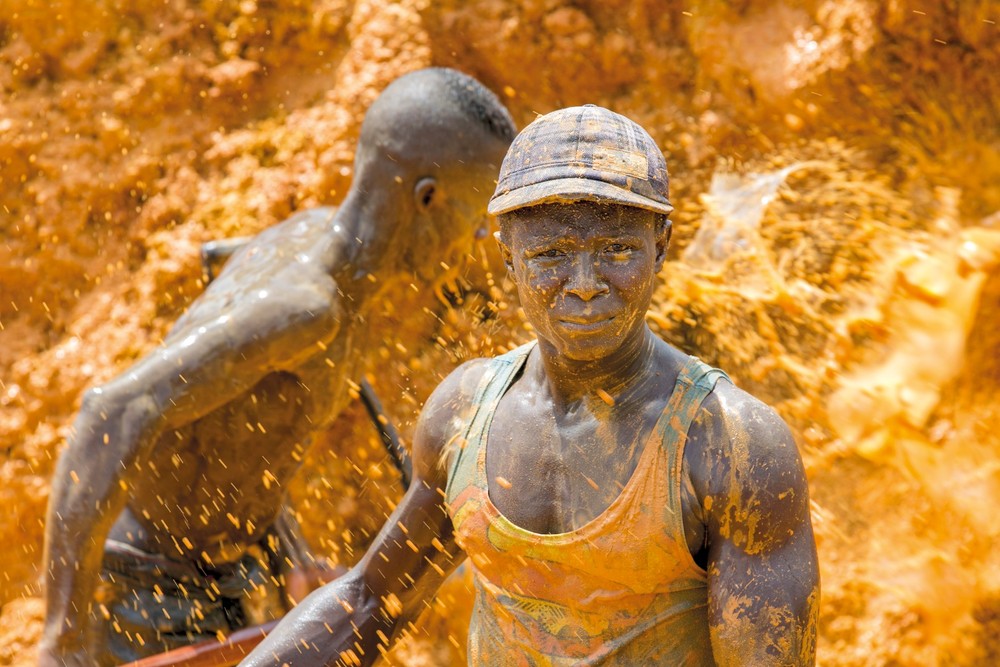
Heidi Woodman‘s project Gold Fever examines the Ghanaian gold industry. She describes the country’s relationship with gold as “complex and paradoxical”:

On the one hand, the industry is crucial to the health of the country’s formal economy. But on the other, production of the precious metal has had devastating long-term effects on the environment. This in turn has both direct and indirect adverse socio-economic repercussions, especially since an estimated 70%-80% of the population rely on the land for their livelihoods in one form or another. As such, Ghana’s health and success as a country and as a population is inextricably linked to its environment. So, the relentless pursuit of gold, while profitable in the short-term, is ultimately destroying the things that are most precious to Ghana.

Are Pathogens Passé?

Writing in Nature, Arturo Casadevall and Liise-Anne Pirofski urge microbiologists to retire the pathogen paradigm, arguing that “the focus on microbes is hindering research into treatments”:

The term pathogen started to be used in the late 1880s to mean a microbe that can cause disease. Ever since, scientists have been searching for properties in bacteria, fungi, viruses and parasites that account for their ability to make us ill. Some seminal discoveries have resulted — such as the roles of various bacterial and fungal toxins in disease. Indeed, our oldest and most reliable vaccines, such as those for diphtheria and tetanus, work by prompting the body to produce antibodies that neutralize bacterial toxins.

Yet a microbe cannot cause disease without a host.

What actually kills people with diphtheria, for example, is the strong inflammatory response that the diphtheria toxin triggers, including a thick grey coating on the throat that can obstruct breathing. Likewise, it is the massive activation of white blood cells triggered by certain strains of Staphylococcus and Streptococcus bacteria that can lead to toxic-shock syndrome. Disease is one of several possible outcomes of an interaction between a host and a microbe.

It sounds obvious spelled out in this way. But the issue here is more than just semantics: the use of the term pathogen sustains an unhelpful focus among researchers and clinicians on microbes that could be hindering the discovery of treatments. In the current Ebola epidemic in West Africa, for instance, much attention has been focused on the ill and the dead, even though crucial clues to curbing the outbreak may be found in those who remain healthy despite being exposed to the virus.

Lessons From The Digital Revolution

Reviewing Walter Isaacson’s The Innovators, James Surowiecki notices an important one – we shouldn’t romanticize the role of lone geniuses:

That may sound odd, since the story of invention is usually told as a story of great inventors. But as Isaacson reveals, the true engine of innovation is collaboration. The pairing of a creative visionary and a more practical engineer (such as John Mauchly and J. Presper Eckert, who created ENIAC, or Steve Jobs and Steve Wozniak at Apple) can be enormously productive. And it isn’t just strong pairs, either; the organizations that have done best at innovating have typically been those that have relied on strong teams made up of diverse thinkers from lots of different disciplines. …

One of the reasons diverse teams have tended to be more successful is that they have done a better job of turning ideas into actual products.

This is an important theme in Isaacson’s book: genuine innovations are not just about brilliant insights. They’re the result of taking those insights and turning them into things that people will actually use and then finding a way to get those products into people’s hands. One of the more interesting sections of The Innovators is Isaacson’s account of John Atanasoff’s quixotic quest to build a general-purpose computer by himself in the early 1940s. Atanasoff anticipated important aspects of what would become ENIAC and constructed a prototype. But because he worked alone, in Iowa, rather than in a lab with other scientists and engineers, his computer never became fully functional, and he became a footnote to history, eclipsed by Mauchly and Eckert. Isaacson takes Atanasoff’s efforts seriously, but he notes that “we shouldn’t in fact romanticize such loners.” Real innovation isn’t just about an invention. As Eckert put it, “You have to have a whole system that works.” And that’s hard to do when you’re all by yourself.

Everybody Loves Edmund

Reviewing David Bromwich’s The Intellectual Life of Edmund Burke, David Marquand examines why the 18th century British statesman resists tidy ideological labels:

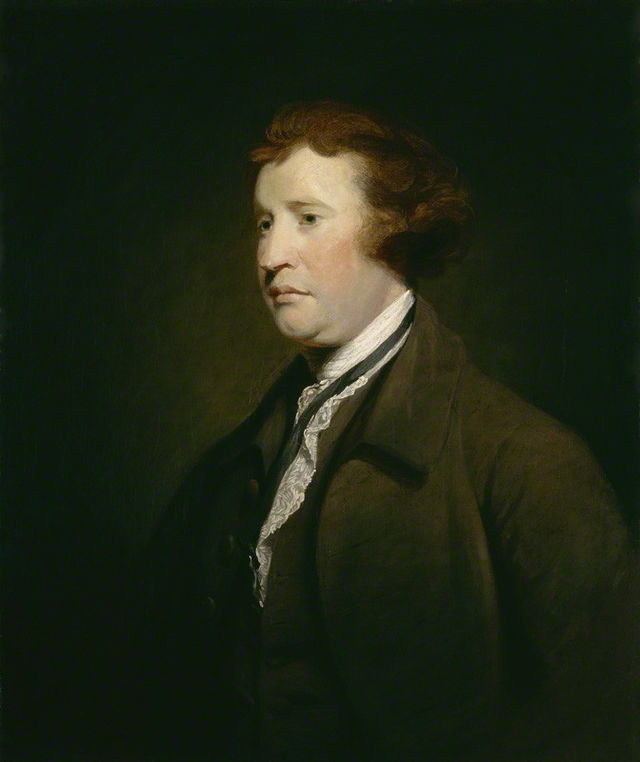
He was too original to classify in his own day or to fit the pigeonholes of academe in ours. The American political theorist Russell Kirk called him the EdmundBurke1771 (1) “father of conservatism” and this has become the conventional wisdom. There is something in it. Burke certainly believed in property, hierarchy and tradition and defended them with passion and occasional savagery.

However, typecasting him as a conservative makes his legacy banal and obscures its subtleties. Burke, the believer in hierarchy and tradition, was also Burke, the champion of the voiceless millions of Bengal; Burke, the friend of the liberty-loving American colonists in their dispute with the British crown; and Burke, the hammer of the grasping Protestant landlords of his native Ireland and their cruel penal laws.

For Lord Acton, the 19th-century historian and Gladstone protégé, Burke was one of the three greatest liberals in British history, along with Gladstone and Macaulay. Macaulay, too, considered him the greatest man since Milton. Gladstone thought his writings on Ireland a “magazine of wisdom”. Woodrow Wilson saw him as a paramount interpreter of English liberty. John Morley, Gladstone’s disciple and eventual biographer, wrote an admiring study of Burke while making it clear that he differed with him over the French Revolution.

Previous Dish on Bromwich’s book here and here.

(Image: Joshua Reynold’s portrait of Burke, circa 1767-69, via Wikimedia Commons)