The Shocking Truth, Ctd

This summer, we noted research that found a significant percentage of subjects preferred to suffer an electric shock rather than be alone with their thoughts. Alva Noë revisits the results, asserting that “there is good reason to doubt some of the findings of the study”:

Take, for example, the most widely discussed result: that some significant percentage of subjects administered a minor non-painful shock to themselves — like familiar household static electricity — when they might otherwise have spent six to 15 minutes quietly in the presence of their own thoughts alone. Notice, to begin with, that the subjects were wearing a self-shocking apparatus. Under those conditions, it strikes me that exploring the effects of shocking oneself, testing and reflecting on one’s responses, simply indulging in curiosity about it, should be counted as a form of engagement with one’s thoughts rather than a flight from them.

He zooms out to consider thinking’s complicated relationship with pleasure:

We tend to think of thinking as cerebral and inward looking and we contrast that with a kind of selfless outward orientation to what is going on around us. But this is confused. Is the mathematician working out a problem on paper looking out or in? And what about the visitor to a gallery concentrating on a painting. Isn’t this kind of looking (at the painting) or doing (writing on the paper) one of the forms that thinking can take for us?

And something similarly goes for the idea that we can simply range complex human psychological attitudes and choices along a spectrum from aversive to extremely pleasurable. As Fox et al. explain, “just thinking” can be valuable, meaningful and important in ways that are tied to, but not the same as, being simply pleasurable. The same is true, perhaps, of any form of what we call exercise. It can be hard to make yourself do your work out. But that doesn’t mean that it isn’t highly pleasurable. And even when it is, in some sense, aversive, that doesn’t mean that you don’t value it highly.
The Santa Con

Will Wilkinson recently shared why, as an atheist, he plans to teach his son to believe in Santa. Rob Stennett, a man of faith, also weighs the pros and cons. He argues that believing in Santa is good for kids, but notes that “many of my Christian friends don’t look at it this way”:

They think teaching about Santa can damage your child when it comes to believing in God. It’s not a stretch to see why. We teach our kids to believe there is a bearded man in the sky who knows you by name and cares about how you act. I think that’s why it’s so important to be careful about how I talk to my kids about Santa Claus. But I’m just never sure what to say. This year, I’ve decided to say nothing at all.

This morning, my daughter asked, “Dad, how does Santa get in our house when we don’t have a chimney?”

I was searching for the words when I decided I didn’t need to answer. I asked, “How do you think he comes in?” She gave me an elaborate answer, and I said, “That’s a very good theory.” It was a good theory. I didn’t lie to her — I just gave her room to discover the answers on her own.

Meanwhile, Michael Brendan Dougherty calls himself “unpersuaded by the more principled anti-Claus chorus.” He suggests that “there is something too flatly literalistic, even Puritanical, about their arguments”:

Radical Protestants of an older stripe thought holy days like Christmas were offensive because God is with us every day, and because they hated the “mass” in Christ’s Mass. How this translated in practice was that around the time other people began making merry, the dour low churchman marked the time with especially strenuous sermons against holy days.

Similarly, just as parents are conjuring a model of abundant generosity and joy, today’s killjoys make it a season of rote sermonizing against materialism. This misses the point entirely. A materialist looks under the tree and sees the year’s economic surplus, badly invested. It takes a spiritual person to see it as the work of St. Nick, as a recurrence of the Magi, or an imitation of the great generosity of the God-child born to us. Only the devil wants your Christmas to be just like all the other days. Save the mortifications for Lent. …

There’s also something to be said for a light touch with magic and myth. For “letting the faeries out” of your soda bread, and for what Chesterton called “creative credulity” in another defense of Santa. This doesn’t mean accepting fantastic stories cravenly and literally, but inhabiting them with zest.

Scores of Dish readers share their stories of Santa disillusionment here.

A Poem From The Year

6337641903_774c9f44df_b

“Inversnaid” by Gerard Manley Hopkins:

This darksome burn, horseback brown,
His rollrock highroad roaring down,
In coop and in comb the fleece of his foam
Flutes and low to the lake falls home.

A windpuff-bonnet of fawn-froth
Turns and twindles over the broth
Of a pool so pitchblack, fell-frowning,
It rounds and rounds Despair to drowning.

Degged with dew, dappled with dew
Are the groins of the braes that the brook treads through,
Wiry heathpacks, flitches of fern,
And the beadbonny ash that sits over the burn.

What would the world be, once bereft
Of wet and of wildness? Let them be left,
O let them be left, wildness and wet;
Long live the weeds and the wilderness yet.

Please consider supporting the work of The Poetry Society of America here.

(Photo by Espen Klem)

Face Of The Day

dish_fiftyshrinks

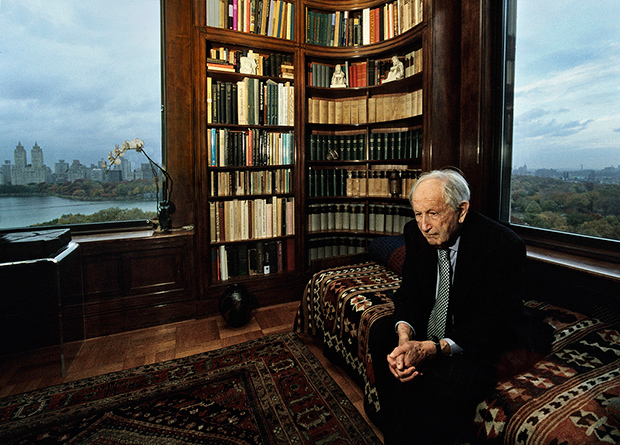
For his book Fifty Shrinks, photographer and psychiatrist Sebastian Zimmermann captured New York therapists in their offices:

The seedling ideas for the project began to take root as Zimmermann built his own practice in Upper West Side Manhattan, where he observed within himself a sense of remoteness from the outside world. While his patients shared with him intimate portions of themselves, the role of psychiatrist necessitated a detached and discrete existence.

For Zimmermann, the remedy for the psychiatrist’s exile was the photographer’s inquiry. As soon as he began capturing the offices of his friends and peers, word spread and his own position within the city’s network of mental health professionals opened doors that would otherwise have remained closed. For the artist, his psychiatric training lent itself to portraiture in the sense that both required careful attention to the barely perceptible psychological rhythms of his fellows. Where therapists mostly cast their gaze outwards, here they become the vulnerable objects of our own, their evanescent anxieties and idiosyncrasies unveiled for a single precious instant.

See more from the series here.

(Image of Martin Bergmann, PhD, copyright © Sebastian Zimmermann)

The Agony Of Christmas In Broken Homes

Heather Havrilesky offers advice to a stressed-out millennial revisiting a contentious relationship with her mother. She recommends serious self-care and being “prepared to serve the common good”:

Now, why should you be prepared to serve the common good? Because this is the realistic, adaptive, self-protective behavior of a mature adult. Instead of focusing on your own drama, you should focus on helping others. Because, look, part of you still believes that you might be able to right the wrongs of the past. The Jekyll-and-Hyde mother is tricky for this reason; her good days fool you into believing that you might be able to shake her out of her irrational attacking state. Listen to me: Your mother will never change. Going home for the holidays is not about “fixing” her or the past. It’s about tolerating the freaks you grew up with, making them dinner, giving them your unconditional love, and keeping your mouth shut. Realizing this might seem to serve them, but trust me, it serves you the most, by keeping you safer from heartbreak.

So help with the homework. Go out and buy some groceries. Do the dishes. Pour the wine. Listen. Laugh. Do the dishes again. Listen some more. Don’t expect to be in the best mood as you do these things. Do them anyway.

Meanwhile, Berit Brogaard explains what makes Christmas a hard time for divorced parents:

When sane parents separate, many judges, thankfully, divide custody equally. Each parent gets his or her fair share of custody, if at all possible. Even when it’s not possible to share the time with the children equally, judges will usually attempt to divide up the holidays evenly. The kids spend every other holiday with mom and every other holiday with dad. It certainly is in the children’s best interest to get to spend some time with each parent. Most kids, with decent moms and dads, would prefer to spend every holiday with both parents. The precious little ones secretly hope for the impossible: That their divorced or separated parents will get back together. But despite their wishes, they adjust to the situation. They have no other choice.

Nor do the parents. As we face the holidays many single parents face a very lonely time. They may be with dear family members: parents, brothers, sisters, nieces, nephews, aunts and uncles. Yet they may nonetheless feel a profound pain in their hearts, even as they watch close relatives savor the pecan pie or scream in delight when they rip open their Christmas presents. Their own children are far away.

Quote For The Day

“The recent unpleasantness at The New Republic is more than a hiccup among the country’s political and cultural and literary elite. The zone of seriousness that the journal sought to establish is today under siege. It is, alas, the object of scorn from yahoos of all parties. Writing in the special anniversary issue published to coincide with the magazine’s centennial, film critic David Thomson wrote presciently: “Even a hundred-year-old magazine, proud and illustrious, eloquent and earnest, right and wrong, may turn into vapor. We are more fragile than we think.” Those who rejoice in The New Republic‘s collapse should think twice about what they wish for,” – Steve Wasserman.

The 2014 Dish Awards!

It’s that time of year again! As usual, our elite, highly-specialized blue-ribbon panel has pored over more than a thousand posts in order to select this year’s award finalists, and now it’s time for you to have your say!

Click the links below and vote for the 2014 Malkin AwardHathos AlertPoseur Alert, and Yglesias Award. Polls are also open for the year’s best Chart, Mental Health Break and View From Your Window, as well as the 2014’s Coolest Ad, Face Of The Year, and for the first time ever, Map Of The Year and Beard Of The Year!

Our polls will close on Wednesday, December 31, at midnight. Winners will be announced soon after. Have at it:

Please note: due to there not being enough nominees this year, we will not be issuing a 2014 Hewitt Award, Moore Award, or Dick Morris Award. Learn more about all our awards here.

America’s Christmas Tree Capital

Trees-Chart-2

Kelly Williams Brown points to the Beaver State:

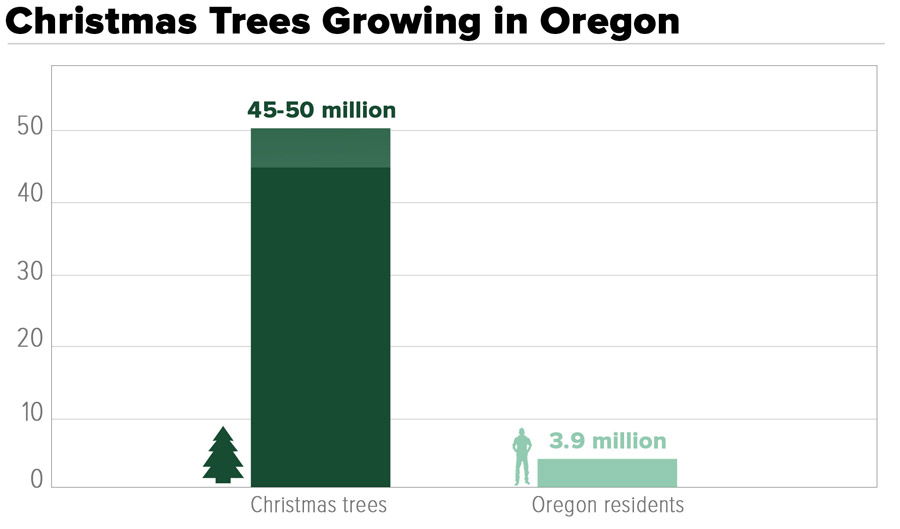
Oregon is the biggest producer in the country, and arguably the world. In this green and gray state, there are 45 to 50 million Christmas trees in the ground at any given time, which means Christmas trees outnumber humans 12 to 1.

It’s not just that Oregon has a the right climate to grow the trees (though it does) or that a state historically reliant on logging would continue to produce trees as products. Oregon is where the modern Christmas tree industry in America was born, thanks to a Nebraskan-born farmer named Hal Schudel.

In 1955, Hal had an enormous idea: Perhaps Christmas trees, like corn, wheat or soybeans, could be a crop. They could be bred selectively, attended to and fertilized, sheared each year into the perfect cone. A tree’s nooks and crannies that perfectly showcase your ornament collection didn’t happen by accident. They were designed. Like every agricultural product, Christmas trees are now selectively bred and groomed for what the consumer wants: the perfect color; needle retention to minimize vacuuming; dense, bushy branches that can hold the heaviest ornament; and perhaps most importantly, the scent that wafts gently through a home and announces the presence of Christmas.

Hal’s insight became Holiday Tree Farms, which started as 300 acres and now reaches 8,500 acres, is one of the two largest Christmas tree operations in the world, trading off with McKenzie Farms, also in Oregon. Holiday Tree Farms is still held by Hal’s family, and this year will ship over one million Christmas trees. Today, 98% of Christmas trees come from farms like the one first envisioned by Hal.