The Weekly Wrap

http://www.youtube.com/watch?v=D6v4WrvG7xk

Friday on the Dish, Andrew cheered Portman’s reversal on marriage equality as change acceleratedassessed the accuracy of House of Cards, and was wowed by Francis’ humility, which reflected the best of Catholicism. In political coverage, Portman blurred the line between the personal and the political on marriage equality, which put opponents in a tough spot. We criticized America for failing to adequately care for the troops as sequestration put defense spending on the chopping block. Hillary sprinted to an early lead in the 2016 polling, Nate Cohn shrugged at Obama’s ratings slip, CPAC’s diversity disappointed, and a tortured priest reconciled with the Pope.

In assorted news and views, readers jumped in to defend Amazon, clarified the details of the Veronica Mars Kickstarter campaign, and enlightened us on solar energy. As the slow decline of RSS continued, we wondered what Google product would jettison next, and Zachary Seward considered the effect on dissidents in Iran and China. Science shattered our hopes for a real-life Jurassic Park, psuedoscientific paleo diets still worked to shed pounds, Dr. Leslie Kernisan prescribed downloads,  and we charted 20th century causes of death.

Meanwhile, Drezner explained international politics through Girls, Evan Soltas worked out the reasons people are working later in life and Americans multitasked on the road. Newspapers found their calling, Tom Vanderbilt picked apart the legend of the perfect lock, and even the CIA couldn’t train cats. Gotye got the Gollum treatment in the MHB while the US banned frequent contributor Pogo, we checked in on CPAC in the FOTD, and jumped across the pond in the VFYW.

D.A. 

The rest of the week below the jump.

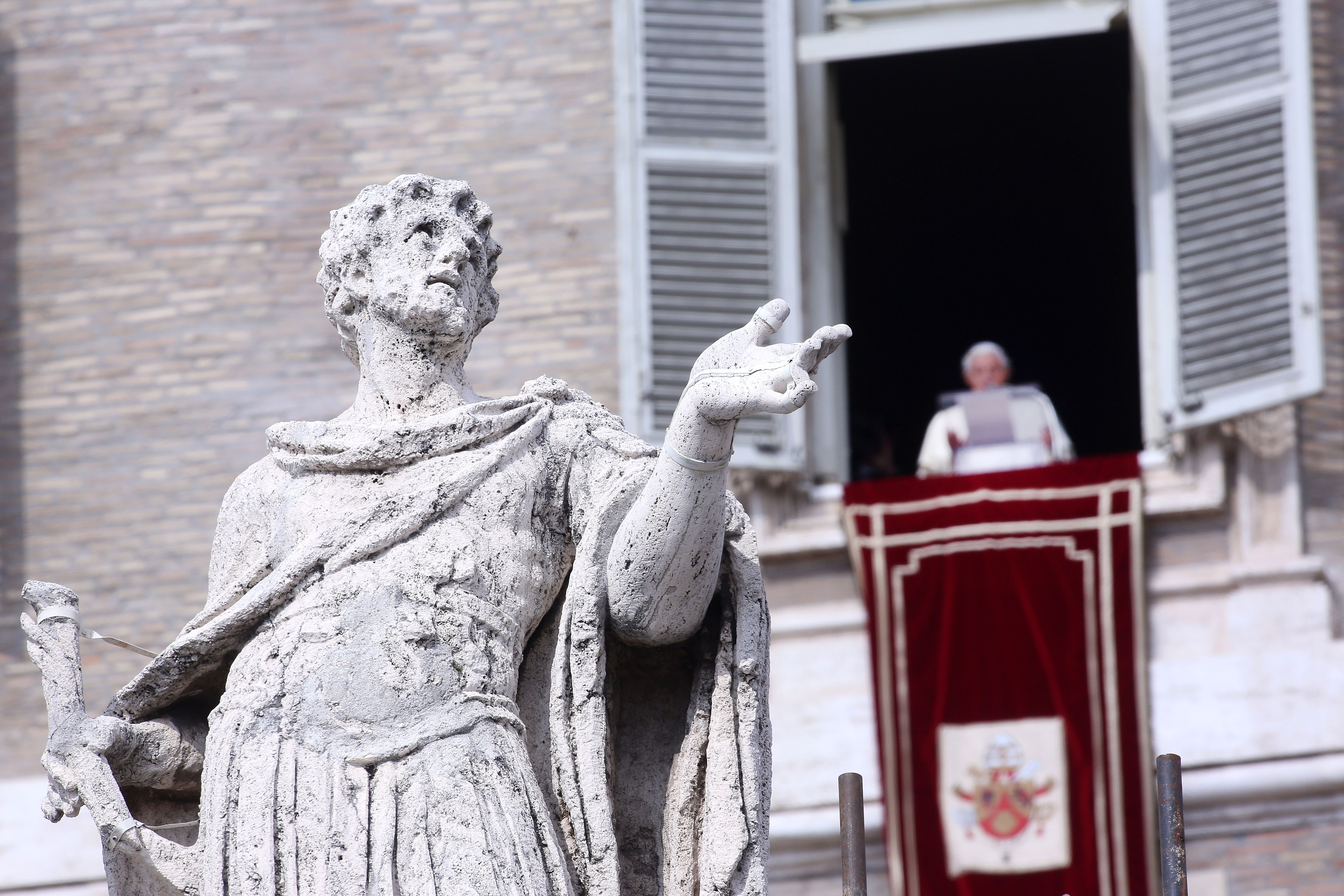
ITALY-VATICAN-POPE-CRIB FIGURINE

By STR/AFP/Getty Images

Thursday on the Dish, Andrew hoped for strong leadership from a concise Pope of the Assisi tradition, but grew uneasy at his disputed role in 1970’s Argentina and his pending court appearance. To relax, he meditated by playing Angry Birds (but won’t watch the show).

In politics, Obama’s approval returned to pre-election levels, Noam Scheiber tired of Paul Ryan’s games, and Boehner risked Hannity’s wrath over Obamacare. Blackwater extended the CIA’s reach beyond the rule of law, IEDs migrated into Syria, Tik Root mourned teens executed in Yemen, and Ambers found drones to be the best of our bad options. On Pope Francis’ first full day, we corrected the record and struggled for clarity regarding his ties to the Junta, and hoped that his background would make a good recession Pope. While Garry Wills revealed that he might bring the clergy down to earth, readers threw in their views and the Daily Mail quarreled with his stance on the Falklands.

Elsewhere around the web, World’s Best Dad reprogrammed a Princess to be the Heroine, Google relegated Reader to the dustbin, new technologies paved the way for more solar power, and Bas Van Abel designed a conflict-free phone. The Onion spoiled the next episode of Girls and Kickstart got a producer credit in the Veronica Mars movie, but that may not have been a good thing. The Atlantic spouted management-speak, Christian Caryl shone a light on the worst parts of the Malaysian sponsored content scandal, and the library went underground.

Lydia DePillis worried about the future of NOLA’s 9th district, Dana Becker encouraged readers to release their stress, and Rhys Southan chose suffering over eternal sleep. Yglesias advised low-income students to aim high in their college applications, readers added another layer to the debate on racism and made the case against civil polygamy. The Pet Shop Boys gave us more than we deserve while Dr. Andy Hildebrand defended auto-tune. A Guatemalan peak filled the VFYW, Pogo remixed Kenya in the MHB, and a mustache froze in the FOTD.
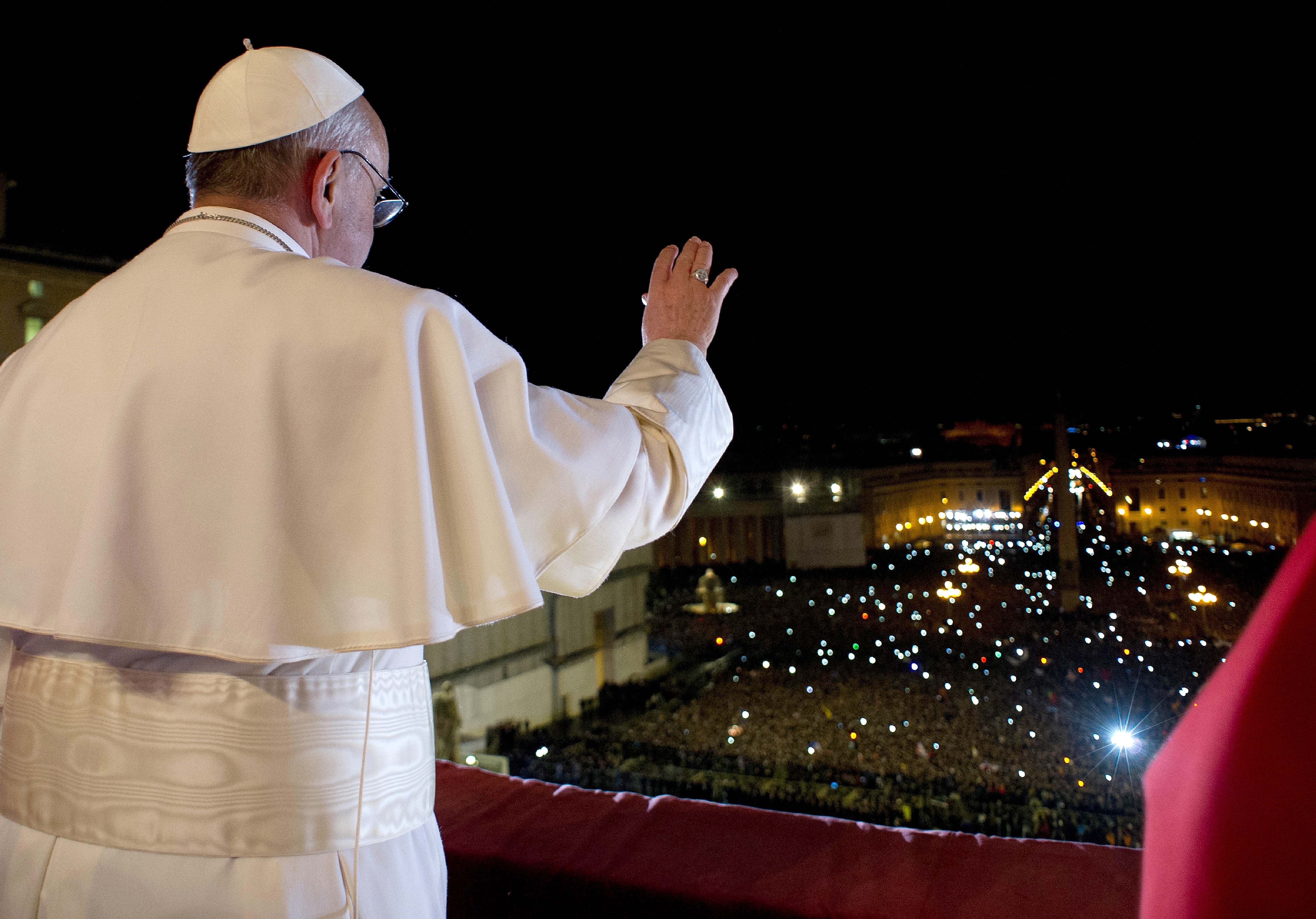
The Conclave Of Cardinals Have Elected A New Pope To Lead The World's Catholics

By L’Osservatore Romano/Getty Images

Wednesday on the Dish, Andrew greeted the new Pope in real time, and looked forward to seeing his marriage equality learning curve. At home, he flunked Paul Ryan’s budget, called out Republicans for taking obstructionism too far, and knew hope for marijuana legalization as a result of the progress on marriage equality, which continued its advancement down under. Elsewhere, he drew parallels between anti-semitism and homophobia and protested comparisons to Stalin or Hitler.

In politics, we wearied of Paul Ryan’s schtick as Derek Thompson broke down his budget, Kevin McCarthy took points off for Obama’s professorial attitude, and Rand Paul hearkened back to the “big tent” days of the GOP. Max Fisher noted ambiguity in the UN report on a murdered Gaza child, the Falklands opted to stay British. As the Conclave ended, Philip Ball cleared up the Vatican’s smoke coloring as we pulled back the curtain on the seconds before the announcement and rounded up Twitter’s reactions. Meanwhile, Garry Wills looked forward to a Pope who was “ordinary and ignorable” and Massimo Gatto deconstructed the Pope Emeritus’ ruby slippers.

In assorted coverage, Anna Clarke uncovered USPS-enabled discrimination, Robin Hanson lost sleep over couples’ bed arrangements, and Rebecca Willis blacklisted Manet from being an Impressionist. Judy Stone disputed the rationale behind employer drug tests and the drug war slowed, while Ben Goldacre pulled back the curtain on publication bias in pharmaceutical studies. Dr. Suess sucked on the silver screen, Margaret Talbot found practical advice for the trans population on YouTube, and video sites tested out some new revenue models.

We deliberated over juror questions, readers fleshed out the debate on the origins of racism, the UFC fought homophobia, and the internet revealed its charitable side. SubPop held auditions to complete the Postal Service, the VFYW looked down on Hong Kong and we listened in on the Pope’s first address in the FOTD.

Tuesday on the Dish, Andrew pushed neocons to the fringes of the Republican party, expressed his ambivalence about the Rand-Rush alliance, grimaced at Beltway clubbiness, As the Conclave began, he held on to hope for the future of the Papacy despite the lack of diversity among the Curia and chuckled at news of the Vatican’s bathhouse. Meanwhile, he responded to more reader comments on the Iraq War and unpacked another fallacy in his own support.

In the political realm, the courts iced Bloomberg’s soda ban, we negotiated NIMBY-ism for nuclear waste, and a small minority actually watched partisan cable news. Overseas, North Korea rattled the saber, as the Chinese rushed to censor Weibo and subsidized the arts.

Elsewhere on the web, a reader ran down the arguments against our using Amazon’s Affiliate program, Bruce Bartlett explained why the gains at the top haven’t been trickling down, and companies hired robot surrogates. Palin took up arms for Christmas, SXSW jumped the shark, sanitation workers kept us healthy, and we dissected the history of heart surgery procedures. Patrick Kurp grew nostalgic with age, Ian Stansel distinguished between suburbia and the suburbs, and leisure activities went longform. The fan fiction audience held no surprises, author “Acknowledgments” were either displays of gratitude or gratuitousness, and Bob Woodward penned a tone-deaf biography of John Belushi.

Autumn Whitefield-Madrano took pride in her self-care, we were traumatized by Q-tips on Girls, and the EU sought gender equality through banning porn. As an adult film actress prepped for filming in the FOTD, we featured a Sacramento Stonehenge in the weekly VFYW contest, snow fell on Flagstaff in the VFYW, and penguins tripped their way through the MHB.

The_Frozen_Thames_1677

Monday on the Dish, Andrew contemplated sequestration’s effect on military spending, absolved Israeli forces in the death of a Gaza child, and criticized the worldwide governmental inaction on climate. Elsewhere, he disagreed with TNC on the provenance of racism, cheered Shafer’s take on advertorials while Orwell described them perfectly, solicited the next round of “Ask Andrew Anything” questions.

In political coverage, Paul Ryan selectively accounted for the cost of Obamacare as Justin Green predicted a missed opportunity and  we balanced Social Security against Medicare. Kevin Bullis highlighted the greener side of fracking and troubles in the Chinese solar market threatened American installations. Pete Wehner assigned Reagan to the RINO camp, Peter Beinart declared the Bush 2016 campaign DOA, and Rand Paul’s influence rippled outward. While Obama obscured more from the public eye, Hamas and Morsi exasperated each other, and the Guardian traced the history of some haunting images out of Syria.

In assorted coverage, The Economist audited the internet, Frank Abagnale described how modern technology would make him harder to catch, Tim De Chant saw dark clouds on the horizon for US satellites, and Evgeny Morozov explored ethical designs. Nick Holdstock weighed the merging of games and the news, Gregory Ferenstein slimmed down by standing up, and SCOTUS dissected the property rights for GMO seeds. Rachel Kolb filled in the gaps on lip-reading, monsters were nowhere to be found on ancient maps, David Leventi found beauty in dark places, and David Sessions blamed the French’s poor English on Hollywood.

Meanwhile, readers contributed their thoughts on what’s in a name, and argued against polyamory with John Corvino piling on. Garance Franke-Ruta brought Columbia back into the spotlight, women watched from outside the Conclave. Hindus in Indonesia prepared for the Day of Silence in our FOTD, a dance lesson solved racism in the MHB, the SoCal sun peeked through the clouds in the VFYW.

screen-shot-2013-03-05-at-6-04-25-pm

Detail of Piero della Francesca’s “Virgin and Child Enthroned with Four Angels”

Last weekend on the Dish, we provided our usual eclectic coverage of religious, books, and cultural coverage. In matter of faith, doubt, and philosophy, Conor Williams pondered the miracles that come from love, J.L. Wall examined an exception to the decline of the religious novel, and Kerry Howley imagined a conversation between Schopenhauer and Joel Osteen. Christian Wiman ruminated on the parables of Jesus, Jerry Saltz praised Piero della Francesca’s artistic vision, and Stefany Anne Golberg visited the Shaker Heritage Society in New York. Alan Jacobs remembered Walker Percy’s Lost in the Cosmos, readers debated arguments against polygamy, Robert Zarestksy argued that Isaiah Berlin thought like a fox, and Kiley Hamlin asked why we judge each other.

In literary coverage, W.H. Auden critiqued the gluttony of reading, Amit Majmudar found that contemporary fiction fears sentimentality, and John Fram described writing a bad book for money. John Jeremiah Sullivan movingly recalled his father’s love, Jason Resnikoff traced the evolution of the word “indescribable,” and Carmel Lobello provided a Scrabble player’s dream. Claire Barliant highlighted a library of unborrowed books, Cynthia L. Haven explored how Polish-born poet Czesław Miłosz’s became a Californian, and Mark Levine mused on what former Poet Laureate Philip Levine was like in the seminar room. Mark Oppenheimer gave tips on freelancing in the digital age, Julian Baggini held that encyclopedias always were relics, and Simon Akam mourned the distinctly American transformation of a butchered pun. Read Saturday’s poem here and Sunday’s here.

In assorted news and views, Maggie Koerth-Baker compared gun violence to climate change, Marc Tracy showed where Moneyball is bankrupt, and Chip Scanlan emphasized the power of silence for journalists conducting interviews. There proved to be an app for STD diagnosis, Conner Habib critiqued Alain de Botton’s views on sex, and Rose Surnow detailed the market for paying for cuddling. Marina Galperina gazed at webcam performers who pose like they’re in a classic work of art, Niall Connolly delved into the history and enduring popularity of “voguing,” Tom Junod looked back at Dazed and Confused, and Megan Garber cast a light on moon towers.

MHBs here and here, FOTDs here and here, VFYWs here and here, and the latest window contest here.

M.S and D.A.

The Daily Wrap

The Conclave Of Cardinals Have Elected A New Pope To Lead The World's Catholics

Today on the Dish, Andrew greeted the new Pope in real time, and looked forward to seeing his marriage equality learning curve. At home, he flunked Paul Ryan’s budget, called out Republicans for taking obstructionism too far, and knew hope for marijuana legalization as a result of the progress on marriage equality, which continued its advancement down under. Elsewhere, he drew parallels between anti-semitism and homophobia and protested comparisons to Stalin or Hitler.

In politics, we wearied of Paul Ryan’s schtick as Derek Thompson broke down his budget, Kevin McCarthy took points off for Obama’s professorial attitude, and Rand Paul hearkened back to the “big tent” days of the GOP. Max Fisher noted ambiguity in the UN report on a murdered Gaza child, the Falklands opted to stay British. As the Conclave ended, Philip Ball cleared up the Vatican’s smoke coloring as we pulled back the curtain on the seconds before the announcement and rounded up Twitter’s reactions. Meanwhile, Garry Wills looked forward to a Pope who was “ordinary and ignorable” and Massimo Gatto deconstructed the Pope Emeritus’ ruby slippers.

In assorted coverage, Anna Clarke uncovered USPS-enabled discrimination, Robin Hanson lost sleep over couples’ bed arrangements, and Rebecca Willis blacklisted Manet from being an Impressionist. Judy Stone disputed the rationale behind employer drug tests and the drug war slowed, while Ben Goldacre pulled back the curtain on publication bias in pharmaceutical studies. Dr. Suess sucked on the silver screen, Margaret Talbot found practical advice for the trans population on YouTube, and video sites tested out some new revenue models.

We deliberated over juror questions, readers fleshed out the debate on the origins of racism, the UFC fought homophobia, and the internet revealed its charitable side. SubPop held auditions to complete the Postal Service, the VFYW looked down on Hong Kong and we listened in on the Pope’s first address in the FOTD.

D.A.

(Photo by L’Osservatore Romano/Getty Images)

The Daily Wrap

Today on the Dish, Andrew pushed neocons to the fringes of the Republican party, expressed his ambivalence about the Rand-Rush alliance, grimaced at Beltway clubbiness, As the Conclave began, he held on to hope for the future of the Papacy despite the lack of diversity among the Curia and chuckled at news of the Vatican’s bathhouse. Meanwhile, he responded to more reader comments on the Iraq War and unpacked another fallacy in his own support.

In the political realm, the courts iced Bloomberg’s soda ban, we negotiated NIMBY-ism for nuclear waste, and a small minority actually watched partisan cable news. Overseas, North Korea rattled the saber, as the Chinese rushed to censor Weibo and subsidized the arts.

Elsewhere on the web, a reader ran down the arguments against our using Amazon’s Affiliate program, Bruce Bartlett explained why the gains at the top haven’t been trickling down, and companies hired robot surrogates. Palin took up arms for Christmas, SXSW jumped the shark, sanitation workers kept us healthy, and we dissected the history of heart surgery procedures. Patrick Kurp grew nostalgic with age, Ian Stansel distinguished between suburbia and the suburbs, and leisure activities went longform. The fan fiction audience held no surprises, author “Acknowledgments” were either displays of gratitude or gratuitousness, and Bob Woodward penned a tone-deaf biography of John Belushi.

Autumn Whitefield-Madrano took pride in her self-care, we were traumatized by Q-tips on Girls, and the EU sought gender equality through banning porn. As an adult film actress prepped for filming in the FOTD, we featured a Sacramento Stonehenge in the weekly VFYW contest, snow fell on Flagstaff in the VFYW, and penguins tripped their way through the MHB.

D.A.

The Daily Wrap

The_Frozen_Thames_1677

Today on the Dish, Andrew contemplated sequestration’s effect on military spending, absolved Israeli forces in the death of a Gaza child, and criticized the worldwide governmental inaction on climate. Elsewhere, he disagreed with TNC on the provenance of racism, cheered Shafer’s take on advertorials while Orwell described them perfectly, solicited the next round of “Ask Andrew Anything” questions.

In political coverage, Paul Ryan selectively accounted for the cost of Obamacare as Justin Green predicted a missed opportunity and  we balanced Social Security against Medicare. Kevin Bullis highlighted the greener side of fracking and troubles in the Chinese solar market threatened American installations. Pete Wehner assigned Reagan to the RINO camp, Peter Beinart declared the Bush 2016 campaign DOA, and Rand Paul’s influence rippled outward. While Obama obscured more from the public eye, Hamas and Morsi exasperated each other, and the Guardian traced the history of some haunting images out of Syria.

In assorted coverage, The Economist audited the internet, Frank Abagnale described how modern technology would make him harder to catch, Tim De Chant saw dark clouds on the horizon for US satellites, and Evgeny Morozov explored ethical designs. Nick Holdstock weighed the merging of games and the news, Gregory Ferenstein slimmed down by standing up, and SCOTUS dissected the property rights for GMO seeds. Rachel Kolb filled in the gaps on lip-reading, monsters were nowhere to be found on ancient maps, David Leventi found beauty in dark places, and David Sessions blamed the French’s poor English on Hollywood.

Meanwhile, readers contributed their thoughts on what’s in a name, and argued against polyamory with John Corvino piling on. Garance Franke-Ruta brought Columbia back into the spotlight, women watched from outside the Conclave. Hindus in Indonesia prepared for the Day of Silence in our FOTD, a dance lesson solved racism in the MHB, the SoCal sun peeked through the clouds in the VFYW.

D.A.

The Weekly Wrap

Bill Clinton Campaigns For A Second Term As President

Friday on the Dish, Andrew accepted Bill Clinton’s DOMA stance without absolving him of past actions, gawked at the contortions to which Catholics would go to oppose gay rights, and remained hopeful at the chance of a Grand Bargain. He looked into the online media abyss with Michael Wolf and gave us a “talking-heads-up” for Sunday. In politics, we cautiously cheered the recent jobs report, contemporary constitutions excluded the right to bear arms, and Alan Abramovitz made an argument for the Voting Rights Act that didn’t rely on race. Internationally, hawks loved Rand Paul’s contrariness even as they disagreed with him, Sam Roggeveen contributed to the growing Iraq War retrospective, Marc Lynch dreaded the effects of Iran’s declining popularity, and the Harlem Shake meme took on a revolutionary tone.

In assorted news and views, Arthur Nelson worried about a Boomer-initiated housing bubble and Ryan Healey stripped down the effects of ending Canada’s pole-dancing visa, and Freidersdorf called out Breitbart and O’Keefe. Virginia Hughes felt ill at the idea that lobbying would trump science in allocating money to disease research while Google doled out prescription advice and Dr. Rob Lamberts experimented with his own subscription model in health care. Kevin Charles Redmon cultivated the argument for farmed Rhino horns to thwart extinction, fracking hogged scarce water resources in the West, and

Heading into the weekend, Grandpa pwned and was happier for it and Don Ward pointed out how badly our shoes need shining. George Packer updated his notion of the bare necessities, Colin McSwiggen blamed his tools, and Jill Filipovic exercised her individuality by keeping her surname. Cat Rohr helped ex-cons climb the corporate ladder and readers leaned into the discussion on Sheryl Sandberg’s new book. David Haglund noted a definition that has been around literally forever, Alice Jones fretted over the dissolving fourth wall, and Rich Juzwiak opted for the most generic hookup music possible. We previewed a brutally honest teen-party movie in the MHB, piloted a drone in the FOTD, and peeked through the blinds at Buenos Aires in the VFYW.

D.A.

Rest of the week below the jump.

Thursday on the Dish, Andrew applauded Rand Paul’s righteous filibuster while we rounded up other reactions to the 13-hour dose of awesome, and recognized the decline of christianist influence thought in their inability to engage in secular debate. He dubbed Clinton’s DOMA announcement a “BFD” and stood in awe at the progress of gay rights during his lifetime,

In the political realm, Ponnuru looked forward to 2016 debates featuring Rand Paul, Chait found the paragon of truthiness, and we welcomed the blossoming of more conservative sanity. Readers shared their own stories from the lead-up to the Iraq War, Republicans sought “permission” to support marriage equality, and Evan Soltas declared the sequester overhyped. Overseas, the US weighed the odds in Syria, we eagerly awaited a peaceful outcome for the Kenyan election, and bookies pontificated about the next pontiff.

In miscellaneous coverage, a reader blurred the line between work and play for reporters, NPR considered all things about the Dish model, Hairpin offered Amazon alternatives, and freelancers measured payment against pageviews. Drum cast about for an explanation of the public’s climate ennui, soccer kept the lights on, stoners reclaimed 3-D printers for peaceful purposes, and a Yellow Lab chilled with some herbal help. Andrea Swensson passed on SXSW, Douthat ignored the Hathaway haters, and Peter Orszag challenged colleges to close to dropout gap.

Eslewhere, readers threw in their thoughts on san men, city-dwellers were sad (but there’s an app for that), and Harold Pollack calculated that substance abuse treatment for the mentally ill was definitely worth it. As Donnie Collins navigated the health insurance market, Gwynn Guilford solved to China’s bachelor problem, and Lauren Drain proposed that sex might be straining WBC’s ties, We compiled rude awakenings in the MHB, our hair stood on end at the adorableness of the next generation of orangutan in the FOTD,  snow fell on Old Dominion in our VFYW.

Wednesday on the Dish, Andrew recalled the emotional influence of 9/11 in the lead up to the Iraq War, watched Rumsfeld’s war crimes pile up, and insisted that the government to release the Torture Memos to bring evidence to the debate surrounding torture. He lauded Israel’s airing of debate, hit Republicans for their hypocrisy on weapons expenditures and their suicidal spite on the sequester while agreeing with PM Carpenter on the shifting GOP, and declared the empirical and civil debates over marriage equality dead. In media coverage, Andrew waved as the Daily Caller left reality behind, walked us through the reasoning behind The Dish’s use of Amazon’s Affiliate program, and a reader took NBC to task for its “sponsored content”.

In politics, we gathered reactions to Chavez’s death, including some of Hitch’s words from beyond the grave, Latin America countries diverged in their agreement with the US, and Jeb Bush erred on Evangelical Latinos. Noah Millman joined the discussion on the Iraq war and Congress started to come around on DOMA. Meanwhile, Charles Hurt’s voodoo rant garnered him a Hewitt nomination, we wrestled with visualizing inequality,  and Obama’s Energy nominee walked the tightrope on fracking.

In assorted coverage, Till Roenneberg pushed for high schoolers to be able to sleep in, ADHD sufferers paid a price later in life, and Sheryl Sandberg’s views on women in the workplace stoked controversy among feminists. We rummaged through reader responses on recycling, Roger Goodell presaged an on-field death for the NFL, Kevin Ashton followed Coke across borders,  and Rob Horning climbed a mountain of paperwork in pursuit of fairness.

Russell Brand gave up drugs in favor of reality, Mark Oppenheimer turned the blame on TV watchers and a reader encouraged us to suspend our disbelief when reading the gospels. Bill Gates brutalized the book Why Nations Fail, the NYT shuttered its Green blog, and negativity dominated Twitter. Frank Underwood invaded the Conclave in the MHB, NYC showed us a dreary, drizzly day in the VFYW, and we turned our gaze on police violence in India in the FOTD.

Tuesday on the Dish, Andrew meditated on the origins of modern conservative thought, saw spectres of the past in Israel’s segregated bus lines, and questioned the recent announcement of a baby “cured” of HIV. In home news, he wrapped up the first 30 days of the new Dish model.

In political coverage, Ta-Nehisi regretted his perceived powerlessness in the march to the Iraq war, while Dreher’s emotions swayed him in favor of it. Peter Person ascribed the slowdown in healthcare costs to the ACA, Adam Gopnik probed the limits of the market, and Jeb jumped back from his published stance on immigration. Seth Masket deliberated over politician perceptions, the GOP gave little ground in their latest budget, while Ponnuru made room in the party for Chris Christie. Scarborough pwned Krugman and the Daily Caller channeled Family Guy in its Ashley Judd coverage. Abroad, the Tories tussled with a perception problem and Syria schools felt the effects of the extended conflict.

In assorted coverage, Seattle weighed a tax on bikes, the cost of flying fell without our noticing, and Vince Beiser pushed back against the idea of “peak oil”. Readers continued the thread on doctor salaries while surgeons honed their skills on their smartphones, Lori Rotenberk went to DIY University, and Judith Glaser tried to wean us off of arguing. Dylan Bergeson dug through archaeological findings in the West Bank, chimpanzees savored their first taste of freedom, and luck loomed large in Hong Kong. Ruth Clark praised Jell-O’s ability to preserve and Evgeny Morozov protested Big Data-influenced punk.

Meanwhile, journalists sold their services to Malaysia, Marie Chaix found inspiration in pain, Madhavankutty Pillai chronicled the troubles of bringing great novels to the big screen, and Twain posed topless. We resorted to the tiebreaker for our Kagoshima VFYW contest and awoke to a Cancun sunrise in the VFYW, Spidey’s romance got the BLR treatment in the MHB, and Misao Okawa celebrated the big 1-1-5 in the FOTD.

debate-photo-andrew-sullivan-doug-wilson

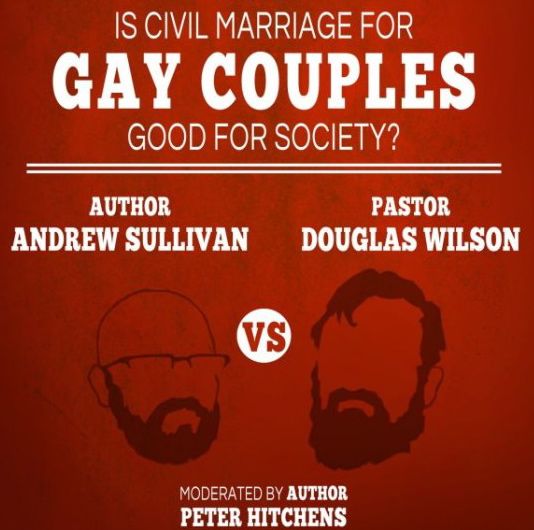
Monday on the Dish, Andrew continued his look back at his arguments for the Iraq War, pitted Cardinal O’Brien against himself and wondered if the Curia would recognize their hypocrisy. He saw apples and oranges in the South Park-Arrested Development debate, provided the latest numbers on the new Dish model, and debated marriage equality in a battle of beards. In the final installment of the “After Dark” series, Sully and Hitch contested the existence of any factual basis for the gospels.

In political news and views, Jacob Heilbrunn sounded an alarm over epistemic closure on the right, legislators’ perceptions of their constituencies skewed conservative, and TNC examined the wave of public opinion that Obama rode to power. We muddled through the data on gun violence in America, Cass Sunstein worried about coercive paternalism, the Golden State flipped on marriage equality in under 30 years, and McKibben called for colleges to green their portfolios. The sequester showed no signs of going anywhere soon, but Israel escaped its effects as Tom Doran sought a way forward in the increasingly segregated West Bank. Readers clarified the charges against Bradley Manning while the government focused on low-level leakers, the military continued to struggle with sexual assaults, and Tony Blair was unrepentant 10 years after the Iraq invasion.

In assorted coverage, Austin Considine broke down the research on BPA, MIT scientists visualized the invisible, Google Glass threatened to take away our last shred of privacy, and Ross Andersen predicted a Skynet devoid of empathy. We tracked drug prices from cultivation to distribution, Scott James waded through a same-sex couple’s tax return, and the working poor sought redemption by collecting recyclables. Don McCullin struggled to find value in his war photography, Marin Cogan’s sources failed to recognize the line between work and play, readers pointed us to other examples of “sponsored content” around the web, and we eulogized Emerson’s Atlantic.

Elsewhere, Jessica Love lamented Gladwell’s effect on social science, and Linda Besner uncovered bullies of all ages. Charles Ornstein faced a real-life situation he’d only written about before, Colm Tóibín perused Proust’s notebooks, and “nuns” shut down an Irish bar. We took a gander at the Gateway to the West in the VFYW, London spring came early in the FOTD, and babies battled it out (break-dance style) in the MHB.

The First Day Of Spring At Kew Gardens

(By Dan Kitwood/Getty Images.)

Last weekend on the Dish, Andrew saw signs of hope that the Right might be inching away from theoconservatism and revisited his own misguided commentary on Iraq from a decade ago. We also provided our usual eclectic mix of religious, books, and cultural coverage. In matters of faith, doubt, and philosophy, Noah Millman unpacked the problem with natural law arguments, George Saunders described his Roman Catholic childhood, and David Runciman reminded us of Hobbes’s audacious religious writing. Bryan Appleyard critiqued A.C. Grayling’s treatment of religion, Sarah Ngu explained how evil is parasitic on the good, and Hans Küng hoped for a modern pope. David Foster Wallace reached the other side of boredom, Charles Bukowski waited for the words to come, and Mahzarin Banaji considered how to overcome our hidden prejudices.

In literary and arts coverage, Ramona Ausubel relished the messiness of first drafts, Sam Sacks detailed why writers became suspicious of the visual arts, and Rose Tremain revealed how a smell inspired her to be a writer. Brad Leithauser celebrated concise writing, Justin Nobel explored the last years of Jack Kerouac, Ellen Handler Spitz asked how Maurice Sendak’s sexuality might illuminate his books, and Ron Rosenbaum reviewed Bernard Bailyn’s harrowing new book on how barbarous America was in the 17th century. Jeff Lin remembered Ang Lee’s lean years, Hannah Goldfield pondered what Amour taught her about her own grandparents, and Sophie Pinkham pointed to a fascinating new exhibit about the Cold War and homosexuality. Read Saturday’s poem here and Sunday’s here.

Fittingly for the weekend, sex and drugs were in the mix. Ferris Jabr visited a penis museum in Iceland, Jason G. Goldman highlighted the kinks of the animal kingdom, Ann Friedman continued the elusive search for a hetero Grindr, and Brett Aho mused on the connection between drug use and intelligence. In assorted news and views, Isabel V. Sawhill argued that we need more immigrants more than we need more babies, Lindsay Abrams continued the discussion on rising healthcare costs, and Khalil A. Cassimally reported on the prospect of “drone journalism.” Audrey Carlsen found that civilization was bad for your teeth, Lisa Hix caught up with collectors of African-Americans dolls, and an amazing story of adoption and marriage provided your Sunday cry. MHBs here and here, FOTDs here and here, VFYWs here and here, and the latest window contest here.

– D.A. & M.S.

The Daily Wrap

Today on the Dish, Andrew applauded Rand Paul’s righteous filibuster while we rounded up other reactions to the 13-hour dose of awesome, and recognized the decline of christianist influence thought in their inability to engage in secular debate. He dubbed Clinton’s DOMA announcement a “BFD” and stood in awe at the progress of gay rights during his lifetime,

In the political realm, Ponnuru looked forward to 2016 debates featuring Rand Paul, Chait found the paragon of truthiness, and we welcomed the blossoming of more conservative sanity. Readers shared their own stories from the lead-up to the Iraq War, Republicans sought “permission” to support marriage equality, and Evan Soltas declared the sequester overhyped. Overseas, the US weighed the odds in Syria, we eagerly awaited a peaceful outcome for the Kenyan election, and bookies pontificated about the next pontiff.

In miscellaneous coverage, a reader blurred the line between work and play for reporters, NPR considered all things about the Dish model, Hairpin offered Amazon alternatives, and freelancers measured payment against pageviews. Drum cast about for an explanation of the public’s climate ennui, soccer kept the lights on, stoners reclaimed 3-D printers for peaceful purposes, and a Yellow Lab chilled with some herbal help. Andrea Swensson passed on SXSW, Douthat ignored the Hathaway haters, and Peter Orszag challenged colleges to close to dropout gap.

Eslewhere, readers threw in their thoughts on san men, city-dwellers were sad (but there’s an app for that), and Harold Pollack calculated that substance abuse treatment for the mentally ill was definitely worth it. As Donnie Collins navigated the health insurance market, Gwynn Guilford solved China’s bachelor problem, and Lauren Drain proposed that sex might be straining WBC’s ties, We compiled rude awakenings in the MHB, our hair stood on end at the adorableness of the next generation of orangutan in the FOTD,  snow fell on Old Dominion in our VFYW.

D.A.

The Daily Wrap

Today on the Dish, Andrew recalled the emotional influence of 9/11 in the lead up to the Iraq War, watched Rumsfeld’s war crimes pile up, and insisted that the government to release the Torture Memos to bring evidence to the debate surrounding torture. He lauded Israel’s airing of debate, hit Republicans for their hypocrisy on weapons expenditures and their suicidal spite on the sequester while agreeing with PM Carpenter on the shifting GOP, and declared the empirical and civil debates over marriage equality dead. In media coverage, Andrew waved as the Daily Caller left reality behind, walked us through the reasoning behind The Dish’s use of Amazon’s Affiliate program, and a reader took NBC to task for its “sponsored content”.

In politics, we gathered reactions to Chavez’s death, including some of Hitch’s words from beyond the grave, Latin America countries diverged in their agreement with the US, and Jeb Bush erred on Evangelical Latinos. Noah Millman joined the discussion on the Iraq war and Congress started to come around on DOMA. Meanwhile, Charles Hurt’s voodoo rant garnered him a Hewitt nomination, we wrestled with visualizing inequality,  and Obama’s Energy nominee walked the tightrope on fracking.

In assorted coverage, Till Roenneberg pushed for high schoolers to be able to sleep in, ADHD sufferers paid a price later in life, and Sheryl Sandberg’s views on women in the workplace stoked controversy among feminists. We rummaged through reader responses on recycling, Roger Goodell presaged an on-field death for the NFL, Kevin Ashton followed Coke across borders,  and Rob Horning climbed a mountain of paperwork in pursuit of fairness.

Russell Brand gave up drugs in favor of reality, Mark Oppenheimer turned the blame on TV watchers and a reader encouraged us to suspend our disbelief when reading the gospels. Bill Gates brutalized the book Why Nations Fail, the NYT shuttered its Green blog, and negativity dominated Twitter. Frank Underwood invaded the Conclave in the MHB, NYC showed us a dreary, drizzly day in the VFYW, and we turned our gaze on police violence in India in the FOTD.

D.A.

The Daily Wrap

[youtube http://www.youtube.com/watch?feature=player_embedded&v=_cpUnUUQF3o]

Today on the Dish, Andrew meditated on the origins of modern conservative thought, saw spectres of the past in Israel’s segregated bus lines, and questioned the recent announcement of a baby “cured” of HIV. In home news, he wrapped up the first 30 days of the new Dish model.

In political coverage, Ta-Nehisi regretted his perceived powerlessness in the march to the Iraq war, while Dreher’s emotions swayed him in favor of it. Peter Person ascribed the slowdown in healthcare costs to the ACA, Adam Gopnik probed the limits of the market, and Jeb jumped back from his published stance on immigration. Seth Masket deliberated over politician perceptions, the GOP gave little ground in their latest budget, while Ponnuru made room in the party for Chris Christie. Scarborough pwned Krugman and the Daily Caller channeled Family Guy in its Ashley Judd coverage. Abroad, the Tories tussled with a perception problem and Syria schools felt the effects of the extended conflict.

In assorted coverage, Seattle weighed a tax on bikes, the cost of flying fell without our noticing, and Vince Beiser pushed back against the idea of “peak oil”. Readers continued the thread on doctor salaries while surgeons honed their skills on their smartphones, Lori Rotenberk went to DIY University, and Judith Glaser tried to wean us off of arguing. Dylan Bergeson dug through archaeological findings in the West Bank, chimpanzees savored their first taste of freedom, and luck loomed large in Hong Kong. Ruth Clark praised Jell-O’s ability to preserve and Evgeny Morozov protested Big Data-influenced punk.

Meanwhile, journalists sold their services to Malaysia, Marie Chaix found inspiration in pain, Madhavankutty Pillai chronicled the troubles of bringing great novels to the big screen, and Twain posed topless. We resorted to the tiebreaker for our Kagoshima VFYW contest and awoke to a Cancun sunrise in the VFYW, Spidey’s romance got the BLR treatment in the MHB, and Misao Okawa celebrated the big 1-1-5 in the FOTD.

D.A.

The Daily Wrap

debate-photo-andrew-sullivan-doug-wilson

Today on the Dish, Andrew continued his look back at his arguments for the Iraq War, pitted Cardinal O’Brien against himself and wondered if the Curia would recognize their hypocrisy. He saw apples and oranges in the South Park-Arrested Development debate, provided the latest numbers on the new Dish model, and debated marriage equality in a battle of beards. In the final installment of the “After Dark” series, Sully and Hitch contested the existence of any factual basis for the gospels.

In political news and views, Jacob Heilbrunn sounded an alarm over epistemic closure on the right, legislators’ perceptions of their constituencies skewed conservative, and TNC examined the wave of public opinion that Obama rode to power. We muddled through the data on gun violence in America, Cass Sunstein worried about coercive paternalism, the Golden State flipped on marriage equality in under 30 years, and McKibben called for colleges to green their portfolios. The sequester showed no signs of going anywhere soon, but Israel escaped its effects as Tom Doran sought a way forward in the increasingly segregated West Bank. Readers clarified the charges against Bradley Manning while the government focused on low-level leakers, the military continued to struggle with sexual assaults, and Tony Blair was unrepentant 10 years after the Iraq invasion.

In assorted coverage, Austin Considine broke down the research on BPA, MIT scientists visualized the invisible, Google Glass threatened to take away our last shred of privacy, and Ross Andersen predicted a Skynet devoid of empathy. We tracked drug prices from cultivation to distribution, Scott James waded through a same-sex couple’s tax return, and the working poor sought redemption by collecting recyclables. Don McCullin struggled to find value in his war photography, Marin Cogan’s sources failed to recognize the line between work and play, readers pointed us to other examples of “sponsored content” around the web, and we eulogized Emerson’s Atlantic.

Elsewhere, Jessica Love lamented Gladwell’s effect on social science, and Linda Besner uncovered bullies of all ages. Charles Ornstein faced a real-life situation he’d only written about before, Colm Tóibín perused Proust’s notebooks, and “nuns” shut down an Irish bar. We took a gander at the Gateway to the West in the VFYW, London spring came early in the FOTD, and babies battled it out (break-dance style) in the MHB.

D.A.

The Weekly Wrap

http://youtu.be/uj-82AKs-tA

Friday on the Dish, Andrew endorsed both Obama’s and Ilya Shapiro’s approaches to marriage equality, wondered why the Voting Rights Act wasn’t left to the legislature, and echoed Kenneth McIntyre’s description of Oakeshott. He agreed with a reader on gluten-free diets as he watched BuzzFeed’s sponsored content spread.

In politics, the sequester struck and the public wearied of war, but Boehner exhibited rare bipartisanship in the House. Beinart mulled over the reasons for Obama’s Israel trip, Jeffrey Goldberg recounted his own Gene Sperling threat, and Arkansas negotiated a new option for the Medicaid expansion, while Chris Soghoian pocketed more information than ever and Yochai Benkler worried for future whistleblowers.

In assorted coverage, we probed the cracks in the arguments in favor of the Keystone pipeline and considered the risks and rewards of cannabis for canines, uChek democratized urinalysis, and Sadie Dingfelder’s Korean spa didn’t quite live up to Andrew’s russian baths experience. Laura Bennet saw unrealized potential in Dan Harmon and Robin Nagle brought san men into the spotlight. Tattoos got a hi-tech upgrade, the Myo amazed, a robotic dog learned to play fetch without threatening workers, and Emily Elert helped firefighters clear the smoke. NFL player Brendan Ayanbadejo spoke out against discrimination wherever it occurred, while a reader added a personal touch on trans surgery insurance and Keith Kloor gave us a green light to dial.

Meanwhile, readers explained why they haven’t yet logged in to the New Dish, defended doctors against Yglesias, and chimed in on advertorials, while Matt Drudge made millions with clearly labeled ads. Smeagol covered Tears for Fears in the MHB, Bloomberg looked on in the FOTD, and the TransAmerica building showed us just the tip in the VFYW.

– D.A.

Rest of the week below the jump.

Pope Benedict XVI Steps Down And Officially Retires From The Papal Office

(Photo by Oli Scarff/Getty Images)

Thursday on the Dish, Andrew bid a not-so-fond farewell to Benedict XVI and fisked Bob Woodward’s claim of White House intimidation. Amy Davidson analyzed the bottom line for marriage equality while Jesse Green anticipated a wave of same-sex divorces, Erick Erickson reminded conservatives about the basics of reporting, and the Supreme Court entangled privacy advocates in a Catch-22.

As sequestration loomed, Mike Riggs grinned at the possibility of DEA budget cuts and we predicted that the gradual phase-in will slow but not stop growth. We debated whether smart people had “flip-flopped” on the deficit, contemplated the long-term Republican strategy, and Kornacki put Hillary at the head of the 2016 Democratic class. In foreign policy coverage, Douthat found reason for optimism in Rand Paul and we considered America’s next step in Syria in light of restrained interventionism at home.

In assorted new and views, Christina Larson sifted through Chinese secrecy on soil pollution while we struggled to adapt to melting at the poles. Andras Forgacs manufactured meats, 3-d printing redefined the parameters of the gun control debate, and Robin Sloan butted up against online language barriers. Ivory Toldson pulled apart the stats on college-bound black men, Sarah Kendzior worried over the effect of internships and adjunct professorships, Andrew Mason shocked us with his honest resignation, and readers looked for alternative motives in Yahoo!’s ban on working from home. The trans community found a surprising ally in its push for insurance coverage and A. Barton Hinkle condemned cities for being choosers when it came to beggars.

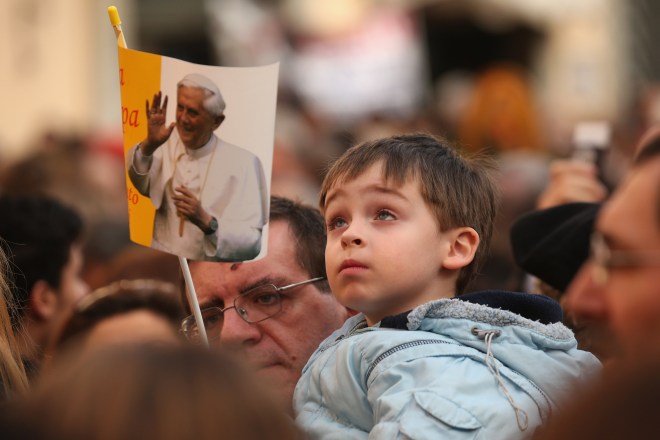
Elsewhere, Benjamin Lennett forecast trouble for Netflix addicts, Keith Ellison expressed ambivalence about deleted scenes, we deconstructed hatred for Anne Hathaway, and watched an audition for Lena Dark Thirty. John Patrick Leary shared tales of untimely doggie deaths, gluten-free diets elicited mixed feelings, and we exposed the sinister side of a sartorial movement. A young pilgrim waved a goodbye to the outgoing pope in the FOTD, drought knocked out a Texas dock in the VFYW, and we gesundheit’d through a super-cut of canine sneezes in the MHB.

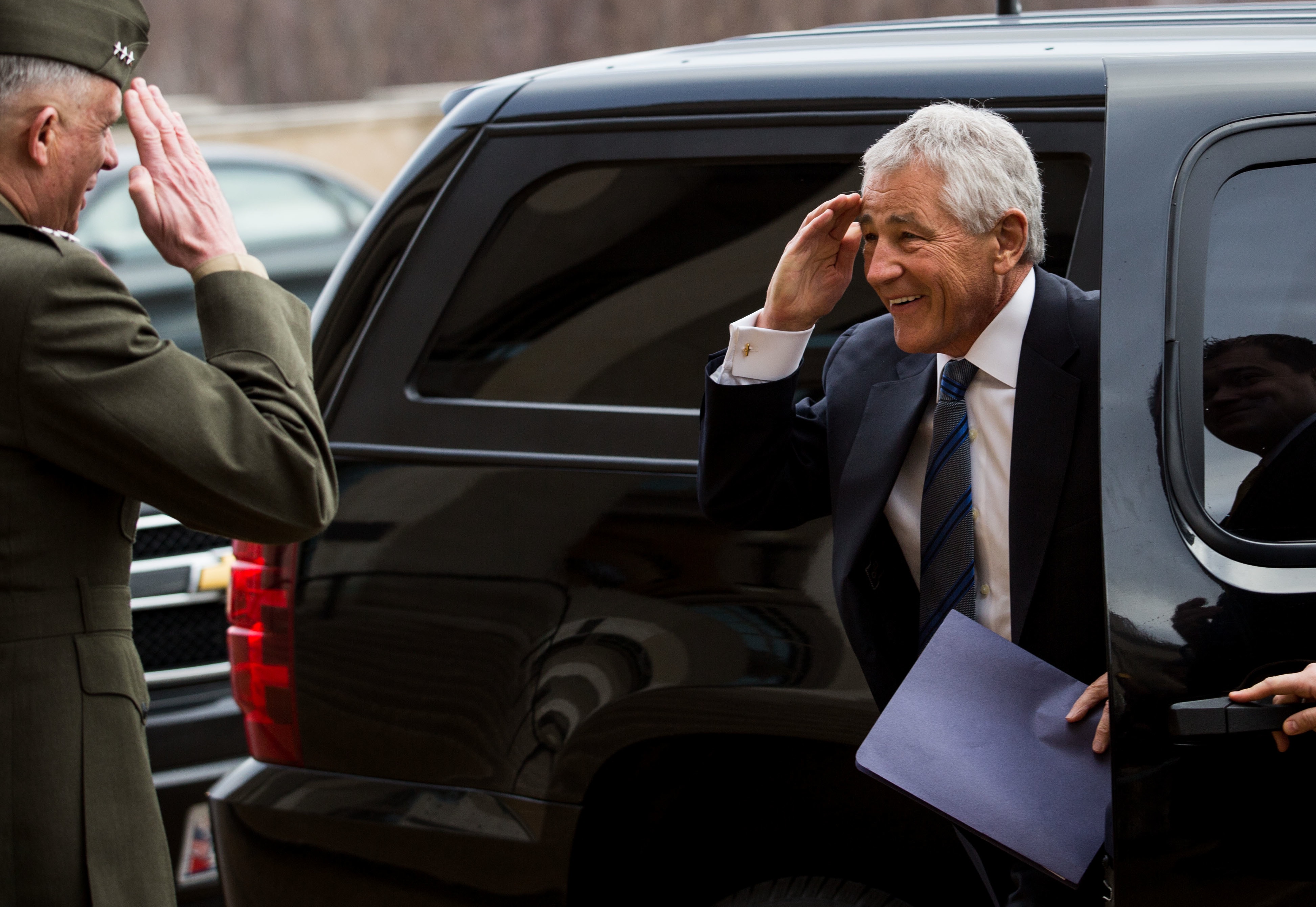
Chuck Hagel Begins His Post As Defense Secretary

(By Drew Angerer/Getty Images)

Wednesday on the Dish, Andrew welcomed big businesses to the ranks of the marriage equality supporters, raised his eyebrows at news that Benedict will continue to retain his personal secretary even as the latter services the new Pope, and then wondered who would be left at the Conclave if closeted or enabler Cardinals were excluded. Reihan connected the pace of change on the right to the rise of young pundits on the left, Peter Beinart traced the roots of the right’s Hagel hatred to the Dubya era, Frum elucidated his change of heart on marriage equality, and conservative commentators weighed the wisdom of CPAC’s Christie snub. John Cluverius plotted the popularity of government policy, Kent Sepkowitz felt ill over the possibility of sequester cuts to immunizations, and Freddie deBoer was unsatisfied with Sully’s defense of Saletan.

Looking abroad, Jonathan Katz calculated a way to compensate Haitians infected by UN peacekeepers, Naunihal Singh predicted that the next Pope will be an African, and Italian blogger Beppe Grillo threw a wrench into Italian politics. In cannabis coverage, we pondered the forthcoming regulatory framework for marijuana, Robert Frichtel worried about potency, and John Schwartz called for more research on potential health benefits.

In assorted coverage, Alex Knapp ushered in the post-piracy era, rom-coms turned inward, Rebecca Makkai unknowingly committed identity theft, and Sara Naomi Lewkowicz documented domestic abuse. David Roberts heralded the rise of decentralized power systems, Cheryl Katz dredged up some innovative flood management in the Netherlands, and Lucy Weltner questioned environmental vigilantism. The Harvard Grant Study highlighted the importance of intimacy, winning lost out to sportsmanship, and readers debated grocery store layouts while we worked through the work-from-home debate. Hans Rosling illustrated worldwide demographic convergence and Samuel Arbesman found computers that make geniuses look dumb. We pulled a cool ad out of thick air, frolicked through fallen leaves in the MHB, caught a glimpse of a former Cardinal in the FOTD, and enjoyed a seaside sunset in the VFYW.

tumblr_lni23xheku1qchhhqo1_1280

Tuesday on the Dish, Andrew marked more signs of progress on the Right and found a silver lining in the ridiculousness of the sequester. Later, he demanded transparency on targeted assassinations and processed an historic Republican breakthrough on marriage equality.

In political news and views, we considered the impact of Senator Cruz, debated the pain of the sequester, and ideas actually mattered in 2012. In health care coverage, Yglesias focused on the impact of doctor salaries on costs. We forecast the effects of changing weather on work, Douthat fretted over the demographic profile of those dropping out of the workforce, and Yahoo! terminated telecommuting. Abroad, Italy voted for “Ingovernability” in their recent election.

In assorted coverage, Gabe Habash gawked at Matt Kahn’s reading list and Amber Forcey rejected self-righteous nostalgia. Jen Doll dove into the craaaaaazy language of Twitter, Erica Westly explored her fascination with outsourced paperwork, and a reader drew parallels between BuzzFeed and Politico. William Deresiewicz celebrated the timelessness of good food, J-P Metsavainio brought nebulas down to earth, and Thomas Dixon cast a critical eye over theories on tears. A reader pointed to a Portuguese middle-ground in bullfighting, Ambers corrected Glenn Beck on the party of pro wrestling, Laurie Santos and Jesse Bering discussed disgust and sex, readers chimed in on the merits of live music, and two Michelles had a dance-off.

Garance Franke-Ruta meditated on the ups and downs of an activist youth while we mourned the passing of an evangelical Surgeon General who refused to let faith trump science and navigated the tensions of faith, and . We revealed the home of the Rodeway Inn in this week’s VFYW contest, breezed through the Caribbean in the VFYW, de-memed the Harlem Shake in the MHB, and Marine recruits prepped for a test in our FOTD.

The Pope Attends His Final Angelus Prayers Before His Retirement

(By Franco Origlia/Getty Images)

Monday on the Dish, Andrew mulled over legalized prostitution, hoped for a new era to emerge from the coming Papal Conclave, and updated readers on the status of the New Dish. He glimpsed the new generation of Journalism in Steve Brill’s health care essay and shook his head at the Republican management of the sequester.

In political coverage, we looked ahead to the fallout from the sequester and Josh Barro laid the blame for epistemic closure at the door of Republican think tanks. Felix Salmon was skeptical that the BuzzFeed model could scale, Jonah Peretti described the advertorial strategy while employees Jeff Greenspan and Mike Lacher aimed for ads that feel like editorials, and readers saw little to worry about. Overseas, Gianluigi Nuzzi wondered at tales of unquestioned cruelty from the Vatican.

In assorted coverage, Seth MacFarlane’s manatees failed to impress on Oscar night, Stefan Kanfer rebelled against recorded music, and Scott Adams bulked up with video games. Simon Park made us squirm at the thought of getting calls on our cells, Joshua Topolsky got an early glimpse at Google Glass, and France was unafraid of the dark. Eric Nusbaum weighed a bull’s cushy life against a grisly death, James Surowiecki dug into the black betting economy in American sports, and Howard Megdal noted parallels between Lena Dunham and Philip Roth.

Elsewhere, Gregory McNamee mapped out the grocery store while Nicola Twilley revealed rampant genetic modification in the produce aisle, Adam Clark Estes wasted nothing in addressing the food shortage, and Marlene Zuk pushed back against paleo nostalgia. Wayne Curtis recalled the golden age of the USPS, Jennifer Kabat exposed the perils of making snow, Beth Skwarecki couldn’t explain birth rate patterns, Shane Koyczan illustrated the haunting effects of bullying, and Amanda Marcotte debunked the myth of chatty women. FLOTUS busted a move in the MHB, we recognized the distant Rockies in the VFYW, and shared the sorrow of a mother mourning her child in the FOTD.

Last weekend on the Dish, Andrew continued to think through Buzzfeed’s “sponsored content” model for online ads, pointed to an incisive comment on the issue from Kevin Drum, briefly riffed on the Atlantic’s new guidelines for native ads, offered a theological critique of Zero Dark Thirty, and noted what’s different this time about who will be selecting the next Pope (and if you’d like to be Pope, here’s some helpful tips). We also provided some helpful background to this year’s Oscars here, here, and here.

There was a lot of sex and drugs on the Dish this weekend, too. Connor Habib wondered what drives gay porn starts to take their own lives, Jon Millward combed the archives of the Internet Adult Film Database, Melissa Gira Grant revealed America’s pioneer prostitutes, and Margaret Hartmann looked at a rash of sexting cases among FBI employees. Ned Beauman surveyed the online recreational drug marketplace, Robert Morrison credited Thomas De Quincey’s Confessions of an English Opium-Eater for making drug culture highbrow, and Miles Klee considered accidental and involuntary highs.

We also offered our usual eclectic mix of religious, books, and cultural coverage as well. In matters of faith, doubt, and philosophy, Will McDavid mused on the relationship between love and justice in the work of Andre Dubus, Bill Vallicella unpacked Simone Weil’s understanding of God, Richard Holloway grappled with political theorist John Gray’s vision of life without redemption, and Irene Klotz reported on what the Higgs boson particle might teach us about the lifespan of the universe. Kevin Hartnett asked which religions are the most chaste, Giles Fraser contemplated the right way to pray, and Adam Kirsch reviewed the place of anti-Judaism in western thought and culture.

In literary coverage, Jeannette Winterson praised Virginia Woolfe’s Orlando, Michael W. Clune explored the artist’s impulse to overcome time’s defeat of novelty, Alexander Nazaryan pushed back against literary sprawl, and Juliet Escoria realized she’d never be a novelist. Andrew Gallix pondered the purpose of intentionally difficult books, Michael Bourne uncovered the core of Truman Capote, Adam Kirsch tackled contemporary essayists, and Sean Wilentz deconstructed Oliver Stone’s revisionist take on American history. Read Saturday’s poem here and Sunday’s here.

The Economist investigated social networking data getting factored into credit scores here. Your weekend dose of really gay here and the latest viral dance meme here. MHBs here and here, FOTDs here and here, VFYWs here and here, and the latest window contest here.

– D.A. and M.S.